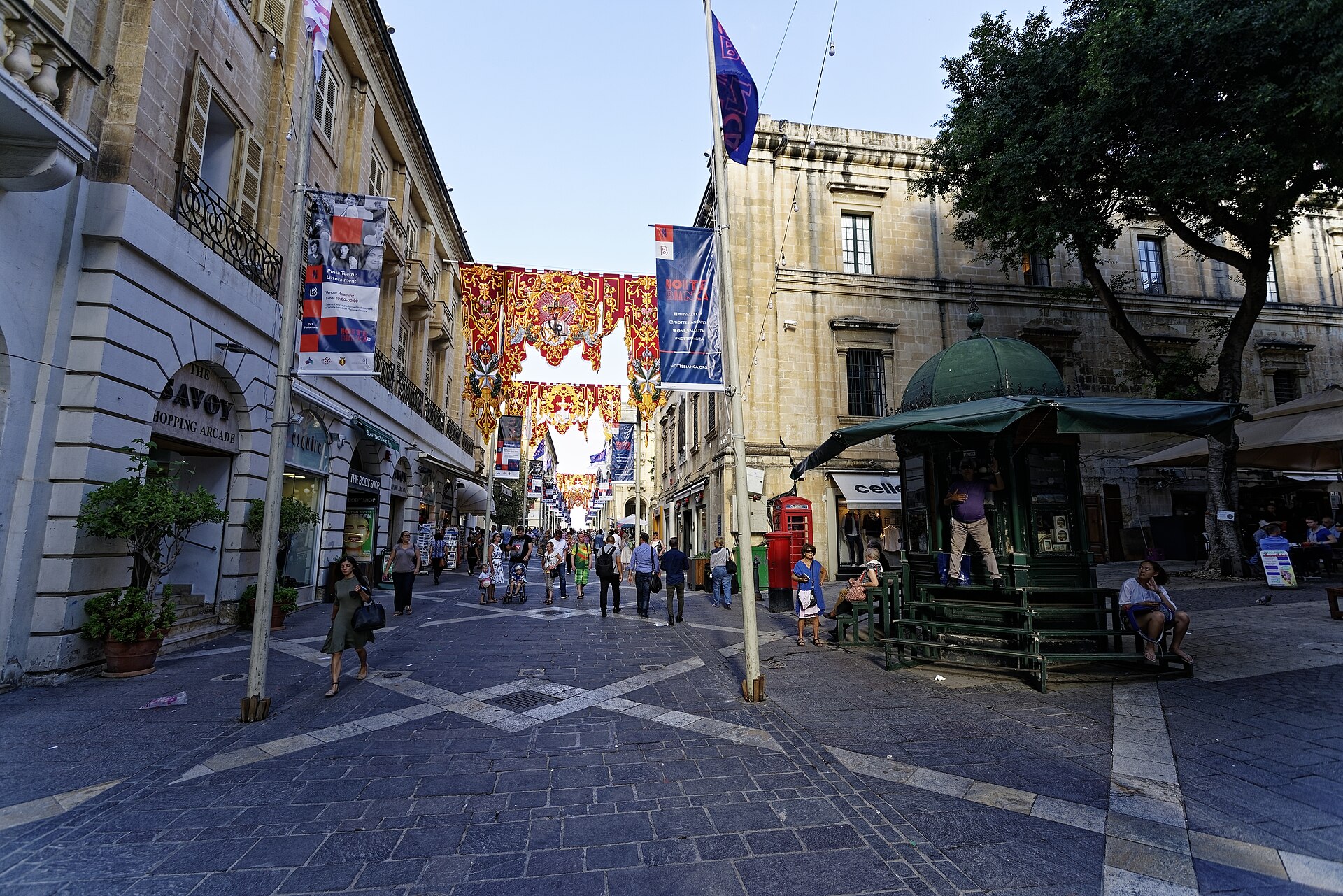
Pack for three different days happening inside one week: a hot port day walking on polished stone, a cool evening at sea, and a church or a mosque that will turn you away at the door in a vest top. For seven nights that works out at roughly five daytime outfits, four evening outfits, two pairs of broken-in walking shoes and one scarf that does a lot of work.
The rest of this guide is the detail behind those numbers, because the honest answer to what to pack for a Mediterranean cruise is not a list of 31 things — it is a set of constraints that most packing articles never mention. The Vatican bans hats as well as bare shoulders. Every major line confiscates surge-protected power strips at the gangway scanner. Pompeii turns away any bag bigger than 30 by 30 by 15 centimetres. Your itinerary crosses four different plug types in a week. Get those four right and the wardrobe takes care of itself.
At a glance: the Mediterranean cruise packing list in one box
| Luggage | One checked bag plus one carry-on per person is the working norm. Cruise lines rarely publish a hard weight limit; your airline does, and that is the number that binds. |
| Daytime | Breathable cotton and linen, covered shoulders available at all times, sun hat, sunglasses, refillable bottle. |
| Evening | Smart casual most nights. Royal Caribbean schedules one formal night on a 5-night sailing, two on 6–10 nights, three on 11–14. |
| Shoes | Two pairs of broken-in walking shoes with grip, one pair of evening shoes, one pair of sandals or pool shoes. Four pairs total, rotated. |
| Religious sites | Knees and shoulders covered; the Vatican also bars low-cut garments and hats. Mosques add shoes off and a headscarf for women. |
| Plugs | Type C/F in Spain, Greece, Croatia, Turkey, Portugal and Montenegro; C/F/L in Italy; C/E in France and Monaco; type G in Malta and Cyprus. All 230 V / 50 Hz. |
| Banned on board | Extension cords, power strips, surge-protected power boards, multi-plug outlets, clothing irons and garment steamers. Curling and flat irons are the stated exception. |
| Day bag | Soft, packable, and under 30×30×15 cm if Pompeii is on your itinerary — that is the site’s published maximum. |
| Cash | Small euro notes for buses, tenders, lifts and toilets. Greek landing fees go on your onboard account, not your wallet. |
| Laundry | Assume one wash or one sink session on any sailing of 10 nights or more, and pack to that assumption rather than to the full night count. |
If you are still choosing the trip rather than the suitcase, start with our complete Mediterranean cruise planning guide, then come back here once the month and the itinerary are fixed. What you pack depends far more on when you sail than on which ship you booked.
What should you pack for a 7-night Mediterranean cruise?
Five daytime outfits, four evening outfits, two pairs of walking shoes, one pair of evening shoes, swimwear with a cover-up, a scarf or light layer for churches, a folding day bag, a European plug adapter and a refillable bottle. Add one dressier outfit if your line schedules two formal nights.
That list assumes a typical seven-night Western or Eastern Mediterranean sailing with five port days and one or two sea days, which is what the overwhelming majority of first-time cruisers book. The reason it is shorter than the lists you will find on the cruise lines’ own blogs is that it counts rather than describes. “Bring plenty of layers” is not actionable at 11pm the night before you fly. “Five day outfits” is.
Two of those daytime outfits get worn twice. Nobody notices, and nobody on a ship of 4,000 people is keeping track. What people do notice is the passenger sitting on a bollard at Katakolon at 11am with a blister, having walked 900 yards in shoes bought the week before.
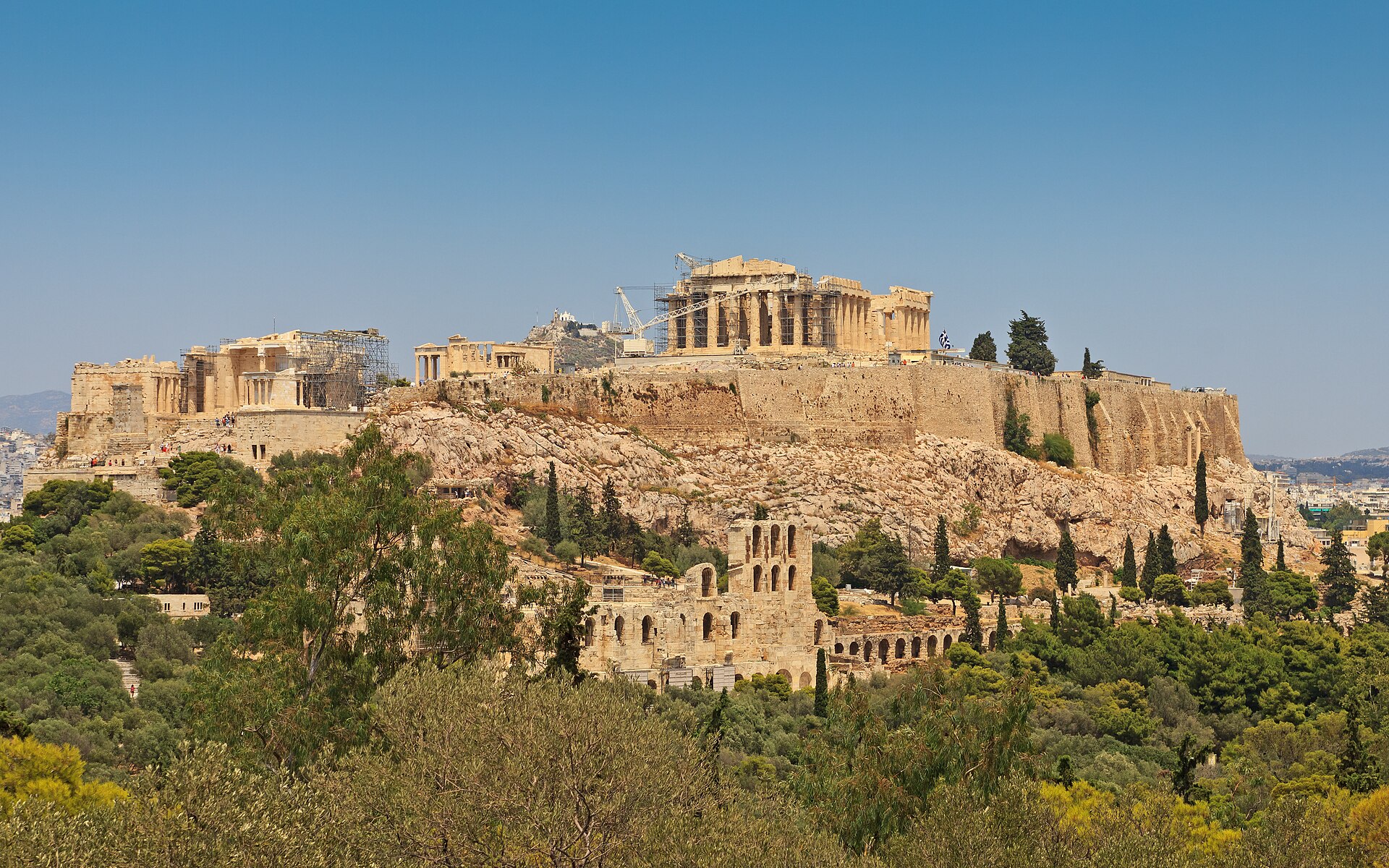
The one genuinely non-negotiable item is a layer that covers your shoulders and can live in a day bag all day without creasing into a rag. A large lightweight scarf, a linen overshirt or a packable long-sleeve does it. On a Western Med itinerary you will want it in Rome, Florence, Barcelona and Palma; on an Eastern Med itinerary you will want it in Athens, Rhodes, Istanbul and Kusadasi. It is the single most-used thing in the bag and the single most commonly forgotten.
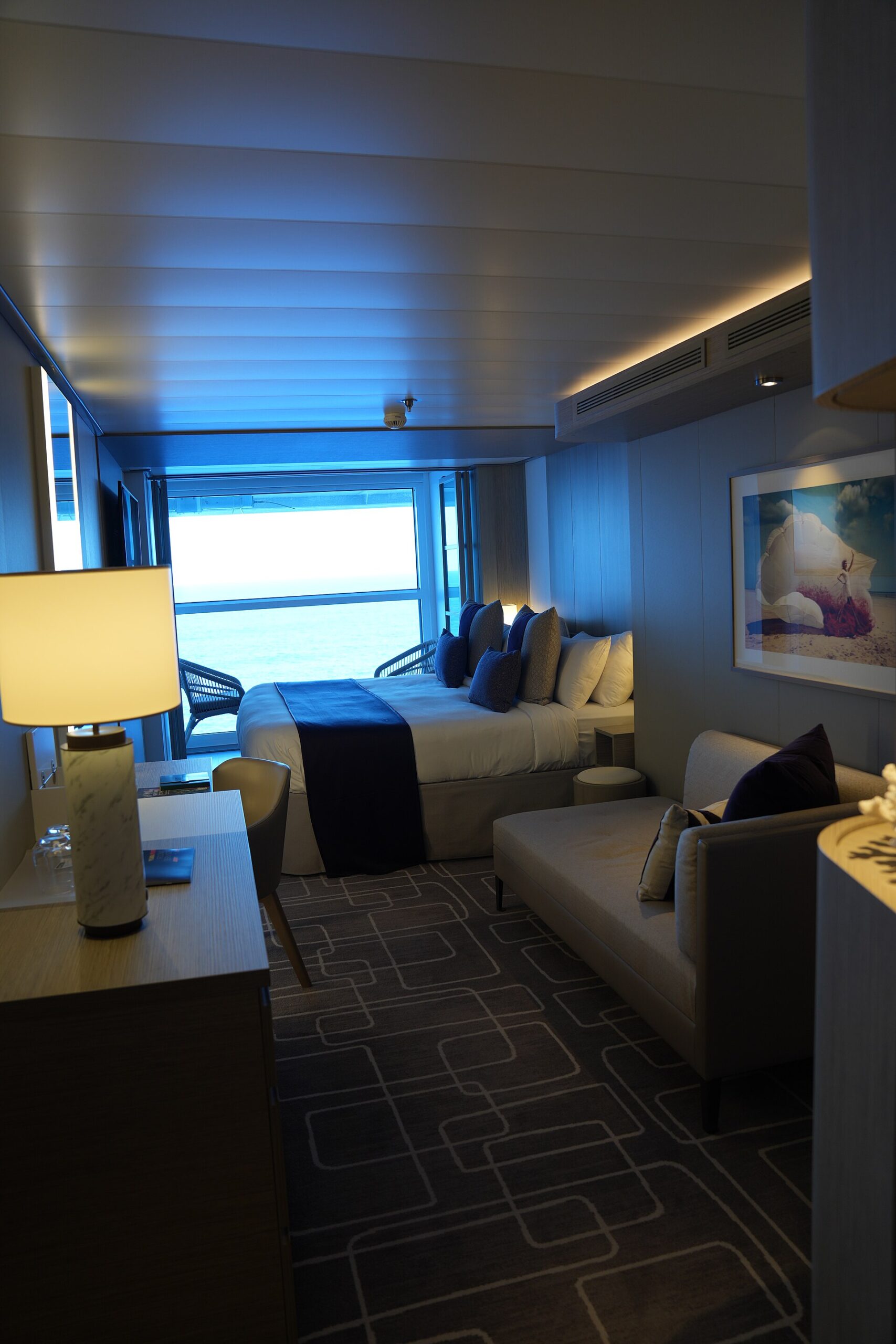
What to pack for a Mediterranean cruise of 7, 10 or 14 nights
Here is the arithmetic written out, so you can count into the case rather than guess. The numbers assume you re-wear daytime bottoms, re-wear evening outfits at least once on the longer sailings, and do one laundry cycle on anything over ten nights.
| Item | 7 nights | 10–12 nights | 14+ nights |
|---|---|---|---|
| Daytime tops | 5 | 7 | 8, plus one laundry cycle |
| Daytime bottoms (shorts, trousers, skirts) | 3 | 4 | 5 |
| Evening outfits | 4 | 5 | 6, re-worn |
| Formal or “dress to impress” outfits | 1–2 | 2–3 | 3–4 |
| Swimwear | 2 | 2–3 | 3 |
| Walking shoes | 2 pairs | 2 pairs | 2 pairs |
| Evening shoes | 1 pair | 1 pair | 1–2 pairs |
| Sandals or pool shoes | 1 pair | 1 pair | 1 pair |
| Shoulder-covering layer | 1 scarf + 1 overshirt | 1 scarf + 1 overshirt | 2 scarves + 1 overshirt |
| Warm layer for evening deck | 1 | 1 | 1–2 |
The formal-night row is not a style judgement. It comes straight from the published policy: Royal Caribbean states one formal night on a 5-night sailing, two on 6–10 nights, three on 11–14 nights and three to four on 15 nights and up. Check your own line’s number before you decide whether the dinner jacket earns its space, because the answer on a 7-night sailing is usually “twice”.
Two practical rules make the table work. First, build around one colour family so every top works with every bottom — this is the one piece of standard packing advice that genuinely holds. Second, weigh the bag before you leave rather than after you have bought the ceramics in Sicily. Anything you buy in port flies home in the same allowance you flew out with, and the Mediterranean is very good at selling people olive oil, ceramics and wine.
What is the evening dress code on a Mediterranean cruise?
Smart casual on most nights, with one to four formal nights depending on the length of your sailing. Royal Caribbean defines smart casual as “collared shirts, dresses, skirts and blouses, or pantsuits” and formal as “suits and ties, tuxedos, cocktail dresses or evening gowns”. Bare feet are banned everywhere, tank tops in the main dining room at dinner.
That is the official wording from the line’s own onboard dress code page, and it is worth quoting exactly because the gap between the published code and what actually happens at 7:30pm is the thing that causes all the anxiety. The published code is a ceiling, not a floor. Enforcement in the main dining room is real for bare feet, swimwear and tank tops; it is much softer for the difference between a jacket and a good shirt on formal night.
The picture across lines, as each currently describes it:
| Line | How it is branded | What to pack |
|---|---|---|
| Royal Caribbean | Casual / Smart Casual / Formal; 1–4 formal nights by length | One jacket or one cocktail dress covers a 7-night sailing comfortably |
| Celebrity | No formal nights; one to two “Evening Chic” nights depending on length | Smart separates rather than black tie |
| Princess | Smart casual default; formal night branded “Dress to Impress” | Shorts are not accepted in the main dining room at dinner |
| Norwegian | Freestyle — no formal nights scheduled at all | Resort casual throughout; one smart outfit for a specialty restaurant |
| Cunard, Crystal and the traditional lines | Genuine gala evenings, enforced | Dinner jacket or long dress if you are eating in the main restaurant |
| Viking, Oceania, Regent, Silversea, Seabourn, Explora | “Elegant casual” or equivalent; jackets optional, ties rare | Nice shirt and trousers, or a dress; leave the tuxedo at home |
Only the Royal Caribbean row above is quoted from an official policy page. The others are what the lines describe in their own marketing and guest information, and dress codes change without much announcement — confirm yours in the cruise documents that arrive 30 days out. If you are still deciding between lines, our comparison of the best Mediterranean cruise lines sets out which ones are formal in practice and which only on paper.
One thing worth saying plainly, because it is our opinion rather than a rule: on a port-intensive Mediterranean itinerary, formal night matters less than on any other cruise. You will have spent the day walking eight miles around Ephesus or Florence. Most passengers eat, go on deck as the ship pulls out, and go to bed. Pack one good outfit, not three.
Shoes, cobbles and tender ports — the section people regret
Footwear is where Mediterranean cruising differs most sharply from Caribbean cruising, and it is the thing first-timers most often get wrong. The surfaces are not beaches. They are two-thousand-year-old basalt, polished limestone worn smooth by millions of feet, marble steps with no handrail, and the kind of cobbles that turn an ankle in a thin sole.
Some specifics, from ports that appear on almost every itinerary:
- Dubrovnik’s Stradun is limestone polished to a shine by five centuries of traffic. It is beautiful, flat and genuinely slippery in rain. The walls circuit on top of it is steps, sun and no shade.
- Ephesus, from Kusadasi, is a marble street on a gradient with loose stone at the edges — about eleven miles inland, 20 to 25 minutes by road from the Ege Port berth.
- Kotor’s fortress is roughly 1,350 steps above the old town, 45 to 60 minutes up, on uneven rock.
- Sorrento tenders into Marina Piccola and then asks you to climb about 200 steps to Piazza Tasso, or pay for the lift.
- Valletta is a mile and a half uphill from the Waterfront berths, on a street grid that Malta’s own guides describe as steep; the Upper Barrakka lift costs around one euro return and saves the worst of it.
- Santorini always tenders to the Old Port at the foot of the cliff. From there it is the cable car at €10 one way per adult, the zigzag path, or nothing.
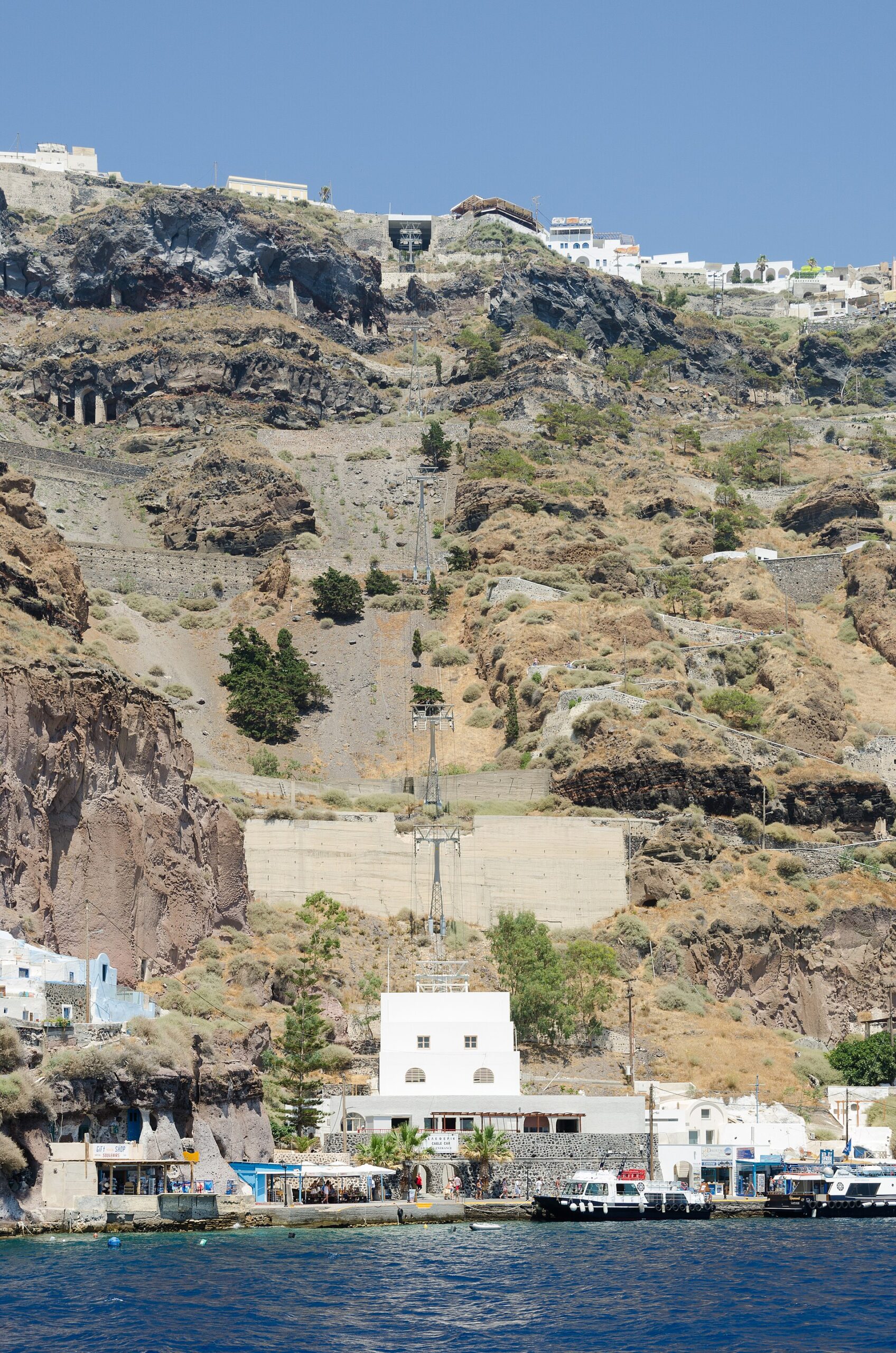
Tender — a small boat that shuttles passengers from a ship at anchor to shore, used where there is no berth or no berth free — changes your footwear maths, because you are stepping from one moving platform to another. Santorini and Villefranche tender always. Capri, Sorrento, Amalfi, Portofino, Cannes, Saint-Tropez, Calvi and Bonifacio usually tender. Mykonos and Kotor dock when a berth is free and tender when it is not. Anything with a slick sole is a bad idea on a wet tender step, and anything you cannot get on and off without using both hands is worse.
So: two pairs of closed, broken-in walking shoes with real grip, worn on alternate days so each dries out, plus one pair of sandals for the pool deck and one pair of evening shoes you can walk 300 yards in. Four pairs. Not six. The brand matters much less than the fact that you have already walked ten miles in them at home.
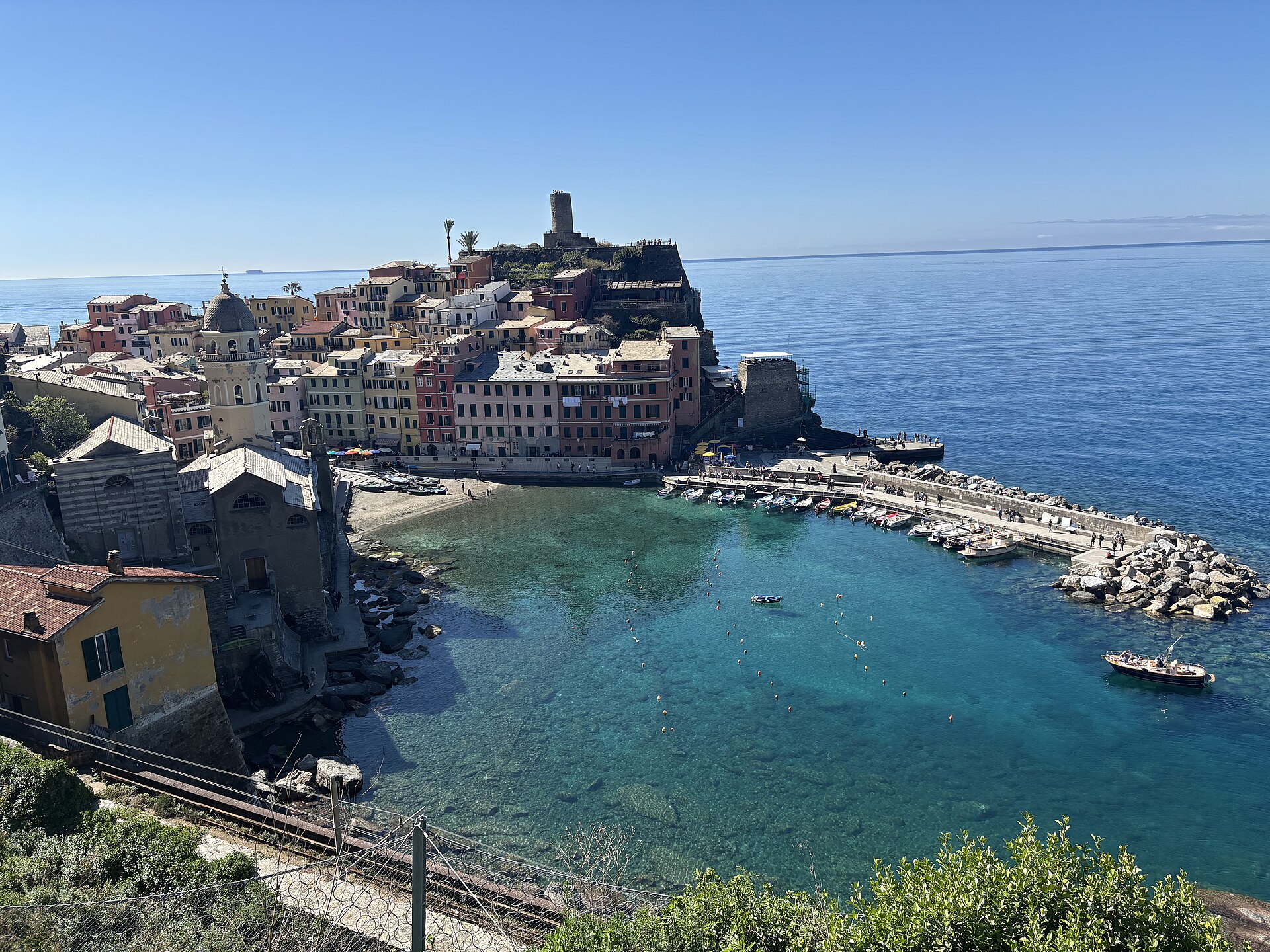
Our port-by-port guides say which calls are walkable and which are not: Italy’s cruise ports, Greece’s, Spain and Portugal’s and Croatia and the Adriatic’s each carry the distance from the berth to the centre.
What should you wear to churches and mosques in the Mediterranean?
Knees and shoulders covered, at minimum. The Vatican goes further: its published rule bars sleeveless and low-cut garments, shorts above the knee, miniskirts and hats. Working mosques in Turkey add two more requirements — shoes come off at the door, and women cover their hair. Carry a scarf and you satisfy almost all of it.
The hat clause is the one that catches people, because it contradicts the advice in every other packing article, including the cruise lines’ own. They tell you to bring a sun hat; the Vatican Museums, the Sistine Chapel, St Peter’s Basilica and the Vatican Gardens tell you to take it off. The official wording on the Vatican Museums’ visitor information page is that entry “is permitted only to appropriately dressed visitors” and that “sleeveless and/or low-cut garments, shorts above the knee, miniskirts and hats are not permitted.” The same page extends the requirement of decorum to visible personal items and visible tattoos.

What that means in practice, site by site:
| Site | The rule | What to carry |
|---|---|---|
| Vatican Museums, Sistine Chapel, St Peter’s Basilica | No bare shoulders, no low-cut tops, nothing above the knee, no hats. Published and enforced at the entrance. | Scarf or overshirt, trousers or a knee-length skirt, hat off before the queue |
| Italian churches generally (St Mark’s in Venice, the duomos of Florence, Palermo, Amalfi) | Shoulders and knees covered; enforcement varies by church and by day | The same scarf |
| Greek Orthodox churches and monasteries | Shoulders and knees covered; some monasteries supply wrap skirts at the gate for men and women alike | Long-ish shorts are often refused where a skirt is not |
| Spanish cathedrals (Sagrada Família, Seville, Palma) | Shoulders and knees covered at the ticket check | Overshirt in the day bag |
| Working mosques (Istanbul, Kusadasi, Tangier where non-Muslims may enter) | Shoes off, shoulders and knees covered, hair covered for women; prayer times close the hall to visitors | Large scarf, socks you are happy to walk in |
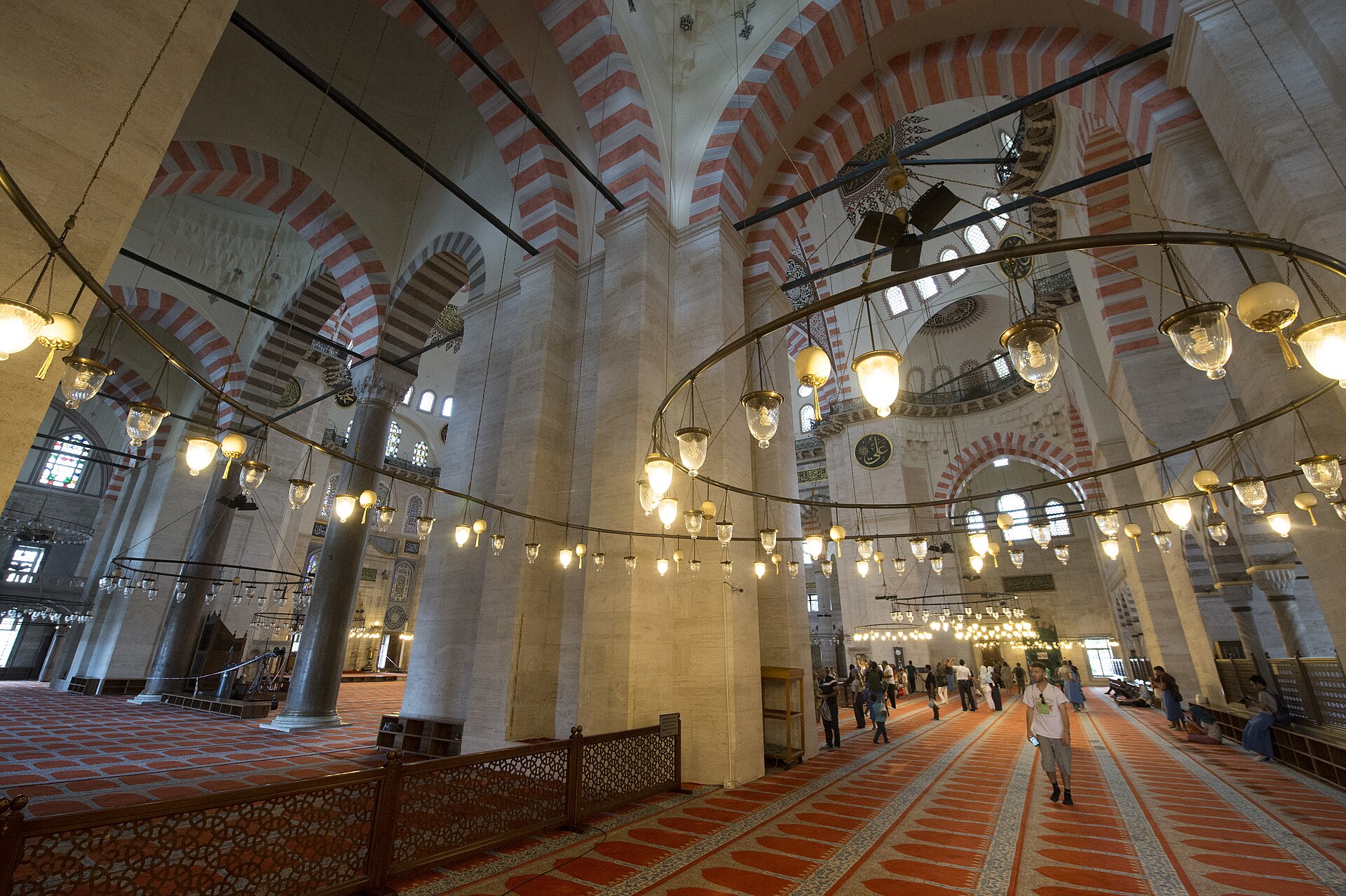
The single-item solution is a scarf about the size of a bath towel, in a fabric that does not crease. It covers shoulders in Rome, hair in Istanbul, a bare midriff in Athens, and doubles as a sarong on the pool deck and a blanket on a cold coach. Men get less coverage from a scarf and are better served by a linen overshirt, which also solves the shorts problem if the shorts are already knee-length.
One warning about timing. Heat closures are a live risk at outdoor sites: the Acropolis closed until 5pm on 8 July 2025 with Athens forecast to hit 38 °C. That is not a packing problem you can solve with clothing, but it is a reason to carry sun protection and water rather than relying on a mid-afternoon visit.
Sun, heat, water and a small medical kit
The Mediterranean in July and August is genuinely hot, and the ports are stone, which radiates. Athens averages a daily maximum around 90 °F (32 °C) in July; Rome and Barcelona sit in the mid-80s °F through July and August. Shade in an archaeological site is close to zero.
The sun and health kit, in the order it gets used:
- A refillable bottle of at least a litre. Ships have water stations; most Mediterranean ports have public fountains. Buying bottled water at a site entrance is the most reliable way to spend €3 on something you could have carried.
- High-factor sunscreen, packed in the checked bag. Buying it in a port at a tourist price is a rite of passage nobody enjoys.
- A hat that packs flat, because it has to come off and go into the bag at the Vatican and in every mosque.
- Sunglasses with real UV protection, plus a spare cheap pair, since the first pair usually ends up on a tender floor.
- Electrolyte tablets or sachets. Unglamorous, weightless, and the difference between an afternoon in Pompeii and an afternoon lying down.
- Blister plasters and tape, in the day bag from day one, not in the cabin where they are useless.
- Motion sickness remedies if you are prone. The Med is usually calm, but the Aegean in the summer meltemi — the strong northerly that blows hardest in July and August — and the Gulf of Lion in a mistral are the two places you may notice the ship.
- Your prescriptions in their original labelled packaging, split between your carry-on and your case, with a copy of the prescription. Do not pack medication only in checked luggage.
- A basic kit: painkillers, antihistamine, an anti-diarrhoeal, a rehydration sachet. Ships’ medical centres charge for everything, and shoreside pharmacies keep local hours.
Pharmacies are easy to find once you know the word and the sign — farmacia in Italy and Spain, pharmacie in France, φαρμακειο in Greece, eczane in Turkey, and almost always a green cross. They are well stocked and pharmacists usually speak enough English in cruise ports. They are not, however, open when your ship is in port on a Sunday in a small Italian town.
Plugs, chargers and the power strip that gets confiscated
A single Mediterranean itinerary can cross four plug standards in a week, and the ship is a fifth question again. Mains voltage across the region is 230 V at 50 Hz, against the 120 V / 60 Hz of North American outlets, so anything without a dual-voltage rating needs more than a shape adapter.
| Country | Plug type | Notes |
|---|---|---|
| Spain, Greece, Croatia, Turkey, Portugal, Montenegro, Egypt | C / F | The standard round two-pin “Europlug” and its earthed cousin |
| Italy | C / F / L | Type L is the Italian three-in-line pin; older buildings and some hotels still use it |
| France, Monaco | C / E | Type E has an earth pin protruding from the socket |
| Malta, Cyprus | G | The UK three-rectangular-pin plug — a different adapter entirely |
| Israel | C / H | Type H is Israel-specific |
| On board | Varies by ship and by cabin | Newer ships commonly fit both a North American and a European socket plus USB; older ships may fit one of each for the whole cabin |
A single universal adapter with multiple USB ports solves all of it, weighs almost nothing and — crucially — is not the thing that gets taken off you at the gangway.
What does get taken off you: extension cords, power boards, surge-protected power strips and multi-plug outlets are all prohibited, along with clothing irons and garment steamers. Royal Caribbean’s prohibited items policy states it plainly, and every major line runs an equivalent rule for the same fire-safety reason. Personal hair appliances — curling irons, flat irons, hair dryers — are the stated exception and are fine.
This catches an enormous number of passengers, because “cabins don’t have enough outlets, bring a power strip” is advice that circulates constantly and was true a decade ago. The compliant version is a cruise-approved non-surge-protected cube or a USB-only charging block. If you are not certain which yours is, assume it will be confiscated at the scanner and held until the end of the cruise.
Two more electrical notes. Power banks travel in your carry-on, never in checked luggage, under airline rules that apply on the flight over, not the ship. And a European itinerary is a strong argument for a local eSIM or a proper roaming plan rather than the ship’s satellite Wi-Fi; our Mediterranean cruise tips guide covers the connectivity side in more detail.
What should you not pack for a Mediterranean cruise?
Leave out extension cords, power strips, surge protectors, clothing irons, garment steamers, candles and anything with a heating element. Then leave out the things that are merely useless: brand-new shoes, a hairdryer, full-size toiletries, heavy books, valuable jewellery, formal wear you will not wear twice, and the fourth and fifth pairs of shoes.
The prohibited list is a safety rule and is enforced by scanner. The useless list is a space and weight argument, and it is the one that will change your holiday, because every kilo you do not pack on the way out is a kilo of ceramics, olive oil or Turkish rugs you can bring home.
- A hairdryer. Essentially every cabin has one. It will not be a good one, but it is a hairdryer.
- Full-size toiletries. Most lines provide shower gel and shampoo in dispensers. Decant what you actually need.
- New shoes. The Mediterranean is the worst possible place to break in footwear.
- Beach towels. The ship provides them for the pool and, on most lines, for the beach as well.
- More than one formal outfit on a 7-night sailing. See the formal-night counts above.
- Serious jewellery. Cabin safes are small and pickpocketing in Barcelona, Rome and Athens is an organised profession.
- A drone. Many ports, and several countries in the region, restrict them; several lines prohibit them being flown from the ship at all. Check before rather than after.
- An iron “just in case”. It is on the prohibited list. Ships have laundry services and, on many, self-service launderettes.
Documents, money and what actually goes in the safe
Your passport is the one item with no substitute. The Schengen rule is that it must have been issued within the previous ten years and remain valid for at least three months beyond your intended departure — but most cruise lines demand more than that, and Royal Caribbean, for example, requires six months’ validity beyond the end of the cruise. Work to the six-month figure and you will never be caught out.
Two European entry systems now bear on a Mediterranean cruise. The Entry/Exit System (EES) has been fully operational across all 29 Schengen countries since 10 April 2026: it records your face and fingerprints at the border, there is nothing to apply for, and it has added real time to arrival queues at Barcelona, Rome Fiumicino and Athens. ETIAS, the €20 travel authorisation valid for three years, is scheduled for the final quarter of 2026 with mandatory enforcement following in 2027 — check whether it is live before you sail, because the date has slipped before. Our guide to Mediterranean embarkation ports covers what those queues mean for your arrival day.
What to carry, and where:
- Passport — in the cabin safe once you have boarded, unless the itinerary requires you to carry it ashore. Most Schengen port days do not.
- A photocopy and a phone photo of the passport photo page, plus one copy left with someone at home.
- Your ship card, which is your boarding pass at every gangway. Losing it ashore is an annoyance, not a disaster, but it is the thing to keep dry on a tender.
- Small euro notes. Ten and twenty euro notes for buses, lifts, toilets, tenders, church donations and taxi drivers who have suddenly lost all their change. A fifty in a Kusadasi taxi is a negotiation you will lose.
- One contactless card and one backup card, stored separately, with your bank told you are travelling. Decline “dynamic currency conversion” when a card machine offers to charge you in dollars — it is always a worse rate.
- Turkish lira only in small amounts, and only if Turkey is on the itinerary; euros are widely accepted in Kusadasi and Istanbul’s cruise district but at a poor rate.
One thing you do not need cash for: the Greek cruise passenger fee. It is charged per person per port call, only if you go ashore, and it is billed to your onboard account rather than collected at the gangway. In high season it is €20 at Santorini and Mykonos and €5 at other Greek ports, dropping in the shoulder months. The true cost of a Mediterranean cruise breaks down that fee and the rest of the onboard bill.
Day bags ashore, and the bag-size rules that turn you away
Almost every packing guide tells you to bring a day bag. Almost none of them mentions that several of the sights you are sailing to see publish a maximum bag size, and that the security queue is not the place to discover it.
Pompeii is the strict one. The official site rules cap bags at 30 by 30 by 15 centimetres — roughly 12 by 12 by 6 inches. Anything larger has to go into the left-luggage facility, which costs time you do not have on a Naples port day. Pompeii also runs timed slots between 16 March and 14 October, with a daily limit of 20,000 visitors, and its tickets are nominative, meaning your name is on them and ID may be checked. The details are published on the Parco Archeologico di Pompei site.
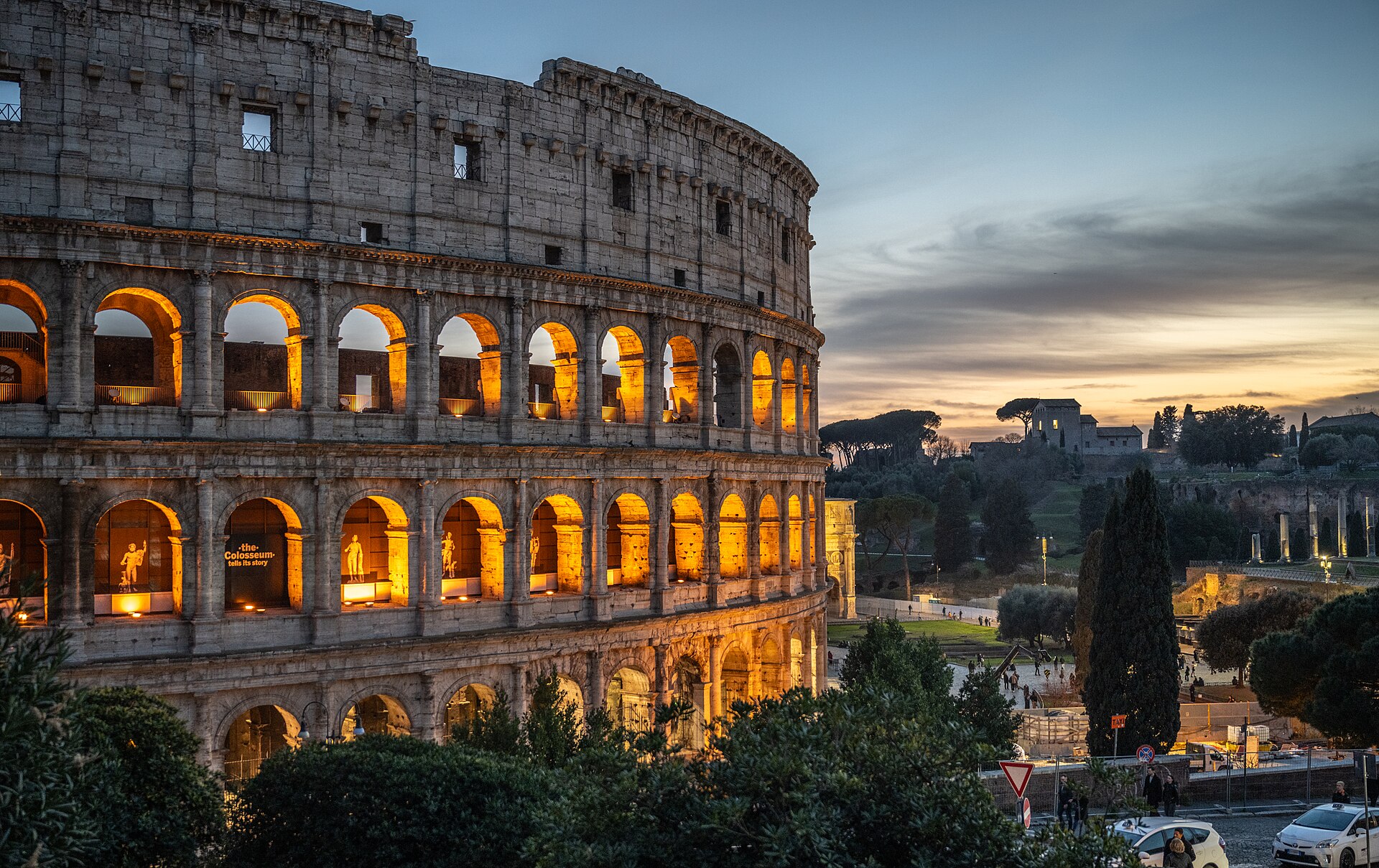
Elsewhere the rules are looser but the pattern repeats. The Vatican Museums operate a cloakroom and require larger bags and umbrellas to be checked in. The Colosseum, the Acropolis and Ephesus all run security screening at the entrance. Nothing here is unusual by the standards of a European museum — it is simply that a cruise passenger arrives on a schedule, with a fixed all-aboard time, and a second queue is the one thing the day cannot absorb.
So the day bag wants to be soft, packable, roughly A4-footprint, and carried on the front in a crowd. A folding nylon daypack that lives inside your case weighs a few ounces and solves both the size limit and the “we bought too much at the market” problem. Add a small dry bag or a zip-lock for a tender day, because spray over the bow of a tender is normal rather than exceptional. Our guide to Mediterranean shore excursions covers which of these sights are worth the ship’s tour and which you can do on your own two feet.
Packing by month, April to November
The single biggest variable in this whole article is the month. A May sailing and an August sailing on the identical itinerary want substantially different suitcases, and the sea temperature lags the air temperature by about two months, which catches people out in both directions.
| Month | Barcelona air / sea | Rome air | Athens air / sea | What changes in the case |
|---|---|---|---|---|
| April | 64 / 57 °F | 64 °F | 66 / 59 °F | Rain shell, a proper sweater, long trousers. The sea is too cold for most people. |
| May | 70 / 63 °F | 73 °F | 75 / 64 °F | The best-balanced month. Layers still needed after dark. |
| June | 77 / 68 °F | 81 °F | 84 / 72 °F | Full summer kit; sun protection becomes the priority item. |
| July | 82 / 73 °F | 86 °F | 90 / 77 °F | Peak heat and peak meltemi. Two litres of water capacity, not one. |
| August | 83 / 77 °F | 86 °F | 88 / 79 °F | As July. The warmest sea of the year for swimming. |
| September | 79 / 73 °F | 81 °F | 82 / 77 °F | Summer clothes, warm sea, one light layer for evening deck. |
| October | 72 / 68 °F | 72 °F | 72 / 72 °F | Add the sweater back. The sea is still swimmable. |
| November | 63 / 63 °F | 63 °F | 64 / 68 °F | A waterproof becomes essential — Rome averages 15 rainy days. |
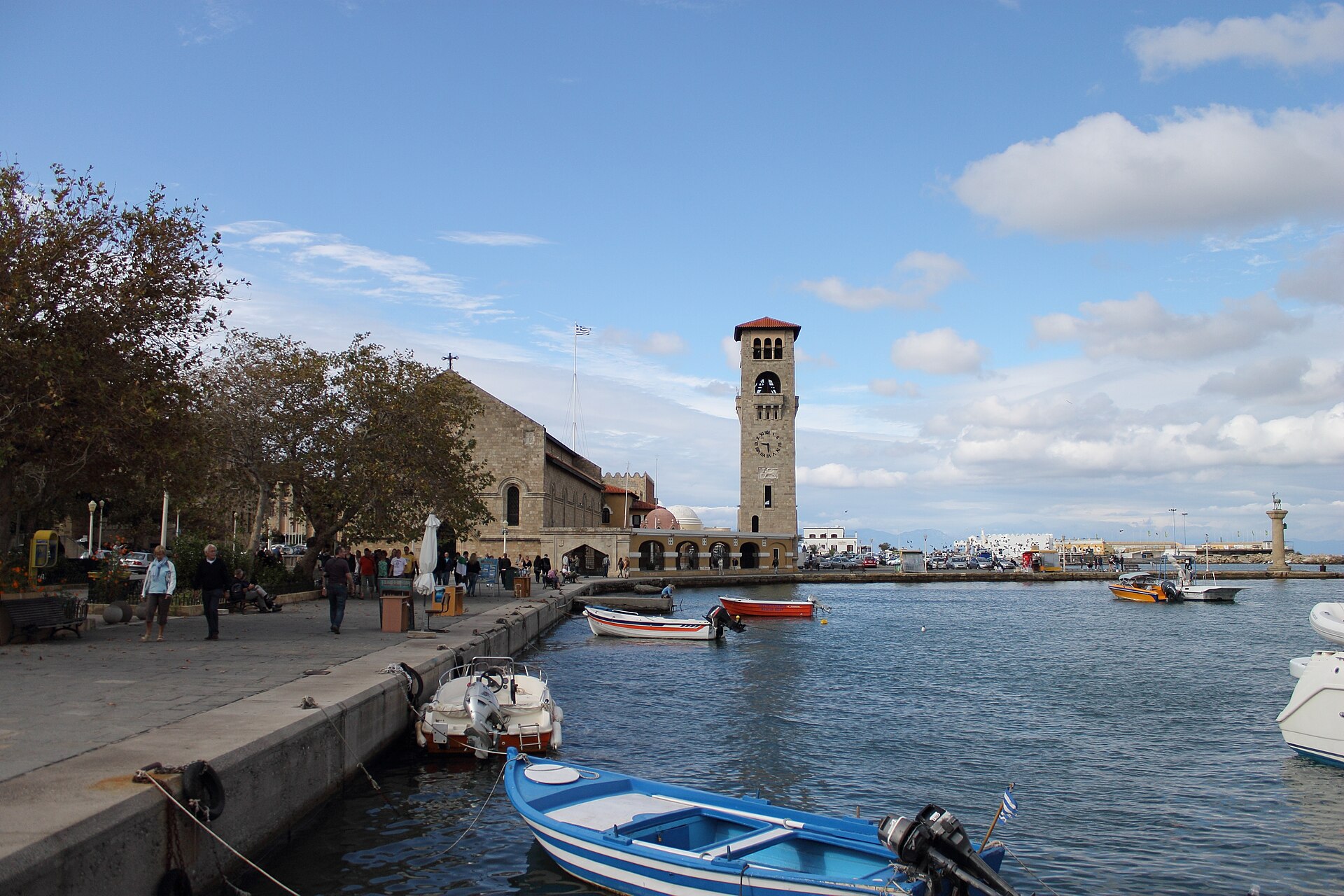
Two things that are easy to underestimate. First, evening on an open deck at 20 knots is much cooler than the daytime figure suggests, in every month. A windproof layer is worth more than a thick one. Second, Rome in November is the wettest month of the Mediterranean cruise calendar at around 15 rainy days, so a November repositioning sailing is a rain-jacket trip, not a sundress trip. If the month is still open, our guide to the best time to cruise the Mediterranean sets out the full trade-off between weather, crowds and price.
The printable Mediterranean cruise packing checklist
Everything above, condensed. Work down it the night before, not the morning of.
Documents and money
- Passport, issued within ten years and valid six months beyond your return
- Photocopy and phone photo of the passport photo page
- Cruise boarding documents and luggage tags, printed
- Travel insurance policy number and the insurer’s 24-hour number
- Two payment cards, stored separately, bank notified
- €150–250 in small notes per couple for a week of port days
- Any visa or entry authorisation your nationality needs for non-Schengen calls
Clothing, for seven nights
- Five daytime tops, three daytime bottoms, all in one colour family
- Four evening outfits plus one dressier option for formal night
- Two swimsuits and a cover-up
- One large scarf and one linen overshirt — the church and mosque solution
- One windproof layer for evening deck; a packable waterproof in April, May, October and November
- Underwear and socks for the full trip plus two spare, because they weigh nothing
- Sleepwear and something to cross the cabin in
Shoes
- Two pairs of broken-in closed walking shoes with grip
- One pair of sandals or pool shoes
- One pair of evening shoes you can walk in
Day bag and port kit
- Packable daypack under 30×30×15 cm
- Refillable water bottle, one litre or more
- Sunscreen, hat that packs flat, sunglasses
- Blister plasters, painkillers, electrolyte sachets
- Portable charger and cable
- Zip-lock or dry bag for tender days
- Paper map or offline map downloaded before you lose signal
Electrics
- One universal adapter with USB ports — not a surge-protected power strip
- Phone, camera and charging cables
- Power bank, carried in your hand luggage on the flight
Do not pack
- Extension cords, power strips, surge protectors, multi-plug adapters
- Clothing irons, garment steamers, candles, anything with a heating element
- Hairdryer, beach towels, full-size toiletries, new shoes, serious jewellery
The documents side of the packing list is worth its own read. Our guide to Mediterranean cruise travel documents covers passport validity, the EES biometric system, ETIAS, and the question of whether to carry your passport ashore or leave it in the cabin safe.
Where this guide goes deeper
This page is the hub for everything about clothes, kit and dress codes on a Mediterranean sailing. Over the coming weeks we are publishing the detailed guides that sit beneath it, and we will link each one here as it goes live.
- By season. What to Pack for a Mediterranean Cruise in Spring (April–May), What to Pack for a Mediterranean Cruise in Summer (June–August), What to Pack for a Mediterranean Cruise in Fall (September–November) and What to Pack for a Winter Mediterranean Cruise, each with the month-by-month temperatures and the specific items that change.
- What to wear. Mediterranean Cruise Outfits: What to Wear Day and Night, a companion guide to Mediterranean Cruise Outfits for Men, and Mediterranean Cruise Dress Code and Formal Nights with the published code for every major line.
- The specific problems. Best Shoes for a Mediterranean Cruise for the cobbles-and-tenders question, Church Dress Codes in Italy, Greece and Spain for the site-by-site rules, Plug Adapters and Power on a Mediterranean Cruise for the electrics, Mediterranean Cruise Carry-On Only: A Capsule Wardrobe for travelling light, and What Not to Pack for a Mediterranean Cruise for the confiscation list in full.
Alongside those, the site covers the rest of the trip: choosing the line and the ship, every major port of call, homeports and embarkation, shore excursions, documents and insurance, and the money side.
Mediterranean cruise packing FAQs
How many suitcases can you take on a Mediterranean cruise?
Cruise lines are generally relaxed about the number of bags — one large case and one carry-on per person is the practical norm and rarely questioned. The binding limit is your airline’s, and on transatlantic economy fares that is usually one checked bag of 50 lb (23 kg). Pack to the airline’s number, not the ship’s.
Do I need a plug adapter for a Mediterranean cruise?
Yes, for the shore side, and probably for the ship too. Ports run on 230 V at 50 Hz with type C/F sockets across most of the region, type L also in Italy, type E in France and Monaco, and the UK-style type G in Malta and Cyprus. One universal adapter with built-in USB ports covers every call on a single itinerary.
Can I bring a power strip on a cruise?
No. Extension cords, power boards, surge-protected power strips and multi-plug outlets are on the prohibited items list of every major line and are removed at the gangway scanner. Personal hair appliances such as curling irons, flat irons and hair dryers are the stated exception and are allowed.
What should a woman wear on a Mediterranean cruise?
Daytime: breathable trousers, midi skirts or knee-length shorts with tops that cover the shoulders or can be covered with a scarf, plus closed walking shoes. Evening: smart separates or a dress, with one dressier option for formal night. The scarf is the item that makes the rest work, because it converts any daytime outfit into something acceptable at the Vatican, a Greek monastery or an Istanbul mosque.
What should a man wear on a Mediterranean cruise?
Knee-length shorts or chinos with polo shirts or short-sleeved button-downs for port days, a linen overshirt for churches, and closed walking shoes rather than trainers with smooth soles. For the evening, chinos and a collared shirt satisfy smart casual on every mainstream line; add a jacket for the one or two formal nights on a 7-night sailing.
Can you wear shorts in Italy and Greece?
In the street, yes, everywhere, and locals do. At religious sites, only if they reach the knee — the Vatican explicitly bars shorts above the knee, and Greek monasteries often refuse shorts on anyone regardless of length while supplying a wrap skirt at the gate. Knee-length shorts plus a scarf is the combination that passes almost everywhere.
How much cash should I bring on a Mediterranean cruise?
Roughly €150–250 per couple for a week of port days, in small notes, is enough for buses, lifts, taxis, tips, toilets and market stalls. Cards are accepted almost everywhere else. Port fees such as the Greek cruise passenger levy go on your onboard account rather than being collected in cash.
Do I need to dress up every night on a Mediterranean cruise?
No. Most nights are smart casual on every mainstream line, and Norwegian schedules no formal nights at all. Royal Caribbean publishes one formal night on a 5-night sailing, two on 6–10 nights and three on 11–14. On a port-intensive Mediterranean itinerary, one good outfit is genuinely enough for a week.
What do I need for a tender port?
Shoes with grip that you can get on and off without using your hands, a bag you can wear across your body so both hands are free on the step, and something waterproof around your phone and ship card. Santorini and Villefranche tender on every call; Capri, Sorrento, Amalfi, Portofino, Cannes and Saint-Tropez usually do; Mykonos and Kotor tender when the berths are full.
Is it worth bringing formal wear to the Mediterranean?
One outfit, yes; a full evening wardrobe, no, unless you are sailing Cunard or a similarly traditional line where gala evenings are genuinely enforced. That is our view rather than a rule, and it reflects how port-intensive Mediterranean itineraries actually run: a long day ashore leaves most passengers wanting dinner and bed rather than a second costume change.
How we researched this guide
Every rule, fee and figure on this page comes from a named source with the date we checked it. The Vatican dress code is quoted from the Vatican Museums’ own visitor information page, checked on 18 September 2026. The onboard dress code definitions, formal-night counts and prohibited items come from Royal Caribbean’s published policy pages, checked the same day; where we describe other lines’ codes we have said so, because those come from the lines’ guest information rather than a formal policy document and they change without announcement. The Pompeii bag dimensions, ticket rules and visitor limits come from the Parco Archeologico di Pompei. Temperature and sea figures come from published station normals and weather2travel. The Greek cruise passenger fee schedule, the EES and ETIAS positions and the plug standards were checked in September 2026 against the Greek fee schedule in force since July 2025 and European Commission publications.
We are an independent editorial site and we do not sell cruises, cruise wear or luggage. We have not sailed every itinerary described here and we do not claim to have. Where this page gives an opinion — that four pairs of shoes is the right number, that one formal outfit is enough on a 7-night sailing, that a large scarf is the most useful thing in the bag — it is labelled as ours and you are free to disagree. Dress codes and prohibited-item lists are re-checked before each season; entry rules are re-checked quarterly and on any official announcement.
Image credits
| Image | Photographer | Licence |
|---|---|---|
| Republic Street, Valletta, Malta | Txllxt TxllxT | CC BY-SA 4.0, via Wikimedia Commons |
| Balcony staterooms, Celebrity Apex | Richard N Horne | CC BY-SA 4.0, via Wikimedia Commons |
| Santorini Old Port and the cable car to Fira | Norbert Nagel | CC BY-SA 3.0, via Wikimedia Commons |
| Vernazza harbour, Cinque Terre | Mathieu Chollet | CC BY-SA 4.0, via Wikimedia Commons |
| Inside St Peter’s Basilica, Rome | Christoph Strässler | CC BY-SA 2.0, via Wikimedia Commons |
| Interior of the Süleymaniye Mosque, Istanbul | Dosseman | CC BY-SA 4.0, via Wikimedia Commons |
| The Acropolis from Philopappos Hill, Athens | A.Savin | CC BY-SA 3.0, via Wikimedia Commons |
| The Colosseum, Rome | Wilfredor | CC0, via Wikimedia Commons |
| Mandraki Harbour, Rhodes, in October | Ian Griffiths | CC BY 2.0, via Wikimedia Commons |
Published 27 September 2026. Dress codes, prohibited-item lists, fees and entry rules were checked on 18 September 2026 and will change — verify anything you are about to rely on at a door. Further reading: the Vatican Museums’ visitor information and the Parco Archeologico di Pompei.