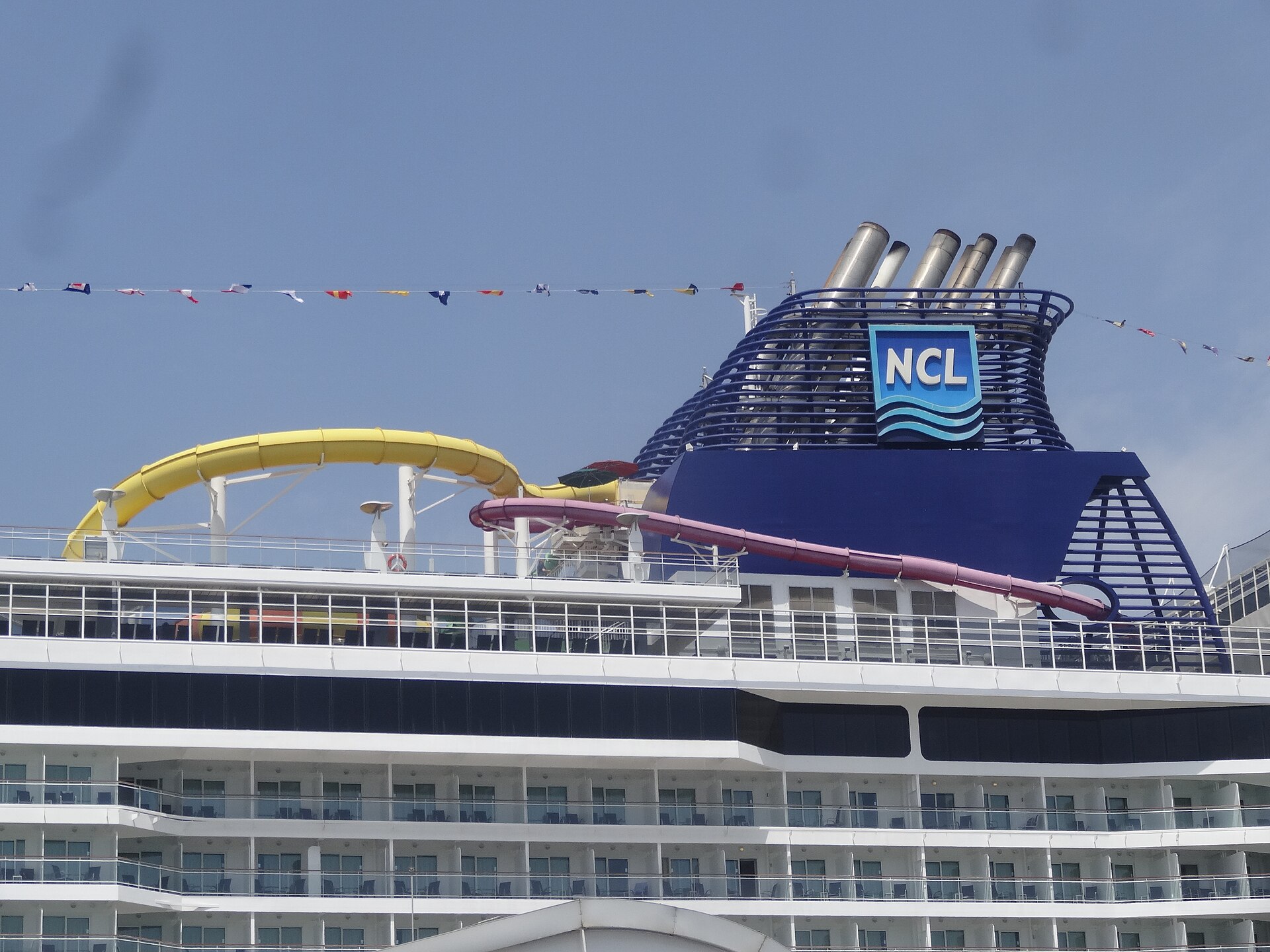
A 7-night Mediterranean cruise costs roughly $1,100 to $1,800 per person in an inside cabin on a mainstream line, including taxes and port fees. That is the fare. The realistic all-in Mediterranean cruise cost from the United States — flights, hotel nights, gratuities, excursions, drinks and the new 2026 destination levies — is $2,800 to $4,200 per person for that same week.
The gap between those two numbers is the entire subject of this page. Cruise lines advertise the first one. You pay the second one. Nothing on page one of Google currently prices the difference, and two of the results still ranking for this query were written in 2009.
We do not sell cruises, take commission or run a booking engine, so we have no reason to quote you a lead-in fare and go quiet about the rest. Below are three complete line-item budgets, every 2026 fee we could verify against a primary source, and one calculation — cost per hour ashore — that we think should change how you choose the length of your trip. For the wider picture, start with our complete guide to Mediterranean cruises.
At a glance: what a Mediterranean cruise costs in 2026
| Mainstream fare, 7 nights | $1,100–$1,800 per person, inside cabin, taxes and port fees included |
| Per night, mainstream | Roughly $150–$250 per person for an inside cabin before extras |
| Premium-inclusive | From about $2,599 per person for 8 days, with excursions, port taxes, Wi-Fi and wine at meals |
| Luxury | From roughly $600–$760 per person per night, all-in by design |
| Taxes, fees and port expenses | About $100–$200 per person on a 7-night Med sailing; broadly 10–20% of the base fare |
| Gratuities | $16–$22 per person per night on mainstream lines; included on luxury lines |
| Destination levies, new since 2025 | Greece charges up to €20 (about $23) per person per port call; Barcelona charges €11 (about $13) per short-stay cruise passenger |
| Shore excursions | $50–$150 per person per port through the ship; $20–$80 doing it yourself |
| Transatlantic airfare | $700–$1,400 round trip from the US East Coast in shoulder season; more for one-way itineraries |
| Realistic all-in, 7 nights from the US | $2,800–$4,200 per person |
| Cheapest months | April and November, with a documented spread of up to about $60 per person per night against midsummer on the same itinerary |
| Currency | Dollar conversions on this page use €1 = $1.1592, the European Central Bank reference rate of 11 September 2026 |
One framing point before the numbers. A cruise fare is not a holiday price. It is a floor price for a bed, a buffet and transport between cities, sold at a deliberately low headline number because the line expects to earn the rest of its margin from you once you are aboard and have nowhere else to shop. Understanding that single commercial fact explains almost every surprise on this page.
How much does a Mediterranean cruise cost per person?
Per person, a Mediterranean cruise costs about $150 to $250 a night on a mainstream line in an inside cabin, $250 to $400 a night for a balcony or a premium-inclusive line, and $600 or more a night on a luxury line. Those figures include taxes and port fees. They exclude flights, gratuities, excursions and onboard spending, which together typically add 60% to 120% on a mainstream booking.
The reason cost pages disagree so wildly is that they compare incompatible things. A small-ship expedition operator quoting “$2,500 to over $10,000 per person” and a deal listing quoting “from $514” are both telling the truth about different products. Here is the market segmented the way the industry actually works.
| Tier | Lines | Per person, per night | What is genuinely included | What you will still pay |
|---|---|---|---|---|
| Budget mainstream | MSC, Costa, Carnival | $90–$160 | Cabin, main dining, buffet, most entertainment | Gratuities, drinks, Wi-Fi, every excursion, specialty dining, sometimes room service |
| Mainstream | Royal Caribbean, Norwegian, Princess, Holland America, Celebrity | $150–$280 | As above, with better entertainment and more dining rooms | The same list; drink packages are heavily pushed |
| Premium-inclusive | Viking, Azamara, Oceania (varies by fare) | $300–$450 | Port taxes, Wi-Fi, wine and beer at meals, often one excursion per port | Premium spirits, spa, extra excursions, flights |
| Luxury | Silversea, Regent, Seabourn, Explora Journeys | $600–$1,100 | Gratuities, all drinks, most excursions, sometimes flights | Very little, which is the point |
| Small ship and sailing | Star Clippers, Ponant, expedition operators | $400–$900 | Varies enormously — read the fare inclusions line by line | Varies enormously |
Three sampled 2026 anchors, so you can see where the bands come from. Royal Caribbean’s Legend of the Seas, 7 nights from Barcelona on 11 October 2026, priced at about $1,551 per person all-in for an inside cabin on a promotional second-guest rate — roughly $222 per person per night. Viking’s 8-day Iconic Western Mediterranean, Barcelona to Rome, started at $2,599 per person including one shore excursion in every port, port taxes, Wi-Fi and drinks with meals. Silversea’s 11-day Rome to Barcelona sailing started around $8,400 per person, or about $760 a night.
Notice what happens when you put those side by side honestly. The Viking fare looks like twice the Royal Caribbean fare and is not, once you add seven excursions, a drink package and gratuities to the mainstream booking. The luxury fare looks like five times and genuinely is. Comparing lead-in fares across tiers is the single most common and most expensive mistake in cruise budgeting, and it is the reason the next section exists.
Three worked budgets: what two people actually spend
These are complete, line-by-line budgets for the same trip: a 7-night Western Mediterranean round trip from Barcelona in September, two people sharing a cabin, flying from the US East Coast, with two hotel nights before sailing. Every figure traces to a source documented on this page. They are arithmetic on stated assumptions, not quotes — but they are the arithmetic the cruise lines decline to publish.
| Line item, per person | Budget | Mid-range | Premium-inclusive |
|---|---|---|---|
| Cruise fare, 7 nights | $1,050 (inside) | $1,550 (balcony) | $2,599 (8 days, fare includes excursions) |
| Taxes, fees and port expenses | $150 | $180 | Included |
| Gratuities | $119 (7 × $17) | $130 (7 × $18.50) | Included |
| Greek and Barcelona destination levies | — (Western Med, Barcelona only) $13 | $13 | $13 |
| Round-trip airfare, US East Coast | $780 | $980 | $980 |
| Two pre-cruise hotel nights, per person sharing | $150 | $260 | $320 |
| Airport and port transfers | $25 (train and metro) | $60 (taxis) | $60 |
| Shore excursions, five ports | $140 (independent) | $400 (mixed) | $0 (one per port included) |
| Food and drink ashore | $140 | $220 | $220 |
| Onboard drinks | $120 (pay as you go) | $560 (drink package, 7 days) | $90 (premium spirits only) |
| Wi-Fi | $0 | $140 | Included |
| Specialty dining and spa | $0 | $120 | $60 |
| Travel insurance | $110 | $160 | $240 |
| Total per person | $2,797 | $4,773 | $4,582 |
| Total for two | $5,594 | $9,546 | $9,164 |
Two results are worth sitting with. First, the budget column comes in under $2,800 per person — genuinely achievable, and it involves no suffering beyond skipping the drink package, booking excursions yourself and taking the train from the airport. Second, the mid-range mainstream booking ends up more expensive than the premium-inclusive one, because the drink package, the ship’s excursions and the Wi-Fi bill are exactly where mainstream lines make their money.
That crossover is real and it is not a trick of our assumptions. If you are the kind of traveller who will buy a drink package, do ship excursions and want connectivity, price a premium-inclusive fare before you assume it is out of reach. If you are not, the budget column is the best value in the table by a wide margin.
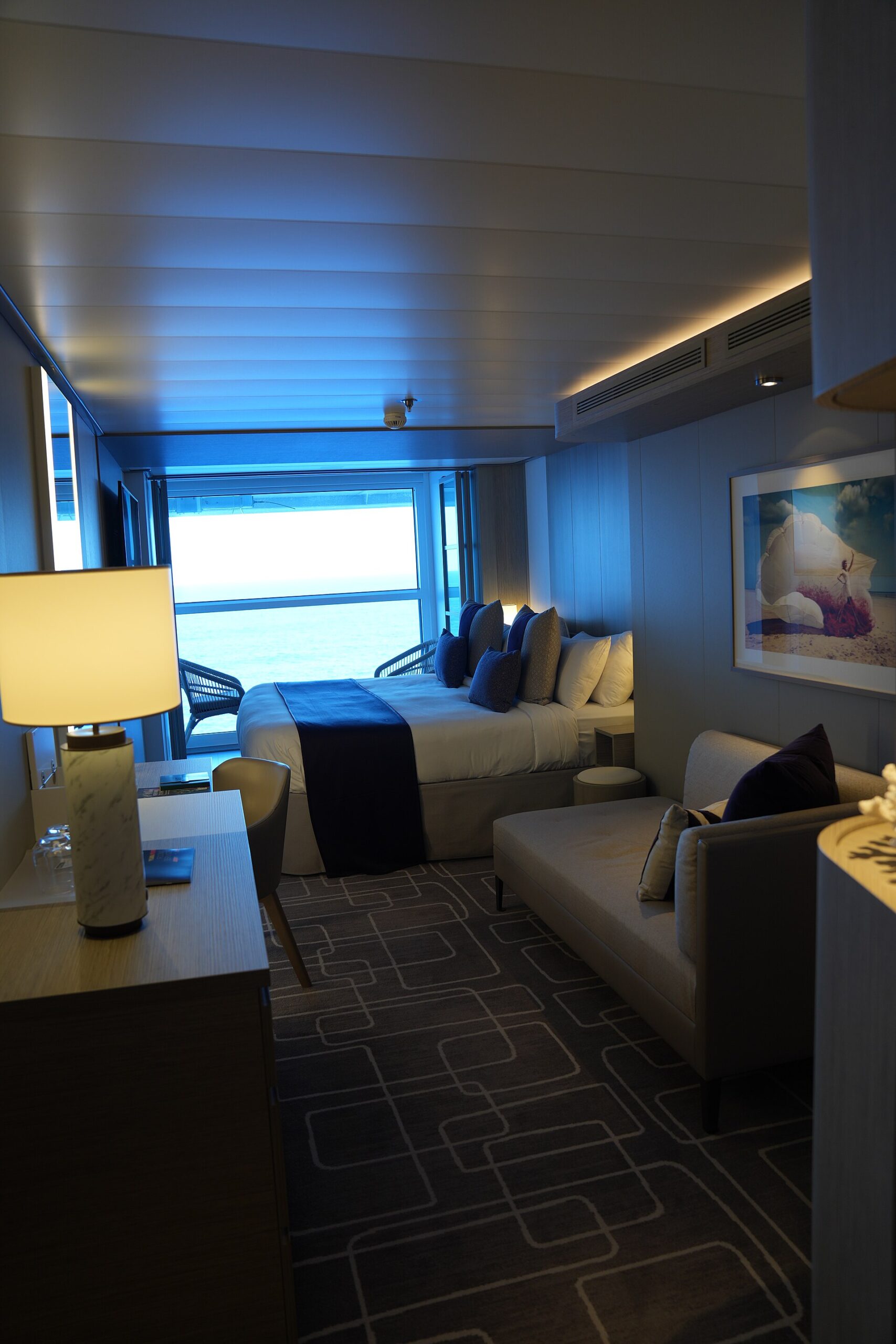
What is in the fare, and what is not
On a mainstream line, the fare buys your cabin, meals in the main dining room and buffet, most entertainment, the gym, the pools and transport between the cities on the itinerary. That is a real and substantial list. It is also, on a typical Mediterranean sailing, well under half of what you will spend.
Here is the same list in the form that matters, which is what is billed separately.
- Gratuities. $16–$22 per person per night, automatically added to your onboard account daily unless you prepay. On a 7-night sailing for two that is $224 to $308.
- Taxes, fees and port expenses. Usually shown at booking as a separate line, about $100–$200 per person for a Mediterranean week. These are the charges the ports levy on the ship, passed through.
- Destination levies. New, growing, and billed to your onboard account rather than at booking. Detailed in the next section.
- Drinks. Everything except tap water, basic coffee, iced tea and sometimes juice at breakfast. Packages run roughly $80–$110 per person per day before service charge.
- Wi-Fi. Roughly $16–$40 per device per day, tiered by whether you want streaming. Pre-purchase is consistently cheaper than buying aboard.
- Shore excursions. $50–$150 per person per port through the ship.
- Specialty restaurants. $25–$70 per person per meal on mainstream lines.
- Spa, salon, casino, photographs, laundry, minibar. Individually small, collectively the reason onboard revenue per passenger keeps climbing.
- Getting to and from the port. Flights, hotels, transfers, and the pre-cruise nights you genuinely should book.
- Travel insurance. Optional in law, foolish to skip on a trip where a missed sailing means chasing a ship to the next country.
A practical note on gratuities, because it generates more argument than any other item. On every mainstream line the daily service charge is adjustable at guest services, and lines will tell you so if you ask. We are not going to tell you what to do with that. We will say that the charge is pooled across housekeeping, dining and behind-the-scenes crew, that many of those crew members are on contracts where it forms a meaningful share of income, and that removing it to reward one visible steward in cash does not work the way people assume it does.
The 2026 destination levies nobody prices in
Since July 2025, going ashore in Greece has had a price. It is charged per person, per port call, billed to your onboard account, and applied only if you actually land. Cruise lines declare and pay it quarterly through a Greek government digital platform. No page currently ranking for Mediterranean cruise cost mentions it.
| Period | Santorini & Mykonos | All other Greek ports | In dollars, Santorini/Mykonos |
|---|---|---|---|
| 1 June – 30 September | €20 | €5 | about $23 |
| 1 April – 31 May and 1 – 31 October | €12 | €3 | about $14 |
| 1 November – 31 March | €4 | €1 | about $5 |
Work an example. A Greek Isles week in July calling at Santorini, Mykonos, Rhodes, Crete and Corfu costs a couple €20 + €20 + €5 + €5 + €5 each — €110 for two, about $128. Sail the same itinerary in late October and it falls to €12 + €12 + €3 + €3 + €3 each, €66 for two, about $77. That is a $51 swing on one line item purely from the calendar, and it sits on top of every other shoulder-season saving.
Barcelona charges separately. Cruise passengers staying under twelve hours pay €11 — a €6 Catalan tourist rate plus a €5 city surcharge, about $13 in total. A rise to €30 a day has city council agreement but still needs the Catalan Parliament and has no effective date, and cruises that start or end in Barcelona would be exempt from the increase. If you see the €30 figure quoted as current, it is not.
Lisbon has charged a €2 cruise passenger disembarkation tax since September 2024, reported to continue through 2026. We have only found that on secondary sources, so treat it as approximately right rather than confirmed, and check with the port if two euros matters to you.
The one to watch for 2027 planning is ETIAS, the European travel authorisation. It is scheduled for the last quarter of 2026 at €20 (about $23), valid three years or until your passport expires, covering 30 countries, with under-18s and over-70s exempt from the fee. That date has slipped before, so check it rather than budgeting on our word. The EU’s Entry/Exit System, which is separate, has been fully operational since 10 April 2026, costs nothing, and is simply a biometric record taken at the border — though the queues it produced at Barcelona, Rome Fiumicino and Athens in summer 2026 have a cost of their own in missed connections.
How much are gratuities on a Mediterranean cruise?
Gratuities on a Mediterranean cruise run $16 to $22 per person per night on mainstream lines in 2026, charged daily to your onboard account, with higher rates for suites. Luxury and most premium-inclusive lines build gratuities into the fare. For two people on a 7-night sailing, budget $224 to $308 on a mainstream line.
| Line | Standard cabin | Suite | Note |
|---|---|---|---|
| Virgin Voyages | $22.00 | — | $20.00 if prepaid; adults only |
| Norwegian | $20.00 | $25.00 | Highest suite rate in the mainstream segment |
| Royal Caribbean | $18.50 | $21.00 | One source gives $21.50 for suites |
| Celebrity | $18.00 | $19.00 Concierge and Aqua, $23.00 Retreat | A rise to $19.50/$20.50/$24.50 from 29 July 2026 appears in search snippets only; we could not confirm it on Celebrity’s own pages |
| Princess | $18.00 | $19.00 mini-suite, $20.00 suite | Effective 8 March 2026 |
| Holland America | $17.00 | $19.00 | |
| Carnival | $17.00 | $19.00 | From 2 April 2026 |
| MSC | $16.00 | $20.00 | That is the Caribbean rate; the Mediterranean euro rate differs and we could not verify it — ask at booking |
| Viking, Oceania, Regent, Silversea, Seabourn, Explora | Included | Included |
Two things follow from that table. The spread between the cheapest and dearest mainstream line is $6 per person per night, which is $84 for two over a week — small, but it is the kind of difference that quietly closes a fare gap you thought you were winning. And prepaying almost always locks the rate against an increase before you sail, which on current form is a reasonable bet.
Tipping ashore is a separate question and Americans routinely overpay. Southern European service norms are not American ones. Rounding up a restaurant bill, or leaving five to ten per cent for a genuinely good meal, is normal and generous. Twenty per cent is not expected anywhere on a Mediterranean itinerary. Tour guides and drivers are the exception where a few euros per person is customary and appreciated.
Onboard spending: drinks, Wi-Fi and the ship’s own math
Onboard revenue is where the mainstream business model lives, and the drink package is its flagship. As of September 2026, unlimited alcohol packages sit at roughly $80 to $110 per person per day before the service charge — Celebrity’s Classic package in the high $80s to low $100s, Norwegian around $80 to $109 depending on sailing length, Royal Caribbean’s Deluxe package broadly comparable. Prices vary by ship, by sailing and by whatever promotion is running, so treat these as a band and check your own booking.
The arithmetic is simple and the lines know it precisely. At roughly $95 a day with service, a package breaks even at about eight or nine drinks. On a Caribbean sailing with five sea days that is easy. On a Mediterranean itinerary where the ship is alongside for nearly eleven hours a day — Norwegian states its ships spend over 90% of their time in port, averaging close to eleven hours — you are ashore drinking €4 wine in a square in Palermo for most of your waking hours. The package that makes sense in the Caribbean often does not make sense here.
There is also the rule most people meet only at the checkout: on nearly every mainstream line, if one adult in a cabin buys the package, the other must too. A couple where only one drinks is being asked for $1,330 a week for one person’s wine.
| Onboard item | Typical 2026 price | Week for two | Our read |
|---|---|---|---|
| Unlimited drink package | $80–$110 pp per day plus service | $1,200–$1,800 | Rarely worth it on a port-intensive Med route |
| Wi-Fi, basic browsing | $16–$25 per device per day | $220–$350 | One device, shared, pre-purchased |
| Wi-Fi, streaming tier | $28–$40+ per device per day | $390–$560 | Only if you must work |
| Specialty dining | $25–$70 pp per meal | $100–$280 for two dinners | You are in Italy. Eat ashore |
| Ship’s photographs | $20–$30 per print | Whatever you let it be | — |
| Laundry | $25–$40 per bag special offers | $50–$80 | Genuinely useful on 10+ nights |
On connectivity there is a cheaper answer that the ship will not mention. An eSIM bought before you travel, activated in port, costs a fraction of shipboard Wi-Fi and works everywhere you actually want to use it — on the quay, in the taxi, in the museum queue. Buy one data plan for Europe, use ship Wi-Fi not at all, and you have removed $220 to $560 from the mid-range column above.
How much do Mediterranean shore excursions cost?
Ship-organised shore excursions in the Mediterranean cost $50 to $150 per person per port for a standard half-day tour, and $150 to $300 for full-day trips to Rome, Florence or Ephesus. Doing the same thing independently typically costs $20 to $80 per person. Over five ports, that difference is $350 to $500 per person.
The premium buys one thing that genuinely matters: if a ship’s excursion runs late, the ship waits. If your independent train is delayed, it does not. That guarantee is worth real money on long transfers — Rome, Florence, Ephesus — and close to nothing at ports where you can walk back in ten minutes.
Here are the actual published transport costs for the headline Mediterranean port days, which is what an independent day really costs before food and tickets.
| Port | Where you are going | Independent transport, as of September 2026 | Ship excursion, typical |
|---|---|---|---|
| Civitavecchia | Rome, 46 miles (74 km) | Train 45–59 min from about €4.85 each way, around 44 a day; SIT coach €15 one way, €25 return | $150–$250 |
| Livorno | Florence, 65 miles (105 km) | Port shuttle about €5 to Piazza Grande, then train 1h08–1h22 from about $14 | $160–$280 |
| La Spezia | Cinque Terre | Cinque Terre Treno card €22 low season, €29.50 mid, €35 peak | $120–$200 |
| Naples | Pompeii, 15 miles (24 km) | Circumvesuviana train to Pompei Scavi, a few euros; site entry €20–€30 | $90–$180 |
| Barcelona | City centre | PortBus €3 one way, €4.50 return; metro from Drassanes | $60–$120 |
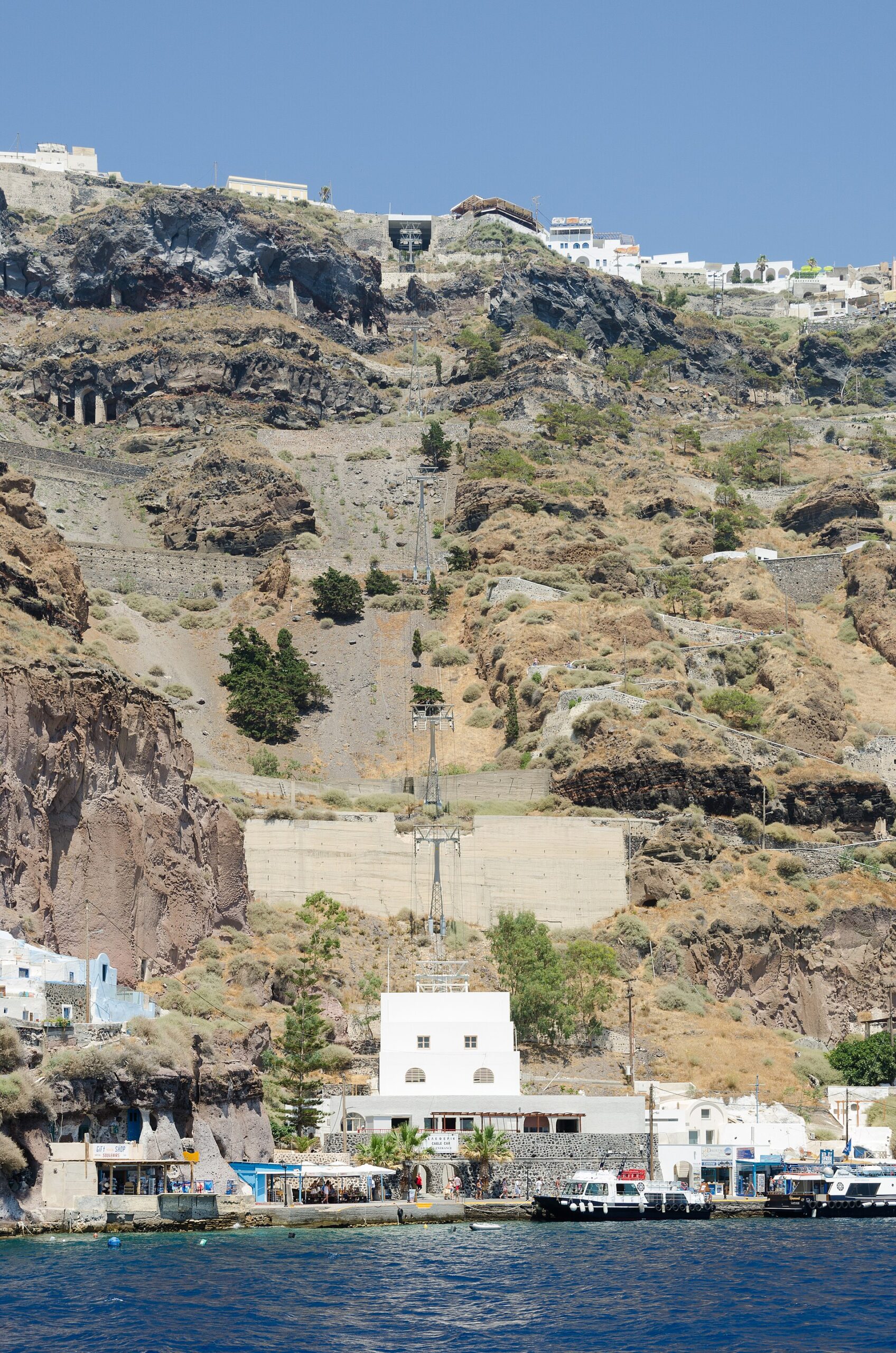
| Santorini | Fira, at the clifftop | Cable car €10 one way adult, €5 child, €5 per bag | $70–$150 |
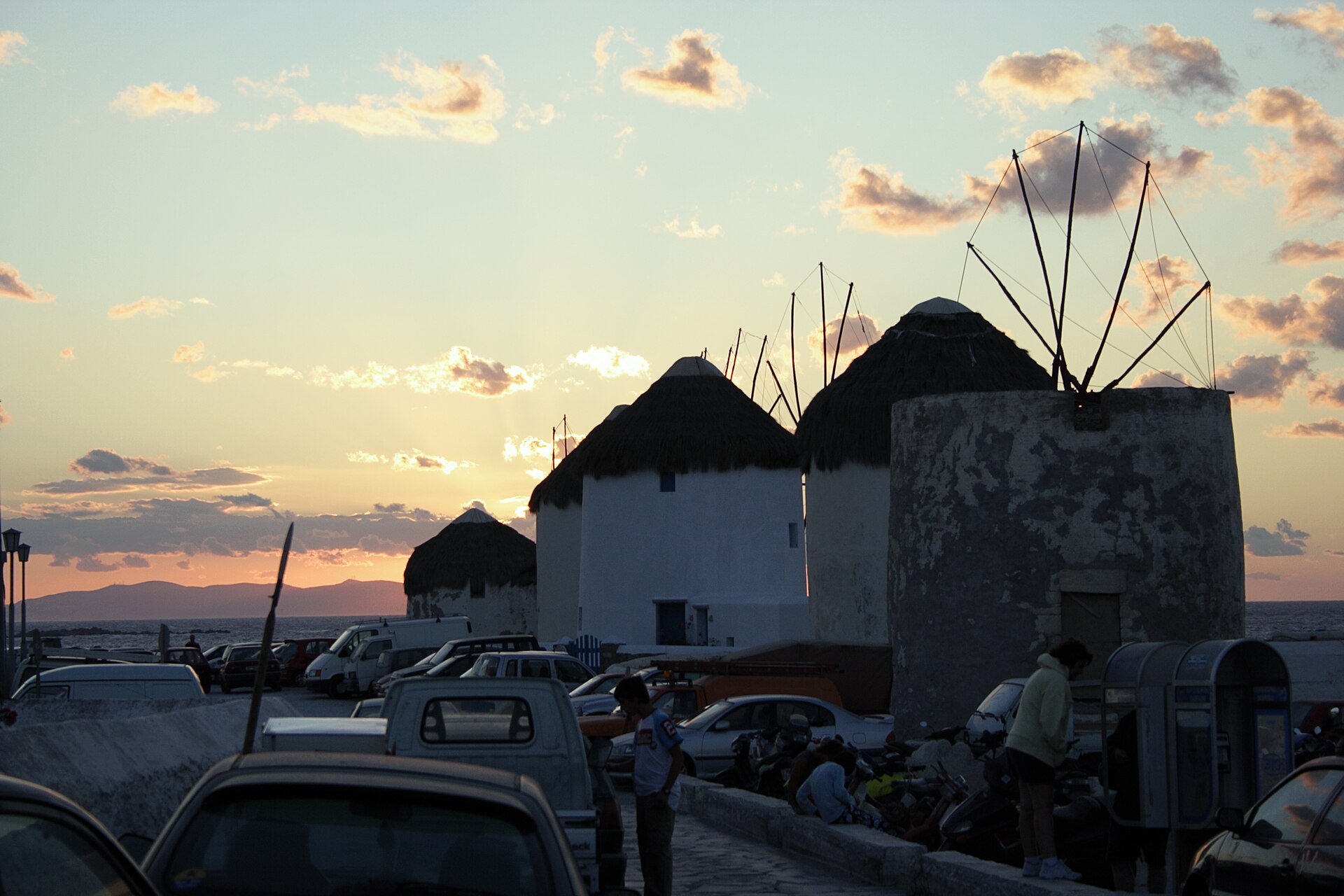
| Mykonos | Chora, 1.5 miles | SeaBus €2 one way, about 12 minutes, every 15–30 min, 1 April to 31 October | $60–$120 |
| Katakolon | Ancient Olympia, 21 miles (34 km) | Train €10 return, about 45 minutes, three services timed to the ships | $90–$160 |
| Dubrovnik | Old Town, 2 miles (3 km) | Bus about €4; cable car €30 adult return, €17 one way | $70–$140 |
| Valletta | City, uphill from the Waterfront | Upper Barrakka lift about €1 return | $60–$120 |
| Split | Diocletian’s Palace, 800 m | Nothing. Walk | $50–$100 |
| Kotor | Sea Gate, 200–400 m | Nothing. Walk. Taxi to Perast €12–18 one way | $60–$130 |
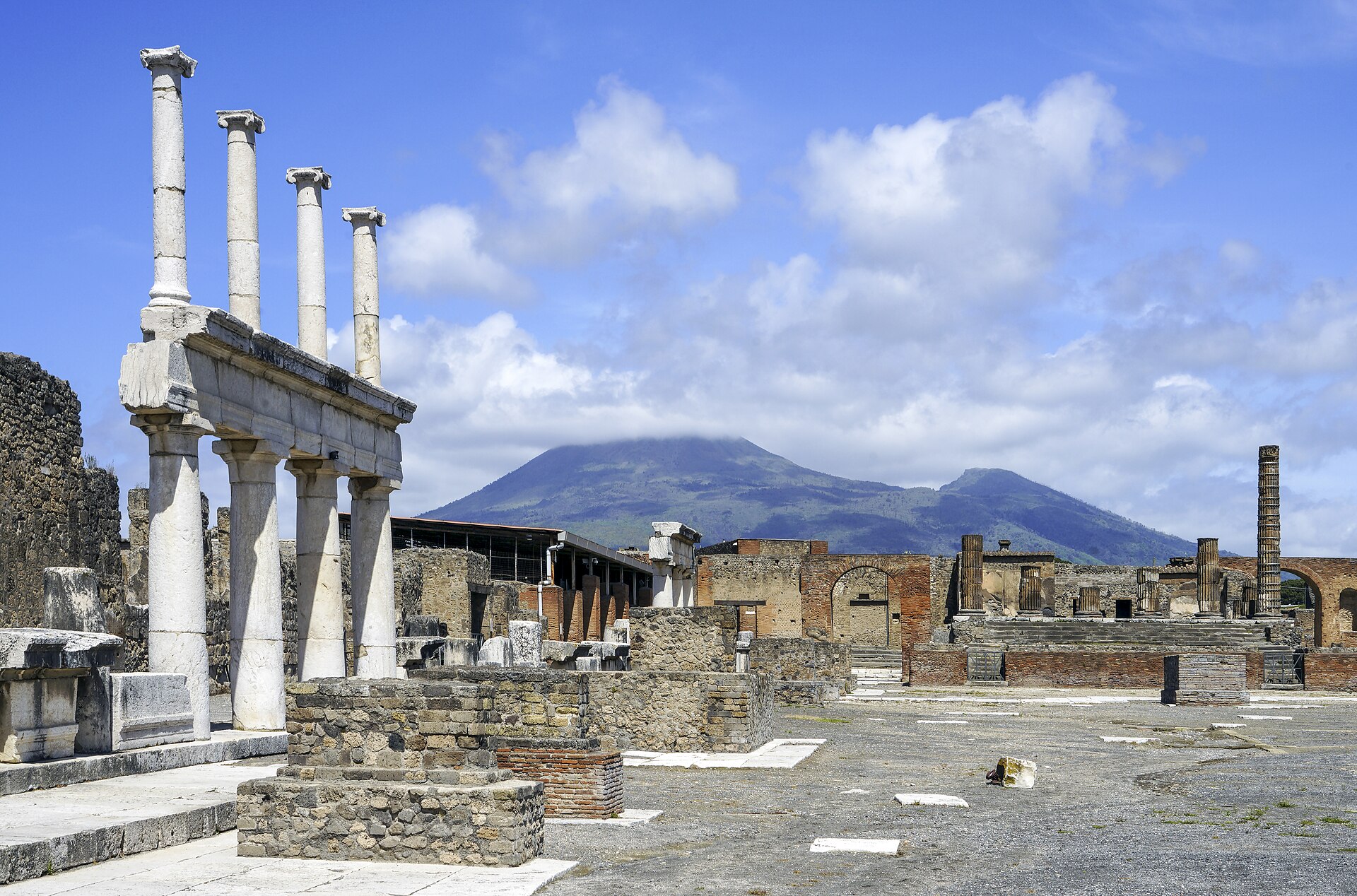
Site entry is the other half. Pompeii’s official tariff from 12 January 2026 is €20 for the Pompeii Express ticket, €25 for Pompeii+, and €30 for the three-day multi-site Pompeii Plus. Tickets are named, ID may be checked, the daily limit is 20,000, and between 16 March and 14 October there are two time slots — 09:00 to 13:00 capped at 15,000 and 13:00 to 17:30 capped at 5,000. Bags are limited to 30 × 30 × 15 cm. That last detail ruins more independent Pompeii days than any transport problem.
Gibraltar is worth a warning for 2026 and 2027 budgets: the cable car is closed for a full refurbishment and is expected to reopen in 2027. The Upper Rock round trip costs £49 in the meantime, which is not what most people have budgeted.
Mediterranean cruise cost per hour ashore: the number lines will never publish
Every cost guide prices the cruise. None of them price what you are actually buying, which is hours on European ground. Divide the all-in total by realistic hours ashore and the case for a longer sailing becomes very hard to argue with, because the flights — the single largest fixed cost for a North American — do not get any more expensive when you add nights.
| Trip | All-in per person | Ports | Realistic hours ashore | Cost per hour ashore |
|---|---|---|---|---|
| 7-night round trip, mainstream | about $3,400 | 5 | about 40 | about $85 |
| 10–12 nights, one way | about $4,300 | 8 | about 64 | about $67 |
| 14 nights, West plus East | about $5,160 | 10 | about 80 | about $65 |
| 15-night transatlantic repositioning | about $3,200 | 6 | about 48 | about $67 |
The seven-night sailing is the worst value in that table by roughly 25 per cent, and it is the one almost every first-time American cruiser books. The reason is not the fare. It is that a US round trip costs you about two days of flying and two days of jet lag regardless of how long the cruise is, so a short cruise amortises a large fixed cost over a small number of port hours.
Adding three nights to a seven-night sailing typically adds $400 to $700 per person and buys three more port days. Adding the same three days to your flights buys nothing. This is, in our view, the highest-leverage decision on the entire page, and it is invisible if you only compare fares.
The transatlantic line deserves a note too. Interior fares of $700 to $1,200 for 14 to 16 nights work out at about $70 to $90 per person per night, and you arrive in Europe without a red-eye. The catch is the one-way flight home, which can add $400 to $1,000 or more and quietly erase the saving if you book it late. Price the flight first, the cruise second.
Flights, hotels and the days on either end
Airfare is the largest single variable in a North American Mediterranean budget and the one that most people research last. Shoulder-season round trips to Barcelona, Rome or Athens from the US East Coast typically run $700 to $1,400; midsummer is higher; one-way open-jaw itineraries — which the best Mediterranean routes require — are often higher still.
Book at least two nights in the embarkation city before you sail. This is not a comfort recommendation, it is a risk calculation. A cancelled connection on the day of embarkation means chasing the ship to its next port at your own expense, and no cruise line owes you anything if you booked the flight yourself. Two nights also solves jet lag before it eats your first two port days, which are otherwise the most expensive nap you will ever take.
On the other end, one night after disembarkation removes the 4am wake-up and the risk of a delayed docking costing you a flight. Budget $75 to $160 per person per night for a decent mid-range hotel in Barcelona, Rome or Athens, sharing.
What is the cheapest month to cruise the Mediterranean?
April and November are the cheapest months to cruise the Mediterranean, with a documented spread of up to about $60 per person per night against midsummer on the same mainstream itinerary. Late October is the sweet spot: fares have dropped, Greek landing fees fall from €20 to €12 on 1 October, and the sea is still warmer than it was in June.
That last point surprises people, so here is the evidence. Mediterranean sea temperature lags air temperature by roughly two months. October water in Athens averages 72°F (22°C); June water in Barcelona averages 68°F (20°C). You are not trading weather for money in October nearly as much as the calendar implies.
| Month | Fares | Greek levy, Santorini/Mykonos | Athens daily max | Athens sea | Our verdict |
|---|---|---|---|---|---|
| April | Lowest | €12 | 66°F / 19°C | 59°F / 15°C | Excellent for walking, cold for swimming |
| May | Low to mid | €12 | 75°F / 24°C | 64°F / 18°C | Arguably the best month overall |
| June | Mid to high | €20 | 84°F / 29°C | 72°F / 22°C | Good, and the levy jumps on the 1st |
| July | Peak | €20 | 90°F / 32°C | 77°F / 25°C | Hottest, busiest, dearest |
| August | Peak | €20 | 88°F / 31°C | 79°F / 26°C | Avoid if you can choose |
| September | High, falling | €20 | 82°F / 28°C | 77°F / 25°C | Very good; the levy is still at peak |
| October | Low to mid | €12 | 72°F / 22°C | 72°F / 22°C | The best value month in the year |
| November | Lowest | €4 from the 1st | 64°F / 18°C | 68°F / 20°C | Cheap, wet, and the season is ending |
On timing your booking rather than your sailing: Princess advises booking European cruises six to twelve months ahead, which matches what we see. Cheap cabins in shoulder months go first, and genuine last-minute Mediterranean bargains are far rarer than Caribbean ones because European ships are smaller and fill earlier. Wave season runs January to March, and lines have been documented raising rack rates immediately before discounting them, so a “50% off” wave offer deserves a screenshot of last month’s price before you celebrate.
Fifteen ways to cut the cost, ranked by what they actually save
Most money-saving lists mix a $900 decision with a $9 one. Here they are ranked by dollars saved per unit of sacrifice, for two people on a week’s sailing.
| # | Lever | Saves, for two | What it costs you |
|---|---|---|---|
| 1 | Sail in late April, October or November instead of July | $600–$900 | Cooler water, a slightly shorter day |
| 2 | Skip the drink package and pay as you go | $700–$1,300 | Counting your drinks; you will drink ashore anyway |
| 3 | Book excursions independently at walkable ports | $400–$700 | Planning time, and you carry the risk on long transfers |
| 4 | Take a transatlantic repositioning instead of flying | $400–$900 | Six sea days and a one-way flight to book early |
| 5 | Inside or oceanview instead of balcony | $400–$800 | A view you will barely use on a port-intensive route |
| 6 | Use an eSIM instead of ship Wi-Fi | $220–$560 | Nothing, genuinely |
| 7 | Fly into the homeport instead of buying the line’s air package | $150–$500 | You own the risk, so add two pre-cruise nights |
| 8 | Take the train or metro from the airport, not a transfer | $70–$120 | Twenty minutes and a suitcase on an escalator |
| 9 | Eat ashore, skip specialty dining | $100–$280 | You are in Italy. This is not a sacrifice |
| 10 | Prepay gratuities at booking | $0–$60 | Nothing; it hedges an announced increase |
| 11 | Choose a Greek itinerary outside 1 June–30 September | $50–$130 | Nothing, if you were already shifting season |
| 12 | Share one Wi-Fi device rather than two | $110–$280 | Taking turns |
| 13 | Book 6–12 months out, not at wave season peak hype | Varies, often $200+ | Committing early |
| 14 | Bring a refillable bottle and your own sunscreen | $40–$80 | Packing space |
| 15 | Decline the port shuttle where the walk is flat | $20–$60 | A mile on your feet; check step-free access first |
The one we would push hardest is number two, and not for puritan reasons. On an itinerary where the ship is in port eleven hours a day, an unlimited drinks package is a product designed for a different ocean. Buy it for a Caribbean sailing with five sea days. On a Mediterranean route it is usually the largest avoidable line in the budget.

Is a Mediterranean cruise cheaper than the same trip by land?
For most travellers, yes — a cruise covering five European cities in a week is cheaper than doing the same five cities independently, usually by 20 to 40 per cent. It buys you less of each city. The cruise wins on cost per city; the land trip wins comprehensively on depth, and it is not close.
Here is the comparison priced out honestly for two people, eight days, the same Western Mediterranean cities.
| Line item, two people, 8 days | Cruise | Independent land trip |
|---|---|---|
| Accommodation | Included in fare | $1,100–$1,800 (7 nights, mid-range) |
| Transport between cities | Included in fare | $400–$900 (trains, one short flight) |
| Food | Mostly included; $280 ashore | $800–$1,300 |
| Fare or base cost | $3,100 (mid-range, two, incl. taxes) | — |
| Gratuities and levies | $285 | $0 |
| Flights | $1,960 | $1,960 |
| Sightseeing and entries | $500 | $500 |
| Total | about $6,125 | about $6,000–$7,500 |
| Hours per city | 8–10 | 30–48 |
So the totals are closer than cruise marketing implies and closer than land-travel snobbery implies. What differs is the product. A cruise gives you eight to ten hours in each of five cities, with zero packing, zero station navigation and a bed that follows you. A land trip gives you evenings, dinner at nine, the neighbourhood that the day-trippers never reach, and the ability to stay another day when a place turns out to be wonderful.
Our honest reading: a Mediterranean cruise is an outstanding way to survey a coastline you have never seen and work out where you want to return properly. It is a poor way to see Rome. If a specific city is the reason for the trip, fly there and stay. If the coastline is the reason, sail.
Timing is the largest single lever on everything above. Our guide to the best time to cruise the Mediterranean sets out air and sea temperatures month by month for the benchmark ports, the meltemi wind that cancels Santorini tender days in July and August, the two dates on which the Greek landing fee steps, and the fortnight where every one of those factors moves in your favour at once.
Route shape drives cost as hard as season does. Our guide to Mediterranean cruise itineraries compares the four route families side by side with port counts, sea days, tender ports and transfer distances, and explains why a one-way sailing that looks like better value can cost several hundred dollars more per person once the open-jaw airfare is priced.
Which line you book changes the shape of the bill as much as the size of it. Our guide to the best cruise lines for the Mediterranean compares more than 25 operators on 2027 deployment, hours alongside, what actually falls out of the fare and onto your onboard account, and the age policies that quietly rule two of the most-recommended lines out for anyone travelling with children.
Greek port days carry their own line on the bill. Our guide to cruise ports in Greece works the landing fee through a real summer week — €55 per person if you go ashore at Piraeus, Santorini, Mykonos, Rhodes and Katakolon — and shows which ports need a taxi, a tender or a train before you ever reach the sight.
Excursions are the line on the bill with the widest range. Our Mediterranean shore excursions guide prices one real day three ways — ship’s tour, private operator and train with pre-booked tickets — and gives a port-by-port verdict on where the ship’s tour earns its price and where it does not.
Where this guide goes deeper
This page is the cost hub. The supporting guides beneath it go port by port and line by line: Mediterranean cruise deals, are Mediterranean cruises all-inclusive, Mediterranean cruise gratuities, how much spending money for a Mediterranean cruise, Mediterranean cruise drink packages, cheap Mediterranean cruises, Mediterranean cruise travel insurance, Mediterranean cruise port fees and taxes, Mediterranean shore excursion costs and when to book a Mediterranean cruise. Each will be linked here as it publishes.
If you are still choosing the shape of the trip rather than costing one, the main Mediterranean cruise guide covers regions, itinerary lengths, homeports and what a port day actually feels like.
Mediterranean cruise cost FAQs
What is the average cost of a Mediterranean cruise?
The average mainstream Mediterranean cruise fare works out at roughly $150 to $250 per person per night for an inside cabin including taxes and port fees. For a 7-night sailing that is about $1,100 to $1,800 per person. Add gratuities, excursions, drinks and transatlantic flights and the realistic all-in average from the US is $2,800 to $4,200 per person.
How much spending money do I need for a Mediterranean cruise?
Budget $80 to $150 per person per day beyond the fare on a mainstream line: roughly $18 gratuities, $30 to $70 for an excursion or independent transport and entry, $20 to $40 ashore on food and drink, and a small allowance for the Greek or Barcelona levy. A week for two therefore needs about $1,100 to $2,100 of spending money.
Are Mediterranean cruises all-inclusive?
Mainstream Mediterranean cruises are not all-inclusive. The fare covers your cabin, main dining, buffet and most entertainment. Drinks, Wi-Fi, gratuities, excursions, specialty dining and destination levies are all extra. Luxury lines — Silversea, Regent, Seabourn, Explora — and some premium-inclusive fares from Viking and Oceania genuinely do include most of that list.
Do you have to pay port fees on a Mediterranean cruise?
Yes. Taxes, fees and port expenses are shown as a separate line at booking and run about $100 to $200 per person on a 7-night Mediterranean sailing, broadly 10 to 20 per cent of the base fare. Separately, Greece charges a per-call passenger fee of €1 to €20 depending on the port and season, and Barcelona charges €11 to short-stay cruise passengers; those are billed to your onboard account, not at booking.
How much are drinks on a Mediterranean cruise?
Individually, a beer runs about $8 to $10, a glass of wine $10 to $14 and a cocktail $13 to $16 on mainstream lines, before the automatic service charge. Unlimited packages cost roughly $80 to $110 per person per day as of September 2026 and break even at eight or nine drinks — a threshold that is much harder to reach on a port-intensive Mediterranean route than on a Caribbean sailing.
Is a Mediterranean cruise cheaper in the off season?
Substantially. The measured spread on the same mainstream itinerary reaches about $60 per person per night between spring and midsummer sailings, and April and November are the best-value months. Greek landing fees also drop from €20 to €12 at Santorini and Mykonos on 1 October, and to €4 on 1 November.
How far in advance should I book a Mediterranean cruise?
Six to twelve months ahead for a European sailing, which is Princess’s own published advice and matches what we see across the market. Mediterranean ships are smaller and fill earlier than Caribbean ones, so genuine last-minute bargains are rare and the cheapest cabins in shoulder months go first.
Can you do a Mediterranean cruise for under $2,000 per person?
From Europe, easily. From North America, only if you find airfare under about $600 round trip, sail in April or November on a budget line in an inside cabin, skip the drink package and do every port independently. It is achievable but tight, and a transatlantic repositioning crossing is usually the more realistic route to that number.
Do children pay full price on a Mediterranean cruise?
Third and fourth guests in a cabin pay a reduced rate on most mainstream lines, often a large discount, but they still pay full gratuities and full taxes and port fees. Greek landing fees apply per person regardless of age. Virgin Voyages is adults-only and does not carry children at all.
How we researched this guide
The SERP for this query was checked on 11 September 2026. The longest page-one result was a cruise line’s own destination hub at roughly 3,500 words that names no price at all; three of the seven results were news deal blurbs from 2009 and 2010. Nothing ranking today reflects 2026 costs, which is why this page exists.
Levy figures come from the Greek cruise passenger fee schedule in force since 21 July 2025 and from Barcelona’s published passenger charge, both re-checked on 11 September 2026. Gratuity rates were compiled from industry trackers updated in January and July 2026; where a rate appears only in a search snippet and not on the line’s own pages — Celebrity’s announced July 2026 increase, MSC’s Mediterranean euro rate — we have said so rather than publish it as fact. Drink package and Wi-Fi prices were cross-checked across several trackers in September 2026 and are published as ranges because they vary by ship and sailing. Climate figures come from station normals and weather2travel. Port transport prices are the operators’ own published tariffs where they exist; where no verifiable source publishes a fare, as at Kusadasi and Messina, we have left the cell empty rather than invent a number. Currency conversions use the European Central Bank reference rate of €1 = $1.1592 on 11 September 2026.
Fares in the worked budgets are sampled, not quoted, and promotional rates expire. We have never sailed every line and itinerary on this page and do not pretend to have; where we give an opinion — on drink packages, on trip length, on cruise versus land — we have labelled it as ours and shown the arithmetic behind it so you can disagree with it usefully.
Image credits
| Image | Photographer | Licence |
|---|---|---|
| Moll Adossat, Port of Barcelona | Jordiferrer | CC BY-SA 4.0, via Wikimedia Commons |
| Balcony staterooms, Celebrity Apex | Richard N Horne | CC BY-SA 4.0, via Wikimedia Commons |
| Santorini Old Port and the cable car to Fira | Norbert Nagel | CC BY-SA 3.0, via Wikimedia Commons |
| Fifty euro cent coin on euro banknotes | José Carlos Casimiro | CC BY-SA 2.0, via Wikimedia Commons |
| The Forum at Pompeii with Vesuvius | Commonists | CC BY-SA 4.0, via Wikimedia Commons |
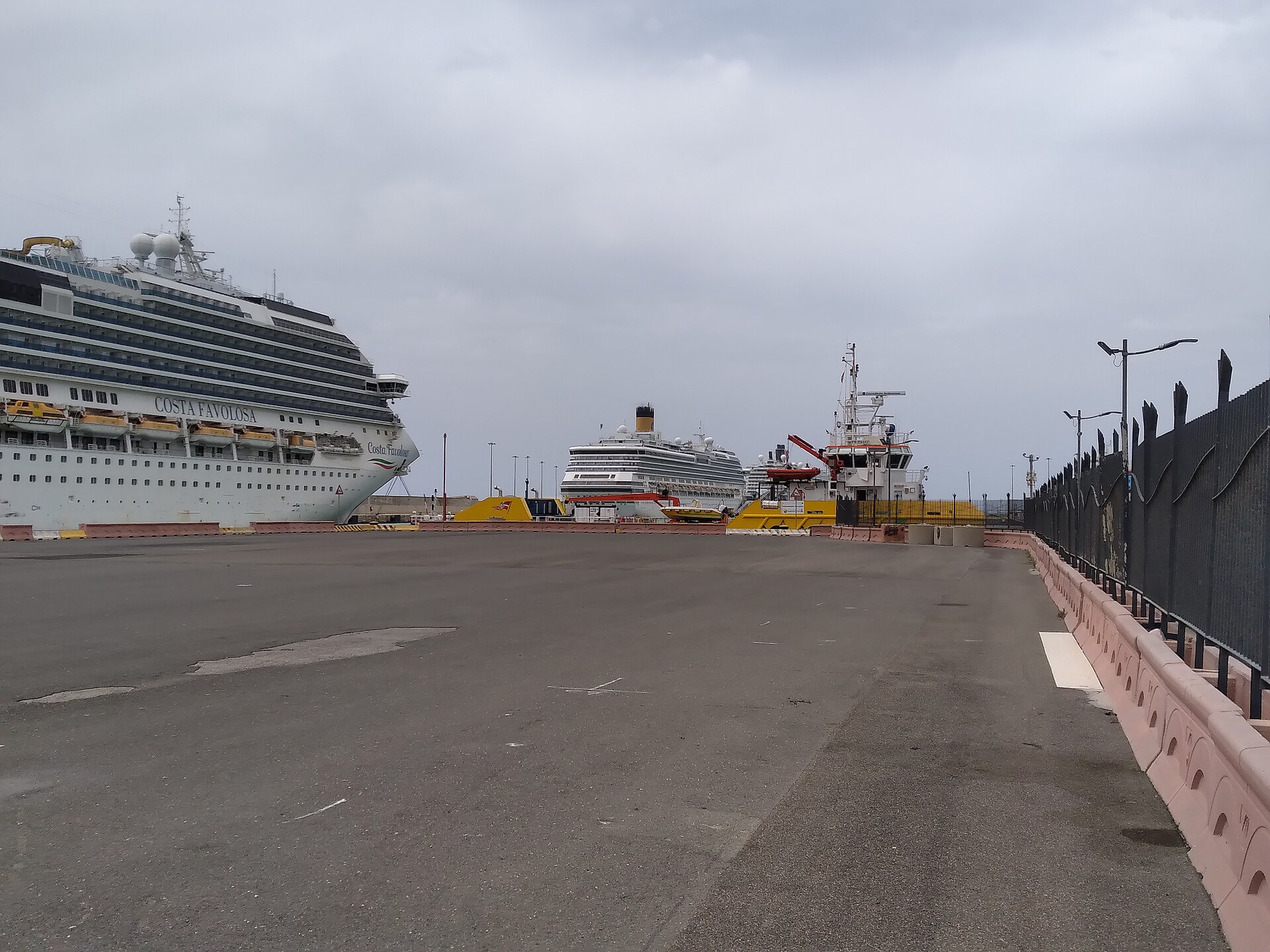
| Port of Civitavecchia | Captain Raju | CC BY-SA 4.0, via Wikimedia Commons |
| The lower windmills, Chora, Mykonos | Zde | CC BY-SA 4.0, via Wikimedia Commons |
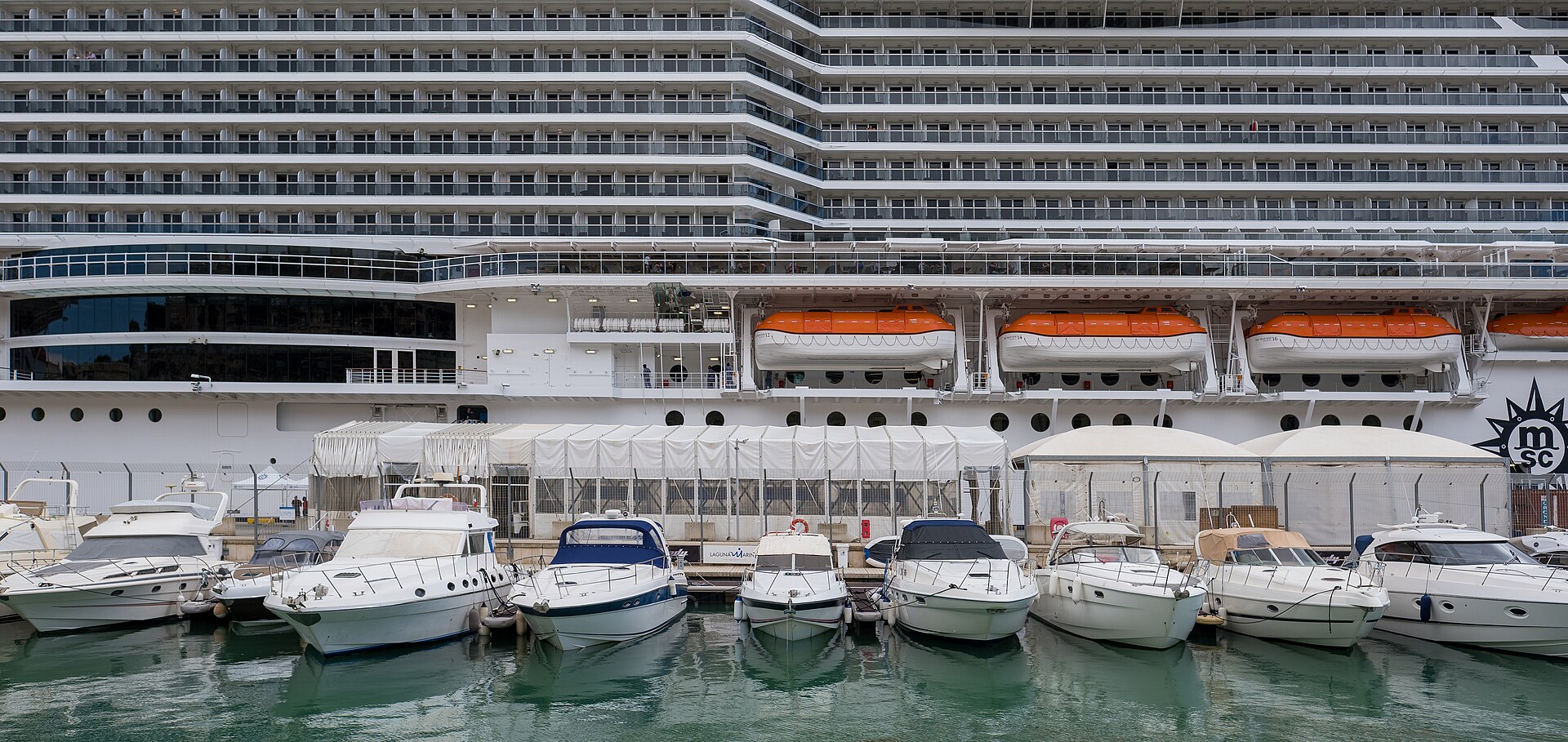
| Valletta Waterfront, Malta | Jules Verne Times Two | CC BY-SA 4.0, via Wikimedia Commons |
Published 12 September 2026. Every fare, fee and rule on this page was checked on 11 September 2026 and will change — verify anything you are about to pay for. Further reading: the Port of Barcelona cruise pages and the Santorini cable car operator’s published tariff.