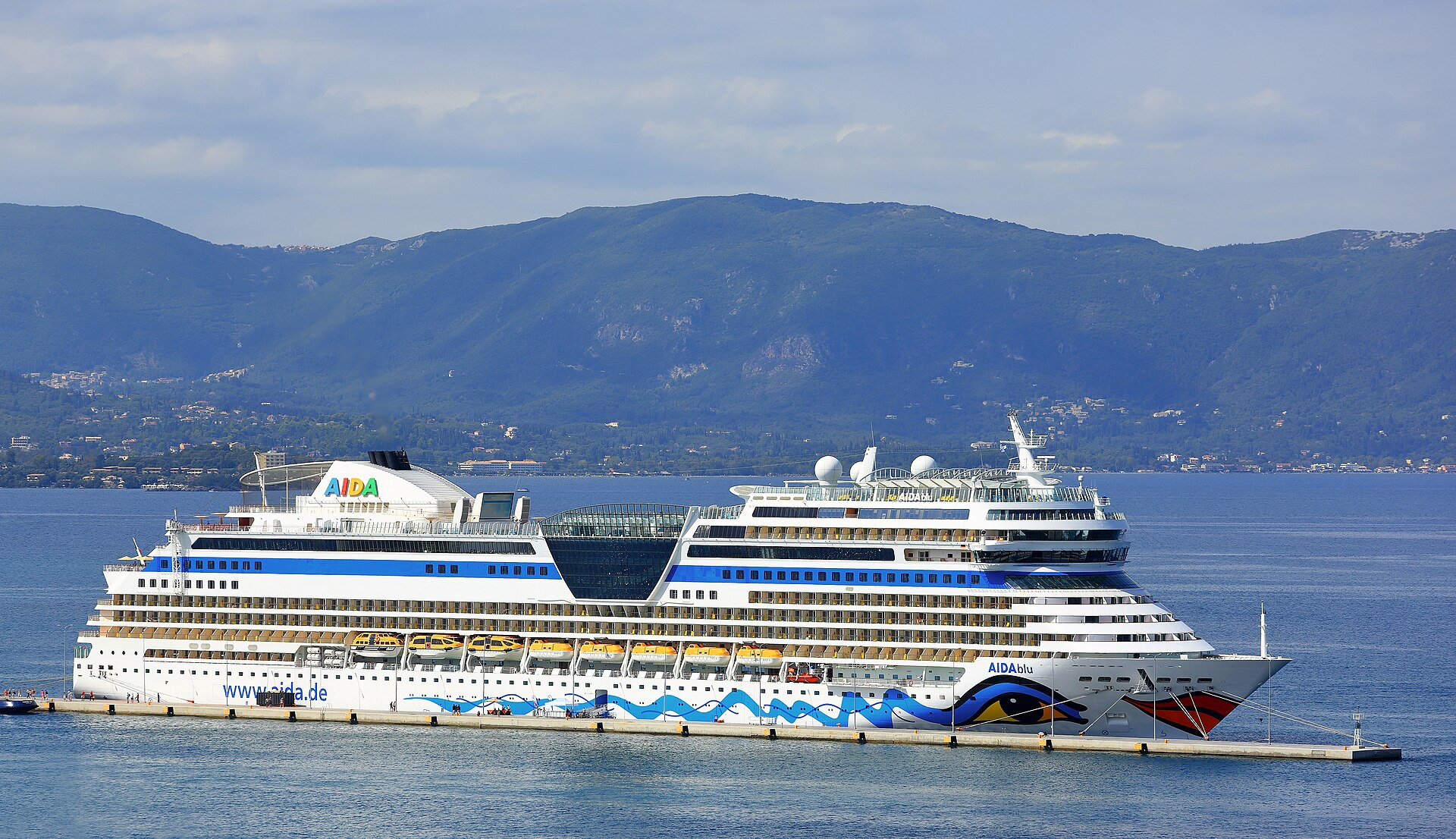
The main cruise ports in Greece are Piraeus (for Athens), Santorini, Mykonos, Corfu, Rhodes, Katakolon (for Olympia) and Crete, where ships use Heraklion or Souda Bay for Chania. Behind them sit a dozen smaller calls: Patmos, Kefalonia, Nafplio, Volos, Thessaloniki and others. Santorini always tenders; most of the rest let you walk off the ship.
That is the list every page gives you. What the lists leave out is what actually shapes your day: which ports dock and which anchor, how far the gangway is from the thing you came to see, what the Greek landing fee adds to each call, and which ports get crowded enough to change your plans. Greece handled 8.4 million cruise passenger visits across 48 ports in 2025, but more than half of that traffic went through just three of them. This guide is the port-by-port reality, with the numbers dated so you know how fresh they are. If you are still deciding whether Greece is the right trip at all, start with our Greek islands cruise guide, which compares big ships, small ships and simply taking the ferries.
Cruise ports in Greece at a glance
| Busiest ports, 2025 | Piraeus 863 calls and 1.85 million passengers; Mykonos 762 calls and 1.22 million; Santorini 728 calls and 1.20 million; Corfu 467 calls and 894,000 (CLIA figures, published March 2026). |
| The one homeport | Piraeus, for Athens. It handled 1.09 million homeport passenger movements in 2025, second only to Barcelona in the Mediterranean. |
| Always a tender | Santorini. Ships anchor in the caldera and every passenger goes ashore by boat. |
| Sometimes a tender | Mykonos on busy days; small-harbour ports such as Patmos and Nafplio for larger ships. |
| Easiest walk-off | Rhodes (Old Town walls under 10 minutes’ walk) and Katakolon (the train station is about 200 yards from the port gate). |
| Biggest transfer | Katakolon to Olympia, 21 miles (34 km); Piraeus to central Athens, 7 miles (12 km). |
| Landing fee | €20 (about $23) per person per call at Santorini and Mykonos from June to September; €5 (about $6) at every other Greek port. Charged only if you go ashore. |
| Currency and plugs | Euro. Type C and F sockets, 230 V. Cards are widely accepted in port towns; carry some cash for small tavernas, buses and tips. |
| Season | April to October, with the Aegean meltemi wind at its strongest in July and August. |
| Conversions | €1 = $1.1592, the European Central Bank reference rate on 11 September 2026. Prices on this page are as of September 2026 unless dated otherwise. |
Which Greek islands have cruise ports?
The Greek islands that see regular cruise calls are Santorini, Mykonos, Rhodes, Corfu and Crete, followed by Patmos, Kefalonia, Kos, Syros, Milos and Zakynthos. Mainland ports fill the gaps: Piraeus for Athens, Katakolon for Olympia, Nafplio, Volos, Itea and Thessaloniki. Of Greece’s hundreds of inhabited islands, only a handful take big ships.
The reason is mostly engineering. A modern mainstream cruise ship needs a long, deep berth or a sheltered anchorage with a tender landing that can move several thousand people in a morning. Most Greek harbours were built for fishing boats and ferries. So the islands that make it onto a 7-night itinerary are the ones that either have that infrastructure (Rhodes, Corfu, Heraklion, the new port at Mykonos) or are so famous that lines will run tenders all day to get people ashore (Santorini).
That shapes what “Greek islands cruise” really means. On a big ship you will see the famous five or six, several times over if you cruise more than once. On a small ship of a few hundred passengers, Patmos, Milos, Syros and the Saronic islands start to appear, because the ship can squeeze into the old harbour or anchor off a beach. The islands are the same Greece; the port list is a function of the hull.
It is also worth knowing that “cruise port” in Greece rarely means a terminal building of the Barcelona or Civitavecchia kind. Outside Piraeus, Corfu and Heraklion, you are usually stepping onto a working quay with a tourist information kiosk, a taxi rank and, if you are lucky, some shade. Plan your water and your toilet stop accordingly.
Every Greek cruise port compared: dock, tender and distance
This is the table we wanted when we started researching Greek itineraries and could not find anywhere else. It covers the ports that appear on mainstream and premium itineraries, how you get ashore, how far the ship is from the thing most passengers go to see, and how confident we are in each figure. Where a distance or a fare has not been confirmed from a source we trust, it says so.
| Port | Dock or tender | Headline sight and distance | Getting there, as of September 2026 | Our realistic hours needed |
|---|---|---|---|---|
| Piraeus (Athens) | Dock. Terminals A Miaoulis, B Themistocles, C Alkimos | Acropolis, about 7 mi (12 km) | Taxi 20–30 min in normal traffic; Metro Line 1 from Piraeus station, a 20–30 min walk from the terminals; free port shuttle from outer berths | 6–7 |
| Santorini | Tender, always, to the Old Port below Fira | Fira, directly above the landing; Oia across the island | Cable car €10 (about $12) one way; the footpath and mule route are the alternatives | 5+ for Fira; 7+ for Oia |
| Mykonos | Usually docks at the New Port (Tourlos); tenders to the Old Port on busy days | Chora and the windmills, 1.2–1.5 mi (2–2.5 km) from Tourlos | SeaBus €2 (about $2.30) one way, about 12 min, every 15–30 min | 4–5 |
| Rhodes | Dock, deepwater quay beside the Old Town | Medieval Old Town, under 10 min on foot | Walk. Lindos is roughly an hour’s drive south; taxi fares not published by any source we trust | 3 for the Old Town; 7 with Lindos |
| Corfu | Dock at the New Port, with an in-port shuttle to the terminal | Old Town, about 1.8 mi (2.9–3 km) | 30-minute seafront walk; taxi about €10 and bus €1.90 are 2023 figures we could not re-verify | 4 for town; 6+ for the island |
| Katakolon | Dock, Pier 3 | Ancient Olympia, 21 mi (34 km) | Train €10 (about $12) return, about 45 min, timetable set each morning to the ships | 5–6 |
| Heraklion (Crete) | Dock | Knossos, roughly 3–4 mi (5–6 km) south; Venetian harbour and museum in town | Taxi or local bus; fares not verified for this guide | 4–5 with Knossos |
| Souda Bay (Chania, Crete) | Dock at Souda, not in Chania itself | Chania’s old Venetian harbour, roughly 4 mi (6–7 km) | Taxi, line shuttle or local bus; fares not verified for this guide | 4–5 |
| Argostoli (Kefalonia) | Varies by ship; not verified | Town on the quay; beaches and Melissani cave by road | Not published by a source we trust | 4–6 |
| Nafplio | Larger ships anchor and tender into the small harbour | Old town on the waterfront; Mycenae and Epidaurus by coach | Walk in town; excursions by coach | 3 for town; 6 with Mycenae |
| Patmos | Larger ships anchor in the bay and tender to Skala | Cave of the Apocalypse and the Monastery of St John, uphill from Skala | Taxi, local bus or line tour | 3–4 |
| Volos, Itea, Thessaloniki, Syros, Milos, Kos, Zakynthos, Gythion | Varies by ship and berth | Volos for Meteora and Pelion; Itea for Delphi; Gythion for Mystras | Mostly line excursions; independent transport data not verified | Depends entirely on the excursion |
Two patterns jump out. First, the islands with the most famous photographs are the hardest to get into: Santorini because of the tender and the cliff, Mykonos because of the shuttle from Tourlos. Second, the mainland ports sell you somewhere else. Katakolon is a village that exists, as far as cruise passengers are concerned, to reach Olympia. Piraeus is a busy commercial port that exists to reach Athens. Itea is Delphi, Volos is Meteora. The port name on your booking is not the destination, and the difference is measured in coach time.
What is the main cruise port in Greece?
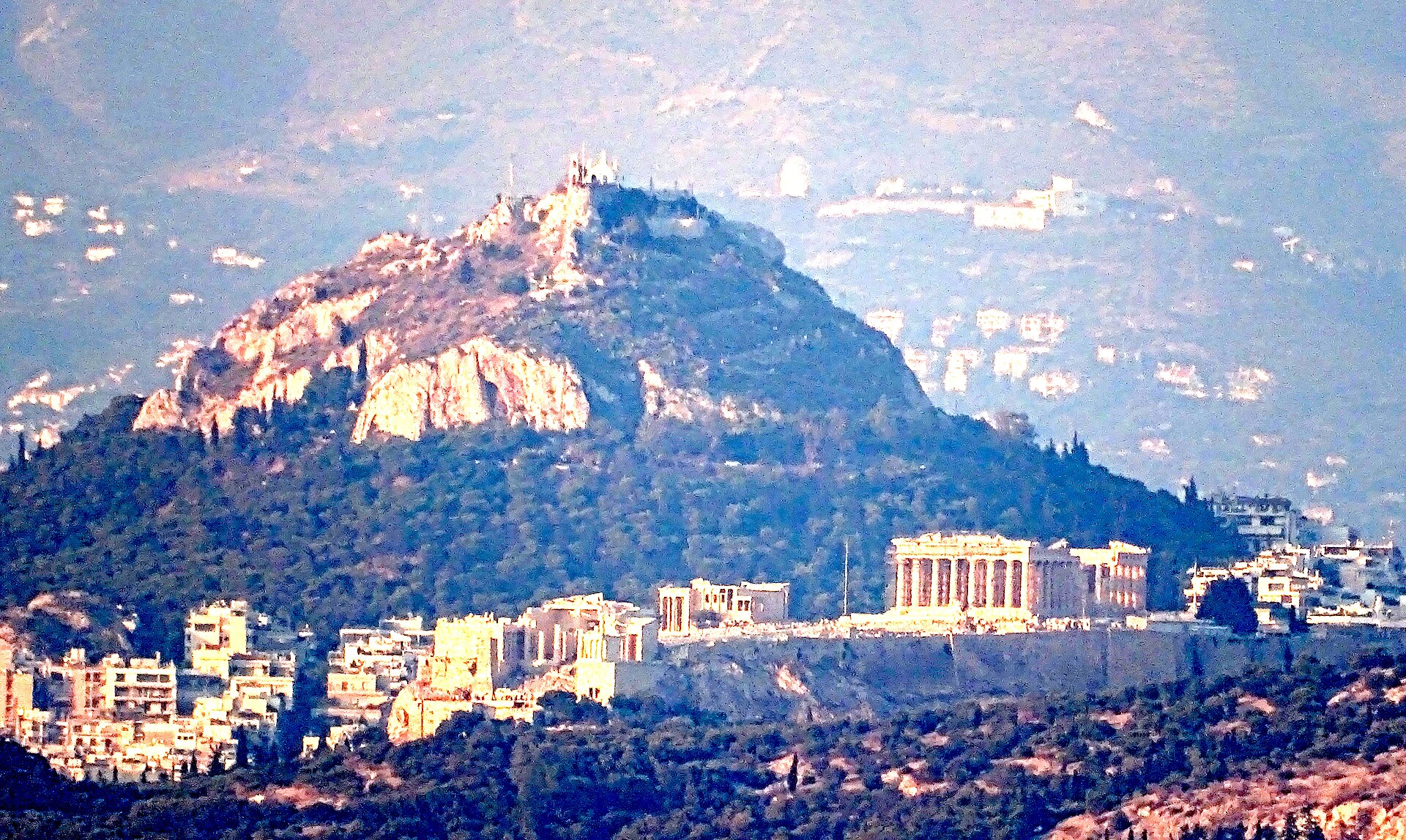
Piraeus, the port of Athens, is the main cruise port in Greece. It recorded 863 ship calls and 1.85 million cruise passengers in 2025, and it is the country’s only major homeport, with 1.09 million embarking and disembarking passenger movements. Almost every Greek itinerary starts, ends or calls there, because it is the gateway to the Acropolis.
Piraeus is also, for a first-timer, the most confusing Greek port. It is enormous, spread along a long waterfront that also serves the island ferries, and the three cruise terminals are some distance from the metro station. Ships berth at Terminal A (Miaoulis), B (Themistocles) or C (Alkimos), and on busy days some berth further out, served by a free shuttle to the passenger terminal. Your ship’s daily programme names the terminal. Check it the night before; it decides whether you can walk to the metro or need the shuttle or a taxi.
For a port-of-call day, you have three realistic choices to reach the Acropolis:
- Taxi. The quickest door-to-door option in normal traffic, 20 to 30 minutes to the foot of the Acropolis. Agree whether the meter is running before you set off, and share with another couple if you can.
- Metro Line 1. Walk 20 to 30 minutes from the terminal to Piraeus station, then ride to Monastiraki or Thissio, both within walking distance of the Acropolis entrance and Plaka. Cheap and predictable, but that walk is in full sun and is the part people underestimate. We have not been able to verify current single-ticket fares with the operator for this guide, so check at the machine.
- Ship’s excursion or hop-on hop-off bus. The ship’s tour removes the navigation and guarantees the ship waits if the coach is late. The price is the least time at the site.
The Acropolis itself runs on timed entry through the official hhticket.gr platform, and secondary sources quoting that platform put the standard ticket at €30 (about $35) and the reduced rate at €15 (about $17) as of September 2026, with a daily limit of 20,000 visitors. In June to August slots sell out days ahead, so book before you sail. And plan for heat: the site closed until 17:00 on 8 July 2025 when Athens was forecast to hit 38°C (100°F). A closure like that on your one port day is not something a cruise line can fix.
If Piraeus is where your cruise begins rather than a stop along the way, the questions change completely — airport transfers, hotel nights, which terminal and when to arrive. That belongs to the embarkation side of this site, and our planned homeport guides will cover it in detail.
Santorini and Mykonos: the Cyclades cruise ports
Santorini and Mykonos are the two Greek cruise ports everyone wants and the two that most often disappoint on the day. Neither is the fault of the islands. Both are about how you get ashore and how many other people are trying to do the same thing at the same time.
Santorini: tender, cliff and cap
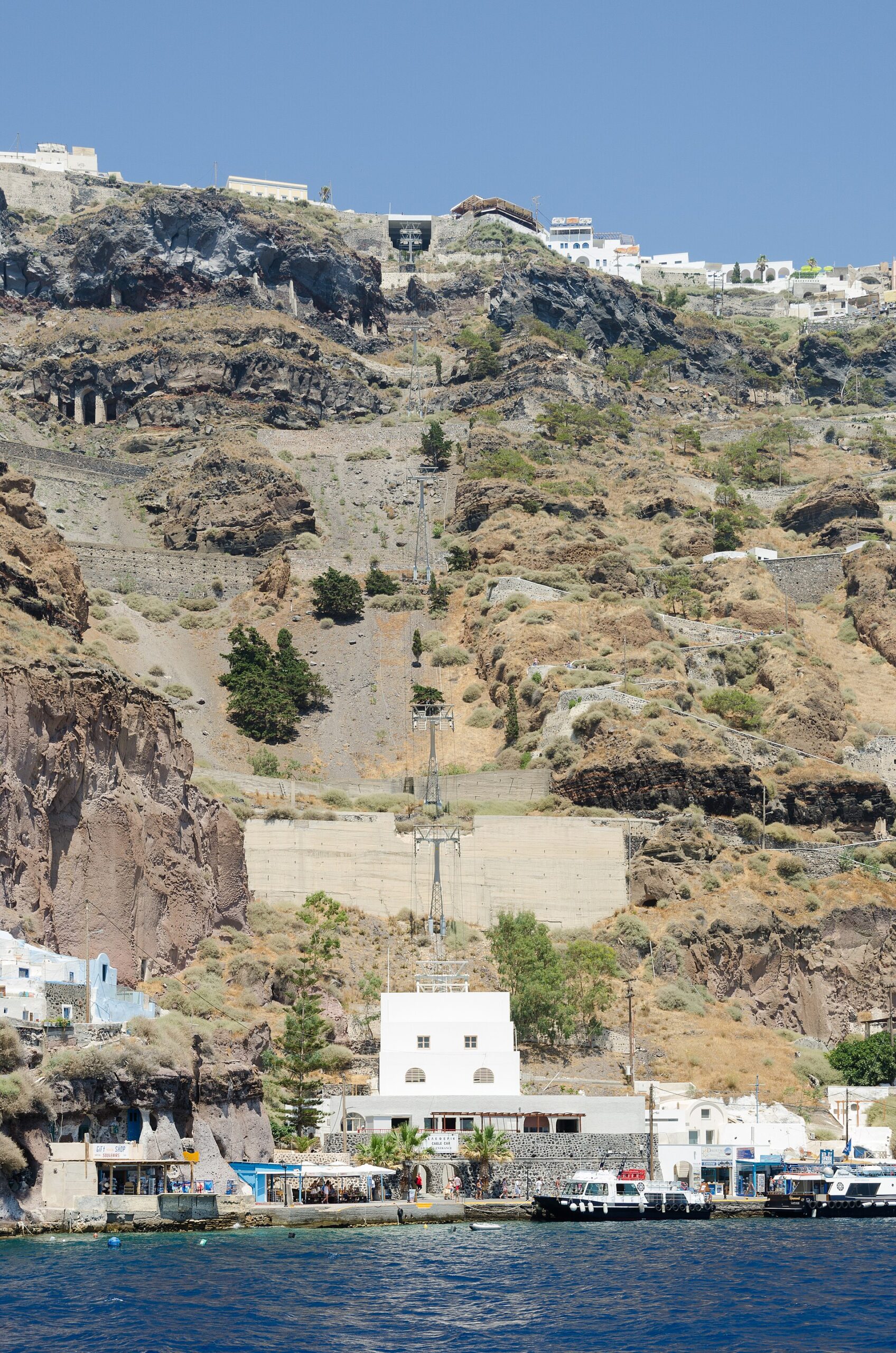
There is no cruise berth on Santorini. The caldera is a flooded volcano, far too deep to anchor a pier in, so every ship drops anchor (or holds position) off Fira and runs tenders — small boats, either the ship’s own lifeboats or local launches — to the Old Port at the foot of the cliff. From there you have three ways up: the cable car at €10 (about $12) one way for adults, the long zigzag footpath of several hundred steps, or the mules. Reports since October 2025 suggest restrictions on the steps route; we have not been able to confirm the current status, so treat the cable car as your plan and anything else as a bonus.
The cable car runs 07:00 to 23:00 in June to August, with the last descent at 22:40. The queue to come down in the late afternoon is the single most common reason cruise passengers cut their Santorini day short. When four or five ships have their passengers heading back for a 17:00 or 18:00 all aboard, that queue can run long, and there is no second cable car.
Santorini now has a hard cap of 8,000 cruise passengers a day, allocated between ships by the Thira Municipal Port Fund. From 2026 ships are counted at 100% of their capacity instead of 80%, and scheduled calls fell to 595 in 2026 from 728 in 2025, a drop of about 18%. That is why fewer 2027 itineraries include Santorini than you might expect, and why some lines schedule it for the evening or put a late departure on it to fit the allocation.
Mykonos: the New Port and the SeaBus
Mykonos is a docking port most of the time. Larger ships berth at the New Port at Tourlos, about 1.2 to 1.5 miles (2 to 2.5 km) north of Chora, the main town. On busy days, when the berths are full, ships anchor and tender straight into the Old Port, which is paradoxically more convenient because it puts you in town.
From Tourlos, the SeaBus is the answer: €2 (about $2.30) one way, about 12 minutes across the bay, running every 15 to 30 minutes from 08:30 to 23:45 between 1 April and 31 October, as of September 2026. The walk is possible in theory, about 40 minutes, but it is along a busy road without much pavement, and we would not recommend it. Taxis exist but the island has famously few of them for the demand.
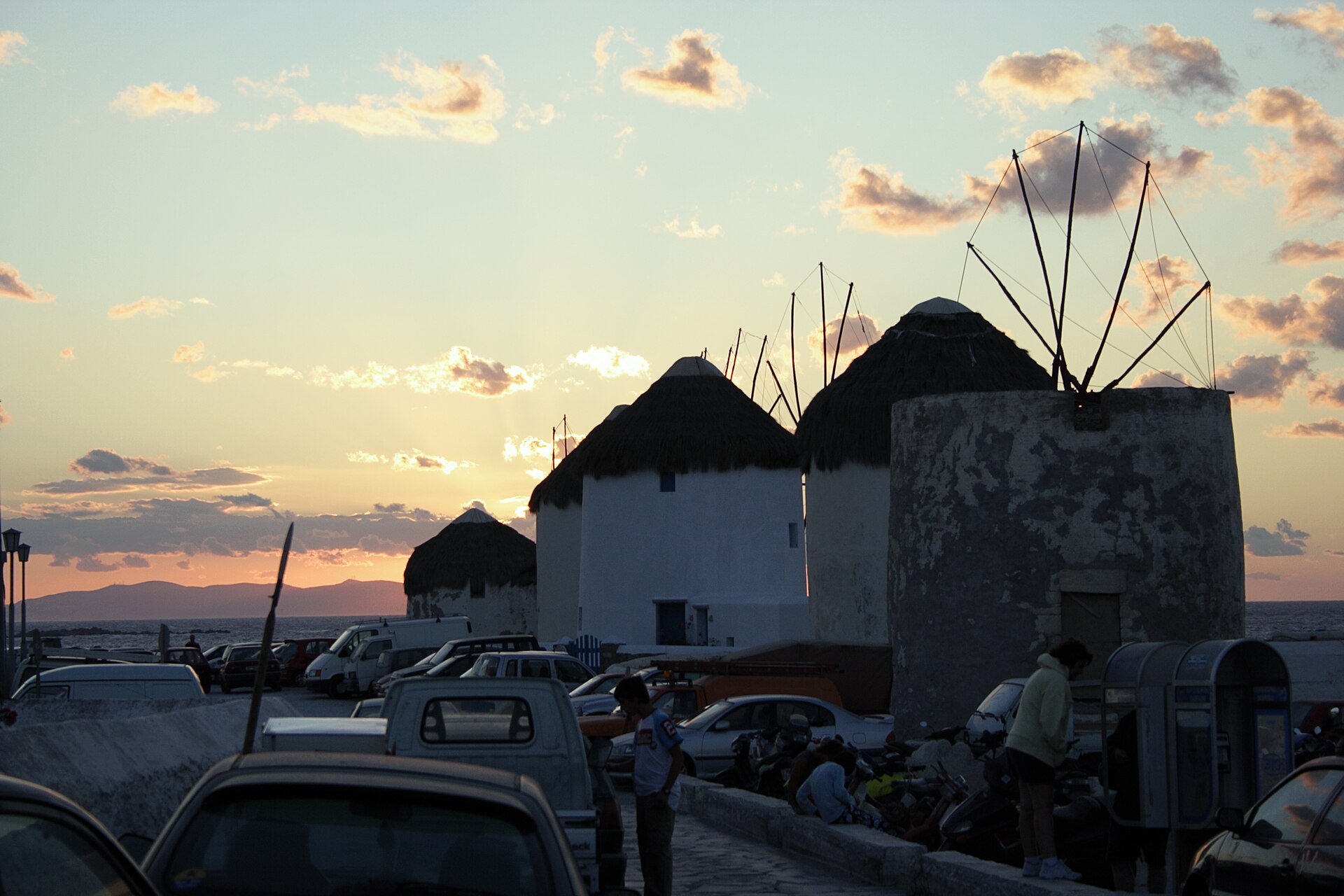
Mykonos is also the only Greek port besides Santorini where the landing fee is €20 per person in high season. The town itself is small — the windmills, Little Venice and the maze of lanes take three hours at a gentle pace — so the real decision is whether to add a beach or the half-day boat trip to Delos, the uninhabited sacred island that is one of the most important archaeological sites in Greece.
Rhodes, Patmos and the Dodecanese ports
The Dodecanese, the island chain off the Turkish coast, gives you one of the best port days in Greece and one of the most atmospheric small calls.
Rhodes
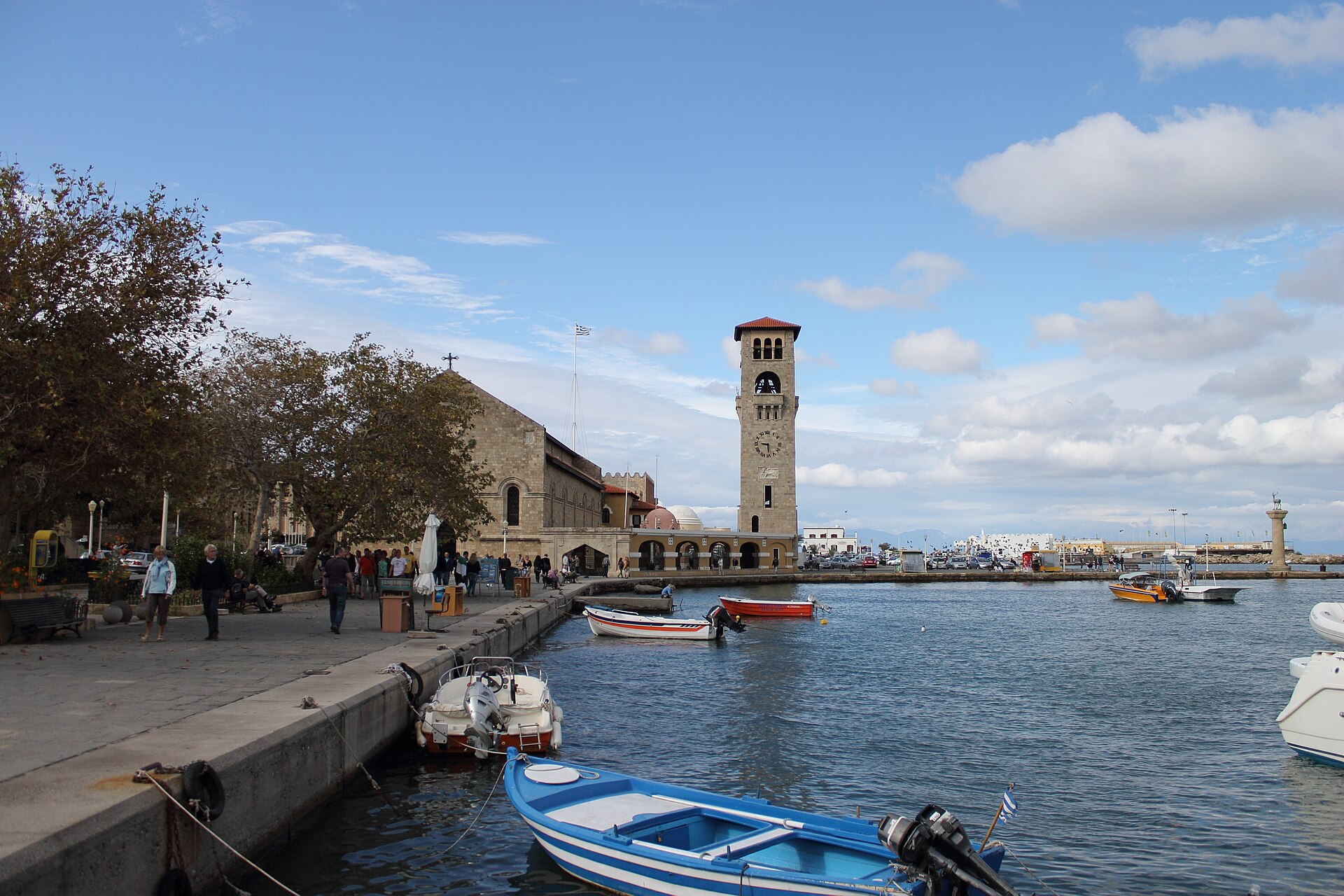
Rhodes is what a cruise port should be. Ships berth at a deepwater quay right beside the medieval Old Town, and the walls of the Knights of St John are under ten minutes’ walk from the gangway on flat ground. Up to six ships can berth at once. There is no tender, no shuttle and no transfer, which means Rhodes is also one of the kindest Greek ports for anyone with limited mobility — at least as far as the gate; the Old Town’s cobbles are another matter.
The big decision at Rhodes is Lindos, the white village and clifftop acropolis roughly an hour’s drive down the east coast. It is beautiful and it is a genuine day out, but it turns an easy walk-off port into a transfer day, and in July and August the climb to the acropolis in the midday heat is serious. Our view: on a call of eight hours or more, Lindos is worth it for people who have already seen a medieval old town elsewhere on the trip. On a shorter call, or if this is your first walled city, stay in Rhodes Town and enjoy not being on a coach.
Patmos
Patmos is the small, quiet one. Larger ships anchor in the bay and tender to Skala, the harbour village. The draw is religious and historic: the Cave of the Apocalypse, where tradition says St John received the visions of the Book of Revelation, and the fortified Monastery of St John above the island’s hilltop Chora. Both are uphill from the port. Dress for a church — covered shoulders and knees — and allow for the fact that both sites keep limited opening hours that can close before your ship leaves. Patmos appears mostly on premium, luxury and small-ship itineraries, and it is a lovely contrast to Mykonos the day before or after.
Kos, also in the Dodecanese, appears on some itineraries too, often paired with Bodrum across the strait in Turkey. We do not yet have port data for it that we are confident enough to publish.
Where do cruise ships dock in Crete?
Cruise ships dock in Crete at two main ports: Heraklion on the north-central coast, closest to the Minoan palace of Knossos, and Souda Bay in the west, which serves Chania. The confusion is that itineraries say “Chania” but ships berth at Souda, roughly 4 miles (6 to 7 km) from Chania’s Venetian harbour, so you need transport.
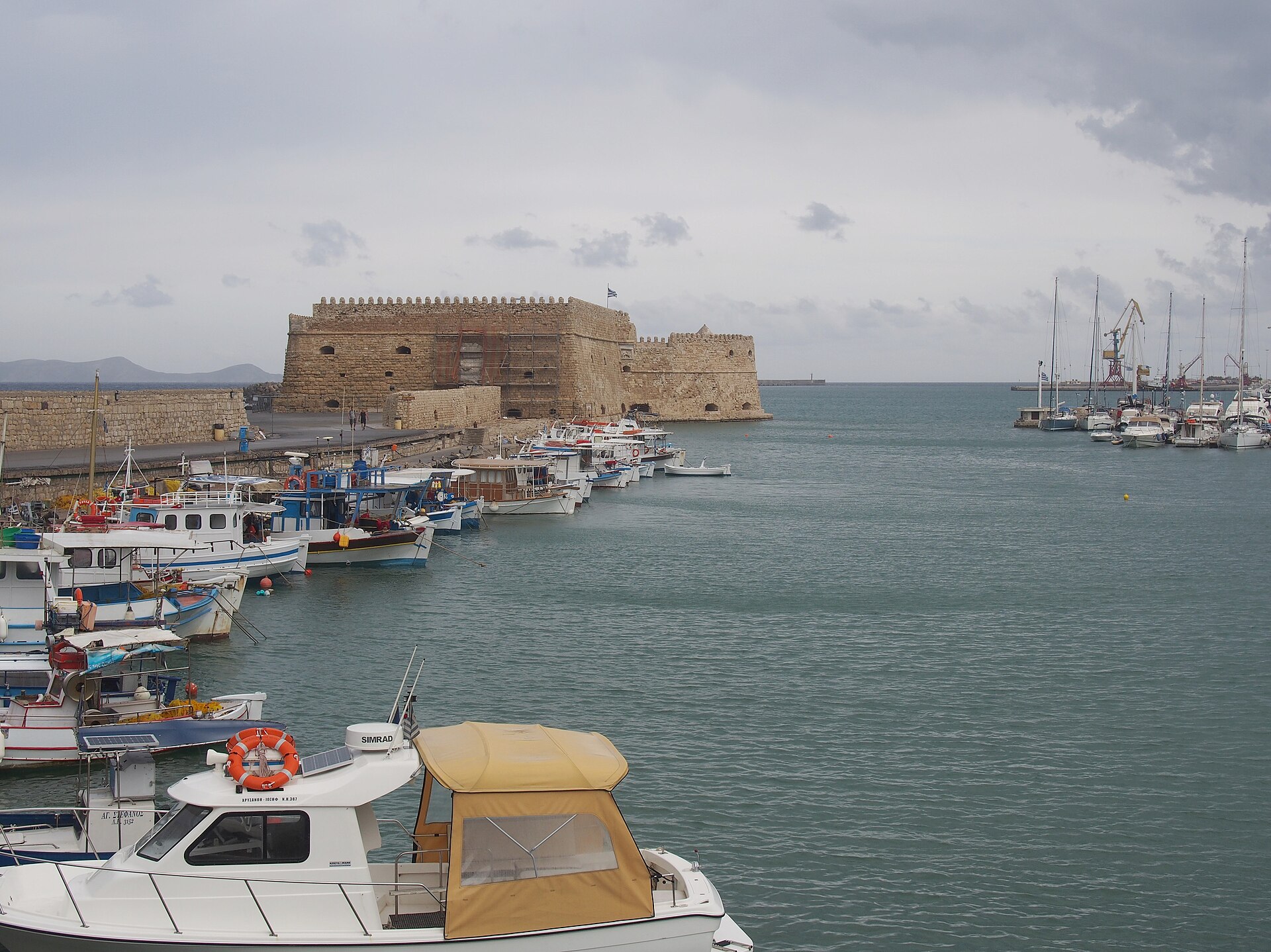
Which one you get changes the day completely. Heraklion is a big, busy city port. The Venetian harbour and the Koules fortress are right there, the excellent Heraklion Archaeological Museum is in town, and Knossos is roughly 3 to 4 miles (5 to 6 km) south by road. That makes Heraklion the port for anyone who wants the Minoans: palace in the morning, museum after lunch, back aboard with time to spare. Knossos is fully exposed and hot from late morning in summer, so go early.
Chania, via Souda, is the prettier town and the better wander — a Venetian harbour with a lighthouse, a lively old quarter and good food — but there is no single headline sight, and the port is not in the town. Souda is also a naval base, which is part of why the cruise quay feels functional rather than scenic. Souda recorded about 204 cruise calls in 2025 according to Greek trade press; Heraklion sees more. We have not verified local bus or taxi fares from either port for this guide, so budget for a taxi and check the price at the rank before you get in.
A handful of smaller ships also call at Agios Nikolaos in the east. That is a niche call and we do not yet have verified data on it; our planned guide to where cruise ships dock in Crete will cover all three.
Corfu, Kefalonia and Katakolon: the Ionian side
Greece’s west coast faces Italy, and its ports tend to appear on Adriatic itineraries from Venice-substitute homeports, or as the first or last Greek call on sailings between the Western and Eastern Mediterranean. The Ionian is greener, wetter and more Venetian in feel than the Aegean, and it is less exposed to the meltemi.
Corfu
Corfu is one of the busiest cruise ports in Greece and getting busier: 467 calls in 2025 by CLIA’s count, with 562 calls confirmed for 2026, up about 20%. Ships dock at the New Port (Neo Limani), and an in-port shuttle takes you to the terminal building. From there the Old Town — a UNESCO World Heritage Site with two Venetian fortresses, arcaded streets that look more Italian than Greek, and the big green Spianada square — is about 1.8 miles (2.9 to 3 km), roughly a 30-minute walk along the seafront.
That walk is pleasant in May and punishing in August. Taxis and a local bus both run, but the most-quoted figures (about €10 by taxi, €1.90 by bus) date from 2023 and we could not re-verify them. Plan on the taxi rank and confirm the price first. Beyond town, the classic half-days are Paleokastritsa on the west coast and the Achilleion Palace built for Empress Elisabeth of Austria; both need a car, taxi or tour.
Kefalonia (Argostoli)
Kefalonia’s capital, Argostoli, sits at the head of a long bay and appears mainly on premium and smaller-ship itineraries. The town was largely rebuilt after the 1953 earthquake, so it is pleasant rather than historic; the island’s attractions — the underground lake at Melissani, Myrtos beach, the village of Assos — are all a drive away. We do not have verified dock or transfer data for Argostoli yet and are not going to guess.
Katakolon
Katakolon is a mainland village of a few streets that has become, by some descriptions, one of Greece’s busiest cruise calls after Piraeus, for one reason: Ancient Olympia, 21 miles (34 km) inland. Ships dock at Pier 3, and the town’s little station is about 200 yards from the port gate. As of September 2026 the train costs €10 (about $12) return and takes about 45 minutes, with three departures roughly two hours apart and extra runs on cruise days. The timetable is set each morning around the ships in port, which is both reassuring (the railway knows you are there) and a reason to check it the moment you land.
If Olympia does not appeal, Katakolon has a short seafront, a few wineries within taxi range and not a great deal else. That is fine. It is the one port in Greece where “stay aboard and enjoy the empty pool” is a perfectly sensible plan.
The mainland ports: Nafplio, Volos, Itea and Thessaloniki
These ports appear more often on premium, luxury and small-ship itineraries than on megaship weeks, and each one is really a doorway to something inland.
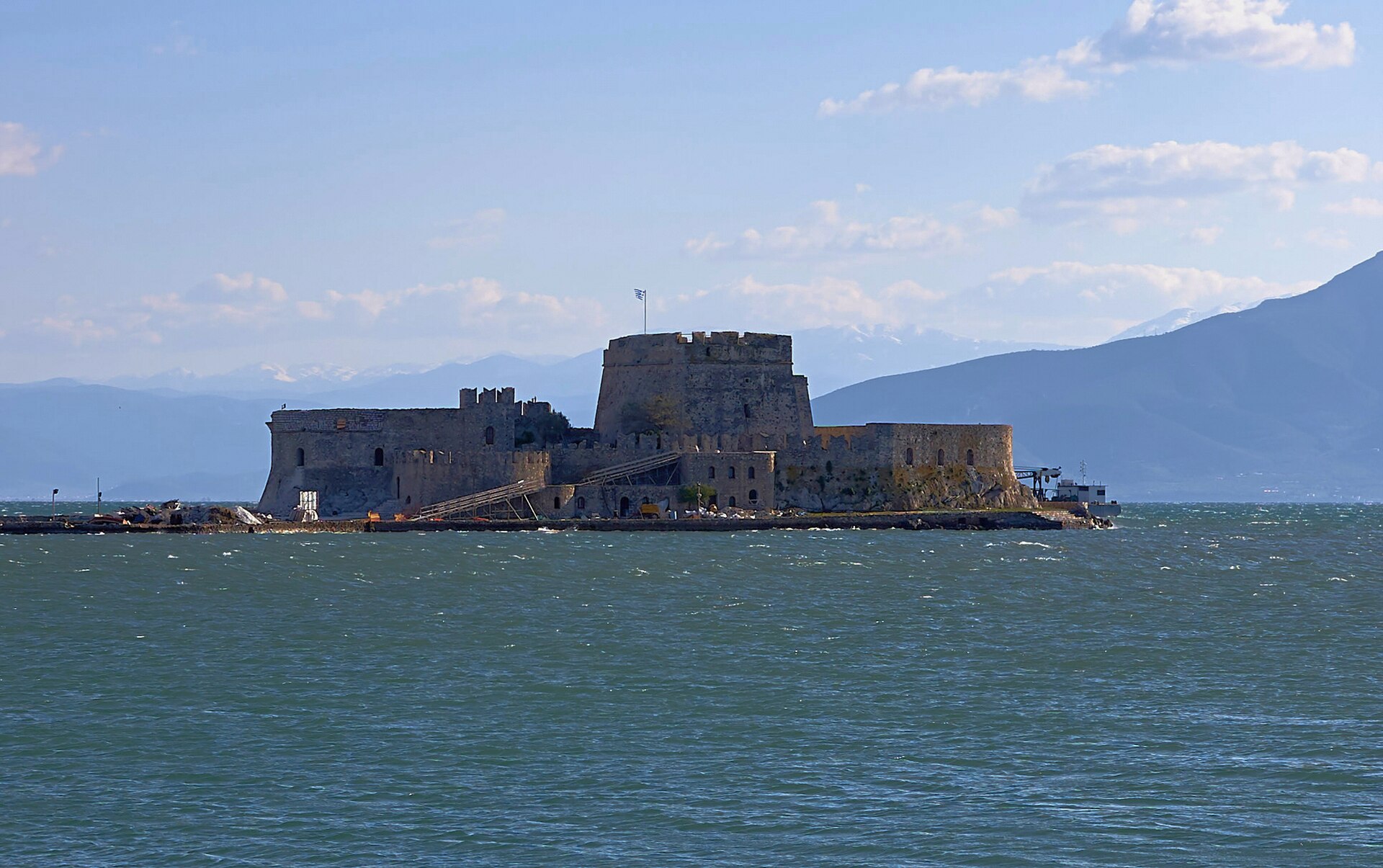
- Nafplio was the first capital of modern Greece and is one of the prettiest towns in the country: Venetian and neoclassical streets under the Palamidi fortress, with the Bourtzi castle on its islet in the harbour. Larger ships anchor and tender. The town alone fills a relaxed half-day; Mycenae and the theatre at Epidaurus are the classic coach excursions.
- Volos is the port for Meteora, the monasteries on sandstone pillars, and for the Pelion villages. Meteora is a long drive inland, which in practice makes it a full-day ship’s excursion for most passengers.
- Itea is the port for Delphi, the sanctuary of Apollo on the slopes of Mount Parnassus. The port itself is small; this is an excursion call.
- Thessaloniki is Greece’s second city, with the White Tower, Byzantine churches and a big food scene, and makes a good independent port day. It appears on a minority of itineraries.
- Gythion, in the southern Peloponnese, is the stepping-off point for the Byzantine ruins of Mystras and for the Mani peninsula.
For all five, independent transfer data is thin and much of what circulates online is years old. We are not going to put a bus fare or a drive time on this page that we cannot stand behind. If Meteora or Delphi is the reason you are booking, the honest advice is to read the ship’s excursion description for its stated time at the site, compare it with the time on the coach, and decide whether that ratio is worth it to you.
All-aboard math for the two hardest Greek port days
All aboard is the time by which you must be back on the ship, usually 30 to 60 minutes before the published departure. The ship does not wait for independent travellers who miss it. The two Greek ports where the arithmetic is tightest are Santorini, because of the tender and cable car queues, and Katakolon, because of the Olympia train. Below are worked timelines for a typical call. The queue times are our planning assumptions, not published figures — nobody publishes them — and you should widen them on days with several ships in port.
Santorini, 07:00 to 17:00 call, all aboard 16:30
| Time | What happens | Why |
|---|---|---|
| 07:00 | Ship at anchor; tender tickets issued | Ship’s tour groups usually go first |
| 07:45–08:30 | Independent passengers’ tender to the Old Port | Tender numbers are called in groups; expect to wait |
| 08:30–09:15 | Cable car queue and ride to Fira | Early is the short queue; by mid-morning it builds |
| 09:15–13:30 | Fira, or Oia by bus or taxi and back | Oia is across the island; allow for the return leg |
| 13:30 | Latest safe time to start heading down if you went to Oia | Return from Oia plus the cable car queue |
| 14:30 | Latest safe time to join the cable car queue from Fira | The afternoon down-queue is the day’s bottleneck |
| 15:30 | Tender back to the ship | Last tenders fill quickly |
| 16:30 | All aboard | Our recommended buffer here: 2 hours |
Our rule for Santorini is simple: be in the down queue two hours before all aboard, not one. If that means leaving Oia before the famous sunset view, that is the trade the tender imposes. Ships with late departures from Santorini exist precisely so passengers can stay for the evening, and if the sunset matters to you, filter for those.
Katakolon, 08:00 to 17:00 call, all aboard 16:30
| Time | What happens | Why |
|---|---|---|
| 08:00–08:20 | Gangway opens; walk to the station, about 200 yards | Check that morning’s printed train times immediately |
| 08:30–09:15 | Train to Olympia, about 45 minutes | €10 return as of September 2026 |
| 09:30–12:30 | Ancient Olympia and, if time, the museum | The site is large and mostly unshaded |
| 12:45 | Walk back to Olympia station | Short walk, but do not cut it fine |
| 13:00–13:45 | Take the middle return train, not the last one | Services run about two hours apart; missing one costs two hours |
| 13:45–16:30 | Lunch in Katakolon, back aboard at leisure | A buffer of nearly three hours |
The logic at Katakolon is different from Santorini. The risk is not a queue; it is a gap in the timetable. With trains around two hours apart, the last return is your only safety net, and if it is delayed you have none. Take the one before it.
Which Greek cruise ports are walkable from the ship?
The Greek cruise ports you can walk straight into from the ship are Rhodes, Heraklion and Katakolon, with Nafplio and Patmos easy on foot once the tender lands. Corfu is walkable but about 30 minutes along the seafront. Piraeus, Mykonos from Tourlos, and Souda for Chania need transport. Santorini needs a tender and then the cable car.
For travellers using a wheelchair or with limited mobility, the more useful question is which ports avoid the tender, because transferring from a ship to a small boat in any swell is the single biggest accessibility barrier in the region, and cruise lines may refuse tender access to passengers who cannot manage the step unaided. Here is how we would rank the main Greek ports for step-free access from gangway to the first thing worth seeing, based on dock or tender status and terrain. It is a planning guide, not an access audit.
| Ease | Port | Why |
|---|---|---|
| Easiest | Rhodes | Docked beside the walls on flat ground; Old Town cobbles are uneven inside |
| Easy | Katakolon | Docked; short flat walk to the station and seafront. Olympia’s paths are gravel and dirt |
| Easy | Heraklion | Docked; harbour front is flat. Knossos has uneven surfaces and steps |
| Moderate | Corfu | Docked with a shuttle; long flat walk or taxi to a hilly Old Town |
| Moderate | Piraeus | Docked; the Acropolis itself is a steep climb on worn, slippery marble; ask the ticket office about step-free access before you go |
| Moderate | Mykonos | Docked at Tourlos most days; the SeaBus boarding and Chora’s steps are the obstacles |
| Hard | Nafplio, Patmos | Usually tender; Patmos’s sites are uphill |
| Hardest | Santorini | Always tender, then cable car or steps; tenders suspended first in wind |
If a tender port is the reason for your trip and mobility is a concern, ask the cruise line in writing, before you book, what its tender policy is for mobility aids. The answer varies by line and even by ship.
How much is the Greek cruise port fee?
Greece charges a cruise passenger fee per person, per port call, only if you go ashore. From 1 June to 30 September it is €20 (about $23) at Santorini and Mykonos and €5 (about $6) at other Greek ports. In April, May and October it is €12 and €3; from November to March, €4 and €1.
| Period | Santorini and Mykonos | All other Greek ports |
|---|---|---|
| 1 June – 30 September | €20 (about $23) | €5 (about $6) |
| 1 April – 31 May, 1 – 31 October | €12 (about $14) | €3 (about $3.50) |
| 1 November – 31 March | €4 (about $4.60) | €1 (about $1.15) |
In practice, a summer week that calls at Piraeus, Santorini, Mykonos, Rhodes and Katakolon adds €20 + €20 + €5 + €5 + €5 = €55 per person if you go ashore everywhere (Piraeus counts too if it is a port of call rather than your embarkation). For a couple, that is €110, roughly $128 — not a deal-breaker, but a real line on your final bill that no fare comparison shows. Move the same cruise into October and it falls to €33 per person. Staying aboard at a port means you are not charged for that call.
For how the fee fits into the full cost of a sailing — taxes, gratuities, excursions, drinks — see our Mediterranean cruise cost breakdown.
When the wind decides: missed Greek ports and the meltemi
Every Greek cruise itinerary is provisional, and the reason is usually the meltemi, a strong, dry northerly wind that blows across the Aegean from May to October. It is most frequent from June to September and strongest and longest-lasting in July and August. In mid-August 2026 the National Observatory of Athens recorded gusts above 100 km/h (62 mph) in several Aegean locations.
Wind matters far more to a tender port than a berthed one. A ship alongside a quay in Rhodes can usually stay put in weather that would make it unsafe to load passengers into small boats at Santorini. So the ports most likely to be skipped are exactly the ones people book for: Santorini always, Mykonos on tender days, and the small-harbour anchor ports. The Ionian ports — Corfu, Katakolon, Kefalonia — are less exposed to the meltemi, and a captain faced with a cancelled Cyclades call will often substitute a sea day or a more sheltered port.
What that means for planning:
- Do not book a non-refundable independent tour in Santorini or Mykonos unless it refunds for missed calls. Ship’s excursions are refunded automatically if the port is cancelled.
- If Santorini is the whole point, choose May, June or September, when the meltemi is less persistent than in high summer. There is no guarantee in any month. Our guide to the best time to cruise the Mediterranean sets out the month-by-month trade-off between wind, heat and price.
- Read the cruise contract. Itinerary changes for weather are at the captain’s discretion, and lines do not compensate for them beyond refunding the port fees and taxes not incurred.
If your itinerary starts on the other side of the Ionian, our Italy cruise ports guide does the same job for Civitavecchia, Livorno, La Spezia, Naples and the Amalfi Coast tender stops.
For the tickets and tour decisions behind these port days — the Acropolis time slot, Knossos, Olympia and Ephesus across the water in Turkey — see our Mediterranean shore excursions guide.
For how these ports are combined into real itineraries with Turkey and the Adriatic, see our Eastern Mediterranean cruise guide.
Where this guide goes deeper
This page is the hub for Greek ports on this site. The port guides beneath it cover each call in full detail — the data box, the transport options with prices, and a worked all-aboard timeline — and each will be linked here as it publishes:
- Santorini: Santorini cruise port, Santorini cable car, Santorini cruise port to Oia and Santorini cruise ship schedule and the 8,000-passenger cap.
- Mykonos: Mykonos cruise port and Mykonos beaches from the cruise port.
- Athens: Athens in one day from a cruise ship and Piraeus cruise port to the Acropolis.
- Rhodes: Rhodes cruise port and Rhodes cruise port to Lindos.
- Corfu: Corfu cruise port and Corfu cruise port to Paleokastritsa and the Achilleion.
- Olympia: Katakolon cruise port and Katakolon to Olympia.
- Crete: Heraklion cruise port, Heraklion cruise port to Knossos, Chania and Souda Bay cruise port and where do cruise ships dock in Crete.
- Smaller calls: Kefalonia (Argostoli) cruise port and Nafplio cruise port.
Elsewhere on the site: the Mediterranean cruise itineraries guide shows how these ports are strung together on real published Greek weeks, and the cruise lines guide explains which lines can reach the small harbours and which cannot. For the whole region, start with our Mediterranean cruise planning guide, and for the decision between ship and ferry, go back to the Greek islands cruise comparison.
Greek cruise ports FAQs
Where do cruise ships dock in Athens?
At Piraeus, the port of Athens, about 7 miles (12 km) from the Acropolis. Ships use three cruise terminals: A Miaoulis, B Themistocles and C Alkimos. A taxi takes 20 to 30 minutes in normal traffic; Metro Line 1 runs from Piraeus station, which is a 20- to 30-minute walk from the terminals.
Do cruise ships dock in Santorini?
No. Santorini has no cruise berth. Ships anchor in the caldera and tender passengers to the Old Port below Fira, where the cable car costs €10 one way. Tenders are suspended in strong wind, which makes Santorini the Greek port most likely to be cancelled on the day, especially in July and August.
Do cruise ships dock in Mykonos?
Usually. Larger ships berth at the New Port at Tourlos, about 1.2 to 1.5 miles from town, and the SeaBus runs into Chora for €2. On busy days, when the berths are full, ships anchor instead and tender passengers directly to the Old Port in town.
What is the best Greek cruise port?
For an easy, rewarding day, Rhodes: you dock beside a medieval walled town and walk in within ten minutes. For the most famous view, Santorini, if you accept the tender and the queues. For history, Katakolon for Olympia or Heraklion for Knossos. That is our opinion; the best port is the one that matches how you like to spend a day.
How far is Olympia from Katakolon?
Ancient Olympia is 21 miles (34 km) from Katakolon. The train takes about 45 minutes and costs €10 return as of September 2026, with the station about 200 yards from the port gate. Trains run roughly two hours apart, so take the return before the last one.
Which cruise port is closest to Knossos?
Heraklion. Knossos is roughly 3 to 4 miles (5 to 6 km) south of the city by road, making it a comfortable half-day from the ship with time left for the Heraklion Archaeological Museum. Ships that call at Souda Bay for Chania are on the other side of the island and much further from Knossos.
Is the Greek cruise port fee included in my fare?
No. Lines add it to your onboard account per person, per port call, and only if you go ashore. It is €20 at Santorini and Mykonos and €5 at other Greek ports from June to September, and lower in spring, autumn and winter.
Can I visit Greek ports without a ship’s excursion?
At most of them, easily. Rhodes, Heraklion, Mykonos, Corfu and Katakolon are all simple to do independently. Piraeus is manageable with a taxi or the metro. Santorini is doable but tight because of the tender and cable car queues. Volos for Meteora and Itea for Delphi are where a ship’s excursion earns its price.
How we researched this guide
Every fare, fee, distance and rule on this page comes from a named source with the date we checked it. Port traffic figures are CLIA data for 2025 as reported by GTP and To Vima in March 2026. The Greek landing fee schedule is the one in force since 21 July 2025. Santorini’s cap and call numbers come from the Thira Municipal Port Fund’s allocation decisions; the cable car tariff and hours come from the operator’s published price list. Dock, tender and transport details come from port operators, the Katakolon railway timetable arrangements and our own verified facts file, all checked in September 2026. We searched page one of Google for this topic on 16 September 2026 and set out to answer the questions those pages leave open.
We are an independent editorial site. We do not sell cruises, we have not personally visited every port on this page, and we do not pretend otherwise. Where a figure — a bus fare in Chania, a tender policy at Argostoli — could not be confirmed from a source we trust, we have said so rather than printing a number that might be years old. Opinions, such as our ranking of ports for step-free access or our view on Lindos, are labelled as ours. Money figures are re-checked every January and March; port rules before each season.
Image credits
| Image | Photographer | Licence |
|---|---|---|
| AIDAblu berthed at the New Port, Corfu | Martin Falbisoner | CC BY-SA 4.0, via Wikimedia Commons |
| The Acropolis seen from the coast off Piraeus | Ad Meskens | CC BY-SA 4.0, via Wikimedia Commons |
| Koules fortress, Heraklion harbour | C messier | CC0, via Wikimedia Commons |
| Bourtzi castle, Nafplio harbour | George E. Koronaios | CC0, via Wikimedia Commons |
| Santorini Old Port and the cable car to Fira | Norbert Nagel | CC BY-SA 3.0, via Wikimedia Commons |
| The lower windmills, Chora, Mykonos | Zde | CC BY-SA 4.0, via Wikimedia Commons |
| Mandraki Harbour, Rhodes, in October | Ian Griffiths | CC BY 2.0, via Wikimedia Commons |
Published 17 September 2026. Fees, fares and port rules were checked in September 2026 and will change — verify anything you are about to pay for. Primary sources: the Santorini cable car operator’s tariff, the official Greek heritage ticketing site, the Piraeus Port Authority and GTP’s report of the 2025 Greek cruise traffic figures.