An Eastern Mediterranean cruise sails Greece, Turkey and usually the Adriatic coast of Croatia and Montenegro, typically for 7 to 12 nights from Piraeus (Athens), Civitavecchia, Istanbul, Trieste or Ravenna. The headline ports are Santorini, Mykonos, Rhodes, Kusadasi for Ephesus, Dubrovnik and Kotor. The season runs from April to October, and the region is hotter, windier and more tender-dependent than the Western Med.
Those last three words — hotter, windier, tender-dependent — are what the cruise line pages on this topic leave out, and they are what decide whether an Eastern Mediterranean cruise lives up to its photographs. The islands really are that blue. But the caldera at Santorini is reached by tender, the Aegean’s summer wind cancels those tenders more often than any other weather in the Mediterranean, and Greece now charges a landing fee at every call. We do not sell cruises, so this guide sets out the trade-offs plainly: a real published week hour by hour, what the fee adds, when the wind blows, and who the region suits better than the West. For the Mediterranean as a whole, start with our Mediterranean cruise planning guide.
Eastern Mediterranean cruise at a glance
| Countries | Greece and Turkey on almost every route; Croatia and Montenegro on Adriatic routes; Cyprus and Albania on some. Israel and Egypt calls were suspended by major lines through 2026. |
| Main homeports | Piraeus (Athens), the Mediterranean’s second-busiest homeport in 2025; also Civitavecchia, Istanbul, Trieste and Ravenna. |
| Typical length | 7 nights from Athens; 10–12 nights from Rome or the Adriatic; 3–4 nights on Greek short loops. |
| Season | April to October, busiest May to August. |
| Tender ports | Santorini always; Mykonos on busy days; Kotor when the quay is taken; small Greek islands for larger ships. |
| Wind | The meltemi blows across the Aegean from May to October, strongest in July and August, and is the main cause of missed Greek island calls. |
| Greek landing fee | €20 (about $23) per person per call at Santorini and Mykonos from June to September; €5 (about $6) at other Greek ports. Lower in spring and autumn. |
| Summer heat | Athens averages 88–90°F (31–32°C) in July and August. |
| Turkey entry | US and Canadian citizens visa-free for tourism since 1 January 2024, up to 90 days in 180. |
| Conversions | €1 = $1.1592, ECB reference rate, 11 September 2026. Prices on this page are as of September 2026 unless dated otherwise. |
What countries are in the Eastern Mediterranean?
In cruise terms, the Eastern Mediterranean means Greece and Turkey, and usually the Adriatic countries of Croatia, Montenegro and Slovenia, with Albania and Cyprus on some routes. Geographically it also includes Israel, Lebanon, Syria and Egypt, but major cruise lines suspended calls at Haifa, Ashdod, Port Said and Safaga through 2026.
Cruise lines use the term loosely. Some sell the Adriatic as its own region, some fold it into “Eastern Med”, and some label anything east of Italy “Greek Isles”. In practice you will see four broad route types under the Eastern Mediterranean banner:
- Greek Isles and Turkey from Athens: the classic 7-night loop through the Cyclades and Dodecanese with one or two Turkish calls.
- Short Greek loops: 3- and 4-night sailings from Piraeus or Lavrio, mostly on Celestyal.
- Adriatic and Greece: from Trieste, Ravenna or Venice’s mainland terminals down the Dalmatian coast to Dubrovnik and Kotor, then to Corfu, Katakolon or Athens.
- Rome to Athens or Istanbul: one-way voyages that cross from Italy to Greece, often 10 to 12 nights.
For itineraries that list Israel or Egypt, read the fine print. A brochure call is not a promise, and lines re-route those ports with very little notice, usually substituting a Greek island or a sea day. If a particular country is the reason you are booking, check current government travel advice and the line’s latest itinerary before you pay a deposit.
Where do Eastern Mediterranean cruises go?
A typical Eastern Mediterranean cruise from Athens calls at Santorini, Mykonos and Rhodes, plus Kusadasi for Ephesus and sometimes Bodrum in Turkey. Adriatic-based routes add Dubrovnik, Split and Kotor, with Corfu and Katakolon (for Olympia) as the bridge to Greece. Crete, Patmos and Istanbul appear on longer or premium itineraries.
Here are the ports you are most likely to see, with how you get ashore. Our Greek cruise ports guide covers every Greek call in detail.
| Port | What it is for | Dock or tender | Getting to the sight, as of September 2026 |
|---|---|---|---|
| Piraeus | Athens and the Acropolis | Dock, terminals A, B and C | Athens 7 mi (12 km); taxi 20–30 min; Metro Line 1 after a 20–30 min walk |
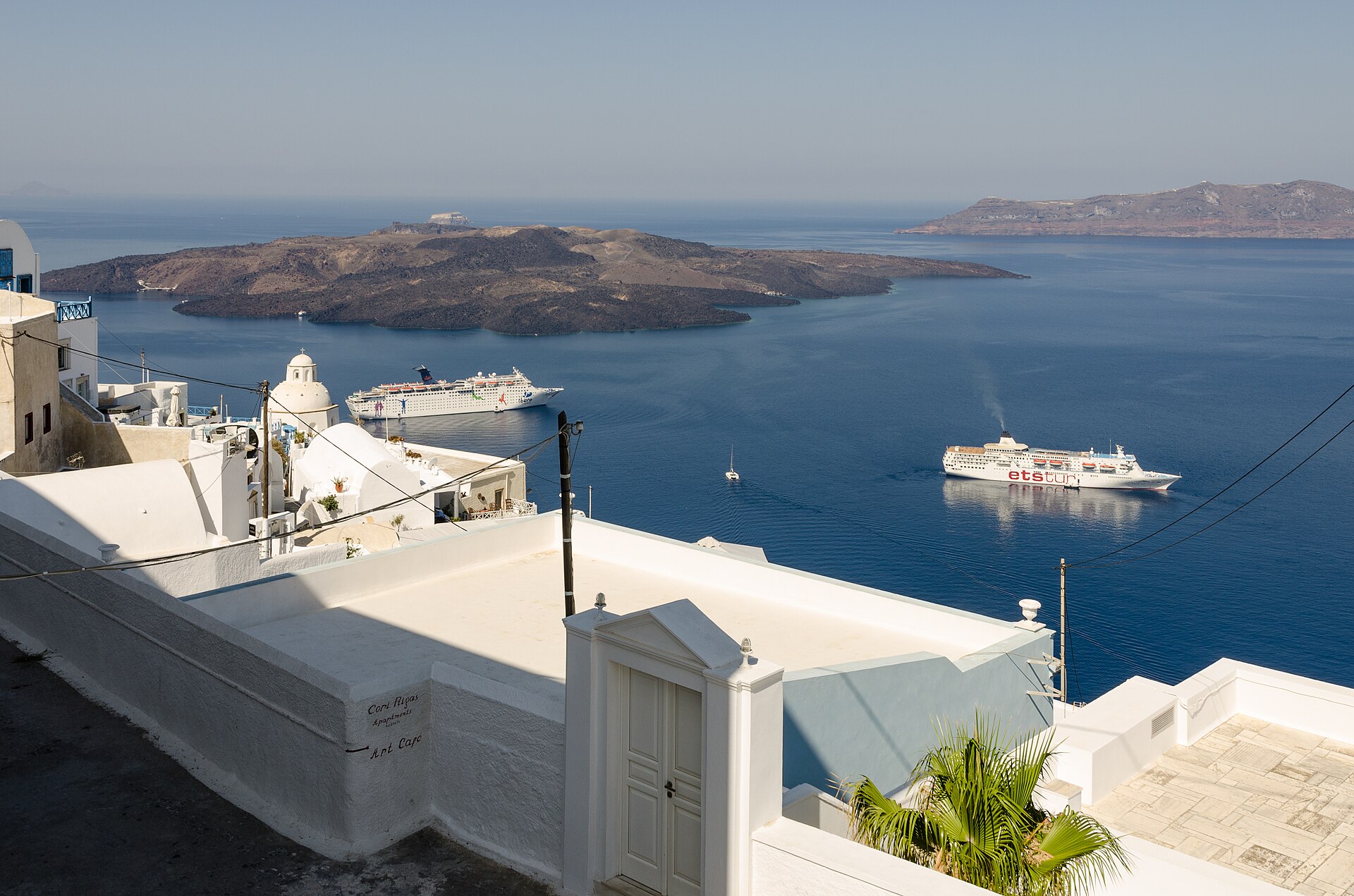
| Santorini | Fira, Oia, the caldera | Tender, always | Cable car €10 one way to Fira |
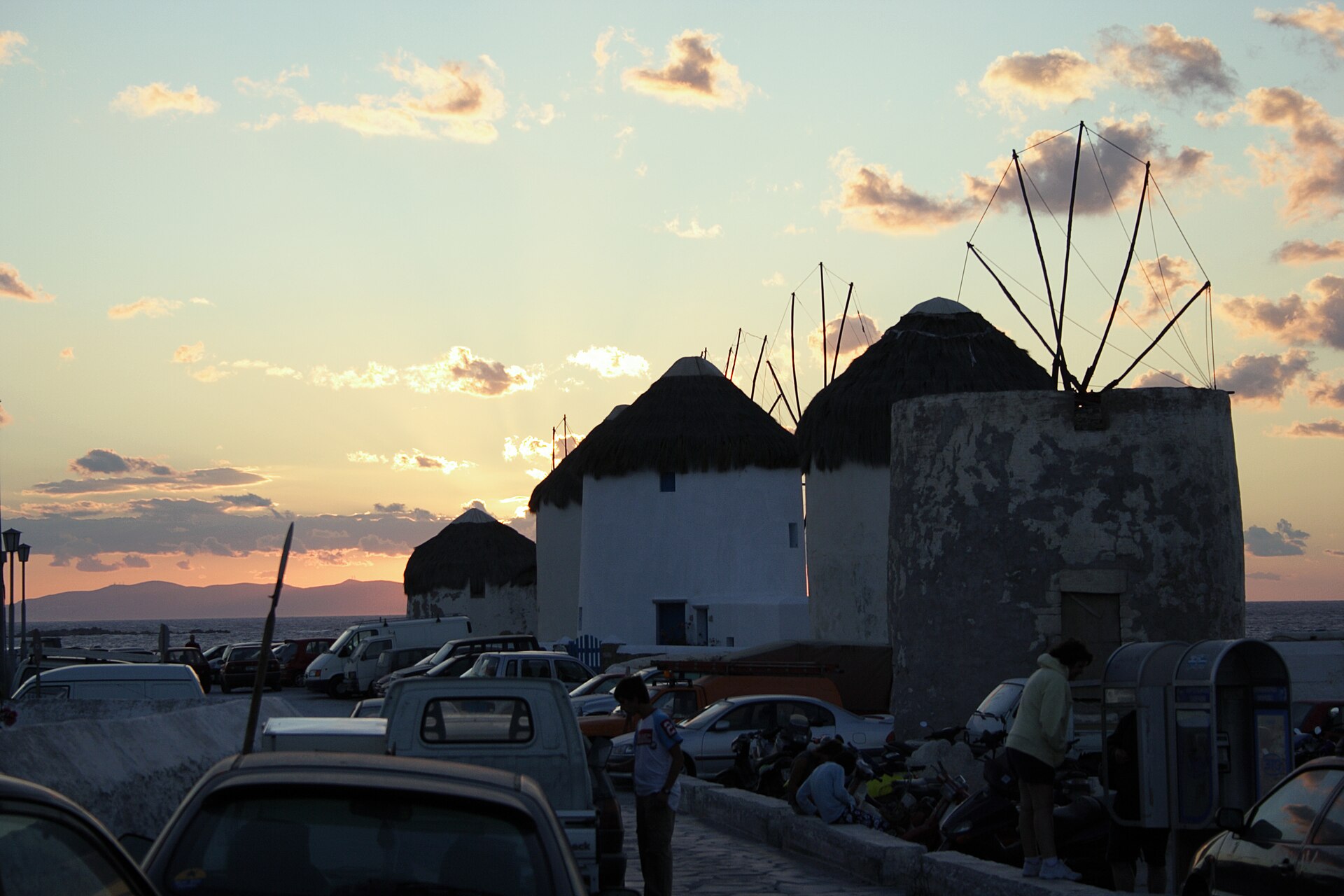
| Mykonos | Chora, windmills, Delos | Usually docks at Tourlos; tenders on busy days | SeaBus €2 one way, about 12 min |
| Rhodes | Medieval Old Town, Lindos | Dock | Old Town under 10 min on foot |
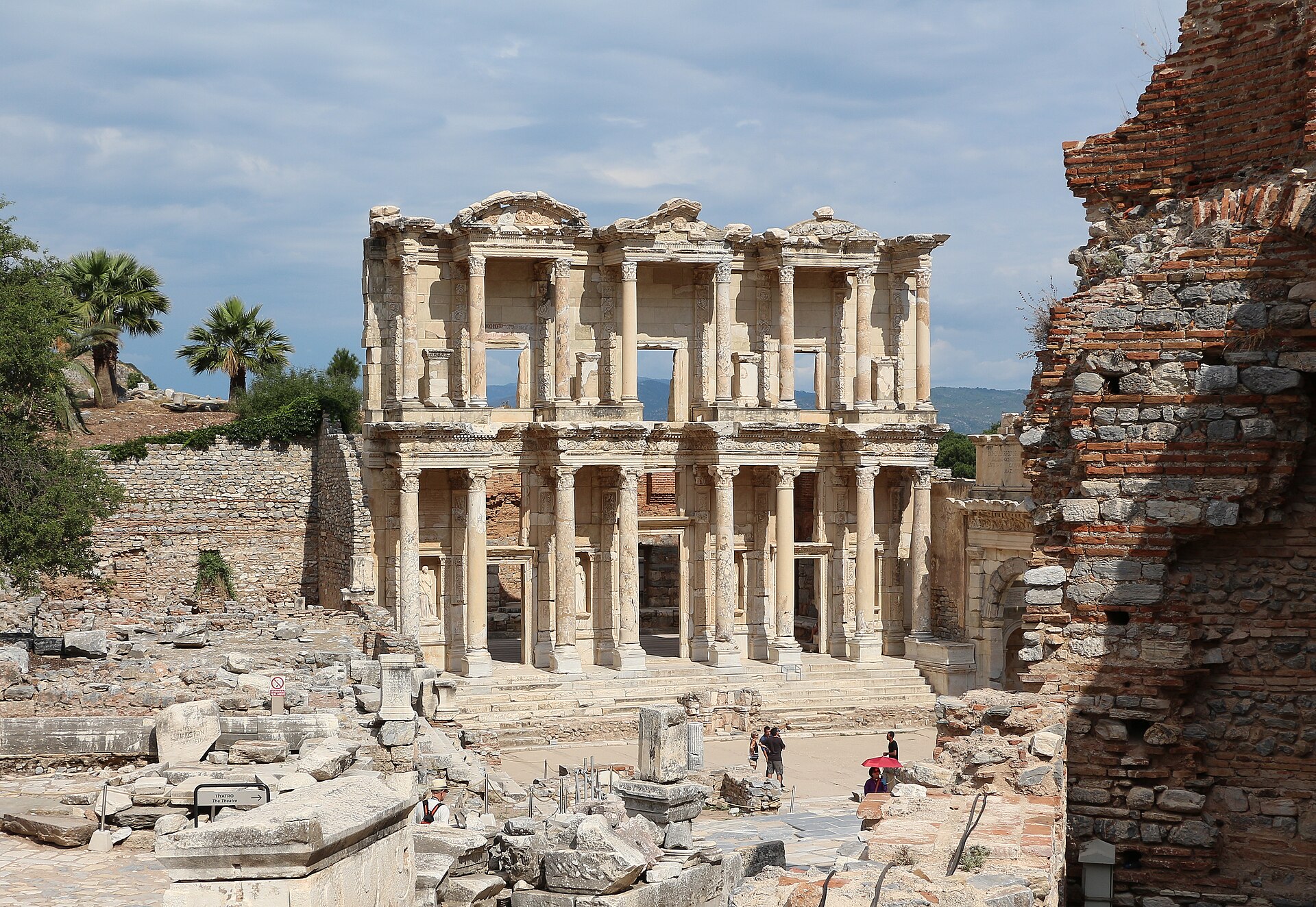
| Kusadasi | Ephesus | Dock at Ege Port | Town 50 m; Ephesus 11 mi (18 km), 20–25 min; taxi fares not published |
| Corfu | Old Town, island beaches | Dock at the New Port + shuttle | Old Town about 1.8 mi (2.9–3 km), about 30 min walk |
| Katakolon | Ancient Olympia | Dock | Olympia 21 mi (34 km); train €10 return, about 45 min |
| Dubrovnik | Walled Old Town | Dock at Port Gruz; tender when berths are full | Old Town 2 mi (3 km); buses about €4; walls from €40 |
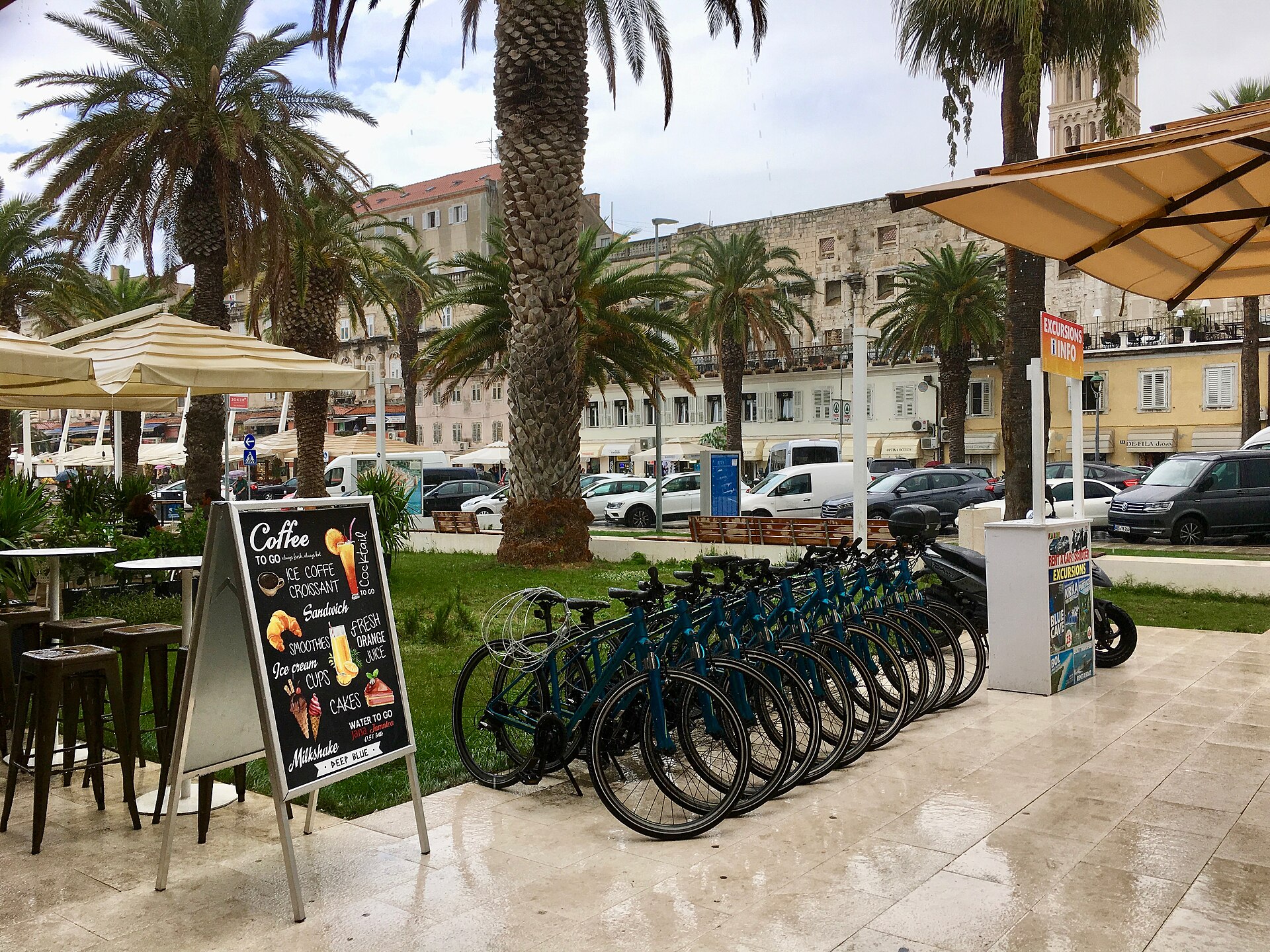
| Split | Diocletian’s Palace | Dock | 800 m on flat ground |
| Kotor | Old Town, fortress, Bay of Kotor | Main quay, else anchor and tender | Sea Gate 200–400 m |
Islands, the Turkish coast and the Adriatic: what each part of the route is like
An Eastern Mediterranean cruise strings together four quite different stretches of coast. Knowing what each one feels like on the day is the easiest way to choose between two itineraries that look identical on a map.
The Cyclades: famous, beautiful and crowded
Santorini and Mykonos are the reason many people book, and they are the least predictable days of the week. Santorini means a tender, a cable car queue at €10 each way and a town perched on a cliff that fills up fast when several ships are in. Mykonos is gentler: most days you dock at the New Port and take the €2 SeaBus into Chora, a compact maze of white lanes that takes about three hours to wander. Both islands charge the top rate of the Greek landing fee. Our advice for both is the same: go early, keep the afternoon flexible, and do not pin the whole trip on one of them.
The Dodecanese and Crete: history you can walk to
Rhodes is the most reliable good day in Greece: you dock beside the walls of the Knights’ medieval town and are inside them within ten minutes. Patmos, on premium and small-ship routes, is a quiet religious island with a monastery on the hill. Crete is big enough to feel like a mainland: Heraklion puts you close to the Minoan palace at Knossos and one of Greece’s great archaeological museums, while ships calling for Chania actually berth at Souda Bay, a taxi ride from the Venetian harbour.
The Turkish coast: Ephesus, Bodrum and Istanbul
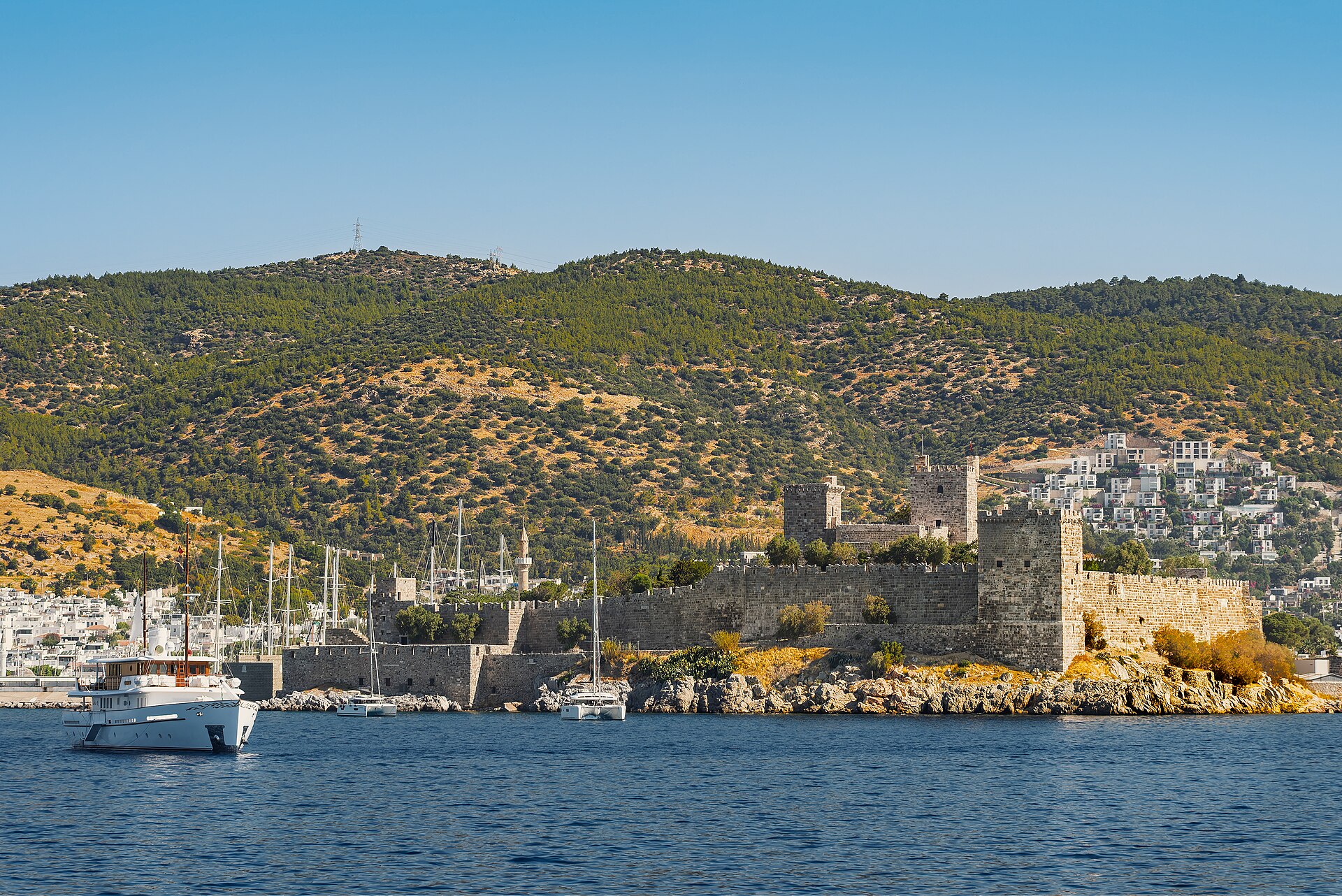
Turkey brings a change of pace, currency and soundscape. Kusadasi’s Ege Port is almost in the town, and Ephesus, one of the best-preserved Roman cities anywhere, is a short drive inland. Bodrum is a resort town built around the Castle of St Peter, the crusader fortress in the photograph at the top of this page. Istanbul is a destination in its own right: ships berth at Galataport, whose underground terminal opens onto a public waterfront, and an overnight or a turnaround there is far better than a single day.
The Adriatic and Ionian: walled towns and sheltered water
The western side of the route is greener and more Venetian. Dubrovnik’s walls cost from €40 and are best walked early; the city caps simultaneous visitors, so ships are scheduled around it. Split is the easiest port in the region, with Diocletian’s Palace 800 metres from the ship. Kotor’s sail-in through its fjord-like bay is spectacular, and the fortress climb above the town is about 1,350 steps. Corfu and Katakolon, on the Ionian side, are the usual bridge between the Adriatic and Greece, and both are less exposed to the meltemi than the Aegean islands.
A real Eastern Mediterranean week, hour by hour
Brochure maps make every Eastern Med week look alike. The published times tell you far more. Here is Royal Caribbean’s Rhapsody of the Seas, a 7-night round trip from Piraeus departing 22 October 2027, exactly as scheduled.
| Day | Port | Arrive | Depart | Hours alongside | Getting ashore |
|---|---|---|---|---|---|
| 1 | Piraeus (Athens), Greece | — | 17:00 | Embarkation | — |
| 2 | Santorini, Greece | 07:00 | 21:00 | 14 | Tender, then cable car |
| 3 | Rhodes, Greece | 08:00 | 18:00 | 10 | Walk off |
| 4 | Bodrum, Turkey | 08:00 | 17:00 | 9 | Varies by berth |
| 5 | Kusadasi, Turkey | 08:00 | 18:00 | 10 | Dock at Ege Port |
| 6 | Mykonos, Greece | 07:00 | 18:00 | 11 | Dock or tender, then SeaBus |
| 7 | At sea | — | — | — | — |
| 8 | Piraeus (Athens), Greece | Early | — | Disembarkation | — |
What that schedule tells you:
- Five port days in a row. Early arrivals every morning from day 2 to day 6, with a single sea day at the end. That is a demanding pace, and it is typical of the region.
- One guaranteed tender. Santorini is scheduled for 14 hours, partly so the tenders and cable car can cope, and partly because an evening in Fira is the point. It is also the call most likely to be cancelled if the wind rises.
- Two countries. Greece and Turkey, so a passport that meets both countries’ rules, and two currencies ashore.
- The landing fee. In October, Greece charges €12 per person at Santorini and Mykonos and €3 at other Greek ports, only if you go ashore. On this week that is €12 + €3 + €12 = €27 per person, about $31. The same week between June and September would cost €45 per person.
Add the embarkation and disembarkation days at Piraeus, and you can see why we say an Eastern Med week feels busier than its Western equivalent even with the same number of nights.
Eastern Mediterranean cruise lines and routes for 2027
The Eastern Med is served by almost every major line, but the style of cruise varies more here than in the West because ship size decides which islands you can reach.
- Royal Caribbean homeports Rhapsody of the Seas in Piraeus for 2027 and uses Odyssey of the Seas across Barcelona, Rome, Ravenna and Athens, with Brilliance of the Seas from Ravenna for the Adriatic.
- Virgin Voyages homeports Scarlet Lady in Athens for summer 2027 on 7- to 11-night sailings, adding Sarandë in Albania. Virgin is adults only.
- Norwegian Cruise Line sails from Istanbul among its 2027 European homeports.
- Princess uses Athens, Istanbul and Trieste among its Mediterranean homeports, across 136 Mediterranean departures in 2027.
- Holland America sails Oosterdam and Nieuw Statendam in the Mediterranean, with long 14- to 15-day voyages and a high share of overnights and late departures.
- Celestyal is the Greek specialist, with short 3-day loops from about €319 (about $370) before extras.
- Small-ship and luxury lines reach Patmos, Nafplio and the smaller Cyclades that megaships cannot. Four Seasons adds 33 Mediterranean voyages for 2027.
Our guide to the best Mediterranean cruise lines compares these operators on price, inclusions, age policies and gratuities, and our Greek islands cruise guide compares big ships, small ships and the ferry alternative for Greece specifically.
How is an Eastern Mediterranean cruise different from the Western Med?
An Eastern Mediterranean cruise is hotter, more island-based and more dependent on tenders and calm wind than a Western Mediterranean one. It has fewer long transfers to inland cities, more beaches and ancient sites, a shorter season, and a Greek landing fee at every call. The Western Med is more city-based, with more direct flights from North America.
| Eastern Mediterranean | Western Mediterranean | |
|---|---|---|
| Character | Islands, ancient sites, beaches, Ottoman and Venetian towns | Big cities, Renaissance art, Riviera, food |
| Flights from North America | Athens has fewer nonstops; Istanbul and Rome are alternatives | Barcelona and Rome have dense nonstop service |
| Tender ports | Several; Santorini always | Few |
| Transfer burden | Short at island ports; long at Piraeus, Katakolon and Kusadasi | Long at Civitavecchia and Livorno |
| July–August heat | Athens 88–90°F (31–32°C) | Barcelona 82–83°F (28–28.5°C) |
| Weather risk | Meltemi cancels island tenders | Mistral can affect the French coast |
| Fees | Greek landing fee at every Greek call | Barcelona €11 for short stays |
| Season | April–October | April–November, some winter |
Our honest view is that the Western Med is the easier first cruise and the Eastern Med the more rewarding second one. But if you know you want islands, ruins and swimming rather than cathedrals and museums, go east first and plan around the wind. Our Western Mediterranean cruise guide sets out the other side of the comparison.
What is the best time to cruise the Eastern Mediterranean?
The best time to cruise the Eastern Mediterranean is late May to June or September to early October. The sea is warm, Athens is cooler than in midsummer, fares are lower, and the meltemi wind is usually less persistent than in July and August. October also brings the lower Greek landing fee of €12 at Santorini and Mykonos.
| Month | Athens air, max | Athens sea | Dubrovnik sea | Athens rainy days | Our verdict |
|---|---|---|---|---|---|
| April | 66°F (19°C) | 59°F (15°C) | 59°F (15°C) | 7 | Lovely for sites; too cold to swim |
| May | 75°F (24°C) | 64°F (18°C) | 64°F (18°C) | 5 | Excellent for sightseeing |
| June | 84°F (29°C) | 72°F (22°C) | 72°F (22°C) | 2 | Warm sea, manageable heat |
| July | 90°F (32°C) | 77°F (25°C) | 75°F (24°C) | 1 | Hottest; strongest meltemi |
| August | 88°F (31°C) | 79°F (26°C) | 77°F (25°C) | 2 | Warmest sea; strongest meltemi; crowds |
| September | 82°F (28°C) | 77°F (25°C) | 73°F (23°C) | 2 | Our pick: warm sea, easing crowds |
| October | 72°F (22°C) | 72°F (22°C) | 70°F (21°C) | 6 | Best value; lower landing fee; season ends |
Two things matter more here than in the West. First, heat affects the sites themselves: the Acropolis closed until 17:00 on 8 July 2025 when Athens was forecast to reach 38°C (100°F), and there is little shade at Ephesus, Knossos or Olympia. Second, wind decides whether you reach the islands at all. Our guide to the best time to cruise the Mediterranean sets out the month-by-month trade-offs for every region.
The meltemi, tenders and caps: why Eastern Med ports get cancelled
The meltemi is a strong, dry northerly wind that blows across the Aegean from May to October. It is most frequent from June to September and at its strongest and longest in July and August. On 14 August 2026 the National Observatory of Athens recorded gusts above 100 km/h (62 mph) in several Aegean locations.
The meltemi matters because it hits tender ports hardest. A ship alongside a quay in Rhodes can stay put in weather that would make it unsafe to move passengers into small boats in the Santorini caldera. So the calls most likely to be cancelled are the ones most people book for: Santorini always, Mykonos on tender days, and the small islands where large ships anchor. When that happens, the captain usually substitutes a sea day or a more sheltered port, refunds the port fees and taxes not incurred, and that is all. There is no compensation beyond that under standard cruise contracts.
Caps are the other constraint. Santorini limits cruise passengers to 8,000 a day under a ranked berth allocation, and since 2026 counts ships at 100% of capacity rather than 80%. Scheduled calls fell to 595 in 2026 from 728 in 2025, a drop of about 18%, which is why fewer 2027 itineraries include Santorini than you might expect. Dubrovnik’s 2026 berthing rules cap simultaneous visitors at 4,000, alongside a long-standing agreement limiting the city to two ships and 5,000 passengers a day; some outlets report a figure of 8,000, so sources conflict. The city expected about 461 cruise calls and 661,094 passengers in 2026.
What we would do about all this:
- If Santorini is the reason for the trip, choose May, June or September, and prefer an itinerary with a long or evening Santorini call.
- Book refundable independent tours at tender ports, or use the ship’s excursions, which are refunded automatically if the call is cancelled.
- Look at the port list for docking ports. A week with Rhodes, Kusadasi, Corfu and Katakolon is far more weather-proof than one built around the Cyclades.
How much does an Eastern Mediterranean cruise cost?
An Eastern Mediterranean cruise costs broadly the same per night as a Western one on the same line, but extras differ: Greek landing fees of up to €20 per call, longer flights to Athens, and more excursions to inland sites. Short Greek loops start around €319. Budget $1,500 to $3,500 per person all-in for a mainstream 7-night week before flights.
The pieces of the bill that are specific to the region:
- The Greek landing fee. Per person per call, only if you go ashore. From June to September: €20 at Santorini and Mykonos, €5 elsewhere. April, May and October: €12 and €3. November to March: €4 and €1. A summer week with Santorini, Mykonos, Rhodes and Corfu adds €50 per person.
- Short cruises. Celestyal’s 3-day loops from Athens start around €319 (about $370), with excursions typically $50 to $150 each.
- Taxes and port fees. About $100 to $200 per person on a 7-night Mediterranean sailing when not already included.
- Gratuities. Per person per night in 2026: Royal Caribbean $18.50, Norwegian $20, Celebrity $19.50 (from 29 July 2026), Princess $18, Virgin $22 (or $20 prepaid). Viking adds $20 on US bookings; Oceania and the luxury lines include them.
- Headline tickets. The Acropolis €30, Ephesus reported at €40, Dubrovnik’s walls from €40. Our shore excursions guide lists them all with dates.
For the full budget, including flights and onboard spending, see our Mediterranean cruise cost guide.
Do Eastern Mediterranean cruises go to Turkey, Israel or Egypt?
Most Eastern Mediterranean cruises visit Turkey, usually Kusadasi for Ephesus and sometimes Bodrum or Istanbul. Israel and Egypt are far less likely: major lines suspended calls at Haifa, Ashdod, Port Said and Safaga through 2026, and itineraries listing them should be treated as provisional. Check current government travel advice before booking.
Turkey. US and Canadian citizens have been able to visit Turkey visa-free for tourism since 1 January 2024, for up to 90 days in any 180. UK citizens are also visa-free, with a passport valid at least 150 days after arrival. Claims that cruise passengers can land without a visa for 72 hours under a special port rule circulate online; we have not been able to verify them, and they are not needed by most English-speaking visitors anyway.
Israel and Egypt. Some itineraries on sale for 2027 still show Haifa, Ashdod, Alexandria or Port Said. We would not book a cruise for those calls. A line can substitute ports at its discretion under the cruise contract, and has done so repeatedly. If Jerusalem or the pyramids are the point, a land trip is the more reliable way to get there.
Cyprus and Albania. Limassol appears on some longer routes, and Virgin Voyages has added Sarandë in Albania for 2027. Both are worth checking for your specific passport’s entry rules.
All-aboard math: Ephesus from Kusadasi
All aboard is the time you must be back on the ship, normally 30 to 60 minutes before departure, and the ship does not wait for independent travellers. Kusadasi is the Eastern Med’s classic excursion port: Ege Port is 50 metres from the town, and Ephesus is 11 miles (18 km) away, 20 to 25 minutes by road. Here is our worked timeline for an 08:00 to 18:00 call, like Rhapsody of the Seas‘ 2027 schedule, with all aboard at 17:30.
| Time | What happens | Buffer logic |
|---|---|---|
| 08:00–08:30 | Gangway opens; walk into Kusadasi | Ege Port puts you almost in town |
| 08:30–09:00 | Agree a taxi price, or meet your tour | Taxi fares are not published; agree before you get in |
| 09:00–09:25 | Drive to Ephesus | Ask the driver which gate they will collect you from |
| 09:30–12:30 | Ephesus, including the Terrace Houses if you pay extra | Three hours; very little shade |
| 12:30 | Latest comfortable departure from the site | Leaves time for lunch and the House of the Virgin Mary or town |
| 13:00–16:00 | Lunch, bazaar or a second site | Keep the last hour flexible |
| 16:30 | Back at the port gate | Our recommended buffer here: 60 minutes |
| 17:30 | All aboard |
Kusadasi is forgiving compared with Rome or Florence, because the distance is short. The risks are heat and a taxi that has not been properly arranged for the return. If you go independently, agree whether the driver waits at the site and the total price before you leave the port.
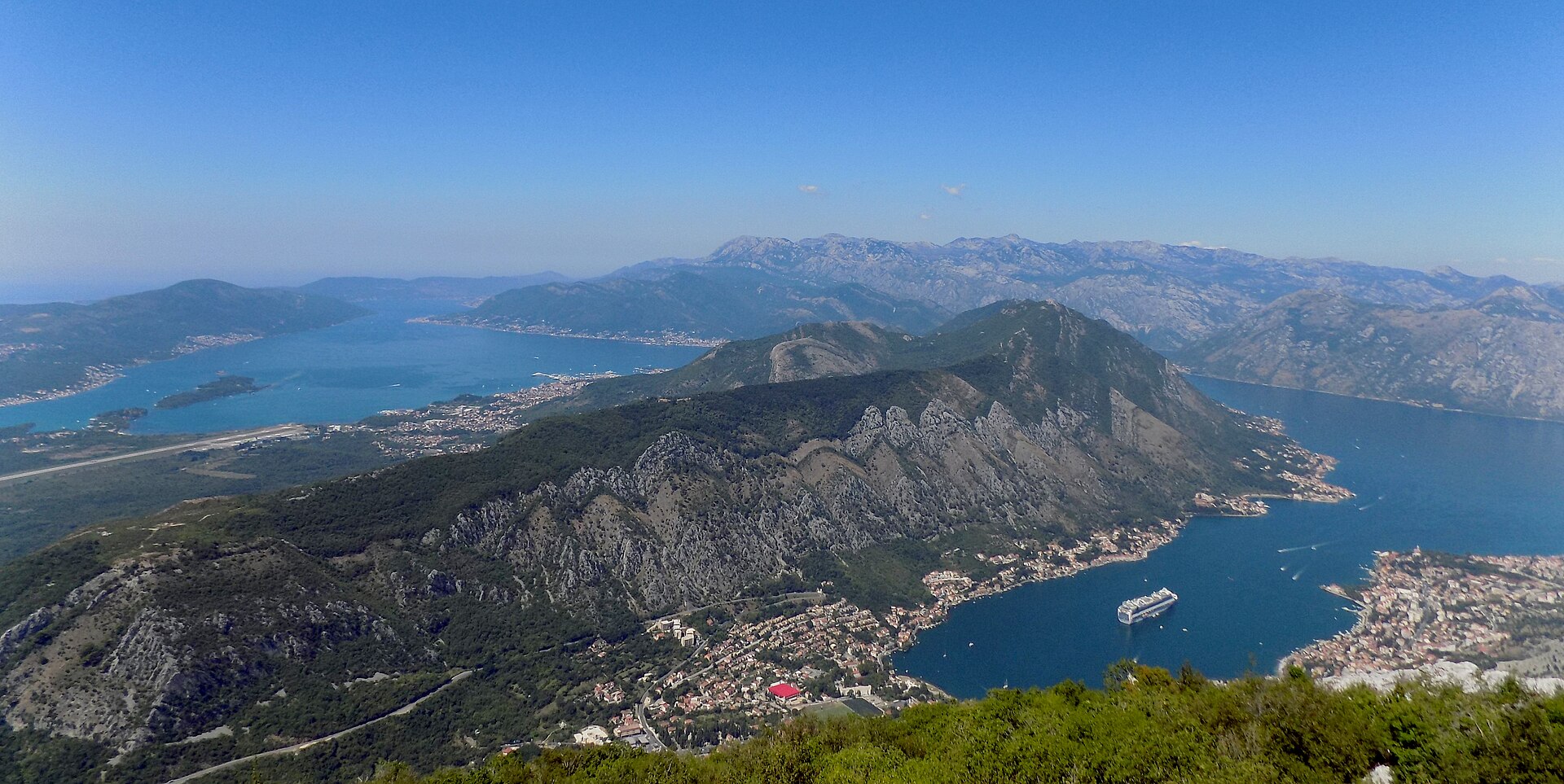
For the Adriatic calls on these routes in detail, our guide to Croatia and Adriatic cruise ports covers the bus from Gruz to Dubrovnik’s walls and the city’s ship limits, Split on foot, whether Kotor docks or tenders, and newer calls at Bar, Koper and Sarandë.
Eastern Mediterranean routes leave and re-enter the Schengen area several times in a fortnight, at Turkey, Montenegro, Albania and occasionally Egypt. Our guide to Mediterranean cruise travel documents and entry requirements gives the rule for each of those borders by nationality, with the source and the date we checked it.
The Turkish, Cypriot and Egyptian calls on these routes now have their own hub. Our guide to Turkey and eastern Mediterranean cruise ports covers where ships dock in Istanbul, Kusadasi, Bodrum, Izmir, Limassol and Alexandria, which lines still call in Egypt and Israel as of September 2026, and the all-aboard timings for Istanbul by tram and for the pyramids from Alexandria.
For travellers with limited mobility the Eastern Mediterranean is the harder half of the sea, because it has the most tender ports and the steepest island towns. Our guide to accessible Mediterranean cruising covers the lines’ tender rules, the Acropolis lift for disabled visitors, and which ports in the region dock.
If you want the Greek islands on a mid-size ship at a low price, Celebrity’s Infinity is worth a look: it sails 7-night round trips from Piraeus through the summer of 2027, taking in Hydra, Kuşadası, Rhodes and Santorini, from $967 per person including taxes when we checked, and it stays in Europe all winter. Our guide to Celebrity Mediterranean cruises compares it with the line’s six other ships in the region.
Where this guide goes deeper
This page is the hub for Eastern Mediterranean cruising. The guides beneath it will each be linked here as they publish: Eastern Mediterranean cruises 2027, best Eastern Mediterranean cruises, Eastern Mediterranean cruise itineraries compared, Adriatic cruises, Greece and Turkey cruises and the best time to cruise the Eastern Mediterranean.
Elsewhere on the site: the itineraries guide compares Eastern routes with Western and Adriatic ones using real published schedules; our embarkation ports guide covers starting a cruise in Athens, Istanbul, Trieste or Ravenna; and the shore excursions hub covers the Acropolis, Ephesus, Olympia and Knossos in detail.
Eastern Mediterranean cruise FAQs
How long is an Eastern Mediterranean cruise?
Most are 7 nights round trip from Athens. Routes from Rome, Trieste or Ravenna usually run 10 to 12 nights, and Greek short loops from Piraeus run 3 or 4 nights. From North America, we think 10 or more nights gives better value for a long flight to Athens.
Is the Eastern Mediterranean rough?
Usually not in terms of ship motion, but the meltemi wind can make the Aegean choppy in July and August and regularly causes tender calls such as Santorini to be cancelled. Adriatic and Ionian waters, around Croatia, Corfu and Katakolon, are generally more sheltered from it.
Do I need a visa for Turkey on a cruise?
Not if you are a US, Canadian or UK citizen visiting for tourism. The US and Canada have been visa-free for up to 90 days in 180 since January 2024. UK visitors need a passport valid at least 150 days after arrival. Other nationalities should check Turkey’s current rules.
Which is better, Eastern or Western Mediterranean?
For a first Mediterranean cruise we lean West: shorter flights, fewer tenders, a longer season. For islands, beaches and ancient sites, the East is more rewarding. It is hotter in summer, more exposed to wind, and adds a Greek landing fee at every Greek call.
Can you swim on an Eastern Mediterranean cruise?
Yes, from about June to early October. The sea off Athens averages 72°F (22°C) in June and 79°F (26°C) in August. Rhodes, Mykonos and Corfu have beaches within reach of the port, though few itineraries give you a true beach day between sightseeing calls.
How much is the Greek cruise port tax?
From June to September it is €20 per person per call at Santorini and Mykonos and €5 at other Greek ports. In April, May and October it falls to €12 and €3, and from November to March to €4 and €1. It is billed to your onboard account only if you go ashore.
Do Eastern Mediterranean cruises stop in Croatia?
Many do, especially routes starting in Trieste, Ravenna or Venice’s mainland ports. Dubrovnik, Split and sometimes Zadar or Korcula appear, often with Kotor in Montenegro. Greek-focused weeks from Athens usually skip Croatia.
Is an Eastern Mediterranean cruise good for people with limited mobility?
It is harder than the Western Med because of tenders, steep island towns and uneven ancient sites. Rhodes, Split, Corfu and Kusadasi are the more manageable ports. Ask your line in writing about tender access for mobility aids before booking.
How we researched this guide
Every fare, fee, schedule and rule on this page comes from a named source with the date we checked it. The Rhapsody of the Seas schedule was retrieved from Royal Caribbean on 13 September 2026. Deployments come from the lines’ own 2027 announcements. The Greek landing fee is the schedule in force since 21 July 2025; Santorini’s cap and call numbers come from the Thira Municipal Port Fund’s allocation; Dubrovnik’s figures come from its 2026 berthing regulations and local reporting, and we have noted where sources conflict. Wind data come from the National Observatory of Athens, climate from weather2travel, and entry rules from official government advice. We searched page one of Google for this topic on 16 September 2026; every result was a cruise line or booking site, and none mentioned the meltemi, the landing fee or tender risk.
We are an independent editorial site. We do not sell cruises and have not sailed every itinerary described. Opinions — that September is the best month, that the Western Med is the easier first cruise, that Israel and Egypt calls should not drive a booking — are labelled as ours. Fees and entry rules are re-checked each January and March, and on any official announcement.
Image credits
| Image | Photographer | Licence |
|---|---|---|
| Bodrum Castle from the sea | Mustang Joe | CC0, via Wikimedia Commons |
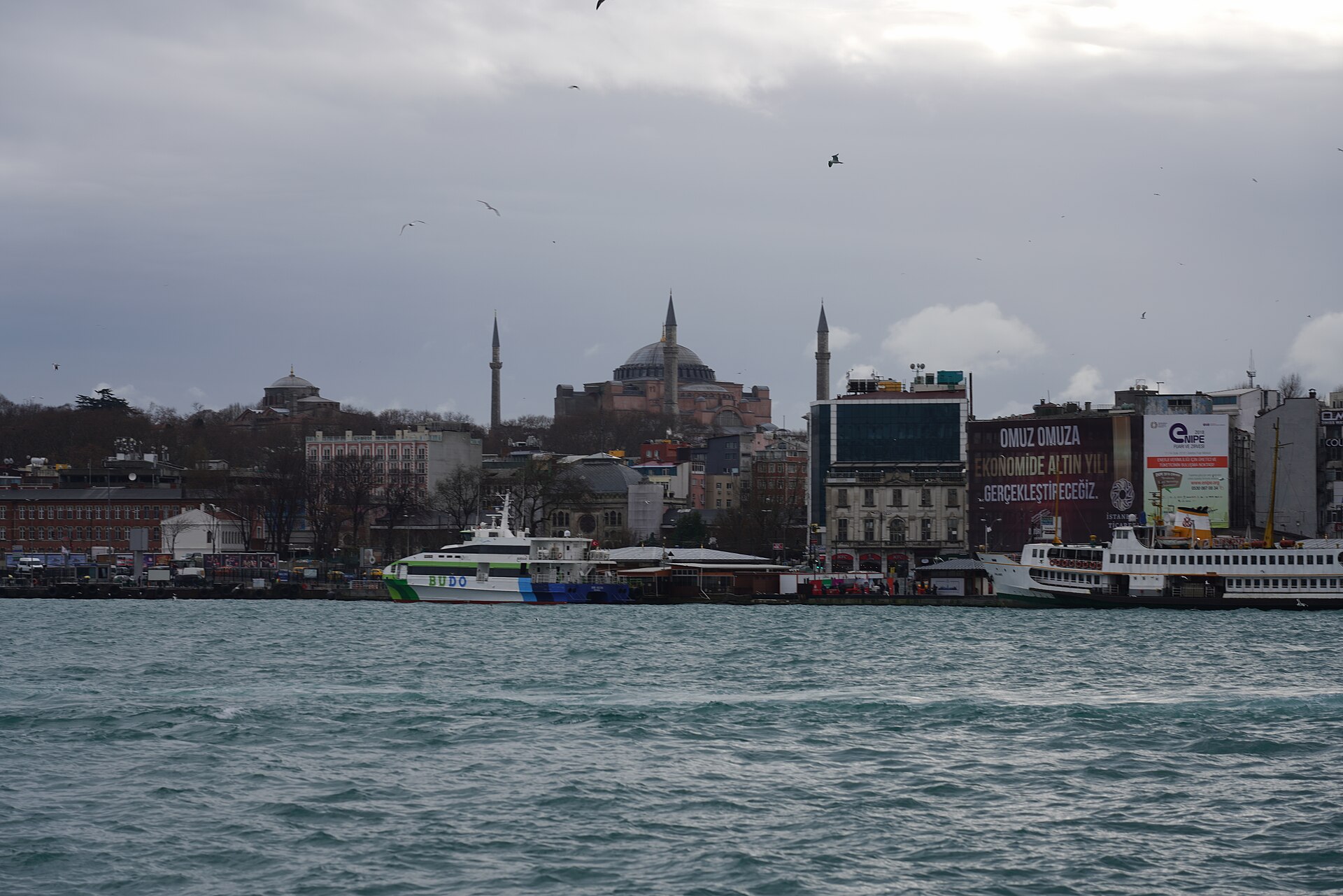
| Hagia Sophia from the water, Istanbul | Ray Swi-hymn | CC BY-SA 2.0, via Wikimedia Commons |
| The Riva promenade, Split | Marie Thérèse Hébert & Jean Robert Thibault | CC BY-SA 2.0, via Wikimedia Commons |
| Cruise ships in the Santorini caldera, seen from Fira | Norbert Nagel | CC BY-SA 3.0, via Wikimedia Commons |
| The lower windmills, Chora, Mykonos | Zde | CC BY-SA 4.0, via Wikimedia Commons |
| The Library of Celsus, Ephesus | Bernard Gagnon | CC BY-SA 3.0, via Wikimedia Commons |
| Bay of Kotor, Montenegro | Milica Buha | CC BY-SA 4.0, via Wikimedia Commons |
Published 22 September 2026. Fees, schedules and entry rules were checked in September 2026 and will change — verify anything you are about to pay for. Primary sources: the Santorini cable car operator’s tariff and the US State Department’s Turkey country page.