A Greek islands cruise is a 3- to 11-night sailing from Piraeus, Athens’s port, calling at four to six islands plus usually one Turkish port. Big-ship weeks cost roughly $1,100 to $1,800 per person; a Celestyal 3-day loop starts around €319, about $370. Santorini always tenders, Greece now charges up to €20 per person to set foot ashore, and July and August are the windiest months of the year.
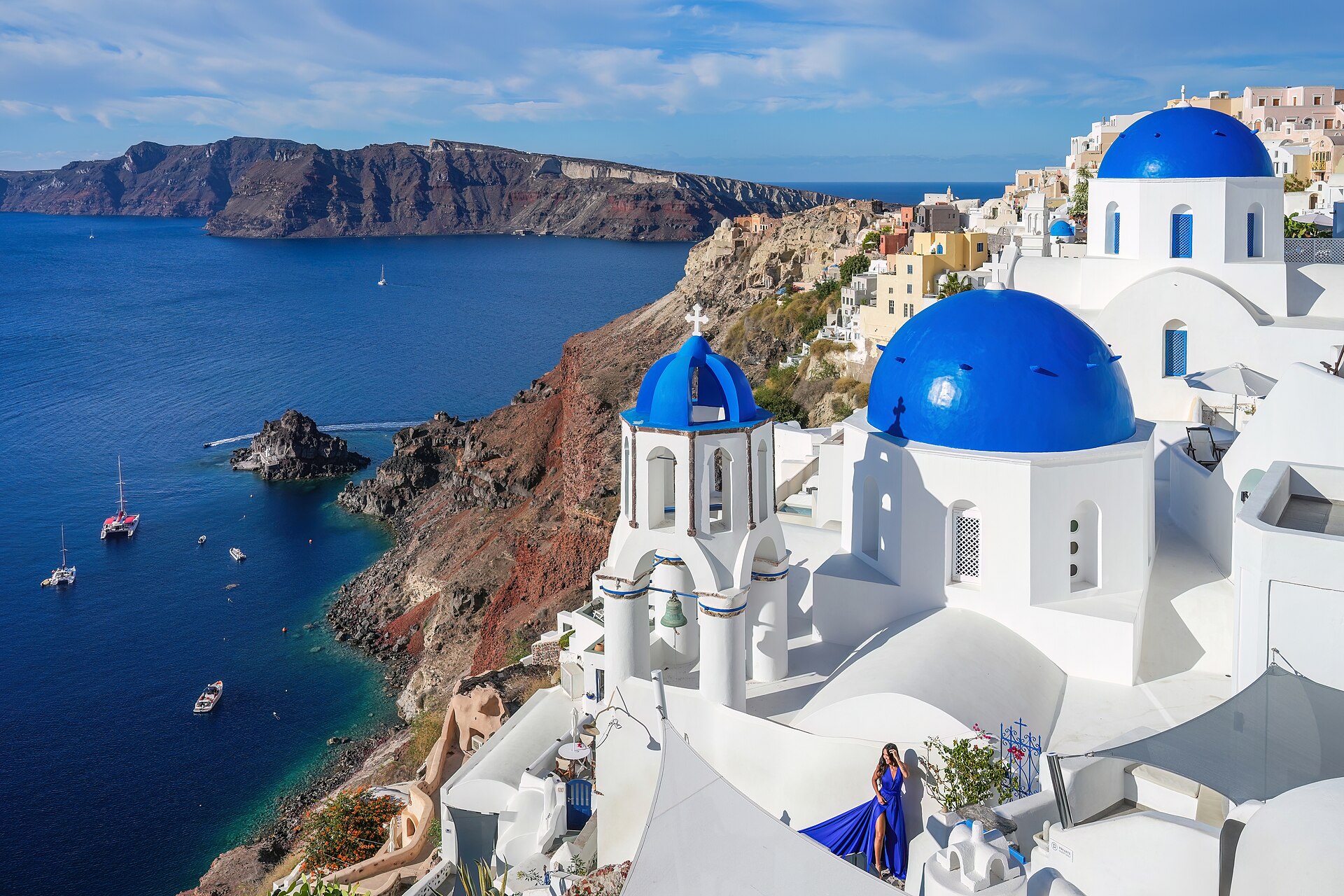
Seven of the nine pages currently ranking for this search are cruise lines selling their own ships. They will show you the blue domes at Oia. None of them will tell you that you reach those domes by tender boat, cable car and queue, that the island caps cruise arrivals at 8,000 a day, or that the ferry from Piraeus costs about €46 and would let you stay the night.
This page compares every way of doing it — megaship, Greek specialist, short loop, small ship under sail, luxury, and not cruising at all — with the prices, times and rules we could verify, and says plainly which we would pick. For the wider region, see our main Mediterranean cruise guide.
At a glance: Greek islands cruising in 2027
| Season | Effectively April to October. The fleet crosses to the Caribbean for winter |
| Main homeport | Piraeus (Athens), 7 miles (12 km) from the city, 20–30 minutes by taxi. Lavrion for some small-ship operators |
| Typical length | 3 or 4 nights for a loop; 7 nights for the standard week; 7 to 11 on Virgin’s 2027 Athens season |
| Ports per week | Five, with one sea day. Greek weeks are the most port-intensive itineraries in the Mediterranean |
| Headline islands | Santorini, Mykonos, Rhodes, Crete, Corfu, Patmos, plus Kusadasi or Bodrum in Turkey |
| Tendering | Santorini always tenders. Mykonos usually docks at Tourlos but tenders on busy days |
| Landing fee | €20 per person per call at Santorini and Mykonos, 1 June–30 Sep; €12 in April, May and October; €4 in winter. Other Greek ports €5 / €3 / €1 |
| Santorini cap | 8,000 cruise passengers a day, ranked berth allocation. 2026 scheduled calls fell to 595 from 728 |
| Biggest weather risk | The meltemi, not the heat. Peak strength and duration in July and August; it cancels tenders |
| Ferry alternative | Piraeus–Santorini from about €46, up to 8 sailings a day; Piraeus–Mykonos from about €44, fastest about 2 h 40 |
| Currency note | Conversions use €1 = $1.1592, the European Central Bank reference rate of 11 September 2026 |
Every way to cruise the Greek islands, compared
There are six genuinely different products sold under this name, at prices differing by a factor of twenty. Comparing a Celestyal 3-day loop with a Silversea week is like comparing a coach tour with a private driver: both get you there, neither is the other’s competitor.
| Option | Typical operators | Length | Roughly | What you get | What you give up |
|---|---|---|---|---|---|
| Big-ship week | Royal Caribbean, Celebrity, Norwegian, MSC, Princess | 7 nights | $1,100–$1,800 pp | Five islands, full ship facilities, best price per night | Tender queues with 3,000 others; no evenings ashore |
| Greek specialist | Celestyal | 3, 4 or 7 nights | From about €319 (about $370) for 3 days | Greek-run, Greek-focused, cheap, more islands per night | Older ships; short calls |
| Adults-only mainstream | Virgin Voyages (Scarlet Lady, Athens, summer 2027) | 7–11 nights | Mainstream-plus | No children, late departures, a different crowd | 18+ only, which rules out family trips |
| Small ship and sailing | Windstar, Star Clippers, Variety, Ponant | 7 nights | $400–$900 pp per night | Harbours the big ships cannot enter; a few hundred guests, not a few thousand | Price; fewer onboard facilities |
| Luxury | Seabourn, Silversea, Regent, SeaDream | 7–11 nights | $600–$1,100 pp per night | Gratuities, drinks and most excursions in the fare; calm ships; small-port access | Three times the mainstream fare |
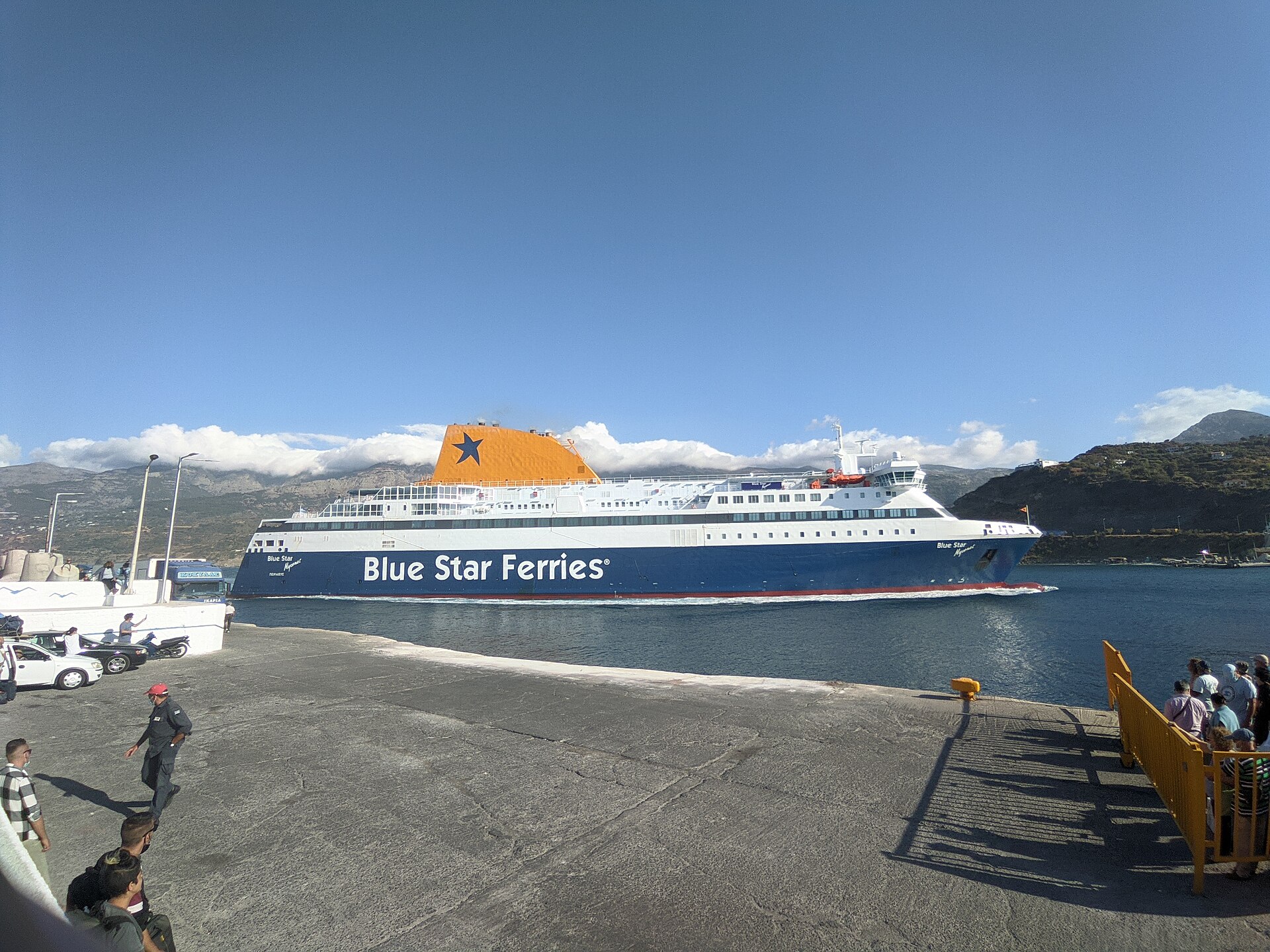
| No cruise: ferries | Blue Star, Seajets, Golden Star, Fast Ferries and others | As long as you like | From about €44–€46 per hop | Evenings, sunsets, staying another night, half the cost | Luggage, logistics, and cancellations when the meltemi blows |
Which Greek islands cruise is right for you?
Our recommendations, with the reasoning shown so you can disagree usefully.
| If you… | Book | Why |
|---|---|---|
| Have never been to Greece and want the highlights | 7-night big-ship week from Piraeus, late September | Five islands, best price per night, warmest sea of the year, meltemi easing |
| Are adding a few days to a land trip in Athens | Celestyal 3- or 4-night loop | From about €319; three or four islands without committing a week |
| Care most about the islands themselves | Small ship or sailing — Windstar, Star Clippers, Variety | Reaches harbours the megaships sail past; a few hundred guests ashore, not a few thousand |
| Want evenings ashore and no packing | A line with overnights, or Virgin’s late departures | An evening in a Greek port is the one thing cruising normally cannot give you |
| Have mobility limitations | A big ship, and accept you may miss Santorini | Tenders are the main accessibility barrier in this region — see the accessibility section below |
| Want depth rather than breadth | Ferries and hotels, not a cruise | Half the cost, evenings included, and you can stay when a place turns out to be wonderful |
| Are travelling with children | Royal Caribbean or MSC, not Viking or Virgin | Both of those are 18+ and will not carry your family at all |
If you push us to one answer for a first-time North American visitor: a 7-night big-ship week from Piraeus in the last week of September or first week of October. It is the cheapest good version of this trip, the sea is at its warmest, the wind has usually settled, and on 1 October the landing fee at Santorini and Mykonos drops from €20 to €12 per person.
A real 7-night Greek itinerary, hour by hour
Here is a published 2027 sailing, reproduced exactly as scheduled, so you can see what a Greek week actually contains rather than what a brochure implies. It is an ordinary itinerary, not a showcase voyage.
Royal Caribbean Rhapsody of the Seas, 7 nights round trip from Piraeus, departing 22 October 2027.
| Day | Port | Arrive | Depart | Alongside | Realistic time ashore |
|---|---|---|---|---|---|
| 1 | Piraeus (Athens) | — | 17:00 | Embarkation | — |
| 2 | Santorini — tender | 07:00 | 21:00 | 14 h | about 9–10 h |
| 3 | Rhodes | 08:00 | 18:00 | 10 h | about 8.5 h |
| 4 | Bodrum, Turkey | 08:00 | 17:00 | 9 h | about 7.5 h |
| 5 | Kusadasi, Turkey (Ephesus) | 08:00 | 18:00 | 10 h | about 8.5 h |
| 6 | Mykonos | 07:00 | 18:00 | 11 h | about 9.5 h |
| 7 | At sea | — | — | — | — |
| 8 | Piraeus (Athens) | Early | — | Disembarkation | — |
Two conventions worth knowing before your first Greek week. All aboard is the deadline for being back on the ship, usually half an hour before the published sailing time, and the ship does not wait for independent travellers. Tendering means the ship anchors and small boats ferry you in, which costs you time at both ends and can be cancelled outright by wind.
Notice what the table shows and the brochure does not: five consecutive port days with 07:00 and 08:00 arrivals, one sea day at the end, and 54 hours alongside that convert to roughly 43 hours actually on Greek and Turkish ground. That is an excellent trip and a genuinely tiring one.
Santorini: the tender, the cliff and the cap
Santorini is the reason most people book this cruise and the port most likely to disappoint them, so it deserves its own section.
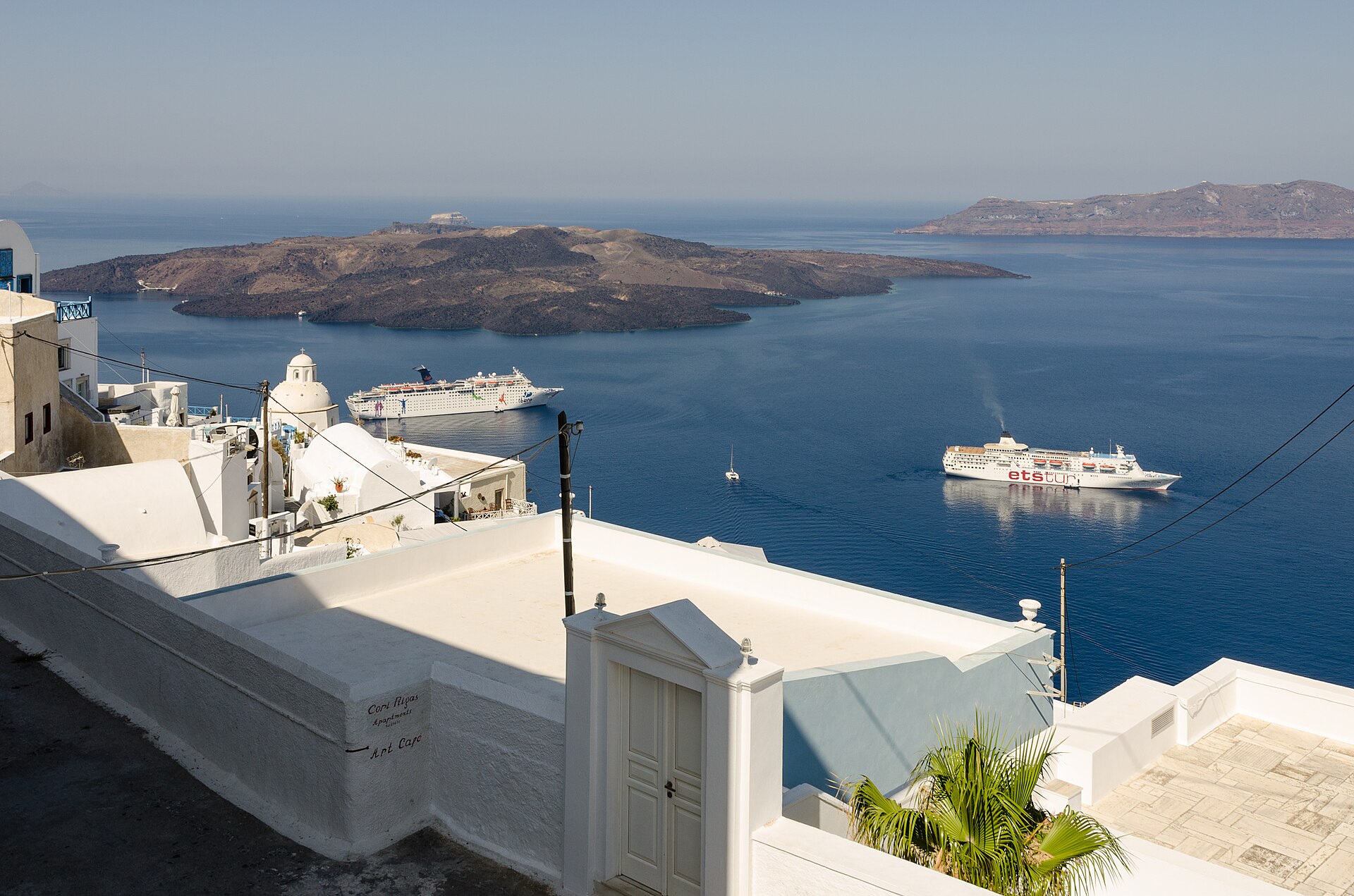
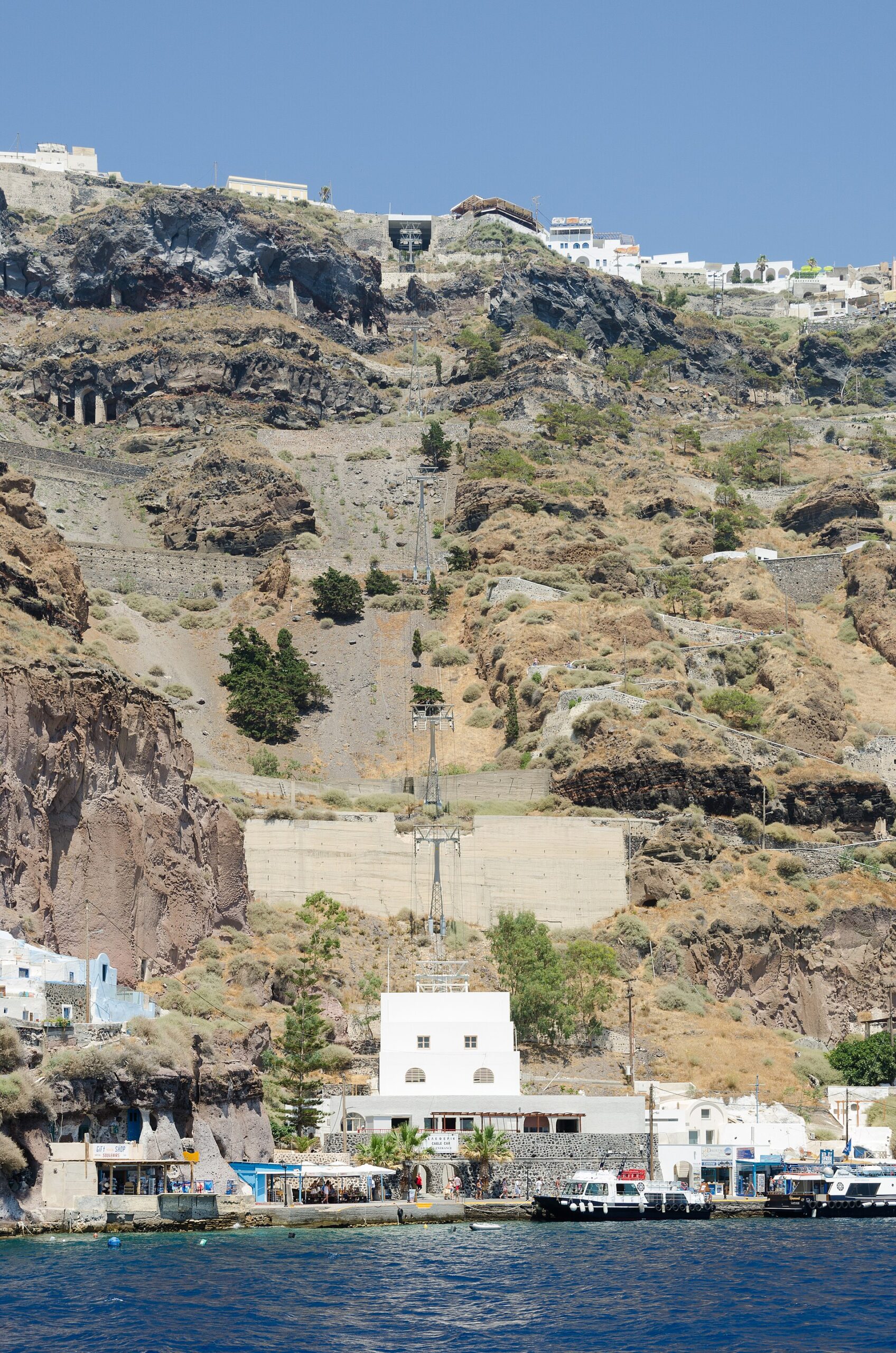
Ships anchor in the caldera. There is no berth and there never will be — the water is too deep. Every passenger goes ashore by tender to the Old Port at the foot of the cliff, and then faces a 300-metre climb to Fira by one of three routes: the cable car at €10 one way for an adult, €5 for a child and €5 per bag, running 07:00 to 23:00 in June to August with the last descent at 22:40; the mule path; or the steps on foot. The cable car queue in high season is the bottleneck, in both directions.
Then the cap. The Thira Municipal Port Fund limits arrivals to 8,000 cruise passengers a day under a ranked berth allocation, and for 2026 counted ships at 100% of capacity rather than 80%. Scheduled 2026 calls fell to 595 from 728 in 2025, a drop of about 18%. Fewer itineraries include Santorini than three years ago, and the ones that do are competing for the same 8,000 places.
Add the €20 landing fee between 1 June and 30 September, and a Santorini day in July costs a couple €40 in levy plus €40 in cable car fares before they have bought a coffee — about $93 — and delivers perhaps nine hours on the island, of which an hour and a half is spent queuing.
None of that means skip it. The caldera is genuinely one of the great sights of Europe and the photographs do not exaggerate. It means go in May, June or October rather than August, take the first tender rather than the third, and walk down rather than queue for the cable car if your knees allow it. A reported closure of the Karavolades steps and mule path since October 2025 is unverified and we will not repeat it as fact — check locally on the day.
Mykonos, Rhodes, Crete and the rest: what each port day is actually like
The islands differ far more in practical terms than the marketing suggests. Here is what you are getting off the ship into.
| Island | Dock or tender | Getting to town | Transport, as of September 2026 | Character |
|---|---|---|---|---|
| Santorini | Tender, always | Old Port at the foot of the cliff; Fira is 300 m above | Cable car €10 one way adult, €5 child, €5 per bag | The great view; the hardest logistics in Greece |
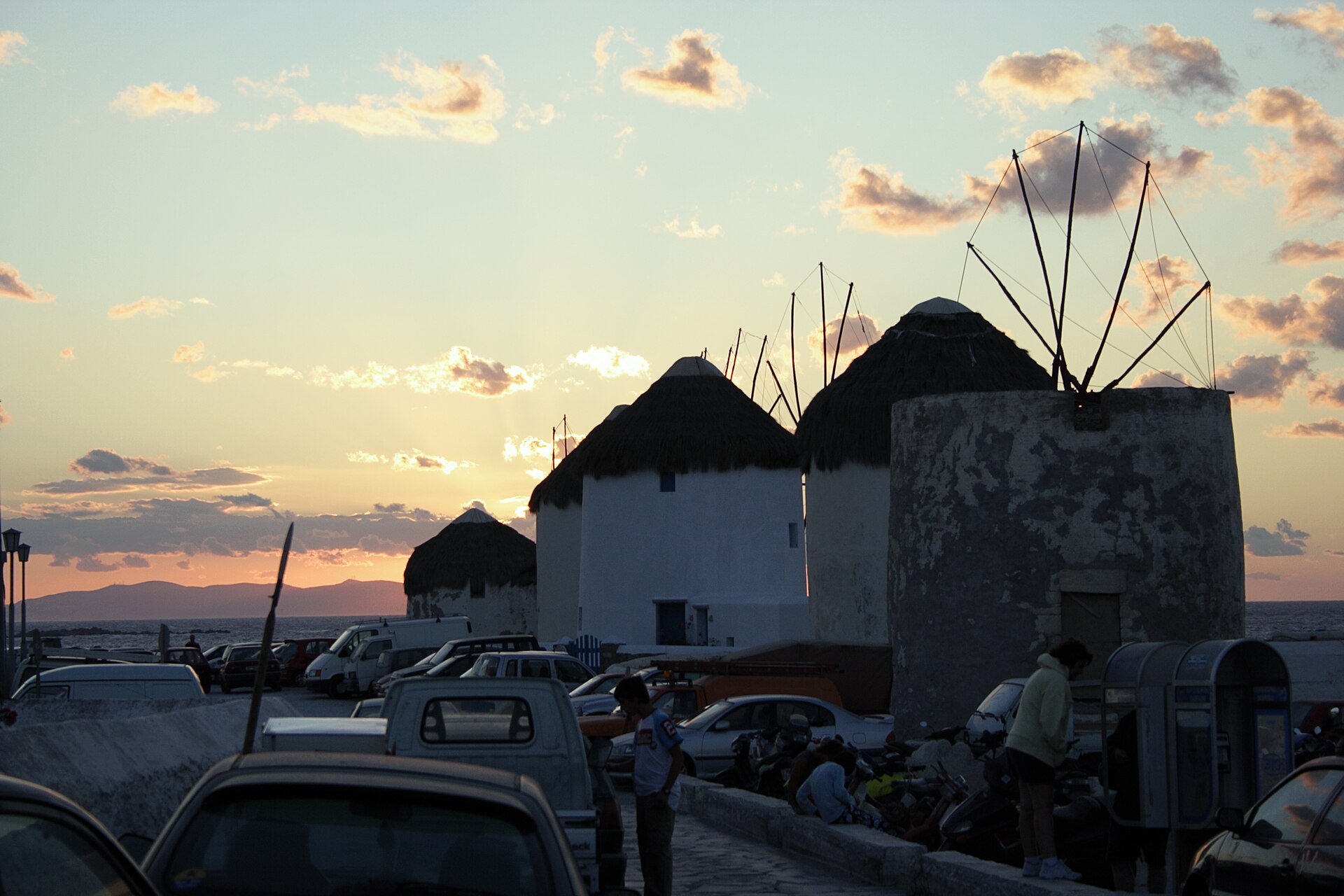
| Mykonos | Usually docks at New Port (Tourlos); tenders on busy days | Chora 2–2.5 km; the 40-minute walk is on a busy road and not recommended | SeaBus €2 one way, about 12 minutes, every 15–30 min, 1 April–31 October | Windmills, Little Venice, expensive beach clubs |
| Rhodes | Docks | Old Town walkable from the berth | Nothing needed | The best walk-off port day in Greece; medieval, flat-ish, cobbled |
| Corfu | Docks at the New Port, with an in-port shuttle | Old Town 2.9–3 km, about a 30-minute seafront walk | Taxi about €10, bus €1.90 — both 2023 prices and due a re-check | Venetian, green, gentler than the Cyclades. 562 calls confirmed for 2026, up 20.3% |
| Katakolon (for Olympia) | Docks at Pier 3 | Ancient Olympia is 21 miles (34 km) | Train €10 return, about 45 minutes, three services timed to the ships each morning; station about 200 yards from the gate | A ruins day, not an island day. Unshaded |
| Crete (Heraklion or Chania) | Docks | Varies by port; Heraklion’s centre is a walk or short taxi | Fares not published by a source we can verify — agree the price first | The biggest island; Knossos is the headline trip |
| Patmos | Usually tenders | Skala at the quay; the Monastery of St John is above Chora | Local buses and taxis; fares not published verifiably | Quiet, religious, small. A very different day |
| Kusadasi, Turkey | Docks at Ege Port, up to four large ships | Town 50 m; Ephesus 11 miles (18 km), 20–25 minutes | Taxi and dolmus fares are not published by any verifiable source — agree the price before you get in | The best ruins on the itinerary; a heavy bazaar sell at the gate |
The pattern worth noticing: the Greek islands have short transfers and easy port days compared with the Western Mediterranean, where Rome is 46 miles from the quay. What they have instead is tendering, climbing and heat. It is a lighter itinerary for your schedule and a heavier one for your legs.
How much does a Greek islands cruise cost?
A 7-night Greek islands cruise costs about $1,100 to $1,800 per person on a mainstream line in an inside cabin including taxes and port fees. A Celestyal 3-day loop starts around €319, about $370. Small ships and luxury run $400 to $1,100 per person per night. Add flights, gratuities, excursions and the Greek landing fees, and a realistic all-in figure from the US is $2,800 to $4,200 per person for the week.
The Greek-specific extras are what nobody prices, so here they are for a couple on a five-Greek-call week.
| Item, for two | July | October |
|---|---|---|
| Greek landing fees, 5 calls (Santorini, Mykonos + three others) | €110 (about $128) | €66 (about $77) |
| Santorini cable car, return | €40 (about $46) | €40 |
| Mykonos SeaBus, return | €8 (about $9) | €8 |
| Gratuities, 7 nights at $18 pp | $252 | $252 |
| Excursions, 5 ports, independent-leaning | $500–$700 | $500–$700 |
| Greek extras subtotal | about $935–$1,135 | about $884–$1,084 |
Ship excursions run $50 to $150 per person per port in Greece, and roughly $150 to $250 for the full-day Ephesus trip from Kusadasi. Doing it independently is cheaper almost everywhere, with one caveat that matters: if a ship excursion runs late, the ship waits. If your taxi does not come back, it does not. Our full cost guide works the whole budget through line by line.
The landing fee nobody prices in
Since 21 July 2025, going ashore in Greece has cost money. It is charged per person, per port call, billed to your onboard account, and applied only if you actually land. Cruise lines declare and pay it quarterly through a Greek government digital platform. It has not appeared on a single page ranking for this search.
| Period | Santorini & Mykonos | All other Greek ports |
|---|---|---|
| 1 June – 30 September | €20 (about $23) | €5 (about $6) |
| 1 April – 31 May, and 1 – 31 October | €12 (about $14) | €3 |
| 1 November – 31 March | €4 | €1 |
The practical consequence is a hard price cliff on two dates. Sail the same itinerary on 28 September and on 3 October and the levy for a couple falls by about $51 — on top of the fare difference, which is larger. It is the clearest argument on this page for early October.
One more piece of paperwork to have on your radar: ETIAS, the EU travel authorisation, is scheduled for the last quarter of 2026 at €20 (about $23), valid three years, with under-18s and over-70s exempt from the fee. That date has slipped before, so check rather than assume. The Entry/Exit System is separate, free, biometric and fully operational since 10 April 2026 — but it produced significant queues at Athens in summer 2026, which matters if you are connecting tightly to a sailing.
Is it better to cruise the Greek islands or take the ferries?
Cruise if you want five islands in a week with no packing and a fixed price. Take the ferries if you want evenings, sunsets and the freedom to stay another night. The ferry version costs roughly half as much and is a genuinely better trip for anyone with more than a week and an appetite for logistics.
No cruise line will ever make this comparison, so here it is honestly.
| Greek islands cruise | Independent ferry hopping | |
|---|---|---|
| Transport cost, Athens plus three islands | Included in fare | About €130–€180 per person in ferry tickets |
| Piraeus to Santorini | Overnight, while you sleep | From about €46; up to 8 sailings a day; 5 h to 11 h+ depending on vessel |
| Piraeus to Mykonos | Overnight | From about €44; up to 5 sailings a day; fastest about 2 h 40 by high-speed |
| Accommodation | Included | €80–€250 a night in season |
| Food | Mostly included | Your own account — but Greek tavernas are cheap |
| Time per island | 8–10 hours, daytime only | Two days and a night, or as long as you like |
| Evenings ashore | Almost never | Always — and the evening is the Greek islands |
| Landing fees | €1–€20 per person per call | None |
| Luggage | Unpack once | You carry it, up hills, in heat |
| Weather risk | Missed tender call; the ship sails on | Cancelled sailing; you are stuck — high-speed catamarans are suspended around Beaufort 7–8 |
| Accessibility | Ship is step-free; tenders are not | Quays and villages are frequently neither |
The honest summary: a Greek islands cruise is an outstanding way to survey the Aegean and work out which island you want to come back to properly. It is a poor way to experience an island, because the thing people love about Greek islands — dinner at nine, the square after the day-trippers leave, the light at seven in the evening — happens after your ship has sailed.
If this is your first time in Greece and you have a week, cruise. If you have ten days, or you have cruised the islands before and want to go deeper, take the boats.
When to go, and why the wind matters more than the heat
Late September is the best time for a Greek islands cruise: the sea is at 77°F (25°C), European school holidays have ended, fares are falling and the meltemi has usually settled. Early October is the best value, because the landing fee drops on the 1st and the water is still at 72°F (22°C) — warmer than June in Barcelona.
The heat argument is the one every guide makes: Athens averages 90°F (32°C) in July, and on 8 July 2025 the Acropolis closed until 17:00 for safety with the city forecast at 38°C (100°F). That is real, and it matters if your port day is Ephesus or Olympia with no shade.
The wind argument is the one nobody makes, and it matters more. The meltemi is a strong, dry northerly across the Aegean that can blow any time from May to October, is most frequent June to September, and reaches maximum strength and duration in July and August. In mid-August 2026 the National Observatory of Athens recorded gusts above 100 km/h at several Aegean locations, with 93 km/h on Tinos on the 14th and 104 km/h on the 15th.
Why that is a cruise problem specifically: a tender operation stops in conditions a berthed ship shrugs off. Santorini always tenders. Mykonos sometimes does. Santorini to Mykonos is the most disruption-prone open-Aegean leg there is and it is on almost every itinerary. So the months that look best on the temperature chart are the months most likely to cost you the island you booked for.
| Month | Athens air | Athens sea | Meltemi risk | Levy at Santorini | Verdict |
|---|---|---|---|---|---|
| April | 66°F / 19°C | 59°F / 15°C | Low | €12 | Cheapest; cold water; some islands still waking up |
| May | 75°F / 24°C | 64°F / 18°C | Low | €12 | Excellent for walking and ruins |
| June | 84°F / 29°C | 72°F / 22°C | Moderate, rising | €20 from the 1st | Very good; levy jumps on the 1st |
| July | 90°F / 32°C | 77°F / 25°C | Highest | €20 | Hottest, busiest, windiest |
| August | 88°F / 31°C | 79°F / 26°C | Highest | €20 | Best swimming, worst everything else |
| September | 82°F / 28°C | 77°F / 25°C | Moderate, easing | €20 | Our pick — especially the last week |
| October | 72°F / 22°C | 72°F / 22°C | Low | €12 | Best value; season closes mid-month |
Our month-by-month guide covers the wider Mediterranean calendar, including the ports where none of this applies.
Greek islands cruise accessibility and mobility
This region is harder than the Western Mediterranean for anyone with limited mobility, and the reason is tendering. A tender is a small boat boarded from a moving platform; lines can and do refuse to carry wheelchair users and passengers with significant mobility limitations onto tenders when sea conditions make it unsafe, and that decision is made on the morning, not at booking.
Santorini is the hard case. It always tenders, and the landing is at the foot of a 300-metre cliff with a cable car as the only step-free ascent. Passengers who cannot manage a tender transfer will miss the island entirely, and no refund is owed for a port they chose not to go ashore at.
The good news is that the rest of a Greek week is comparatively kind. Rhodes docks and the Old Town is walkable, if cobbled. Corfu docks with an in-port shuttle. Kusadasi docks 50 metres from town. Mykonos usually docks and the SeaBus is a short, level crossing. If tendering is a barrier, look for an itinerary whose only tender port is Santorini, and treat that day as a sea day with a view.
A practical ask: before booking, get the line to confirm in writing which calls are berths and which are anchorages on your specific sailing. Lines publish this inconsistently and it changes with berth allocation — particularly at Santorini, where the ranked allocation under the 8,000-a-day cap decides who gets in at all.
The islands the cruise ships never reach
Cruise itineraries call at maybe eight of Greece’s inhabited islands. There are well over two hundred. The ones that never appear on a big-ship schedule are not lesser islands; they are islands without a quay long enough, a cap allocation, or a name a marketing department recognises.
This is the strongest argument for the small-ship operators. Windstar runs weeklong Greek island cruises round trip from Athens on a 148-guest four-masted sailing yacht. Star Clippers sails under canvas. Variety and Ponant work at a similar scale. A ship carrying a few hundred guests can enter harbours that a 5,600-guest vessel cannot approach, and when it does, it does not overwhelm the place it has come to see.
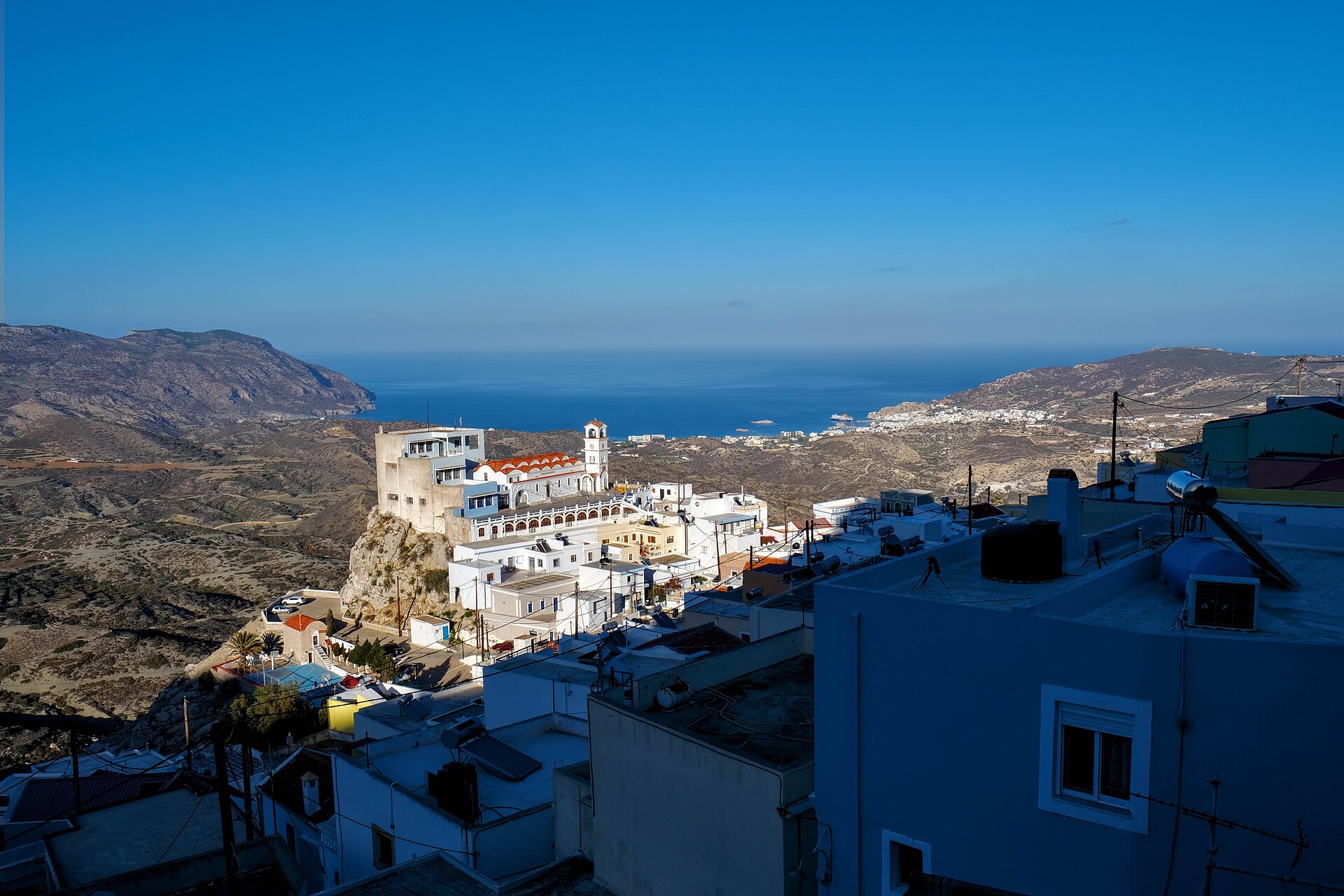
It is also the honest argument for not cruising at all. Karpathos, Ikaria, Folegandros, Amorgos, Milos, Naxos and a long list of others are reachable by ferry, largely free of cruise traffic, and are what people mean when they talk about the Greek islands rather than about Greek island tourism. If you have already done Santorini and Mykonos from a ship and found them crowded, that is not a reason to write off Greece. It is a reason to come back differently.
Do Greek island cruises visit Turkey?
Most 7-night Greek itineraries include at least one Turkish port — usually Kusadasi for Ephesus, sometimes Bodrum. US, Canadian and UK citizens have been visa-free for Turkey since 1 January 2024, for 90 days in any 180. Turkey is not in the Schengen area, so the call is a separate entry and exit.
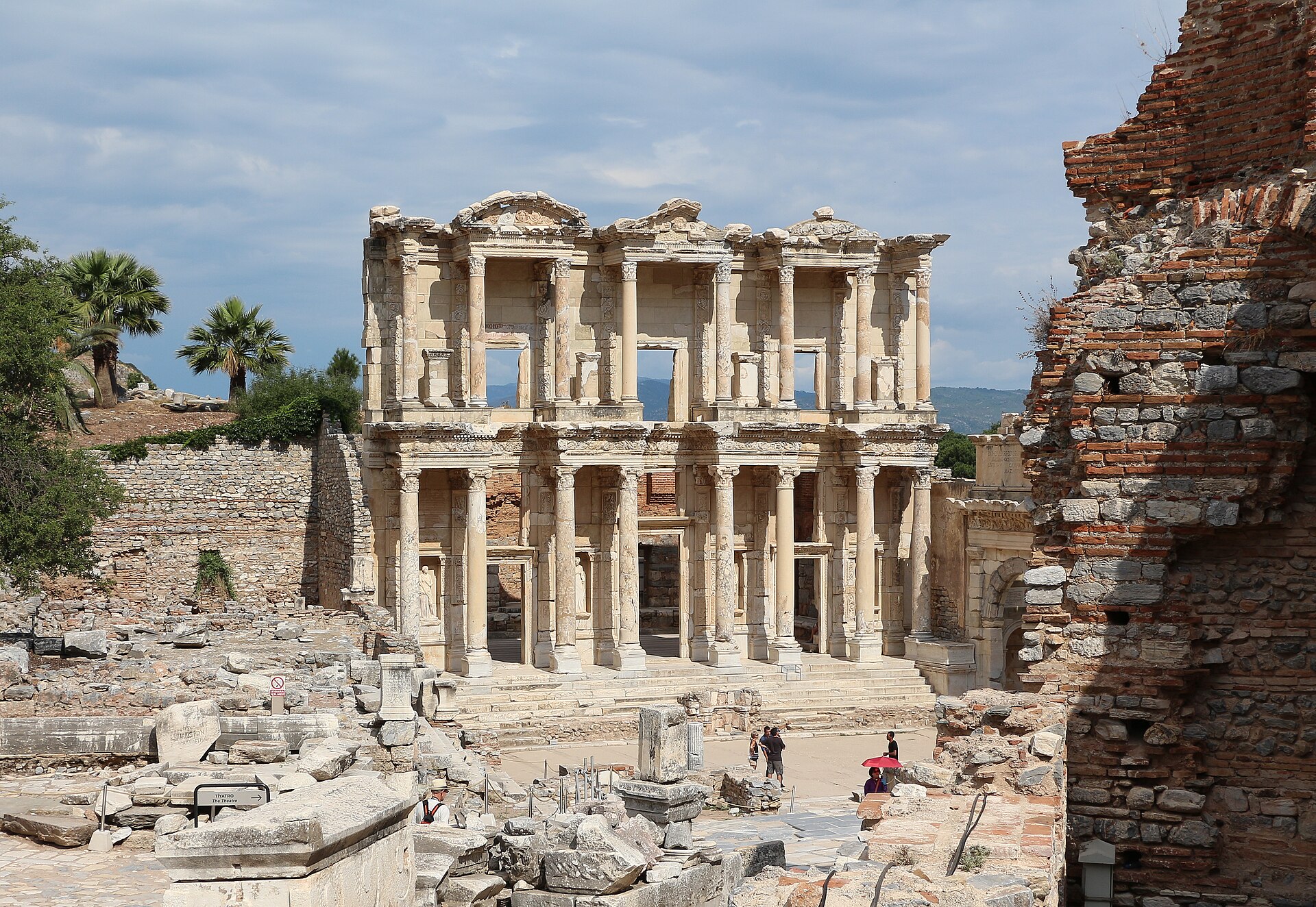
Kusadasi is, for our money, the best port day on a Greek itinerary. Ege Port takes up to four large ships and puts you 50 metres from town; Ephesus is 11 miles (18 km) away, 20 to 25 minutes, and the Library of Celsus is the single most impressive thing on the entire route. Go early, because the site is unshaded and there is no relief from midday sun.
Two practical notes. Taxi and dolmus fares at Kusadasi are not published by any source we are willing to cite, so agree a price before you get in the vehicle. And the bazaar immediately outside the port gate is a persistent sell; it is harmless, and “no thank you” while walking is the answer.
One caution for 2027 brochures more broadly: major lines suspended calls at Haifa, Ashdod, Port Said and Safaga through 2026, and itineraries listing Egypt or Israel are not promises. Lines re-route at their discretion under the cruise contract, usually substituting a Greek island or a sea day.
Many Greek island weeks are sold as Eastern Mediterranean cruises and add Turkey or the Adriatic. Our Eastern Mediterranean cruise guide covers those wider routes, including Ephesus from Kusadasi, Istanbul, Dubrovnik and Kotor, and the 2027 line-up across lines.
Where this guide goes deeper
This page is the Greek Isles hub. The guides beneath it take single questions and single islands: Greek isles cruise from Athens, Greek islands small ship cruises, 3-day Greek island cruise, best Greek islands to visit by cruise, Santorini shore excursions, Mykonos shore excursions and Greek cruise ports. Each will be linked here as it publishes.
Elsewhere on the site: the itineraries guide compares Greek weeks against Western and Adriatic routes with real published schedules; the cruise lines guide covers which operators are in Greece for 2027 and which will not carry children; and the main guide covers the whole region.
Greek islands cruise FAQs
How many days do you need for a Greek island cruise?
Seven nights is the standard and gives you five islands. Three or four nights works well as an add-on to a land trip in Athens and costs from about €319 on Celestyal. If you are flying from North America, 10 to 11 nights is better value per airfare dollar — the flights cost the same and you get more port days.
Does Santorini tender?
Always. The caldera is too deep to berth in, so every ship anchors and every passenger goes ashore by tender to the Old Port. From there it is a 300-metre climb to Fira by cable car at €10 one way, on foot up the steps, or by mule. Tenders are also the first thing cancelled when the meltemi blows.
Which Greek islands have cruise ports?
The regular calls are Santorini (anchorage), Mykonos (New Port at Tourlos), Rhodes, Corfu, Crete at Heraklion or Chania, Patmos and Katakolon on the mainland for Olympia. Well over two hundred Greek islands are inhabited; cruise ships call at a handful, which is why small-ship operators and ferries reach places the megaships never see.
What is the best month for a Greek islands cruise?
Late September. The sea is at 77°F (25°C), European school holidays have ended, fares are falling and the meltemi has usually eased. Early October is the best value because the landing fee at Santorini and Mykonos drops from €20 to €12 on the 1st, though the season closes by mid-month.
How much is the Greek cruise passenger fee?
€20 per person per call at Santorini and Mykonos from 1 June to 30 September, €12 in April, May and October, and €4 in winter. Other Greek ports are €5, €3 and €1 for the same periods. It is billed to your onboard account and charged only if you go ashore, so staying aboard means not paying it.
Do you need a visa for a Greek islands cruise?
Not for Greece if you hold a US, Canadian, UK or Australian passport — the Schengen rules apply, needing a passport issued within the previous ten years and valid at least three months beyond departure, though most lines demand six. Turkey is visa-free for US, Canadian and UK citizens for 90 days in any 180. ETIAS, at €20, is scheduled for the last quarter of 2026.
Is a Greek islands cruise suitable for people with limited mobility?
Partly. Rhodes, Corfu, Kusadasi and usually Mykonos are berths with manageable walks or short shuttles. Santorini is a tender to the foot of a cliff and may be impossible, and lines can refuse tender transfers on safety grounds on the day. Ask the line to confirm in writing which calls on your sailing are berths and which are anchorages.
Which cruise line is best for the Greek islands?
Celestyal for value and Greek focus, Celebrity or Royal Caribbean for a first big-ship week, Virgin Voyages for adults-only with late departures, and Windstar or Star Clippers if the islands themselves are the point. Small ships reach harbours the megaships cannot, which matters more in Greece than anywhere else in the Mediterranean.
Can I see the Santorini sunset from a cruise?
Rarely, and that is the honest answer. The famous sunset is from Oia, at the far end of the island from the Old Port, and most ships sail before it. A sailing with a late departure — the 22 October 2027 Rhapsody itinerary on this page leaves Santorini at 21:00 — is the exception rather than the rule. If the sunset is the reason you are going, stay a night on the island instead.
How we researched this guide
The SERP for this query was checked on 15 September 2026. Seven of the nine page-one results were cruise lines selling their own product. The one strong independent page ran 4,500-plus words and had been updated on 16 July 2026 — substantially longer than our plan had recorded, so the word floor for this page was set from today’s measurement rather than the plan’s. Not one result mentioned the Greek landing fee, Santorini’s daily cap or the meltemi.
Levy figures come from the Greek cruise passenger fee schedule in force since 21 July 2025, re-checked 11 September 2026. Santorini’s cap, ranked berth allocation and 2026 call figures come from the Thira Municipal Port Fund’s decision. The cable car tariff is the operator’s own published pricelist; the reported closure of the Karavolades steps and mule path since October 2025 is unverified and is flagged as such rather than repeated. Ferry fares and frequencies were checked on 15 September 2026. Meltemi seasonality and the mid-August 2026 gust readings from the National Observatory of Athens were checked on 12 September 2026. The published Rhapsody of the Seas schedule was retrieved on 13 September 2026 and is reproduced as scheduled — cruise schedules change. Climate figures come from weather2travel; Santorini’s own climate is not published on comparable terms, so Athens is used as the benchmark and we say so. Site access guidance is the operators’ own, including the Greek Ministry of Culture’s site pages; entry-rule status including ETIAS comes from the European Commission. Currency conversions use the European Central Bank reference rate of €1 = $1.1592 on 11 September 2026.
Where a fare is not published by a source we are willing to cite — taxis and dolmus at Kusadasi, local transport on Crete and Patmos — we have said so rather than estimate. The hours-ashore figures are our arithmetic on published schedules and verified transfer distances, not measurements we have taken. We sell nothing and take no commission; where we recommend a month, an operator or the ferries over a cruise, that is our judgement and the reasoning is on the page.
Image credits
| Image | Photographer | Licence |
|---|---|---|
| Blue domes above the caldera at Oia, Santorini | Giles Laurent | CC BY-SA 4.0, via Wikimedia Commons |
| Blue Star ferry at a Greek island quay | Leeturtle | CC BY-SA 4.0, via Wikimedia Commons |
| Menetes and Pigadia, Karpathos | Magnus.chronicles | CC BY 4.0, via Wikimedia Commons |
| Cruise ships in the Santorini caldera | Norbert Nagel | CC BY-SA 3.0, via Wikimedia Commons |
| Santorini Old Port and the cable car to Fira | Norbert Nagel | CC BY-SA 3.0, via Wikimedia Commons |
| The lower windmills, Chora, Mykonos | Zde | CC BY-SA 4.0, via Wikimedia Commons |
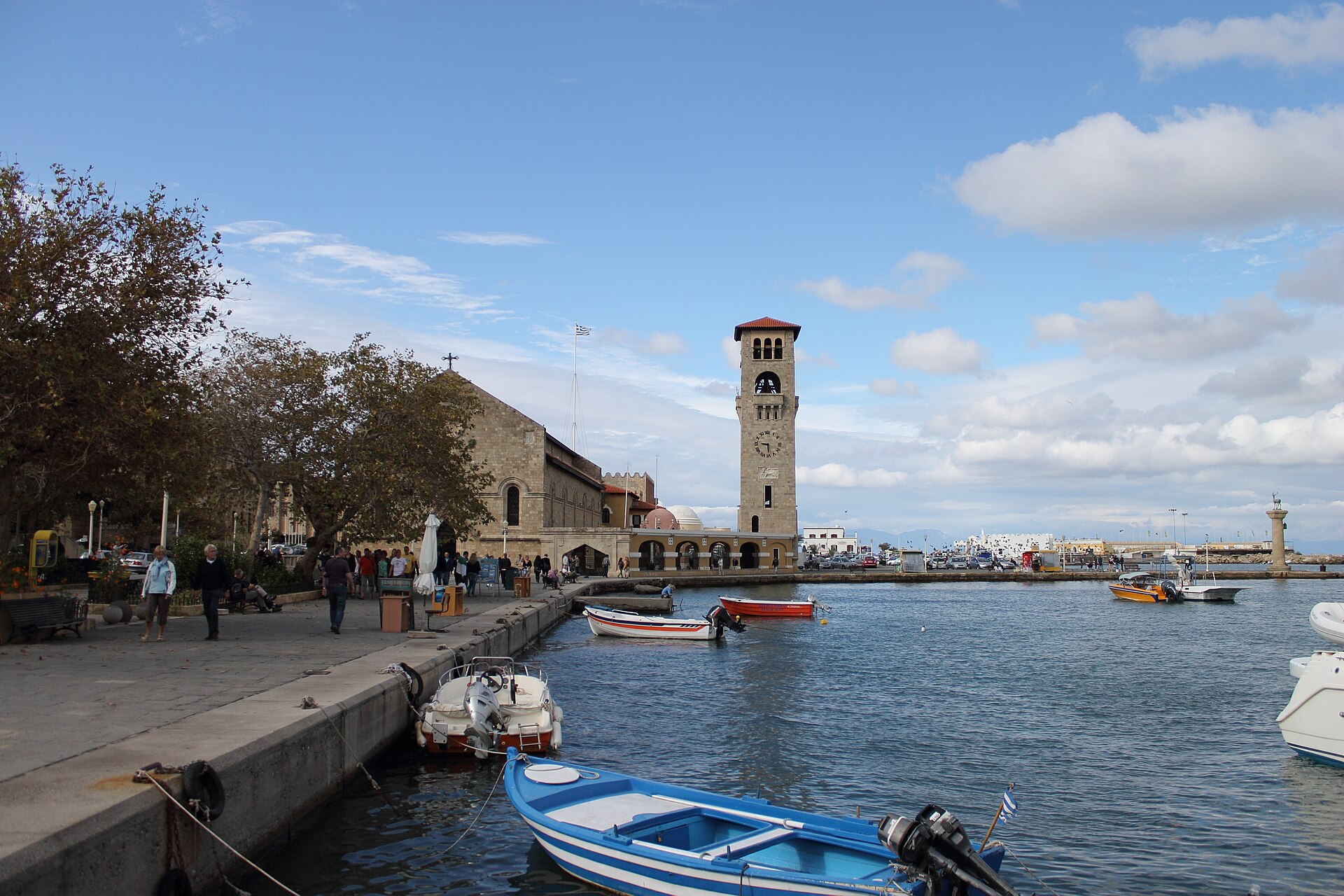
| Mandraki Harbour, Rhodes, in October | Ian Griffiths | CC BY 2.0, via Wikimedia Commons |
| The Library of Celsus, Ephesus | Bernard Gagnon | CC BY-SA 3.0, via Wikimedia Commons |
Published 16 September 2026. Fees, fares, schedules and port rules were checked between 11 and 15 September 2026 and will change — confirm anything you are about to pay for.