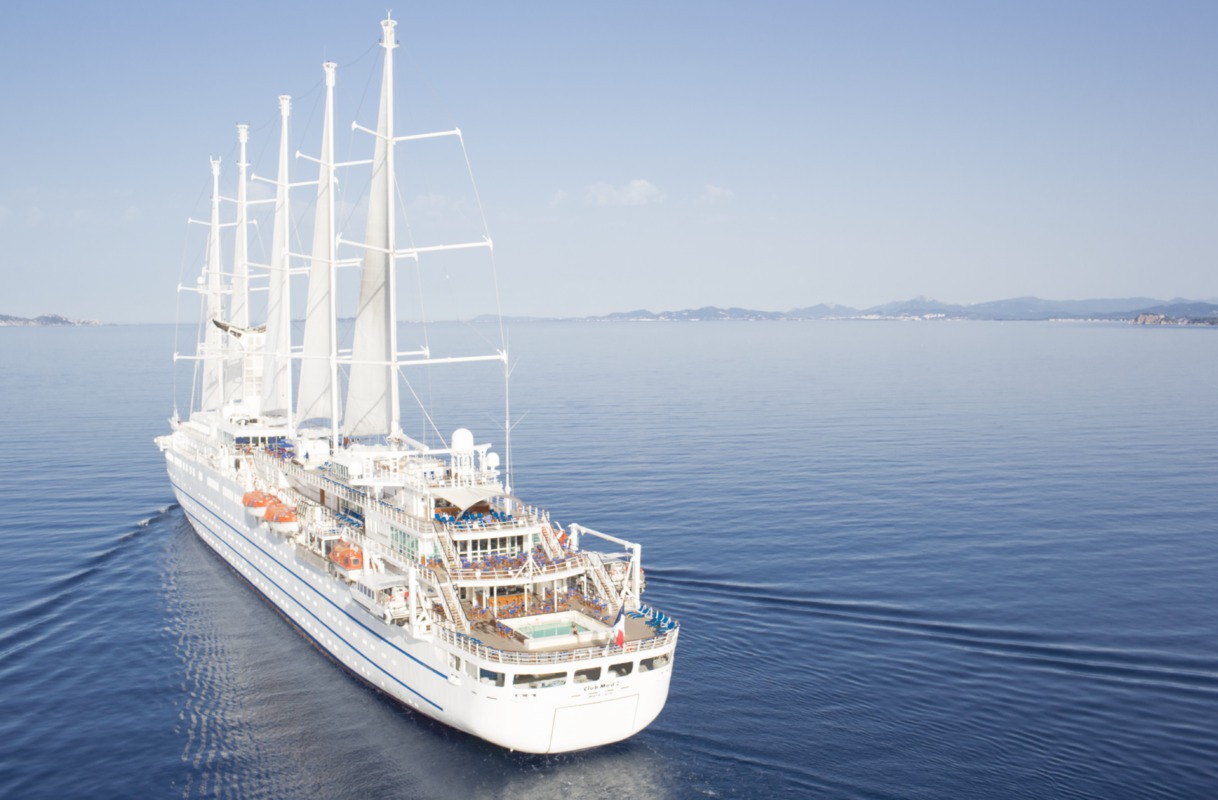
A Mediterranean sailing cruise puts you aboard something with working sails: a tall ship such as Star Clippers’ Royal Clipper, the five-masted Club Med 2 or one of Sea Cloud’s square-riggers, a wooden Turkish gulet, or a crewed yacht. Instead of 5,000 fellow passengers you have somewhere between 8 and 386, and you pay roughly $65 to $1,140 per person per night, depending on the boat.
What you are really buying is a different relationship with the coast. Small vessels anchor in bays, moor stern-first on town quays and hang a swim ladder over the side at lunchtime, while the big ships queue for industrial berths and bus you 46 miles from Civitavecchia to Rome. What you give up is space, stability, entertainment and, on most itineraries, rather less actual sailing than the brochure photographs imply. If you are still deciding between regions and seasons, our complete Mediterranean cruise planning guide is the place to start. This page assumes you are drawn to sails and small boats, and sets every format side by side so you can pick the one that fits the trip you actually want. We are not a cruise line or a charter broker.
At a glance: the Mediterranean sailing cruise in 2026–27
| The formats | Tall ships and sailing cruise ships (Star Clippers, Club Med 2, Sea Cloud, Windstar’s sailing yachts); gulet cabin cruises in Turkey, Greece and Croatia; skippered sailing tours on yachts and catamarans; private crewed gulets and yachts; bareboat charter; regional small ships in Croatia and the Greek islands. |
| Group size | 8–12 guests on a skippered yacht, 12–17 on a gulet, 38 on a deluxe Croatian small ship, 64–386 on the sailing cruise ships. |
| Season | Roughly April or May to October. Royal Clipper and Club Med 2 spend the winter in the Caribbean. |
| Where they go | Turkey’s Turquoise Coast (Bodrum, Marmaris, Fethiye), the Croatian islands and Montenegro, the Cyclades, Ionian and Dodecanese, the Italian and French Rivieras, and Corsica. |
| Price per person per night | About $65–$180 on a Turkish gulet cabin cruise; $115–$455 on a Croatian small ship; about $405 on Star Clippers; $1,070–$1,140 on Sea Cloud. Flights are extra in every case. |
| Drinks | Included on Club Med 2, with free-flowing Champagne after 6pm. Extra on Star Clippers and on most gulets. |
| The surprise | Engines. Timetabled ships motor whenever the wind won’t cooperate, and gulets are motor-sailers that mostly motor. |
| The wind | The meltemi, the Aegean’s strong northerly, blows from May to October and peaks in July and August. Tender landings and small boats feel it first. |
| Currency | Dollar conversions on this page use €1 = $1.1403 and £1 = $1.3252, the European Central Bank reference rates on 25 September 2026. |
What is a Mediterranean sailing cruise?
A Mediterranean sailing cruise is any cruise on a vessel that carries working sails, from a 386-guest five-master to a dozen people on a wooden gulet. What unites them is size rather than rigging: they anchor in bays, moor in town harbors and let you swim off the stern, which a 5,000-passenger ship never will.
The term covers at least five quite different holidays, and the operators’ pages tend to blur them together because each one sells only its own. Knowing which one you are looking at is most of the decision.
- Sailing cruise ships. Purpose-built tall ships and sail-assisted cruise ships with 64 to 386 guests, cabins with private bathrooms, a dining room, a bar and a fixed port-to-port itinerary. Star Clippers, Club Med 2, Sea Cloud and Windstar’s three sailing yachts are the main names; Ponant’s three-masted Le Ponant is the smallest at 64 guests.
- Gulet cabin cruises. You book one cabin on a traditional wooden gulet and share the boat with 10 to 16 other guests on a set route and set dates, usually for a week along Turkey’s southwest coast, sometimes in Greece or Croatia.
- Skippered sailing tours. Cabins on a yacht or catamaran with a professional skipper and 8 to 12 guests, often with a shared food kitty for breakfasts and lunches and dinners ashore. This is where you do the most actual sailing.
- Private charter. The whole gulet or yacht, crewed, for your group alone, on a route you agree with the captain. It is priced per boat per week, plus provisioning and tax.
- Bareboat charter. The boat without a crew. You are the skipper, so you need a recognized qualification and genuine experience.
Two neighbors get lumped in and should not be. Yacht cruises on the Ritz-Carlton Yacht Collection, Four Seasons Yachts and SeaDream are small, glamorous and yacht-shaped, but they are motor vessels without sails; we cover them in our guide to luxury Mediterranean cruises. And the regional small ships — Croatia’s Katarina Line and Sail Croatia boats, and Variety Cruises in Greece — sit halfway between a gulet and a cruise ship. Some carry masts; few depend on them. They are on this page because almost everyone who looks at a gulet ends up looking at them too.
Six ways to sail the Mediterranean, compared
Here is the whole category on one table. The price bands are per person per night, exclude flights, and come from the fares sampled later on this page. They are wide because the category is wide: the cheapest option and the most expensive one differ by a factor of about seventeen.
| Format | Guests | Where you sleep | Per person per night | Usually included | Best for |
|---|---|---|---|---|---|
| Sailing cruise ship | 64–386 | Cabin with private bathroom, often with a porthole rather than a window | About $405 (Star Clippers) to $1,140 (Sea Cloud) | All meals; drinks only on Club Med 2; water sports on Star Clippers | Couples who want real sails and a proper ship |
| Gulet cabin cruise | 12–17 | Small en-suite cabin below deck | About $65–$180 | Meals vary by operator; drinks extra | Swimmers, social travelers, tight budgets |
| Skippered sailing tour | 8–12 | Double cabin on a yacht or catamaran | Tours of 8–15 days listed at $1,889–$8,669 in total | The skipper; a food kitty of about $60–$80 a week; dinners ashore | People who want to take the helm |
| Private crewed gulet or yacht | Your group | The whole boat | Varies enormously; see the worked example below | Crew; food, fuel and marina fees drawn from an advance deposit | Families and friend groups of about 6 to 12 |
| Bareboat charter | Your group | The whole boat | Boat fee plus fuel, marinas and food | The boat, and nothing else | Qualified, experienced sailors |
| Regional small ship | 34–72 | En-suite cabin; some budget grades have bunks | About $115–$455 | Typically breakfast and lunch in Croatia; dinners ashore | Island hopping without ferry timetables |
If you want our one-paragraph verdict, it is this. For a first sailing trip, a week on Star Clippers or Club Med 2 is the easiest version: a real ship, a real bathroom, a real itinerary, and sails you will actually see set. If the sailing itself is the point, book a skippered tour or charter a yacht. If you want the most swimming per dollar in the Mediterranean, take a Turkish gulet in June or September. And if you mainly want to see the Croatian islands without driving, the Croatian small ships do that better than anything with a mast.
Tall ships and sailing cruise ships: who sails the Med
Four companies run large sailing vessels in the Mediterranean each summer, with Ponant’s single sailing yacht alongside. They are more different from one another than their photographs suggest, because a staysail schooner with sails set from the bridge and a square-rigger worked by deckhands aloft are two very different experiences that happen to look similar from a beach.
| Ship | Line | Rig | Guests | Mediterranean fare sampled |
|---|---|---|---|---|
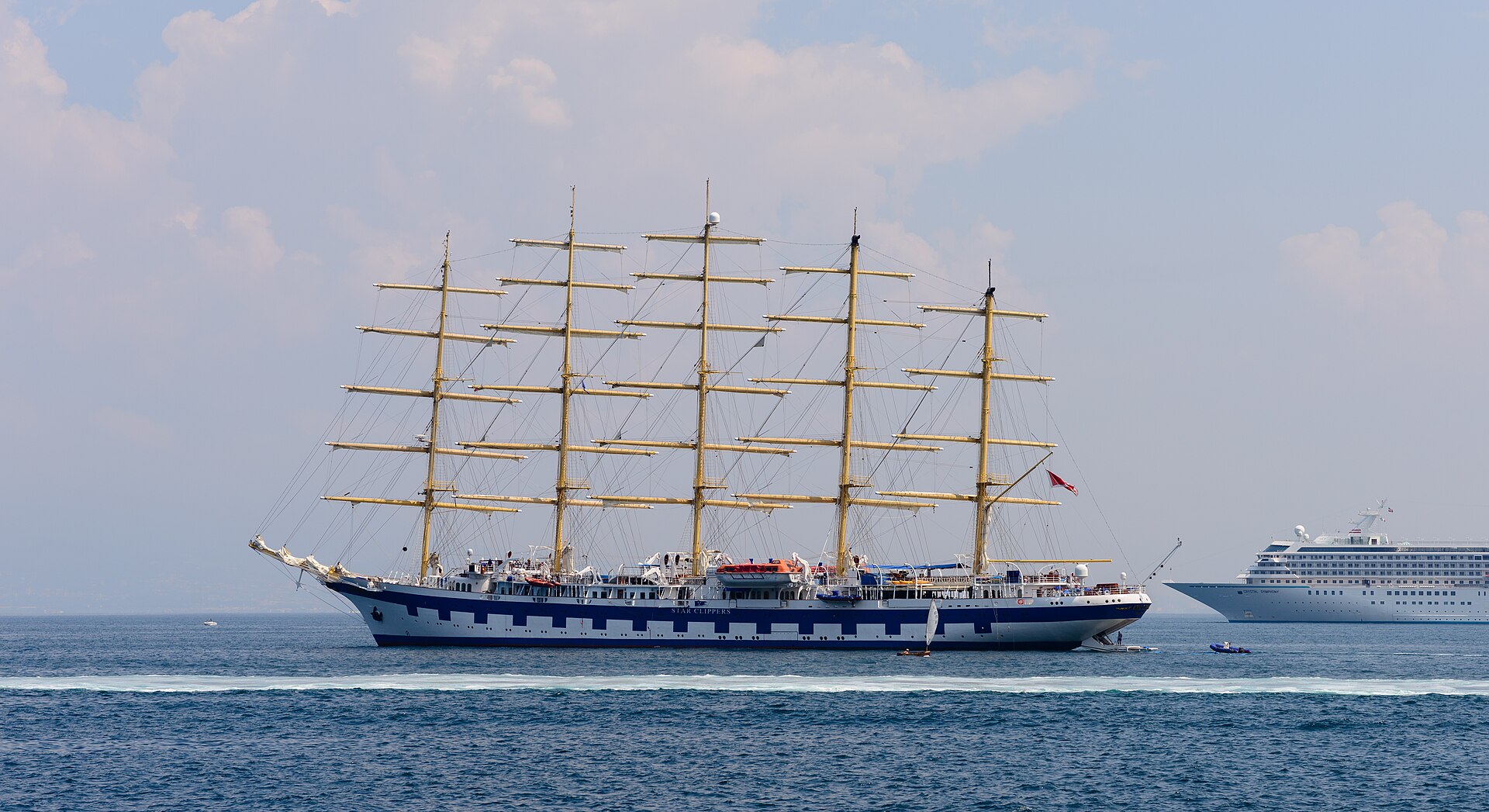
| Royal Clipper | Star Clippers | Five-masted full-rigged ship, 2000 | 227 | 7 nights in 2027 from about $2,836 per person including taxes |
| Star Clipper | Star Clippers | Four-masted barquentine, 1992 | 170 | Not sampled |
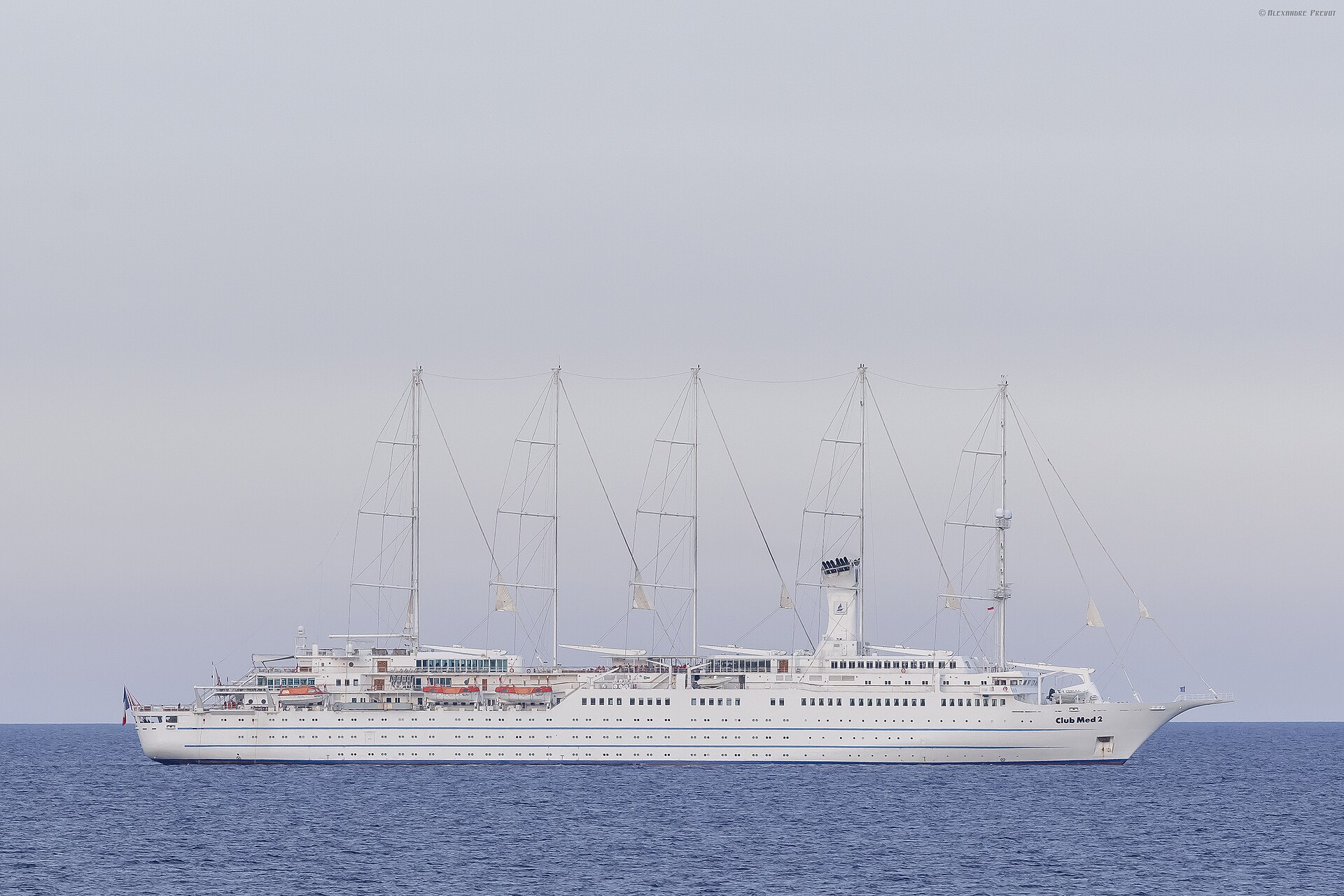
| Club Med 2 | Club Med | Five-masted staysail schooner, 636 ft (194 m), 1996 | Up to 386, in 184 cabins | From $3,463 per adult, all-inclusive |
| Sea Cloud, Sea Cloud II, Sea Cloud Spirit | Sea Cloud Cruises | Square-riggers; the original Sea Cloud dates from 1931 | Not published on the line’s Mediterranean page | $7,495 for 7 nights (Istanbul–Athens, July 2027) to $10,695 for 10 nights (Venice–Catania, September 2026) |
| Wind Star, Wind Spirit | Windstar | Four-masted staysail schooners | About 148 each | Not sampled |
| Wind Surf | Windstar | Five-masted staysail schooner, built as Club Med 1 | About 300 | Not sampled |
| Le Ponant | Ponant | Three-masted sailing yacht | 64 | Not sampled |
Star Clippers
Star Clippers is the line most people mean when they say “tall ship cruise”. Royal Clipper, a five-masted full-rigged ship dating from 2000, is described on Wikipedia as the largest square-rigged sailing ship in service; she carries 227 guests and splits her year between the Mediterranean in summer and the Caribbean in winter. Star Clipper, a four-masted barquentine of 1992, carries 170, and the fleet also includes her sister, Star Flyer. You may still see a fourth name, Flying Clipper, in older articles. According to Wikipedia, that hull entered service in 2021 as Golden Horizon under a different operator and has since been laid up in Split, so do not plan around it.
The fare covers your cabin, all meals, entertainment and the water sports kit (paddleboards and snorkeling gear among it). Alcoholic drinks and shore excursions are extra, and UK booking pages in September 2026 described a discretionary service charge of about €8 (about $9) per person per night added to the onboard account. A seven-night Royal Clipper Mediterranean sailing in 2027 was listed from about $2,836 per person including taxes, or about $405 a night. That is premium-line money for a ship with no casino, no production shows and no queue for anything, which is either exactly the point or a dealbreaker.
Club Med 2
Club Med 2 is the outlier: a 636-foot five-masted staysail schooner with up to 386 guests in 184 cabins, four bars, two restaurants and a pool, run as a floating Club Med resort. Fares are all-inclusive, starting at $3,463 per adult on Club Med’s US site in September 2026, and they include drinks, with free-flowing Champagne after 6pm. The 2027 program lists calls including Portofino, Bastia, Île Rousse and Corfu.
The detail most English-speaking passengers miss is that programming is in French throughout. The entertainment, the announcements and much of the social life are built around French-speaking guests. If that sounds charming, it is. If you want a ship where you will follow every joke at the bar, choose another.
Sea Cloud
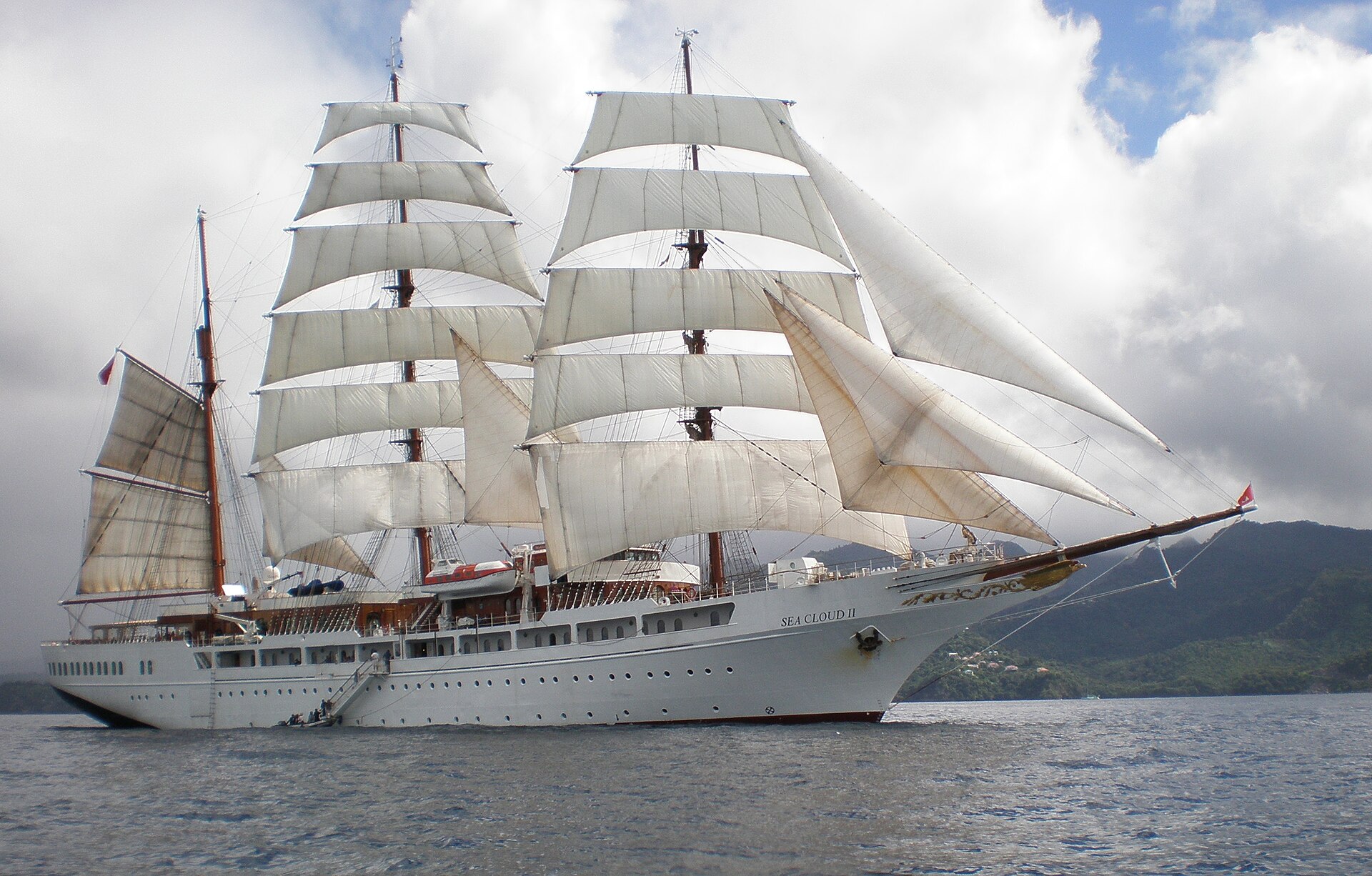
Sea Cloud Cruises runs the most traditional ships in the category and charges accordingly. The original Sea Cloud was built in 1931 as a private yacht, and she and her younger fleetmates Sea Cloud II and Sea Cloud Spirit are square-riggers whose sails are handled by deckhands up in the rigging, a spectacle almost nothing else afloat can match. Sampled Mediterranean fares ran from $7,495 for seven nights between Istanbul and Athens in July 2027, through $7,995 for seven nights from Nice to Monte Carlo in September 2026, to $10,695 for ten nights from Venice to Catania: about $1,070 to $1,140 per person per night. The line’s Mediterranean page does not publish guest numbers or say what the fare includes, so ask both questions before you compare it with anything else.
Windstar and Ponant
Windstar’s three sailing yachts are the most cruise-like of the tall ships. Wind Star and Wind Spirit are four-masted staysail schooners of about 148 guests each, and Wind Surf, originally built as Club Med 1, is a five-master of about 300. Their sails are set mechanically rather than by crew aloft, and the atmosphere is closer to a small premium ship than to a windjammer. Watch the ship name when you book: Windstar also runs three motor ships, Star Pride, Star Breeze and Star Legend, at 212 guests each, and a Windstar itinerary on one of those has no sails at all.
Ponant, the French line headquartered in Marseille, operates Le Ponant, a three-masted sailing yacht of 64 guests. It is the smallest ship in this group, and after Club Med 2, the most French in character.
Do sailing cruise ships actually sail?
Some of the time. The tall ships set sail when the wind and the timetable allow, and motor when they don’t, because they have ports to make and passengers with flights home. Gulets mostly motor. If the sailing itself is the point, a skippered sailing tour or a private charter delivers far more of it.
This is the question the operators’ own pages avoid, and in our reading it is the one that most often separates a delighted sailing-cruise passenger from a disappointed one. A cruise itinerary is a promise to be in Portofino on Tuesday morning and Bastia on Wednesday. Wind is not a promise. When the two disagree, the engine wins.
The Mediterranean summer makes this harder in two opposite ways. Over much of the western basin, midsummer brings settled high pressure and long spells of light air, which is lovely for swimming and useless for moving a large sailing ship at a useful speed. In the Aegean the problem is the reverse. The meltemi, a strong, dry northerly, blows from May to October, most often from June to September, and is at its strongest and most persistent in July and August. On 14 August 2026 the National Observatory of Athens recorded gusts above 100 km/h (62 mph) in several Aegean locations, and Tinos logged 104 km/h (65 mph) the next day. Nobody drives a ship full of passengers hard into that for the photographs.
What sailing tends to look like in practice:
- Sail-away is the showpiece. Leaving port under canvas is the ritual on most tall ships, and it is timed for an audience on deck. How long the sails stay up afterwards depends on the wind angle and the distance to the next port.
- Long overnight legs usually involve the engine. A ship that must cover a long passage by breakfast will run its engines for at least part of the night, with or without sails set.
- Square-riggers need the wind behind them or on the beam. A square-rigged ship cannot point as close to the wind as a modern yacht, so a headwind on the day’s heading means motoring.
- Gulets are motor-sailers. They carry masts and sails, but the itinerary is built around the engine and the coves, and on many trips the sails go up only when the breeze is gentle and the captain has the time.
- Yachts sail most. On a skippered tour or charter the legs are short and flexible, so the skipper can pick routes that suit the wind, and guests are usually encouraged to take the helm or trim a sail.
Our advice is to ask, in writing, before you pay a deposit: how much of this itinerary was sailed rather than motored last season, and is there a sail-away under canvas from each port? A line whose ships sail will answer happily and in detail. A line that changes the subject has told you something too.
Gulet cruises in Turkey, Greece and Croatia
The gulet is the wooden workhorse of Turkey’s southwest coast, refitted for pleasure: a broad-beamed two- or three-masted boat with a big shaded aft deck, cushions on every flat surface, a handful of small en-suite cabins below, and a crew of captain, cook and deckhands. Many are built in the boatyards around Bodrum. The week-long “blue cruise” (in Turkish, mavi yolculuk, the blue voyage) that grew up along this coast in the mid-20th century is still the classic Mediterranean small-boat holiday, and nothing else on this page offers as much swimming for the money.
Cabin charter or private charter?
A cabin charter, sold as a gulet cruise or a blue cruise, gets you one cabin on a boat with a fixed route and fixed dates. You share the deck, the meals and the swim ladder with 10 to 16 people you have not met. A private charter gives your group the whole boat and lets you shape the route with the captain. Cabin charters are the budget option and a surprisingly sociable one. Private charters are better value per head for a group that can fill every cabin, and they are the only sensible choice for a family with young children, because you set the pace and nobody else is trying to sleep through your toddler.
The routes on the Turquoise Coast
| Route | Length | Direction from the start |
|---|---|---|
| Fethiye to Olympos, the classic “blue cruise” | 3 nights | East along the Lycian coast toward Antalya |
| Fethiye to Marmaris | 4 nights | West toward the Dodecanese side of the coast |
| Fethiye to Kekova and back | 6 nights | East to the Kekova area and return |
| Fethiye to Bodrum | 7 nights | West and north, one-way |
| Bodrum and the Gulf of Gökova | Usually a week | Loops into the long gulf southeast of Bodrum |
Prices are where the internet is least trustworthy. The most-quoted “blue cruise” price online comes from a 2017 blog post and means nothing now. As of September 2026, TourRadar listed 27 Turkish gulet cruises at $465 to $1,267 per person for 4 to 8 days, on boats of 12 to 16 guests, running May to October. Responsible Vacation’s sample 8-day trips ran £1,409 to £1,723 (about $1,867 to $2,283), and describes boats often limited to around 17 guests, with fixed departures from April to October. The packages differ in what they bundle, so read them as the shape of the market rather than a quote. What moves the price most is the grade of the boat, whether the cabins are air-conditioned, and whether you sail in June or in August.
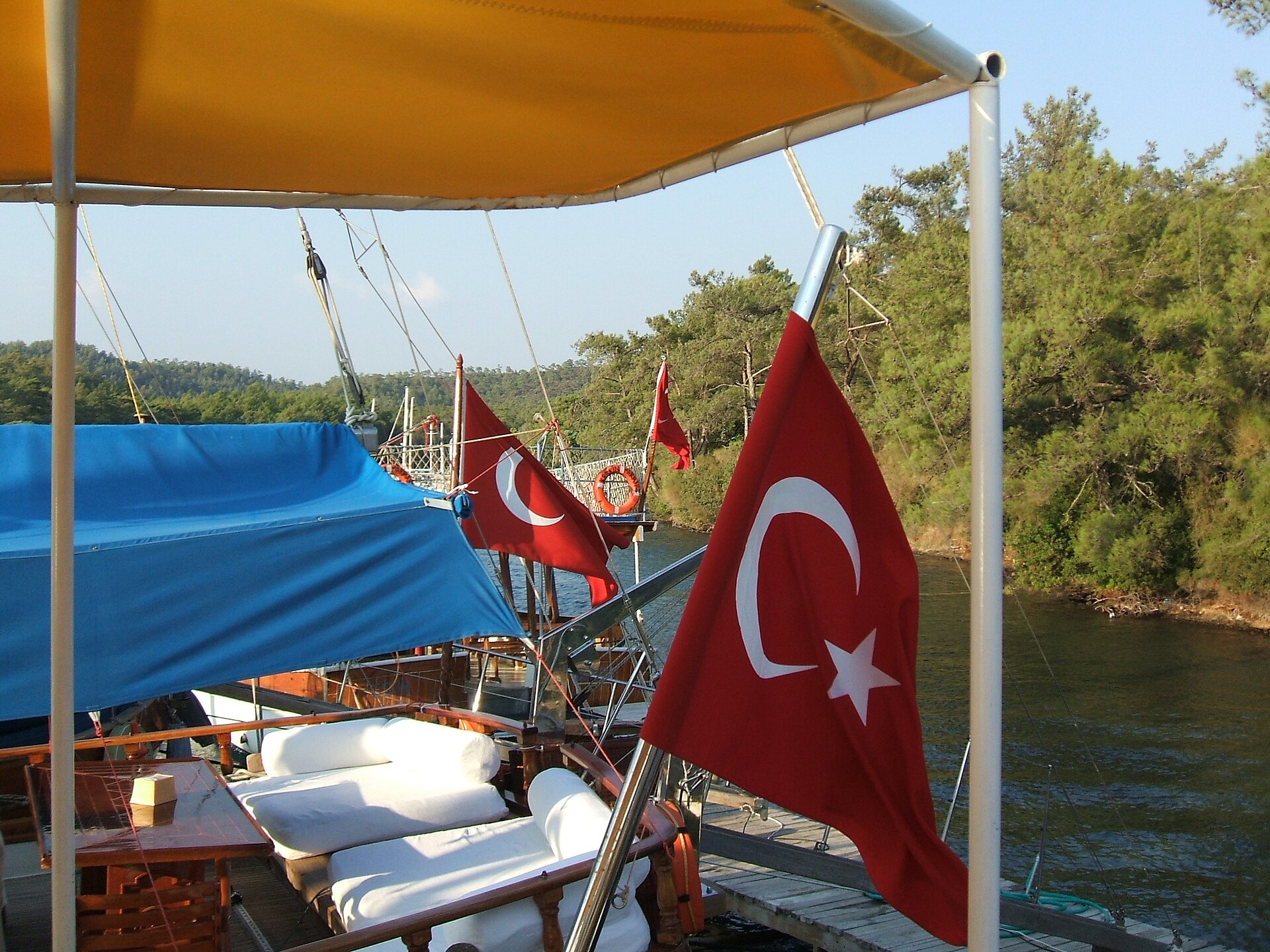
Gulets in Greece and Croatia
Gulets also work the Greek islands and the Dalmatian coast. In Greece the usual grounds are the Ionian, the Cyclades and the Dodecanese, the last of which sit a few miles off the Turkish coast. In Croatia they are the islands off Split and Dubrovnik, sometimes running on to Montenegro’s Bay of Kotor. Crossing between Turkey and the Greek islands by gulet means clearing passport control at an official port of entry on each side, and since April 2026 non-EU passengers entering Greece are registered in the EU’s biometric Entry/Exit System. The crew handles the formalities, but they eat into the day, so most weeks stay in one country.
Bodrum is both the gulet capital and a cruise port in its own right, with its castle on the headland about 1.5 km (roughly a mile) along the waterfront from the cruise port. If you are combining a big-ship cruise with a gulet week, our guide to Turkey’s cruise ports covers Bodrum, Kusadasi and Istanbul from the passenger’s side.
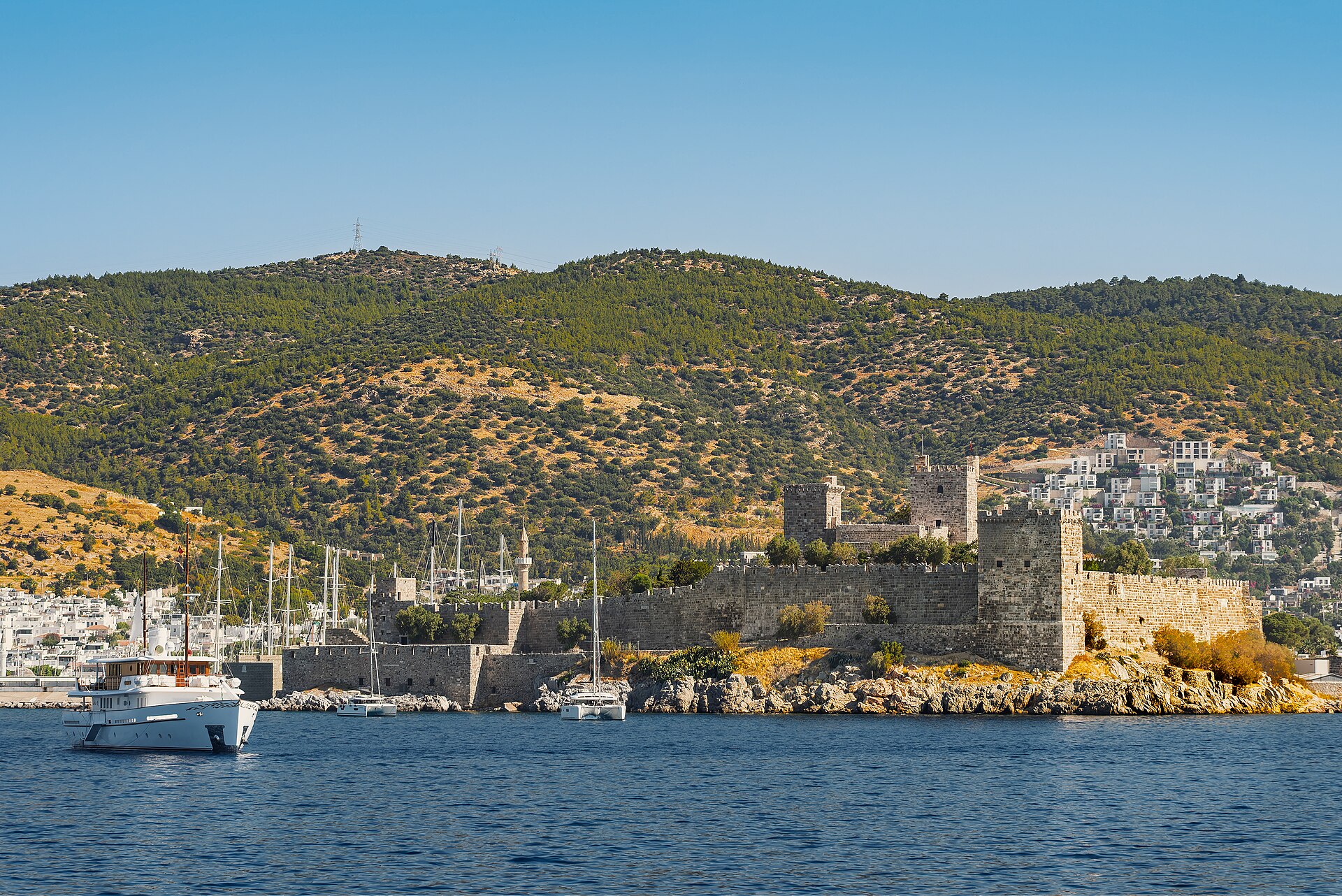
Life aboard a gulet
- Cabins are small and below deck. Expect a double bed with little floor space around it and a compact shower-toilet. You will live on deck.
- Ask exactly when the air-conditioning runs. On many gulets it depends on the generator, and generators are not always run through the night at anchor. If you sleep badly in heat, get the answer in writing.
- Bring a soft bag. Hard suitcases do not fit under bunks or in lockers. Our Mediterranean cruise packing list covers the rest, and most of it applies.
- Check what the fare covers. Some cabin charters are full board; others leave dinners to the harbor towns. Drinks are usually extra and settled at the end of the week.
- Budget for the crew tip. A tip at the end of the week is customary. Ask the operator what is normal on that boat rather than guessing.
Small-ship island hopping in Croatia and the Greek islands
If a gulet sounds too intimate and a tall ship too expensive, the regional small ships are the middle path. They are motor vessels, some with auxiliary or decorative masts, carrying roughly 34 to 72 guests on island-hopping routes, and they generally tie up overnight in town harbors, so your evenings are spent ashore rather than at sea.
Croatia
Croatia has the most developed market. Katarina Line, a family-owned company operating since 1992, runs cruises of two to nine nights from Dubrovnik, Split, Trogir, Zadar, Opatija and Omiš between April and October. Its Deluxe Superior class gives a sense of scale: Adriatic Sky, for example, is a 47.8-meter (157-foot) ship with 19 cabins for 38 guests. Prices on Katarina’s own site ran from about €950 (about $1,083) in the classic category to €2,080–€2,800 (about $2,372–$3,193) in deluxe, checked September 2026. Sail Croatia’s lead-in fares started at €699 (about $797) for its Navigator tier, €999 (about $1,139) for Explorer, €1,739 (about $1,983) for Elegance, and €1,099 (about $1,253) for its cycle-and-hike cruises.
Two things are worth knowing before you book. First, Croatian harbors fill up in summer, and small ships commonly moor side by side, so you may cross another boat’s deck to reach the quay and find another boat’s cabin window a few feet from yours. Second, the market spans very different crowds, from boats sold to groups in their twenties to boats sold to couples and older travelers. The operator’s tier names usually signal which is which. Read the age guidance and the “who is this for” line for the tier, not just the itinerary.
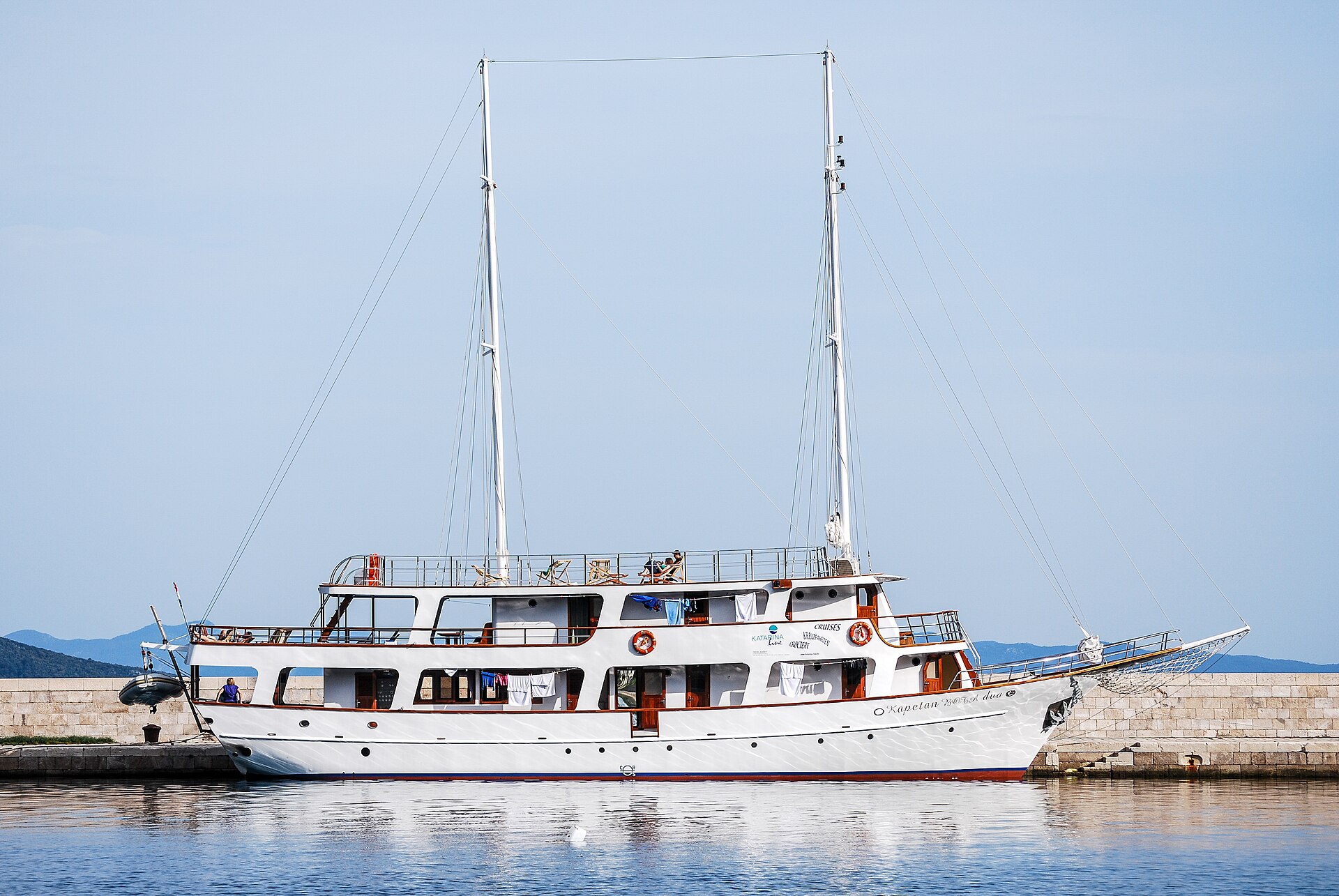
Most Croatian small-ship weeks start in Split or Dubrovnik, both of which are also big-ship ports. Our Adriatic cruise ports guide covers where each city’s berths are, how far they sit from the old towns, and how Kotor works when a large ship is in.
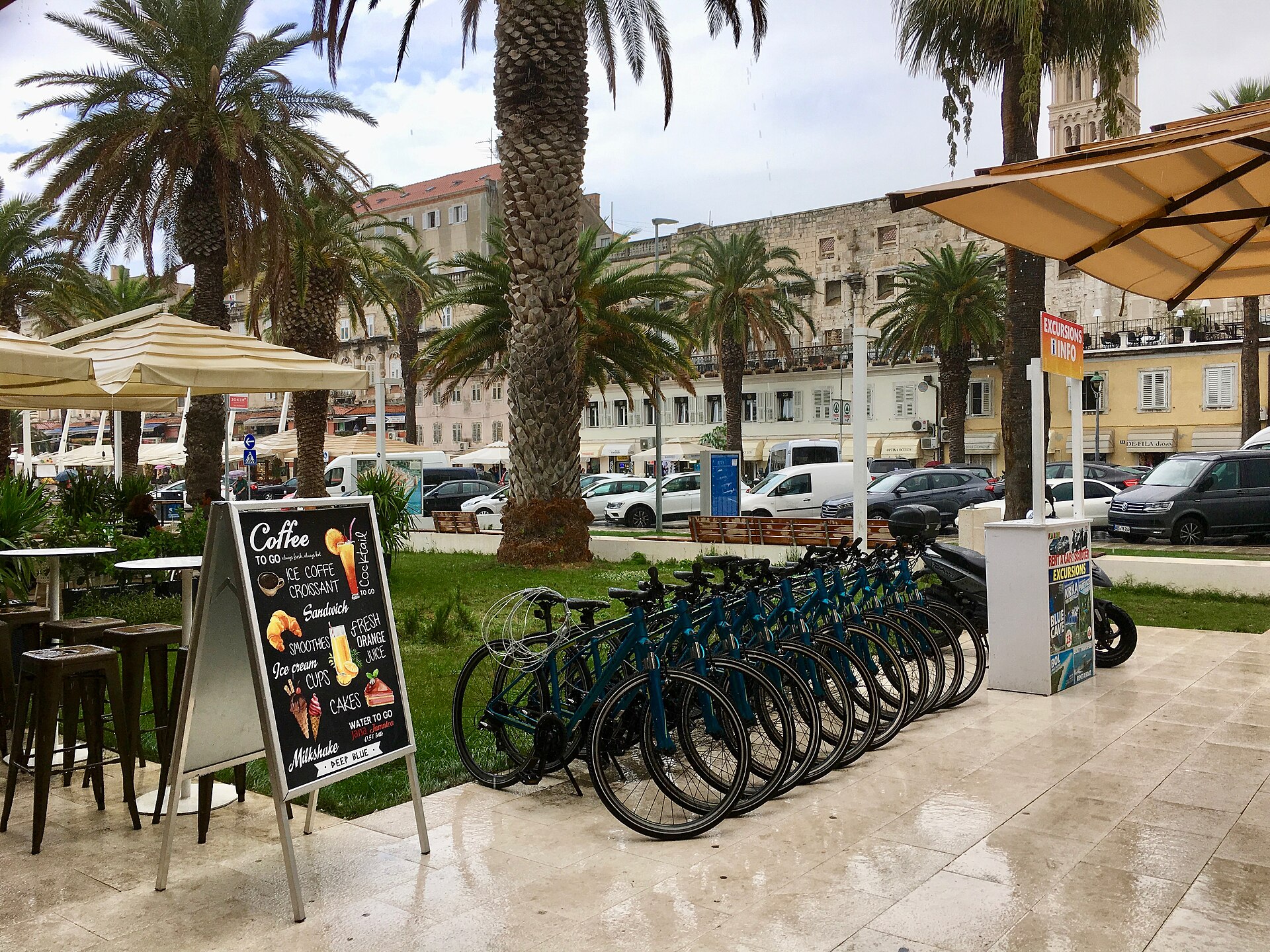
The Greek islands
In Greece the small-ship specialist is Variety Cruises, an Athens-based line founded in 2006. Its flagship, Variety Voyager, carries 72 guests, and its other ships carry 34 to 49. The Greek-island name you will see advertised most often, Celestyal, is a different proposition altogether. Celestyal Journey (55,819 gross tons, formerly Ryndam) and Celestyal Discovery (42,289 gross tons, formerly AIDAaura) are mid-sized conventional cruise ships running three- to seven-night loops from Piraeus. They are good value, with short sailings from around €319 (about $364), but they are not small ships, and they use the same ports, tender queues and landing fees as the big lines. Our Greek islands cruise guide compares them with the mainstream options.
How much does a Mediterranean sailing cruise cost?
Per person, from about $65 a night on a Turkish gulet cabin cruise to roughly $1,140 a night on a Sea Cloud square-rigger, before flights. Star Clippers sits near $405 a night and Croatian small ships between about $115 and $455. Private crewed charters add 20 to 40% for provisioning, plus tax.
| Format | Sampled fare | Per person per night | Included | Source, checked |
|---|---|---|---|---|
| Turkish gulet cabin cruise | $465–$1,267 for 4–8 days | About $65–$180 | Varies by operator | TourRadar listing, September 2026 |
| Turkish gulet package sold in the UK | £1,409–£1,723 (about $1,867–$2,283) for 8 days | About $265–$325 | Varies; packages may bundle more | Responsible Vacation, September 2026 |
| Croatian small ship | €699–€2,800 (about $797–$3,193) | About $115–$455, assuming 7 nights | Typically breakfast and lunch | Sail Croatia and Katarina Line, September 2026 |
| Greek islands on Celestyal | From about €319 (about $364) for 3 days | Roughly $120–$180, depending on the number of nights | Varies by fare type | Celestyal fare sampled September 2026 |
| Skippered sailing tour | $1,889–$8,669 for 8–15 days | Depends heavily on length and boat | Skipper; food kitty about $60–$80 a week | TourRadar listing, September 2026 |
| Star Clippers, Royal Clipper, 7 nights, 2027 | From about $2,836 including taxes | About $405 | Meals, entertainment, water sports | Agency listing, September 2026 |
| Club Med 2 | From $3,463 per adult | Length not stated with the lead-in fare | All-inclusive, drinks included | Club Med US, September 2026 |
| Sea Cloud | $7,495–$10,695 for 7–10 nights | About $1,070–$1,140 | Not stated on the Mediterranean page | Sea Cloud Cruises, September 2026 |
The shorter the trip, the more the per-night figure flatters the cheap end: a $465 four-day gulet trip is about $155 a night, while $1,267 for eight days is about $181. And on every format the fare is only part of the bill. The costs the fares leave out are the same ones that catch people on big ships, only in different proportions:
- Flights to an awkward airport. Gulets start from Dalaman or Bodrum, Croatian ships from Split or Dubrovnik, tall ships from Nice, Rome, Venice, Athens or Istanbul. Open-jaw flights for one-way sailings cost more than round trips.
- Drinks. Only Club Med 2 includes them among the sailing cruise ships sampled here. On a gulet the bar tab is settled at the end of the week.
- Tips. Star Clippers adds its service charge nightly; gulet and charter crews expect an end-of-week tip.
- Excursions. Small ships sell fewer of them, but they cost as much as anyone else’s when they do.
- Insurance. A trip built around a small boat and a remote airport is exactly the trip where missed-connection and cancellation cover earns its keep. Our Mediterranean cruise travel insurance guide explains what to look for.
The private-charter arithmetic
Crewed charters are priced in a way that surprises first-timers, because the advertised weekly rate is only the base. On top comes the advance provisioning allowance, or APA: a deposit, paid up front, that the captain spends on fuel, food, drinks, marina and port fees for your week, reconciled at the end with any balance refunded or topped up. Greek and Croatian brokers put it at roughly 20 to 30% of the base fee for sailing yachts and 30 to 40% for thirstier motor yachts. In Greece, crewed charters over 48 hours carry VAT at a statutory 13%, reduced to between 5.2% and 12% on the invoice depending on the yacht’s licence, according to 2026 broker rate sheets. VAT is charged on the base fee, not on the APA or the tip.
Here is how that adds up on an illustrative week. The base fee below is an example we chose to make the arithmetic readable, not a quote for any real yacht; weekly rates vary enormously by boat, size and month.
| Line item | Amount | Note |
|---|---|---|
| Base charter fee, one week, crewed sailing yacht, Greece | €30,000 | Illustrative figure only |
| VAT at 12% | €3,600 | A common invoiced rate on Greek weekly charters; can be as low as 5.2% |
| APA at 25–30% | €7,500–€9,000 | Held on account, spent on your behalf, reconciled at the end |
| Crew gratuity | Your discretion | Customary; ask the broker what is normal on that yacht |
| Committed before the tip | €41,100–€42,600 | About $46,900–$48,600 |
| Per person, eight guests | €5,140–€5,325 | About $5,860–$6,070, or roughly $835–$870 per person per night |
The point of the exercise is the last line. A private crewed yacht shared by eight people can cost about the same per head as a berth on a Sea Cloud square-rigger, with the whole boat and the route to yourselves. Shared by four, the same week costs double. Charter is a group purchase, and it only makes sense when the group is large enough to fill the cabins.
When is the best time for a Mediterranean sailing cruise?
June and September. The sea is warm, around 72–77°F (22–25°C) in the Aegean, the harbors are less crowded than in August, and the meltemi is less likely to be at full strength than in July and August. Late May is calm but the water is cool; early October is warm-watered and quiet, with shorter days.
| Month | Aegean sea (Athens) | Adriatic sea (Dubrovnik) | Wind | Our verdict |
|---|---|---|---|---|
| May | 64°F / 18°C | 64°F / 18°C | Meltemi season begins, usually gentler | Quiet harbors, brisk swimming |
| June | 72°F / 22°C | 72°F / 22°C | Meltemi frequent but rarely at its peak | One of the two best months |
| July | 77°F / 25°C | 75°F / 24°C | Meltemi at its strongest and most persistent | Hot, busy, and windy in the Cyclades |
| August | 79°F / 26°C | 77°F / 25°C | Peak meltemi; gusts above 100 km/h (62 mph) recorded on 14 August 2026 | Warmest water, most crowded, most disruption |
| September | 77°F / 25°C | 73°F / 23°C | Meltemi still frequent, easing through the month | One of the two best months |
| October | 72°F / 22°C | 70°F / 21°C | Season winding down; fewer departures | Warm sea, short days, lower prices |
Region matters as much as month. The open Aegean is the most exposed sailing ground in the Mediterranean in summer, and island hops across it, Santorini to Mykonos above all, are the legs most often disrupted when the meltemi blows hard. That is the same wind that suspends high-speed ferries at around Beaufort force 7 to 8, and small boats feel it long before a large ship does. Turkey’s Turquoise Coast is a different proposition: the heavily indented shoreline between Bodrum and Fethiye is full of sheltered bays, which in our view is a large part of why it became the gulet heartland. The Adriatic’s notorious bora is best known as a cold-season wind, and the French Riviera and the Gulf of Lion have the mistral; how often either disrupts a summer sailing week is not something we have been able to verify, so we will not put a number on it.
For the full month-by-month picture across all Mediterranean regions, including air temperatures and the Greek landing-fee calendar, see our guide to the best time to cruise the Mediterranean.
Is a sailing cruise right for you?
It suits people who swim, walk and like small groups, and who don’t mind compact cabins, steep stairs and landing by tender or dinghy. It suits fewer people who get seasick easily, need step-free access, want a kids’ club, or look forward to big-ship shows, casinos and a dozen restaurants.
Seasickness
Smaller vessels move more in the same sea; that is physics, not opinion. The mitigating factor is where they spend the night. Gulets and yachts usually anchor or moor in sheltered coves and harbors, so sleeping is often calmer than on a big ship crossing open water. The rolling happens on the open crossings, which is why a midsummer Cyclades itinerary is the worst choice for anyone prone to motion sickness and the sheltered Turkish or Croatian coasts are the kindest. On any ship, cabins low and in the middle move least.
Mobility and step-free access
Sailing ships and gulets are among the least accessible ways to travel by sea. Expect steep companionways between decks, raised door sills, narrow passages, and landings by tender, dinghy or a plank laid from the stern to the quay. If stairs are a problem, ask three questions before booking: is there a lift, does it reach the cabin decks, and how does each landing actually work? Our wheelchair-accessible Mediterranean cruise guide covers the ships and ports that genuinely work for limited mobility, and it is candid that most of this category does not.
Children and age rules
Age rules differ by line and change, so confirm them before you fall in love with an itinerary. Windstar, according to agency summaries, accepts children aged 8 and over and runs no children’s program. Don’t expect a big-ship kids’ club on any of the tall ships; ask each line what, if anything, it runs for children. The exception to all of this is a private gulet or yacht: with the whole boat to yourselves, a week of swim stops is one of the best family holidays in the Mediterranean, and our guide to a Mediterranean cruise with kids covers how to weigh it against a big ship’s clubs. If what you want is the reverse, our guide to adults-only Mediterranean cruises lists the lines that exclude children entirely.
Cabins, luggage and staying connected
Cabins on every format here are smaller than a mainstream ship’s, and on older vessels you get a porthole rather than a window. Storage is limited, so pack in soft bags and less of everything. Wi-Fi at sea on small vessels is often slower and patchier than on a big ship, and at anchor in a remote cove you may be relying on a mobile signal from the nearest village. It is easier to stop minding than you would think.
Sailing cruise or big ship: what you gain and give up
Put a sailing ship next to a mainstream Mediterranean ship on the same stretch of coast and the differences are sharper than the price gap suggests.
| Sailing ship, gulet or small ship | Mainstream big ship | |
|---|---|---|
| Where you stop | Small harbors and anchorages; you step ashore in the town | Commercial terminals, some far from the sight: Civitavecchia is 46 miles from Rome, Livorno 65 from Florence |
| How you get ashore | Tender, dinghy or a plank from the stern at most stops | Usually a gangway to a terminal; tenders at a minority of ports |
| Fellow passengers | 8 to 386 | Several thousand; Legend of the Seas carries 5,610 at double occupancy |
| Entertainment | The deck, the bar, the swim platform, occasional live music | Theaters, casinos, water slides, kids’ clubs |
| Price per person per night | About $65 to $1,140 | Roughly $150 to $300 on the mainstream lines |
| Drinks, Wi-Fi, tips | Mostly extra, except drinks on Club Med 2 | Mostly extra, except on premium-inclusive lines |
| Motion | Noticeable on open crossings | Barely perceptible in a summer Mediterranean sea |
| Port restrictions | Small enough for Monaco’s limit and Portofino’s harbor | Diverted to Villefranche for Monaco; anchored off Santa Margherita for Portofino |
The honest trade is that a big ship gives you more for your money on board, and a small one gives you more of the Mediterranean. On a mainstream ship the sea is mostly scenery between ports. On a gulet it is the swimming pool, the dinner view and the reason you came. Which of those matters more is a question about you, not about ships.
One practical difference trips people up. When a small vessel is at anchor, the last tender or dinghy back is your all-aboard, and it runs to a specific announced time. There is no second gangway, and on a boat with twelve guests everyone notices who is late. Treat the tender time with the respect you would give a ship’s departure in Civitavecchia. If you are still comparing mainstream lines, our ranking of the best Mediterranean cruise lines sets them out by style and price.
Private charter: crewed yachts, gulets and bareboat
Chartering puts you in charge of the route and the company, and it comes in three levels of involvement.
- Crewed charter. A captain and crew run the boat, cook and look after you; on a gulet that usually means captain, cook and deckhands. You agree a route in outline and adjust it daily with the captain around wind and mood. Charters in the Mediterranean are commonly written on the MYBA standard contract, and the APA system described above applies.
- Skippered charter. A professional skipper sails the boat; you handle more of the cooking, provisioning and cleaning yourselves. It is cheaper than full crew and more hands-on.
- Bareboat charter. You are the skipper. Charter companies require a recognized sailing qualification and evidence of experience before they hand over a yacht, and you are responsible for fuel, marina fees, provisioning and any damage covered by your deposit. Flotilla sailing, where several bareboats cruise together behind a lead boat with a professional crew, is the usual stepping stone for people who are qualified but new to a region.
Whichever you choose, compare boats on the things that decide how the week feels: the number of cabins with their own bathroom, whether the air-conditioning runs at night, the size of the shaded deck, the water toys carried, and the crew’s reviews rather than the boat’s photographs. Book through a broker or operator who will put the APA, VAT and cancellation terms in writing before you pay anything.
Mediterranean sailing cruise FAQs
Are Star Clippers cruises all-inclusive?
No. Star Clippers fares cover the cabin, all meals, entertainment and the water sports equipment. Alcoholic drinks and shore excursions are extra, and UK booking pages in September 2026 described a discretionary service charge of about 8 euros (about $9) per person per night added to the onboard account.
Is Club Med 2 all-inclusive?
Yes. Club Med 2 fares, from $3,463 per adult on Club Med’s US site in September 2026, include meals and drinks, with free-flowing Champagne after 6pm. The ship carries up to 386 guests in 184 cabins, and programming is in French throughout, which matters if you want an English-speaking atmosphere.
What is the difference between a gulet cruise and a gulet charter?
A gulet cruise, also called a cabin charter or blue cruise, sells you one cabin on a boat with a fixed route and dates, shared with other guests. A gulet charter gives your group the whole boat and crew, with a route you agree with the captain, priced per boat per week plus provisioning and tax.
How many passengers are on a gulet?
Cabin-charter gulets usually carry 12 to 16 guests, and Responsible Vacation describes Turkish boats often limited to around 17. Private charter gulets range from small boats with a few cabins to large ones for a dozen or more guests, so the cabin count is the number to check.
Do you need sailing experience for a sailing cruise?
No, except for bareboat charter. On a tall ship, a gulet, a regional small ship or a crewed charter, the crew does the sailing and you can help as much or as little as you like. Bareboat charter requires a recognized sailing qualification and genuine experience, because you are the skipper.
Will I get seasick on a sailing cruise?
You are more likely to than on a big ship, because small vessels move more on open crossings. Gulets and yachts usually spend nights in sheltered coves, which helps. If you are prone to seasickness, avoid the midsummer Aegean, choose the Turkish or Croatian coasts, and on a ship pick a low, central cabin.
What is the best month for a sailing cruise in Greece?
June or September. The sea is around 72 to 77 degrees Fahrenheit, the islands are less crowded than in August, and the meltemi, the strong Aegean northerly, is less likely to be at its peak. July and August bring the strongest winds, the most crowded harbors and the most disrupted island hops.
Can I take children on a sailing cruise?
It depends on the line: age rules vary and change, and Windstar, for example, is reported to accept children from age 8 with no children’s program. Don’t expect a big-ship kids’ club on any tall ship. A private gulet or yacht charter is the family-friendly exception, because the whole boat and the pace are yours.
Where this guide goes deeper
This page is the hub for sailing, gulet and regional small-ship cruising in the Mediterranean. The detailed guides beneath it are being published over the coming months, and we will link each one here as it goes live.
- Tall ships. Tall Ship Cruises in the Mediterranean: Star Clippers vs Club Med 2 vs Sea Cloud vs Windstar, Star Clippers Mediterranean Cruises: Ships, Routes & What’s Included and Club Med 2 Mediterranean Cruises: The Five-Masted All-Inclusive Sailing Ship.
- Gulets. Gulet Cruise Turkey: Routes, Prices & How to Book a Blue Cruise, Fethiye Gulet Cruise: Fethiye to Olympos, Kekova & Bodrum Routes, Gulet Cruise Greece: Cyclades, Ionian & Dodecanese, Gulet Cruises in Croatia: The Dalmatian Coast & Montenegro and Gulet Charter: How to Hire a Private Gulet (Costs, Crew, Routes).
- Regional small ships. Croatia Small-Ship Cruises: Katarina Line, Sail Croatia & 8 More Compared, Katarina Line Review: Ship Categories, Cabins & Is It Worth It?, Greek Islands Small-Ship Cruises: Variety, Windstar, Celestyal & More, Variety Cruises Review: Small-Ship Greek Island Cruises and Celestyal Cruises Review: The Greek Islands on Celestyal Journey & Discovery.
- Your own boat. Private Yacht Charter in the Mediterranean: Costs, Crewed vs Bareboat, Where to Go.
For the wider small-ship world, including the expedition ships and the yacht-style lines that carry no sails, start with our luxury and small-ship cruise hub, where the forthcoming Small-Ship Mediterranean Cruises guide will sit.
How we researched this guide
Every fare, guest count and rule on this page comes from a named source with the date we checked it, and wherever a figure could not be verified we have said so rather than filling the gap. Fares were sampled on 25 September 2026 from the lines’ own websites where they publish prices (Sea Cloud Cruises, Club Med, Katarina Line, Sail Croatia) and from marketplace and agency listings where they do not (TourRadar, Responsible Vacation, a Star Clippers agency listing). Ship rigs, dates and guest counts come from the lines’ fleet information and Wikipedia’s ship and company pages, checked in September 2026. Charter APA and VAT ranges come from Greek and Croatian charter brokers’ published 2026 guidance. Sea temperatures come from weather2travel; the August 2026 meltemi readings come from the National Observatory of Athens. Dollar figures use the ECB reference rates for 25 September 2026.
We are an independent editorial site, not a cruise line or a charter broker. We have not sailed on every ship or boat described here and we do not claim to have. Where this page gives an opinion — that a first sailing trip is easiest on Star Clippers or Club Med 2, that June and September beat July and August, that a Turkish gulet is the best swimming value in the Mediterranean — it is labeled as ours, and you are free to disagree. Two gaps we could not close: Sea Cloud’s guest numbers and inclusions, which its Mediterranean page does not publish, and how often the bora and mistral disrupt summer sailing. Fares are rechecked each January and March; fleet and deployment details whenever a line announces a change.
Image credits
| Image | Photographer | Licence |
|---|---|---|
| Club Med 2 under sail in the Mediterranean | Ila Mae Thie | CC BY-SA 4.0, via Wikimedia Commons |
| Royal Clipper of Star Clippers off Campania | Norbert Nagel | CC BY-SA 3.0, via Wikimedia Commons |
| Sea Cloud II under full sail | Jmcglade | CC BY-SA 3.0, via Wikimedia Commons |
| Club Med 2 at anchor with sails furled | Alexandre Prevot from Nancy, France | CC BY-SA 2.0, via Wikimedia Commons |
| Gulet moored in a cove on the Turkish coast | Chris Mitchell | CC BY-SA 4.0, via Wikimedia Commons |
| Bodrum Castle from the sea | Mustang Joe | CC0, via Wikimedia Commons |
| Kapetan Bota dva at Trstenik, Croatia | Gordon Leggett | CC BY 4.0, via Wikimedia Commons |
| The Riva promenade, Split | Marie Thérèse Hébert & Jean Robert Thibault | CC BY-SA 2.0, via Wikimedia Commons |
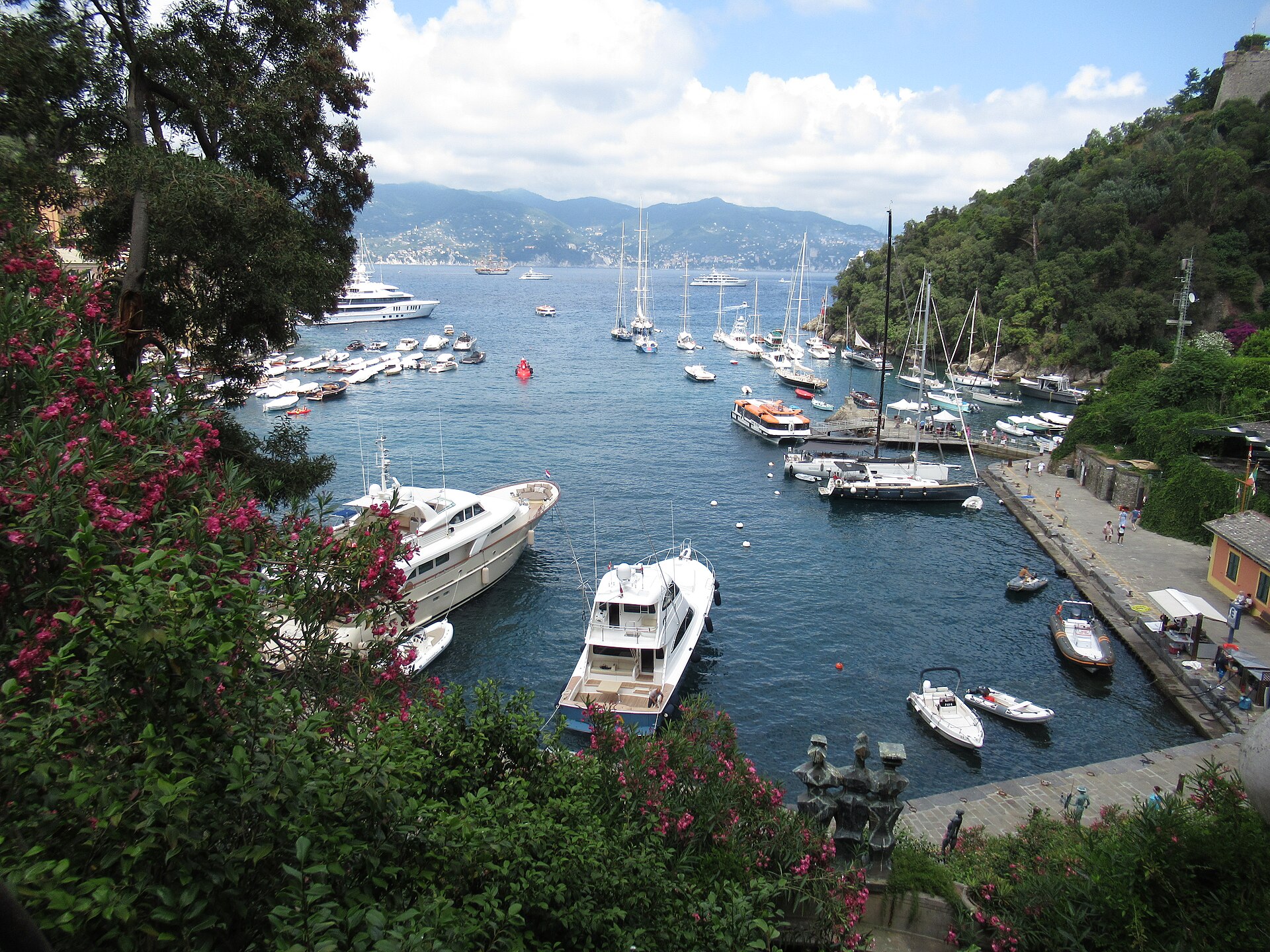
| Harbour of Portofino | Superchilum | CC BY 4.0, via Wikimedia Commons |
Published 7 October 2026. Fares, fleet details and exchange rates were checked on 25 September 2026 and will change — verify anything you are about to pay for. Further reading from the lines themselves: Star Clippers’ Western Mediterranean sailings, Sea Cloud’s Mediterranean voyages, Club Med’s Mediterranean cruises and Katarina Line’s Croatian cruises.