A Mediterranean cruise is a 7- to 14-night sailing that links three to eight port cities across southern Europe, North Africa and the eastern Mediterranean, almost always between April and November, from a homeport such as Barcelona, Rome, Athens or Southampton. Budget $1,500 to $3,500 per person all-in on a mainstream line, plus transatlantic airfare.
That is the short version. The longer version is that “Mediterranean cruise” covers at least five quite different holidays sold under one name, at prices that differ by a factor of five, in a sea that behaves very differently in May than it does in August. This guide is the neutral one. We do not sell cruises and we are not a cruise line, so we have no reason to tell you seven nights is enough when it often isn’t.
At a glance: Mediterranean cruising in 2026–27
| Main season | April to November. MSC and Costa keep some ships in the Western Med through winter. |
| Typical length | 7 nights (the default), 10–12 nights (the better trip), 14+ nights for West-plus-East or a transatlantic repositioning. |
| Main homeports | Barcelona, Civitavecchia (Rome), Piraeus (Athens), Ravenna and Trieste for the Adriatic, Southampton for no-fly UK sailings. |
| Ports per week | Usually five or six port days and one or two sea days. Norwegian says its ships spend over 90% of their time in port, averaging nearly 11 hours alongside. |
| Mainstream fare | Roughly $150–$250 per person per night for an inside cabin, before gratuities and excursions. |
| Taxes and port fees | About $100–$200 per person on a 7-night Med sailing; $200–$300+ on a transatlantic. |
| New since 2025 | Greece charges up to €20 (about $23) per person per port call at Santorini and Mykonos in high season. Barcelona charges €11 (about $13) per short-stay cruise passenger. |
| Paperwork | The EU’s Entry/Exit System has been fully operational since 10 April 2026. ETIAS is scheduled for the last quarter of 2026 at €20. |
| Currency | Euro in most ports; Turkish lira in Turkey; pound in Gibraltar; dirham in Morocco. Dollar conversions on this page use €1 = $1.1592, the European Central Bank reference rate on 11 September 2026. |
| Biggest planning mistake | Believing the port name. Civitavecchia is not Rome. Livorno is not Florence. Katakolon is not Olympia. |
Where does a Mediterranean cruise go?
A Mediterranean cruise goes to one of four broad regions: the Western Mediterranean (Spain, France, Italy and the islands), the Eastern Mediterranean and Greek Isles (Greece, Turkey, sometimes Cyprus), the Adriatic (Croatia, Montenegro, Slovenia and Italy’s east coast), or a long combined route stitching two of them together. Which one you get depends almost entirely on where the ship starts.
Cruise lines rarely spell this out, because their job is to sell whichever ship has cabins left. But the region is the one decision that shapes everything else: the flight you book, the heat you get, the amount of walking you do, and how much of your money you spend once you are ashore.
| Region | Usual homeports | Typical ports of call | Season | Best for |
|---|---|---|---|---|
| Western Mediterranean | Barcelona, Civitavecchia, Marseille, Genoa, Palma | Palma, Marseille, Villefranche, Livorno, La Spezia, Naples, Valletta, Ibiza | April–November, plus limited winter | First-timers, families, anyone flying from the US East Coast |
| Eastern Med & Greek Isles | Piraeus (Athens), Civitavecchia, Istanbul | Santorini, Mykonos, Rhodes, Crete, Corfu, Katakolon, Kusadasi | April–October, thin in winter | Repeat cruisers, ruins-and-beach people, anyone happy to tender |
| Adriatic | Ravenna, Trieste, Athens | Dubrovnik, Split, Kotor, Koper, Bari, Zadar | May–October | Walled towns, short transfers, gentler port days |
| Grand or combined | Barcelona, Rome, Athens, usually one-way | West and East in one sailing, 12–21 nights | Spring and autumn | People with the vacation days and no intention of coming back |
| Transatlantic repositioning | Fort Lauderdale, Tampa or New York to Barcelona or Rome | Azores, Madeira, Canaries, Lisbon, Gibraltar, Malaga | Eastbound March–May, westbound September–November | Budget cruisers who hate flying; typically 14–16 nights |
Repositioning sailings deserve their own line because they are the genuine bargain of the calendar. Interior fares of roughly $700–$1,200 for a 14- to 16-night crossing work out at about $70–$90 per person per night, and you arrive in Europe without a red-eye. The catch is the one-way flight home, which can add $400 to $1,000 or more per person and quietly erase the saving if you leave it late.
What countries do Mediterranean cruises visit?
Mainstream Mediterranean itineraries call at Spain, France, Monaco, Italy, Malta, Greece, Croatia, Montenegro, Slovenia and Turkey. Wider routes add Portugal, Gibraltar, Morocco, Tunisia and Cyprus. Israel and Egypt appear on paper but rarely in practice: the major lines suspended calls at Haifa, Ashdod, Port Said and Safaga through 2026.
That last point matters if you are shopping 2027 brochures. An itinerary listing Alexandria or Haifa is not a promise. Lines re-route Levant and Egypt calls with very little notice, usually substituting a Greek island or an extra sea day, and the substitution is entirely at their discretion under the cruise contract. If Egypt is the reason you are booking, book a trip that goes to Egypt on purpose, not a cruise that happens to stop there.
A second nuance: a “Mediterranean” cruise frequently includes ports that are not on the Mediterranean at all. Lisbon is Atlantic. So are Cadiz, Portimao, the Canaries and Madeira. They appear because they sit on the sailing line between Northern Europe, the Atlantic islands and the Strait of Gibraltar, and because they conveniently give the ship a sea day either side.
North Africa is the region to watch. Carnival announced its first-ever Africa calls for the 2027 season, adding La Goulette (for Tunis) and Tangier to Carnival Sunshine‘s Barcelona and Civitavecchia sailings between late May and October 2027. If you want Morocco or Tunisia on a mainstream ship, those itineraries are the new opening.
Western or Eastern Mediterranean: which should you cruise first?
Cruise the Western Med first. It has shorter flights from North America, more ports you can walk into from the ship, far less tendering, and a season that stretches from April into November. The Eastern Med and the Greek Isles are the better looking trip, but they involve more tender ports, more heat, more transfer time and, since 2025, higher landing fees.
That is our opinion, not a fact, and plenty of people would reverse it. Here is the evidence behind it so you can decide for yourself.
| Western Mediterranean | Eastern Mediterranean & Greek Isles | |
|---|---|---|
| Getting there | Barcelona and Rome have dense nonstop service from the US and Canada | Athens has fewer nonstops; most routings connect |
| Tender ports | Few. Villefranche, Cannes, Portofino, sometimes Capri | Many. Santorini always tenders; Mykonos sometimes |
| Walk-off ports | Naples, Valletta, Palermo, Kotor (Adriatic), Split | Rhodes, Corfu (after a shuttle), Kusadasi |
| Transfer burden | High at Civitavecchia and Livorno, low elsewhere | Low at most island ports, high at Katakolon and Piraeus |
| July–August heat | Barcelona averages 82–83°F (28–28.5°C) | Athens averages 88–90°F (31–32°C) |
| Destination fees | Barcelona €11 short-stay charge | €20 per call at Santorini and Mykonos, 1 June–30 September; €5 at other Greek ports |
| Season length | April to November, with winter sailings | Effectively April to October |
| Crowd pressure | Barcelona handles about 3.9 million cruise passengers a year and absorbs them | Santorini is capped at 8,000 cruise passengers a day and still feels full |
The Adriatic is the quiet third option and, for a certain kind of traveller, the best one. Split puts you 800 metres from Diocletian’s Palace on flat ground. Kotor’s quay is 200 to 400 metres from the Sea Gate. Koper, Zadar and Bari are all walkable. If your idea of a good port day is stepping off the ship and being immediately somewhere, rather than spending 90 minutes on a coach, the Adriatic beats both of the headline regions.
How long are Mediterranean cruises?
Most Mediterranean cruises are 7 nights, and most lines describe their range as 7 to 14 nights. Short 3- and 4-night Greek island loops run from Athens, and long “grand” voyages run to 21 nights or more. Princess sells Mediterranean itineraries from 7 to 42 days. For a first Mediterranean cruise from North America, 10 to 12 nights is the sweet spot.
The reason is jet lag arithmetic rather than snobbery. A seven-night cruise from the US costs you roughly a day each way in flying, and the first two days aboard are spent recovering from a night you didn’t sleep. That leaves about four usable port days for a trip that took nine days of your life. Add three nights and you add three port days at a marginal cost of a few hundred dollars, against airfare you have already paid.
| Length | What it actually gets you | Who it suits |
|---|---|---|
| 3–4 nights | Athens plus two or three Greek islands, often Kusadasi. Celestyal’s short loops start around €319 (about $370) before extras | Add-on to a land trip in Greece; a taster |
| 7 nights | Five or six ports in one region, one or two sea days | Europeans and UK travellers; Americans doing a second Med trip |
| 10–12 nights | Seven to nine ports, often one-way Barcelona to Rome or Rome to Athens | The best value per flight-dollar for North Americans |
| 14 nights | West and East in one go, or a full circumnavigation of Italy | Retirees, anyone who won’t return |
| 14–16 nights transatlantic | Five or six sea days plus Atlantic islands, then a few Med ports | Nervous flyers, bargain hunters, people who love sea days |
| 21+ nights | Grand Mediterranean routes, occasionally with the Canaries or Black Sea | A small, dedicated audience |
One structural point worth knowing: many of the best Mediterranean itineraries are one-way, not round trips. Barcelona to Rome, Rome to Athens, Barcelona to Venice-substitute ports. One-ways see more coastline and repeat fewer sea days, but they need an open-jaw flight, which is usually more expensive and occasionally much more expensive. Price the flights before you fall in love with the itinerary.
What is the best time to cruise the Mediterranean?
Late May, early June, September and the first half of October are the best times to cruise the Mediterranean. Sea temperatures are swimmable, air temperatures are bearable, fares sit below peak, and Greek landing fees drop in October. July and August deliver the hottest, most crowded and most expensive version of the same itinerary.
Heat has stopped being a footnote. On 8 July 2025, the Acropolis closed until 5pm for the safety of staff and visitors, with Athens forecast at 38°C (100°F) and outdoor work paused between noon and 5pm in several Greek regions. Athens averages 32°C (90°F) in July. If your port day is a two-hour coach ride to an unshaded archaeological site, August is a genuinely poor choice, not merely a warm one.
Month-by-month temperatures for four benchmark ports
| Month | Barcelona air | Barcelona sea | Rome air | Athens air | Athens sea | Dubrovnik sea |
|---|---|---|---|---|---|---|
| January | 57°F / 13.6°C | 55°F / 13°C | 54°F / 12°C | 54°F / 12°C | 59°F / 15°C | 57°F / 14°C |
| February | 58°F / 14.3°C | 55°F / 13°C | 55°F / 13°C | 55°F / 13°C | 57°F / 14°C | 57°F / 14°C |
| March | 61°F / 16.1°C | 55°F / 13°C | 61°F / 16°C | 59°F / 15°C | 57°F / 14°C | 57°F / 14°C |
| April | 64°F / 18.0°C | 57°F / 14°C | 64°F / 18°C | 66°F / 19°C | 59°F / 15°C | 59°F / 15°C |
| May | 70°F / 21.1°C | 63°F / 17°C | 73°F / 23°C | 75°F / 24°C | 64°F / 18°C | 64°F / 18°C |
| June | 77°F / 24.9°C | 68°F / 20°C | 81°F / 27°C | 84°F / 29°C | 72°F / 22°C | 72°F / 22°C |
| July | 82°F / 28.0°C | 73°F / 23°C | 86°F / 30°C | 90°F / 32°C | 77°F / 25°C | 75°F / 24°C |
| August | 83°F / 28.5°C | 77°F / 25°C | 86°F / 30°C | 88°F / 31°C | 79°F / 26°C | 77°F / 25°C |
| September | 79°F / 26.0°C | 73°F / 23°C | 81°F / 27°C | 82°F / 28°C | 77°F / 25°C | 73°F / 23°C |
| October | 72°F / 22.1°C | 68°F / 20°C | 72°F / 22°C | 72°F / 22°C | 72°F / 22°C | 70°F / 21°C |
| November | 63°F / 17.3°C | 63°F / 17°C | 63°F / 17°C | 64°F / 18°C | 68°F / 20°C | 64°F / 18°C |
| December | 58°F / 14.3°C | 59°F / 15°C | 55°F / 13°C | 57°F / 14°C | 63°F / 17°C | 59°F / 15°C |
Three things fall out of that table that the brochures never mention. First, the sea lags the air by roughly two months: October water in Athens is warmer than June water in Barcelona. Second, Rome and Athens are noticeably rainier in November than October, which is where the season quietly ends. Third, April and early May are cool for swimming but excellent for walking, which is what you actually do on a Mediterranean port day.
On price, the seasonal spread on the same mainstream itinerary has been measured at up to about $60 per person per night between spring and summer sailings, with April and November the best value. Princess advises booking European cruises 6 to 12 months out, which is consistent with what we see: the cheap cabins in shoulder months go first, and last-minute Mediterranean bargains are far rarer than Caribbean ones.
How much does a Mediterranean cruise cost?
A 7-night mainstream Mediterranean cruise costs about $1,100 to $1,800 per person in an inside cabin including taxes and port fees, before gratuities, excursions, drinks and flights. Add everything in and a realistic all-in number from the US is $2,800 to $4,200 per person. Premium lines run $2,600 upwards; luxury lines start around $600 per person per night.
The reason cost pages are so unreliable is that lines quote lead-in fares and nobody totals the rest. Below are three worked budgets built from sampled 2026 fares plus the fees, gratuity rates and levies documented later on this page. They assume two people sharing, flying from the US East Coast, on a 7-night Western Mediterranean sailing from Barcelona in September.
| Line item (per person) | Budget | Mid-range | Premium-inclusive |
|---|---|---|---|
| Cruise fare, 7 nights | $1,050 (inside) | $1,550 (balcony) | $2,599 (8 days, Viking, from-price) |
| Taxes, fees and port expenses | $150 | $150 | Included |
| Gratuities at $18.50 per day | $130 | $130 | Included |
| Destination levies (Barcelona €11, Greek ports if applicable) | $13 | $13 | $13 |
| Shore excursions | $0 (DIY on public transport) | $420 (three ship tours) | Included, one per port |
| Drinks package or bar spend | $100 | $450 | Wine with meals included |
| Wi-Fi | $0 | $140 | Included |
| Round-trip airfare, US East Coast | $750 | $950 | $950 |
| Two pre-cruise hotel nights | $180 | $320 | $320 |
| Airport transfers, meals ashore, incidentals | $180 | $300 | $300 |
| All-in total per person | about $2,550 | about $4,420 | about $4,180 |
Two conclusions are worth pulling out. The premium-inclusive column is barely more expensive than the mid-range mainstream column once excursions, drinks and Wi-Fi are counted, which is the whole commercial argument for lines like Viking and Oceania. And the budget column is only achievable if you are genuinely willing to do port days on trains and buses, which in the Mediterranean is realistic in some ports and close to impossible in others. The port table further down tells you which is which.
The 2026 charges that are not in the fare
This is the section no cruise line page will publish, because two of the three items on it are charges the line collects on someone else’s behalf and would rather you did not notice until the statement arrives.
The Greek cruise passenger fee
Greece has charged a per-passenger landing fee at every Greek port since 21 July 2025, and it continued unchanged through 2026. It is billed to your onboard account, per port call, and only if you actually go ashore. On a Greek Isles itinerary calling at Santorini, Mykonos, Rhodes and Crete in August, that is €50 per person (about $58) before you have bought a bottle of water.
| Period | Santorini and Mykonos | All other Greek ports |
|---|---|---|
| 1 June – 30 September | €20 (about $23) | €5 (about $5.80) |
| 1 April – 31 May and 1 – 31 October | €12 (about $14) | €3 (about $3.50) |
| 1 November – 31 March | €4 (about $4.60) | €1 (about $1.15) |
Notice the shoulder-season logic buried in that table. Moving a Greek Isles cruise from late September to mid-October cuts the Santorini and Mykonos fee from €20 to €12 per call, cuts the other islands from €5 to €3, and drops you into cooler weather with warmer water. It is one of the cleanest arguments for October sailing that exists.
Barcelona’s cruise passenger charge
Barcelona charges €11 (about $13) per cruise passenger on short stays of under 12 hours: a €6 Catalan rate plus a €5 city surcharge. The city council has agreed a proposal to raise this to €30 per day, but it still requires approval by the Catalan Parliament and no effective date has been set as of September 2026. Under the proposal, passengers starting or ending their cruise in Barcelona would be exempt from the increase. If you are booking a 2027 Western Med sailing that calls at Barcelona rather than starting there, treat €30 as a possible, not a certainty.
Gratuities, by line
Automatic gratuities are the single most underestimated line in a Mediterranean budget, because they run for every night of a longer European cruise. At $18.50 per person per day, a couple on a 12-night sailing owes $444 before they tip anyone individually. At least six lines raised their rates during 2026.
| Line | Standard cabin, per person per day | Suite | Note |
|---|---|---|---|
| Royal Caribbean | $18.50 | $21.00 | One source gives $21.50 for suites |
| Celebrity | $18.00 | $19.00 Concierge/Aqua, $23.00 Retreat | A rise to $19.50 / $20.50 / $24.50 from 29 July 2026 is reported but we could not confirm it on Celebrity’s own site |
| Norwegian | $20.00 | $25.00 | |
| Princess | $18.00 | $19.00 mini-suite, $20.00 suite | Effective 8 March 2026 |
| Holland America | $17.00 | $19.00 | |
| Carnival | $17.00 | $19.00 | From 2 April 2026 |
| Virgin Voyages | $22.00 | $22.00 | $20.00 if prepaid; adults only, 18+ |
| MSC | $16.00 | $20.00 | That is the Caribbean rate. MSC charges Mediterranean sailings in euros and we could not verify the current European rate |
| Viking, Oceania, Regent, Silversea, Seabourn, Explora | Included in the fare | Part of why their headline fares look high | |
Which cruise line should you choose?
The honest answer is that the ship matters less than the itinerary, and the itinerary matters less than the season. But the lines do differ in ways that show up on a port-intensive European cruise more than they would in the Caribbean, chiefly in how early they get you ashore, how long they stay, and how much of your day they expect you to spend buying things.
| Tier | Lines | Rough fare per person per night | What that buys |
|---|---|---|---|
| Value mainstream | MSC, Costa, Carnival | $100–$180 | Big ships, low fares, heavily European passenger mix, most things extra |
| Mainstream | Royal Caribbean, Norwegian, Princess, Holland America, Celebrity | $150–$300 | The default. Broad itinerary choice, add-on excursions and drinks |
| Premium-inclusive | Viking, Oceania | $300–$450 | Smaller ships, 18+ on both lines, one included excursion per port on Viking, Wi-Fi and port taxes included |
| Luxury | Silversea, Regent, Seabourn, Explora, Ritz-Carlton, Four Seasons | $600–$900+ | All-inclusive, 250–750 guests, access to small ports big ships cannot use |
| Sail and small ship | Star Clippers, Windstar, Ponant, gulets | Varies widely | 112–300 guests, marinas and anchorages rather than industrial quays |
A few deployment facts that are genuinely useful when you are choosing for 2027. Royal Caribbean has announced six ships for Europe in 2027, including Legend of the Seas on 7-night Western Med runs from Barcelona and Rome. At 248,663 gross tons and 5,610 guests at double occupancy, it is the largest ship ever based in the Mediterranean, which is a selling point to some people and a warning to others. Princess is running 136 Mediterranean departures across 51 itineraries in 2027. Holland America is putting Oosterdam in the Med across an April-to-November season with 12 overnight calls and 19 late-evening departures, which is the single most underrated feature of any European itinerary. Disney takes the Disney Wish to Europe for the first time in 2027.
Overnight and late-night calls are worth more than almost any onboard amenity. A ship that stays in Kotor until 11pm, or overnights in Istanbul, converts a rushed day into something that resembles travel. When you are comparing two similar itineraries, compare the arrival and departure times before you compare the water slides.
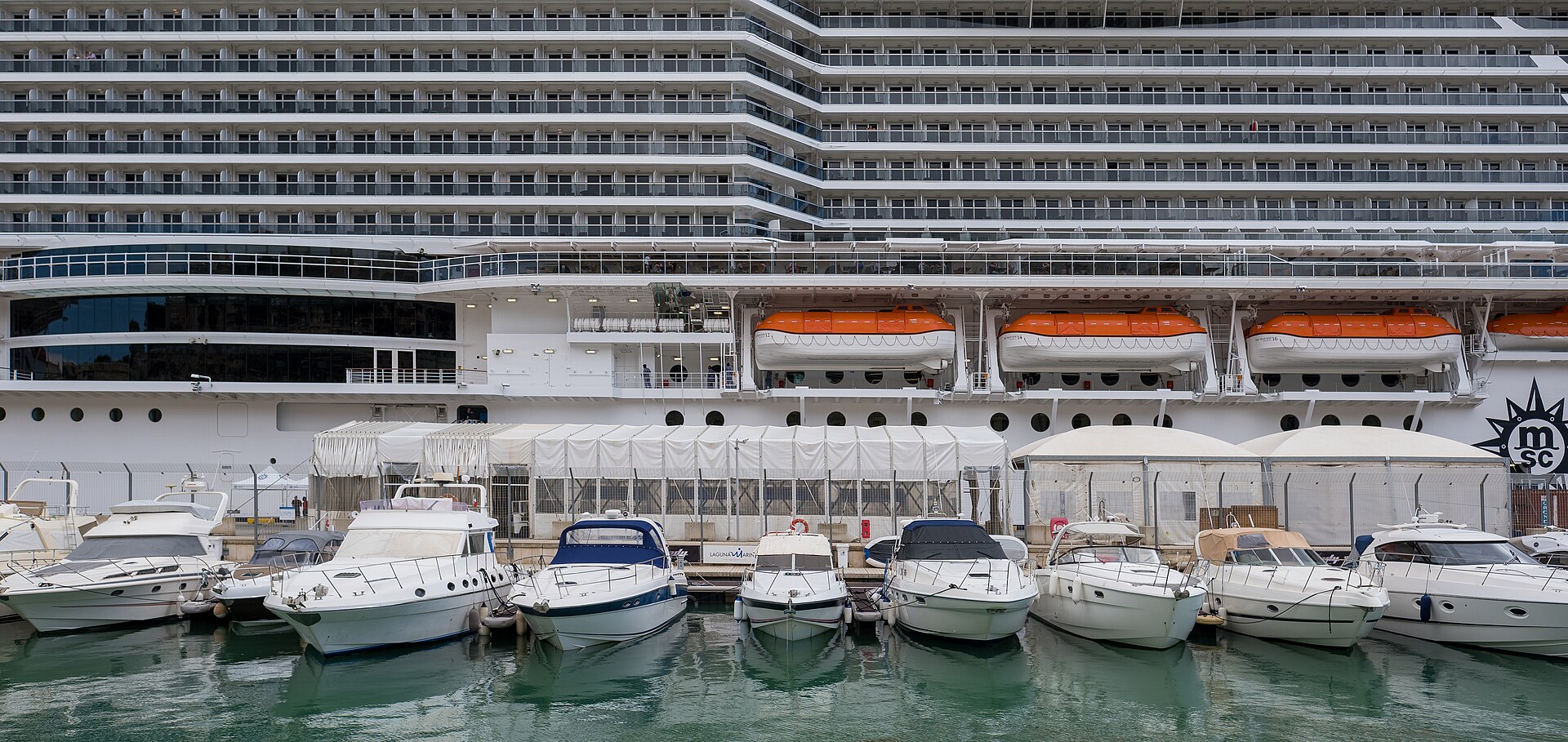
The port is not the city: what the itinerary really means
This is the table we wish someone had shown us before our first European cruise. An itinerary that says “Rome” means a working industrial port 46 miles from Rome. “Florence” means Livorno, 65 miles away. “Olympia” means Katakolon, a village of about 600 people with a railway station and three streets. None of this is a scandal, it is just geography, but it changes how you plan every single day.
| Port (as sold) | Dock or tender | To the centre or headline sight | Transport, with prices as of September 2026 |
|---|---|---|---|
| Civitavecchia (Rome) | Dock, plus a free in-port shuttle to the gate at Largo della Pace | Rome 46 mi (74 km). Station is a 20-minute walk from the gate, or 6 minutes on the Argo bus | Train 45–59 min, about 44 a day, cheapest fares around €4.85 (about $5.60). SIT coach to the Vatican then Termini, €15 one way / €25 return (about $17 / $29), about 1 hour |
| Livorno (Florence, Pisa) | Dock in the container port. You cannot walk out | Pisa 16 mi (25 km), Florence 65 mi (105 km). Station is about 2 mi (3 km) from the berth | Port shuttle to Piazza Grande about €5 cash; to the station about €12 (both need re-checking). Train to Florence 1h08–1h22, about 36 a day, from about $14 |
| La Spezia (Cinque Terre) | Dock at Molo Garibaldi with a free shuttle to the terminal | La Spezia Centrale is a flat 25-minute walk. Cinque Terre is 30 minutes by train | Cinque Terre Treno card, one day, adult: €22 low / €29.50 mid / €35 peak (about $25 / $34 / $41) |
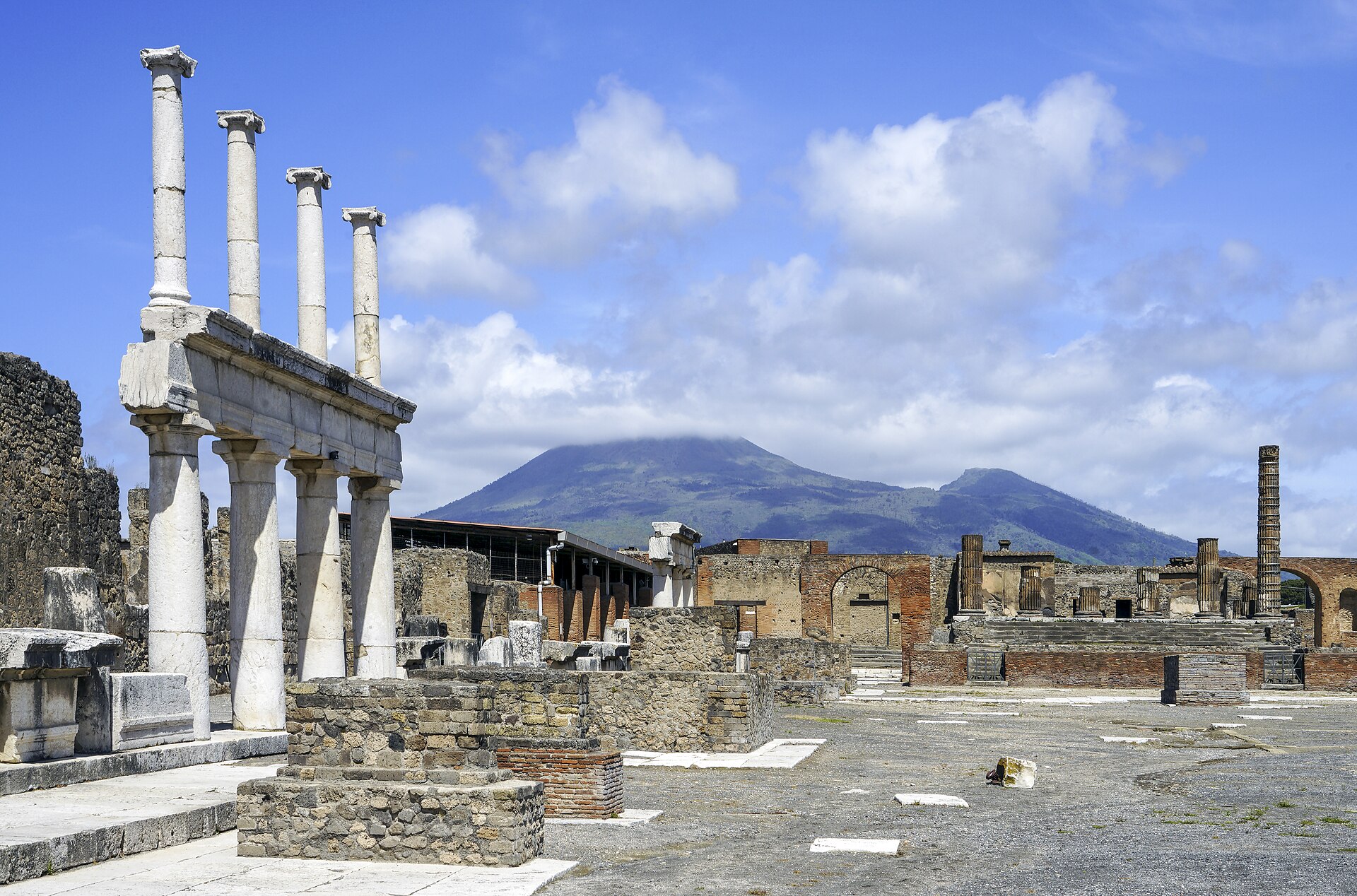
| Naples | Dock at Stazione Marittima, next to Molo Beverello | City centre 10 minutes on foot. Pompeii 15 mi (24 km) | Circumvesuviana train to Pompei Scavi. Hydrofoil to Capri about 40 min from Molo Beverello; slow ferry 75–80 min from Calata di Massa |
| Barcelona | Dock, seven terminals across Moll Adossat and the World Trade Center | Adossat to the Columbus Monument 2–3 km. WTC berths are about 10 minutes’ walk from La Rambla | PortBus “Blue Bus” €3 one way / €4.50 return (about $3.50 / $5.20). Metro at Drassanes on L3 |
| Valletta (Malta) | Dock at the Valletta Waterfront, seven berths | City 1.5 km, about 15 minutes, steep | Upper Barrakka lift about €1 return. Gozo fast ferry about 45 min |
| Villefranche (Nice, Monaco) | Tender to a small jetty, typical wait 5–10 min | Station is a 10-minute walk uphill. Nice 4 km, Monaco a short hop east | Train to Nice about 7 min, Monaco about 20 min. Published fares on the leading port guides are stale; buy at the machine |
| Monaco | Dock at the Digue Rainier III breakwater in Port Hercule, tender when full | Monaco-Ville about 500 yards | Ships are limited to premium and luxury vessels up to 250 m and 1,250 passengers, so big-ship itineraries call at Villefranche instead |
| Piraeus (Athens) | Dock. Three cruise terminals: A Miaoulis, B Themistocles, C Alkimos | Athens 7 mi (12 km), 20–30 minutes by taxi depending on traffic | Metro Line 1 from Piraeus station, a 20–30 minute walk from the terminals. Free port shuttle from the anchorage areas to the terminal |
| Santorini | Tender always. Ships anchor in the caldera; passengers tender to the Old Port below Fira. Ship tours may tender to Athinios | Old Port sits at the foot of the cliff. Cable car or the Karavolades steps | Cable car €10 one way adult, €5 child, €5 luggage (about $11.60 / $5.80). June–August 07:00–23:00, last descent 22:40; shorter hours in the shoulder months. A reported closure of the steps and donkey path since October 2025 is from a single source and we could not confirm it |
| Mykonos | Usually docks at the New Port (Tourlos); tenders to the Old Port on busy days | Chora 2–2.5 km. The walk is about 40 minutes along a busy road and is not recommended | SeaBus €2 one way (about $2.30), about 12 minutes, every 30 minutes and every 15 on cruise arrivals, 08:30–23:45 from 1 April to 31 October |
| Katakolon (Olympia) | Dock at Pier 3 | Ancient Olympia 21 mi (34 km) | Train €10 return (about $11.60), about 45 minutes, three services roughly two hours apart, timetable set each morning around the ships. Station is about 200 yards from the port gate |
| Kusadasi (Ephesus) | Dock at Ege Port, up to four large ships | Town centre 50 m. Ephesus 11 mi (18 km), 20–25 minutes by road | Taxi and dolmus fares are not published by any source we could verify. Agree the price before you get in |
| Dubrovnik | Docks at Port Gruz; also used as a tender port when berths are full | Old Town 2 mi (3 km) from Gruz | Local buses on lines 1, 1A, 1B and 3, around €4; taxis around €12–20 depending on source. Cable car €30 adult return / €17 one way (about $35 / $20) |
| Split | Dock alongside, no tender | Diocletian’s Palace 800 m, a flat 10-minute walk | Nothing needed. This is the easiest headline port in the Mediterranean |
| Kotor | Docks at the main quay opposite the Sea Gate when space allows, otherwise anchors and tenders (5–20 min) | Sea Gate 200–400 m, a 2–5 minute walk | Taxi to Perast €12–18 one way, €25–30 return with waiting, per several local operators |
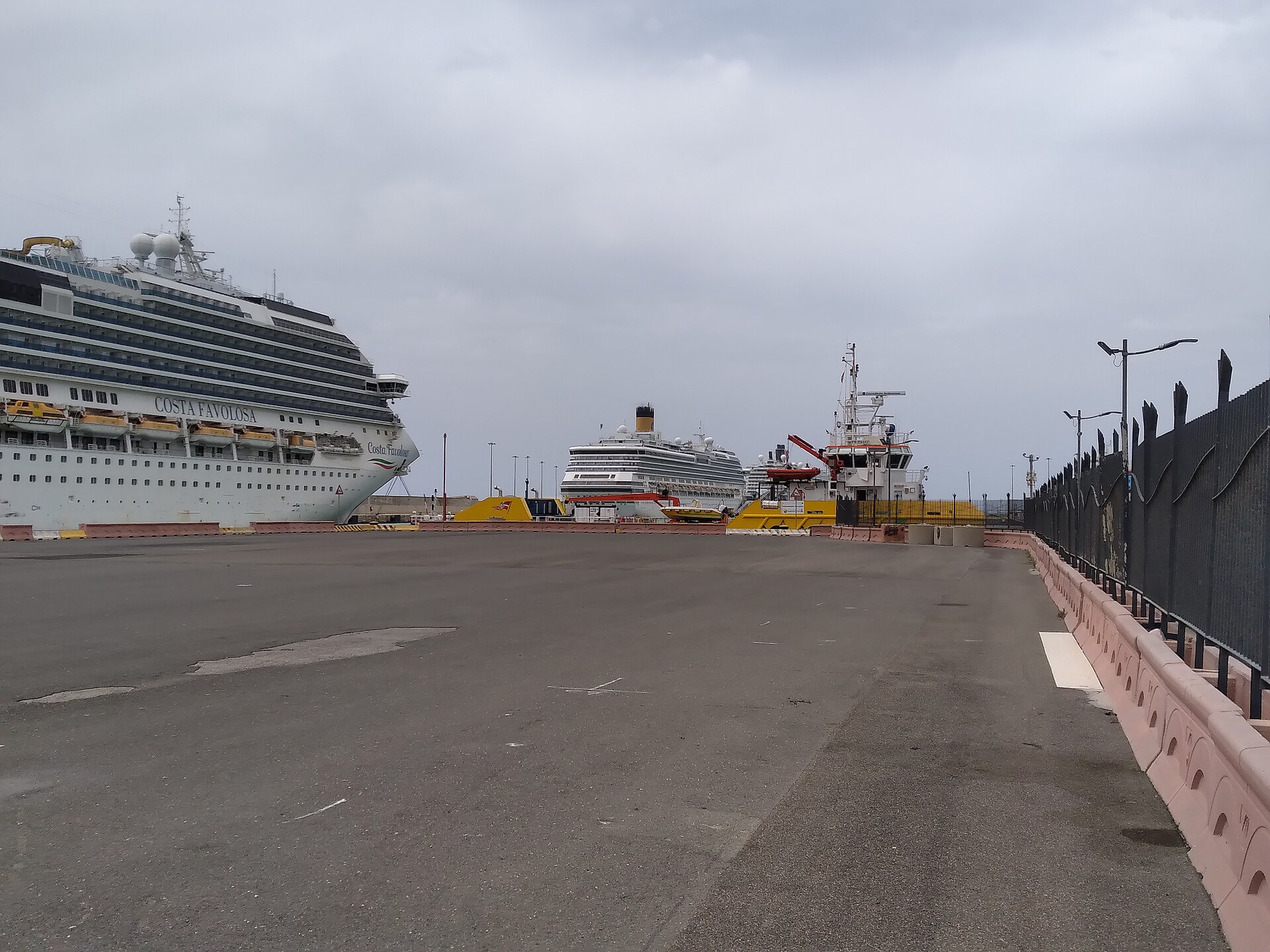
All-aboard math: a worked port day for Rome
Every port day is a subtraction problem, and almost nobody does the subtraction until they are standing on a platform watching a train they cannot afford to miss. Here is the arithmetic for the hardest common case: Rome from Civitavecchia, independently, on a typical 8:00 to 17:00 call. All aboard is usually 30 minutes before departure, so the real deadline is 16:30.
| Time | What is happening | Cumulative |
|---|---|---|
| 08:00 | Ship alongside. Gangway rarely opens on the dot | — |
| 08:15 | Off the ship, onto the free in-port shuttle to Largo della Pace | 15 min |
| 08:30 | At the port gate. Walk to Civitavecchia station, 20 min, or take the Argo bus, 6 min | 30 min |
| 08:55 | Buy tickets and validate. Trains run about 44 times a day, so a 15-minute wait is typical | 55 min |
| 09:10 | Train departs. Fastest is 45 minutes to Roma San Pietro, average 59 minutes to Termini | 1 h 10 |
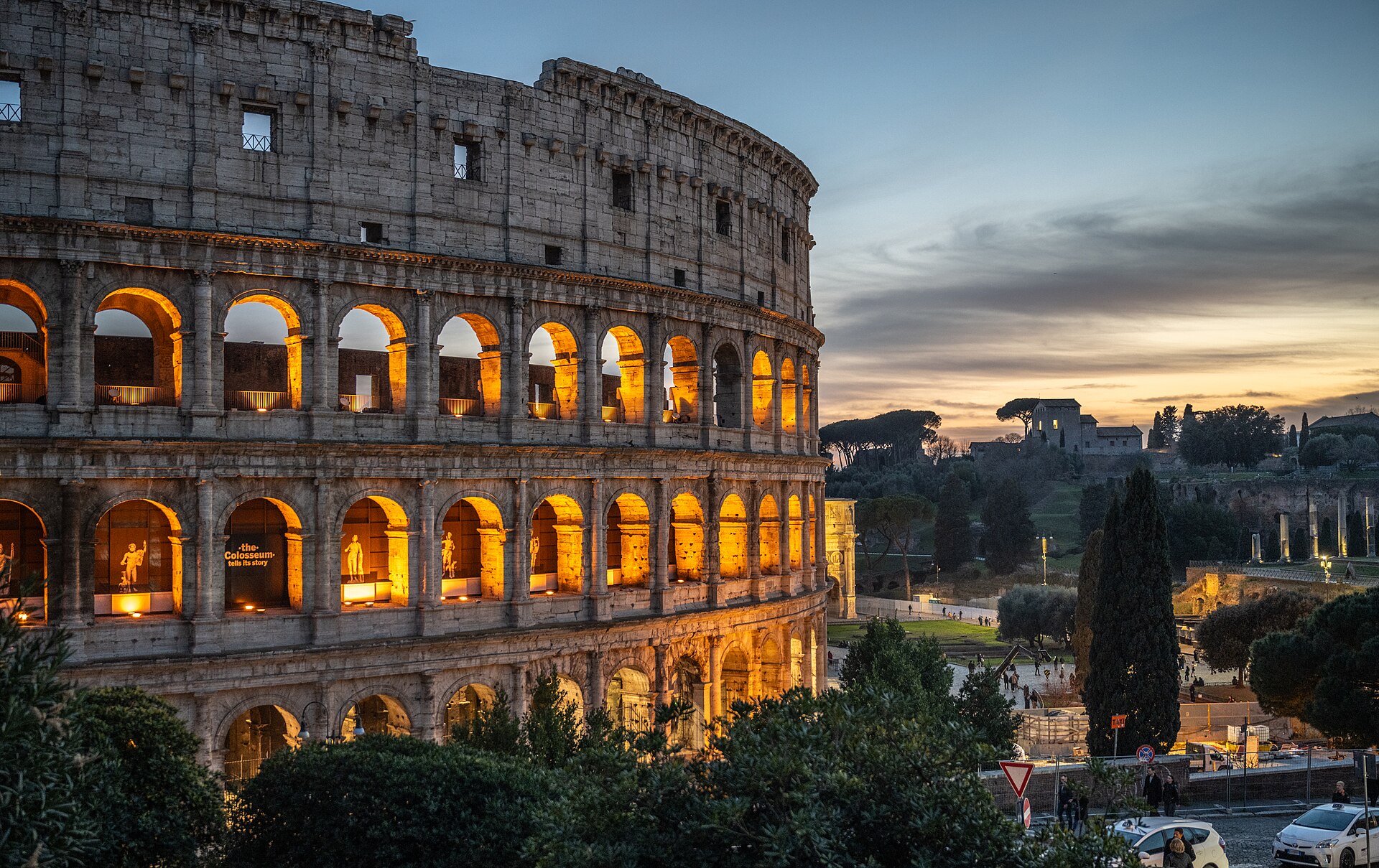
| 10:10 | Arrive Rome. Metro or a 25-minute walk to the Colosseum area | 2 h 10 |
| 10:35 | At the Colosseum with a pre-booked timed ticket. Without one, add 45–90 minutes of queue | 2 h 35 |
| 10:35–14:00 | Actual sightseeing: about 3 hours 25 minutes. That is the Colosseum, the Forum and a fast lunch, or the Vatican Museums, but not both | — |
| 14:00 | Latest safe departure from central Rome. Head for the station | — |
| 14:30 | Train from Termini or San Pietro | — |
| 15:30 | Arrive Civitavecchia | — |
| 15:55 | At the port gate, onto the shuttle | — |
| 16:10 | Back aboard, 20 minutes before all aboard | — |
Two rules fall out of this, and they generalise to every port in the Mediterranean.
- Double the one-way transfer and subtract it twice. A 70-minute transfer costs you two hours and twenty minutes of a nine-hour day before you have seen anything. Then subtract a 45-minute safety buffer on top. On a Civitavecchia call you are choosing between the Colosseum or the Vatican, never both, and anyone who tells you otherwise is selling something.
- Know the ship’s liability rule. If you are on a ship-sold excursion and the tour runs late, the ship waits or the line gets you to the next port. If you are independent and late, it does not and it will not. That difference is what you are actually buying when you pay the ship’s premium at Civitavecchia, Livorno and Katakolon — and it is why we do not think you should buy it at Split, Kotor, Naples or Valletta, where you can walk back in ten minutes.
If you do book independently for Rome, book the archaeological site ticket in advance from the official ticket office, and pick the earliest slot you can realistically make. The same applies at Pompeii, where tickets from 12 January 2026 are named — ID may be checked — and where the site runs timed entry between 16 March and 14 October with a cap of 15,000 in the morning slot and 5,000 in the afternoon. Full details are on the Parco Archeologico di Pompei ticketing page.
Do Mediterranean cruises require a passport?
Yes. Every Mediterranean cruise requires a valid passport, because every itinerary calls at foreign ports and several cross non-Schengen borders. US, Canadian, UK and Australian citizens do not need a Schengen visa for short stays, but from 2026 they do pass through the EU’s biometric Entry/Exit System, and ETIAS is coming.
Here is where the paperwork actually stands as of 11 September 2026.
- Passport validity. For the Schengen area your passport must have been issued within the previous 10 years and be valid for at least three months beyond your intended departure. Most cruise lines ask for six months’ validity anyway, which is the safer standard to hold yourself to.
- The Entry/Exit System (EES). Fully operational across all Schengen countries since 10 April 2026, after a phased rollout that began on 12 October 2025. It records your facial image, fingerprints, passport details and every entry and exit. There is nothing to apply for, but it does mean the first time you enter the Schengen area in a given passport cycle takes longer at the border. Expect queues at Barcelona, Rome Fiumicino and Athens in peak season; the summer of 2026 produced plenty of them.
- ETIAS. Scheduled to start in the last quarter of 2026, with the exact date still to be announced by the European Commission, and full mandatory enforcement following in 2027. It will cost €20, be valid for three years or until your passport expires, and cover 30 European countries. Applicants under 18 or over 70 are exempt from the fee. You apply online in advance; it is not a visa. The authoritative source is the European Commission’s Migration and Home Affairs ETIAS pages, and we recheck them quarterly.
- Turkey. US and Canadian citizens have been visa-free for Turkey since 1 January 2024, for stays of up to 90 days in any 180. UK citizens are also visa-free. Some sources say cruise passengers may land visa-free for up to 72 hours at the port’s discretion; we could not verify that from an official Turkish source, so do not rely on it.
- Croatia, Montenegro and Albania. Croatia is in Schengen and uses the euro. Montenegro and Albania are outside the EU but use or accept the euro and are visa-free for the major English-speaking passports.
- Morocco, Tunisia, Egypt. Rules differ by nationality and change. Check your own government’s advice. Americans should start at travel.state.gov’s country information pages; British travellers should use the FCDO’s foreign travel advice.
One practical consequence of EES that nobody warns cruise passengers about: on a turnaround day in Barcelona or Athens, thousands of people clear the same border control within a three-hour window. If your flight lands the morning your ship sails, you are gambling on a biometric queue. Fly in the day before. Two days before, if you can afford it.
What a Mediterranean port day actually feels like
Caribbean cruising is a holiday with excursions attached. Mediterranean cruising is a walking tour with a hotel attached. This is the single biggest expectation gap we see, and it is why “is a Mediterranean cruise worth it” gets searched so often by people who have already booked.
A realistic port-intensive week looks like this. You are awake at 6:30 most mornings because the good excursions leave at 7:30. You walk somewhere between five and eleven miles a day, much of it on cobbles, marble, or up steps that were laid before handrails were invented. Kotor’s fortress is 1,350-odd steps. Sorrento’s town is about 200 steps up from the tender pier. Mahon’s old town is up 107. Bonifacio’s upper town is up 100. You come back aboard at five, sunburnt and quiet, and you have dinner and go to bed, and then you do it again.
People who love it love it precisely because of that. People who wanted a pool and a sea day resent it by Thursday. Both reactions are reasonable. Choose an itinerary with the right number of sea days for the person you actually are, not the person you intend to become.
Practical things that catch Americans out
- Church dress codes are enforced. Knees and shoulders covered, at St Peter’s and at most working churches in Italy, Greece and Spain. A scarf in the day bag solves it. Being turned away at the Vatican after a 70-minute transfer is a memorable way to waste a port day.
- Plugs differ within one cruise. Spain, Greece, Croatia, Turkey, Portugal and Montenegro use C/F. Italy uses C/F/L. France and Monaco use C/E. Malta and Cyprus use G, the UK three-pin. All run 230V at 50Hz against the US 120V at 60Hz. Cabins usually have both US and European sockets, but surge-protected power strips are banned by every major line.
- Cash still matters in small ports. Tender jetty kiosks, island buses, market stalls and the Katakolon train are all easier with euro coins than with a phone.
- Tender ports can be cancelled. If the swell is wrong, the ship skips the port or diverts. Portofino tenders get cancelled and the ship goes to Genoa instead. Santorini is the one tender port that is almost never missed, because the caldera is sheltered, but it is also the one where the queue to get back down to the Old Port at 4pm is legendary.
- Sea sickness is mostly a non-issue. The Mediterranean is calm through the summer. The genuinely rough stretches are the Gulf of Lion off Marseille in a mistral, and the Atlantic segment of any repositioning crossing.
Crowd caps and access rules you should know before booking
Several Mediterranean ports now limit how many cruise passengers they will take, and the limits are starting to shape itineraries rather than just port days.
- Santorini has a hard cap of 8,000 cruise passengers a day, administered by the Thira Municipal Port Fund through a ranked berth-allocation system. In 2026 the occupancy assumption used to calculate that number rose from 80% to 100% of a ship’s capacity, and scheduled calls fell from 728 in 2025 to 595 in 2026, a drop of about 18%. If Santorini is non-negotiable for you, confirm it is on the specific sailing you are booking rather than on the itinerary family.
- Dubrovnik has capped simultaneous cruise visitors at 4,000 under the port authority’s 2026 berthing regulations, alongside longstanding agreements limiting calls to two ships a day. Some outlets report a different figure; the sources genuinely conflict, so treat the number as “capped, in the low thousands” rather than a precise ceiling.
- Venice has been closed to ships of 25,000 gross tons or more since 1 August 2021. Large ships use Marghera or Fusina on the mainland, or lines substitute Ravenna and Trieste entirely. A reopening of the Stazione Marittima for ships up to 60,000 GT and 250 m is reported for the second quarter of 2027, but we have not been able to confirm that with the port authority and would not book around it.
- Monaco restricts calls to premium and luxury vessels up to 250 m and 1,250 passengers, which is why your 5,000-passenger ship calls at Villefranche and buses you along the coast.
- Gibraltar’s cable car is closed for a full refurbishment and is expected to reopen in 2027. The Upper Rock nature reserve is still open on foot or by taxi tour.
How to plan a Mediterranean cruise
Eleven mistakes first-time Mediterranean cruisers make
- Flying in on embarkation day. The most expensive $300 you will ever save. Two nights before is the standard advice for a reason, and EES queues have strengthened the case.
- Booking July or August because that is when the kids are off. Understandable, but know what you are buying: 90°F in Athens, peak Greek landing fees, peak fares and heat closures at outdoor sites.
- Assuming the port is the city. Check the transfer distance for every port before you book, not after. The table above is the starting point.
- Buying every ship excursion. At Split, Kotor, Naples, Valletta, Rhodes and Kusadasi the ship’s tour buys you very little you could not do yourself in twenty minutes’ walking.
- Buying no ship excursions. At Civitavecchia, Livorno, Katakolon and Motril, the ship’s tour buys you the one thing you cannot buy any other way: the ship waiting for you.
- Ignoring the arrival and departure times. A 7:00 to 19:00 call is worth roughly 40% more day than an 8:00 to 17:00 call at the same port.
- Forgetting gratuities exist. $18.50 per person per day on a 12-night sailing is $444 for a couple.
- Not pre-booking timed tickets. The Colosseum, the Vatican Museums, the Acropolis and Pompeii all sell timed entry. Queue time is the thing you have least of.
- Packing for a beach holiday. You need walking shoes with grip for marble and cobbles, something that covers knees and shoulders, and a light layer for evening deck.
- Treating a 7-night sailing as a Europe trip. Four usable port days is a sampler. Take the extra three nights if you can.
- Booking in wave season without tracking fares first. January to March brings 30–60% “off” promotions, but lines have been documented raising rack rates before discounting them. Watch your sailing for a few months before you believe the saving.
The countdown, from 18 months out to sailing day
- 12 to 18 months out. Pick the region and the month first, before you look at a single ship. This decides the trip.
- 9 to 12 months out. Compare itineraries on port hours and transfer distance, not on ship amenities. Book. Princess’s own guidance is 6 to 12 months ahead for Europe, and the good cabins on shoulder-season sailings go earliest.
- 9 months out. Book flights, arriving at least two days before embarkation. Price the open-jaw option if your cruise is one-way.
- 6 months out. Check your passport was issued within the last 10 years and has six months’ validity beyond your return. Renew now if it is close.
- 4 to 6 months out. Book pre- and post-cruise hotels near the homeport. Book the two or three excursions that genuinely need it — the long-transfer ones.
- 3 months out. Buy travel insurance that covers missing the ship, not just medical. Check whether ETIAS has gone live and whether it applies to your sailing.
- 60 days out. Final payment for most lines. Re-check the itinerary for port substitutions, which are most common on Eastern Med and North Africa routes.
- 30 days out. Pre-book timed tickets for the Colosseum, Vatican, Acropolis and Pompeii as applicable. Download offline maps for each port.
- 2 weeks out. Online check-in, print the boarding documents, photograph your passport, and note the all-aboard time for each port from the itinerary.
- The night before each port. Read the daily programme for the actual all-aboard time, which is not always 30 minutes before departure, and work backwards from it.
Italy is where the port name and the destination part company most often. Our guide to Italy cruise ports goes port by port down the west coast — Civitavecchia, Livorno, La Spezia, Genoa, Naples, Salerno and the tender stops — with the distance to the sight, dated train and coach prices, and all-aboard timelines for Rome and Florence.
The trip starts before the ship does. Our guide to Mediterranean cruise embarkation ports covers Barcelona, Civitavecchia, Piraeus and the Venice substitutes airport-to-gangway, with dated transfer prices, how many nights to arrive early and the earliest sensible flight home.
If you want the short practical version of everything on this page, our 50 Mediterranean cruise tips put the dated numbers behind each piece of advice — from the months the Greek landing fee drops to the tickets you must book before you sail and the all-aboard math for a port day.
Where this guide goes deeper
This page is the hub. Over the coming weeks we are publishing the detailed guides that sit beneath it, and we will link them here as each goes live.
- Deciding whether to go. An honest verdict on whether a Mediterranean cruise is worth it; how it compares with a land tour of the same countries; how it compares with a Caribbean cruise; and how an ocean cruise differs from a European river cruise.
- Choosing the trip. The best Mediterranean cruises by traveller type and by month; how many days you actually need; and what is new for the 2027 season in ships, itineraries and port rules.
- Booking and building it. A twelve-step planning timeline; and how to build a cruise-and-stay trip that adds land nights either side of the sailing.
Alongside those, the site covers cruise lines and ships, every major port of call, homeports and embarkation, shore excursions, documents and insurance, and the money side — tipping, phones and onboard spending.
Mediterranean cruise FAQs
What is the cheapest month to cruise the Mediterranean?
April and November are the cheapest months with a full season of sailings, and the measured spread against midsummer on the same mainstream itinerary has reached about $60 per person per night. March and late November are cheaper still but the choice of itineraries thins out sharply, and Rome and Athens are at their rainiest in November.
Where do Mediterranean cruises depart from?
Barcelona and Civitavecchia (for Rome) are the two dominant homeports, followed by Piraeus for Athens, Venice’s mainland substitutes at Ravenna and Trieste, plus Marseille, Genoa, Palma, Valletta, Istanbul and Southampton for UK no-fly sailings. Repositioning cruises depart from Fort Lauderdale, Tampa and New York.
Are Mediterranean cruises all-inclusive?
Mainstream lines are not: your fare covers the cabin, main dining and basic entertainment, while drinks, specialty dining, Wi-Fi, excursions and gratuities are extra. Premium-inclusive lines such as Viking and Oceania include port taxes, Wi-Fi and, on Viking, one shore excursion per port. Luxury lines including Silversea, Regent, Seabourn and Explora include gratuities, drinks and usually excursions.
Is the Mediterranean rough?
Not usually. Summer Mediterranean sailing is calm compared with the Atlantic or the North Sea, and most passengers never feel the ship move. The exceptions are the Gulf of Lion off southern France when the mistral blows, the Aegean in the high-summer meltemi wind, and the Atlantic legs of transatlantic repositioning crossings.
Can I get by with English?
In the cruise ports, yes. Terminal staff, taxi ranks, ticket offices and restaurants in Barcelona, Rome, Athens, Dubrovnik, Valletta and Kusadasi deal with English-speaking passengers all day. It gets thinner in smaller Italian, Spanish and Greek ports, and in Morocco and Tunisia, where French is more useful than English.
Which Mediterranean ports require a tender?
Santorini always tenders, because ships anchor in the caldera. Villefranche, Cannes, Saint-Tropez, Portofino and Santa Margherita, Capri, Sorrento, Amalfi, Calvi and Bonifacio are usually tender ports. Mykonos and Kotor dock when a berth is free and tender when it is not. Trapani tenders ships drawing more than 8 metres.
Is a 7-night Mediterranean cruise long enough?
For Europeans and UK travellers, yes. For North Americans, it is tight: two travel days and two jet-lag days leave roughly four usable port days out of a nine-day absence. If your flights already cost $750 to $1,000 per person, extending to 10 or 12 nights adds port days at a much lower marginal cost than flying back again.
Do I need travel insurance for a Mediterranean cruise?
We think so, and specifically the kind that covers missed connections and missing the ship, not just medical treatment. On a port-intensive European itinerary the realistic risks are a delayed transatlantic flight on embarkation day and an independent excursion that runs late. Standard medical-only policies cover neither.
How we researched this guide
Every fare, fee, timetable, distance and entry rule on this page comes from a named source with the date we checked it, and we have said so wherever a figure could not be verified rather than filling the gap with an estimate. Climate figures come from published station normals and weather2travel. Transfer distances and transport prices come from port authorities, rail operators and site ticket offices. Deployment and gratuity figures come from cruise line press releases and industry trackers, checked in September 2026. Fees and entry rules come from the European Commission, the Greek fee schedule in force since July 2025, and port authority publications.
We are an independent editorial site. We have not sailed every itinerary described here and we do not claim to have; where this page gives an opinion — that the Western Med is the better first cruise, that 10 to 12 nights beats 7, that ship excursions are worth it at Civitavecchia and not at Split — it is labelled as ours and you are free to disagree. Money figures are re-checked each January and again in March before the season opens. Entry rules are re-checked quarterly and on any official announcement. Port rules are re-checked before each season.
Image credits
| Image | Photographer | Licence |
|---|---|---|
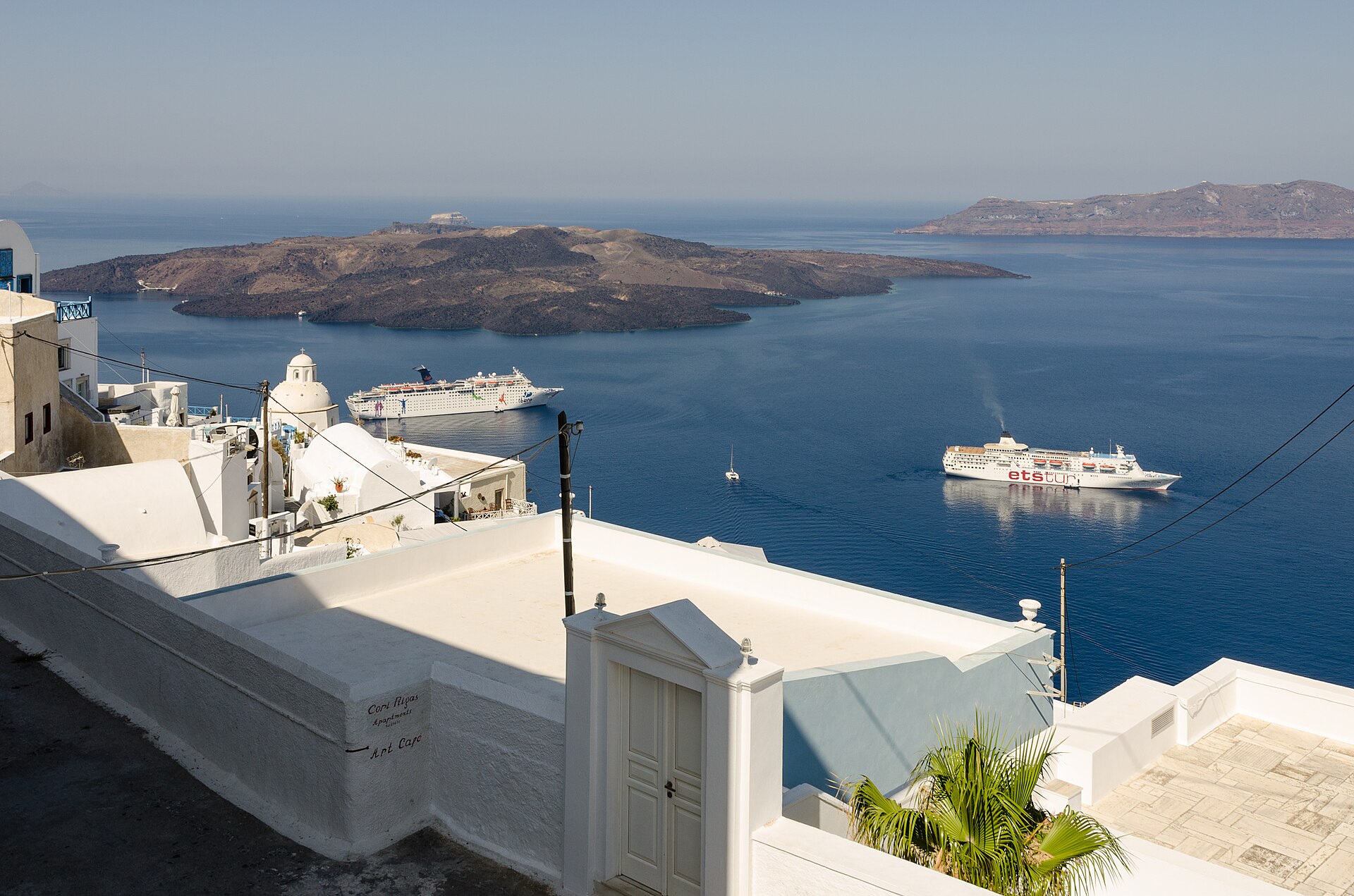
| Cruise ships in the Santorini caldera, seen from Fira | Norbert Nagel | CC BY-SA 3.0, via Wikimedia Commons |
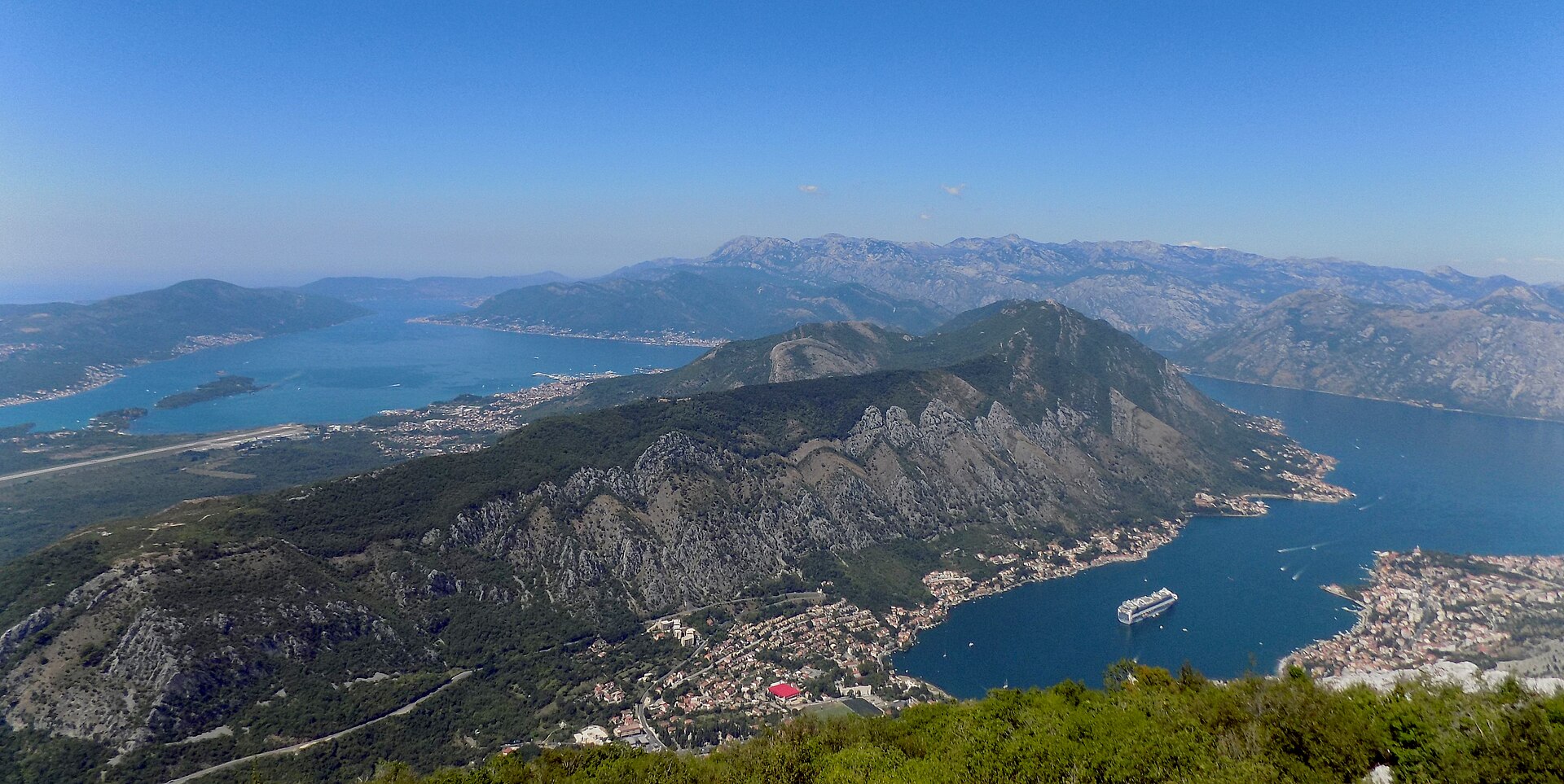
| Bay of Kotor, Montenegro | Milica Buha | CC BY-SA 4.0, via Wikimedia Commons |
| Moll Adossat, Port of Barcelona | Jordiferrer | CC BY-SA 4.0, via Wikimedia Commons |
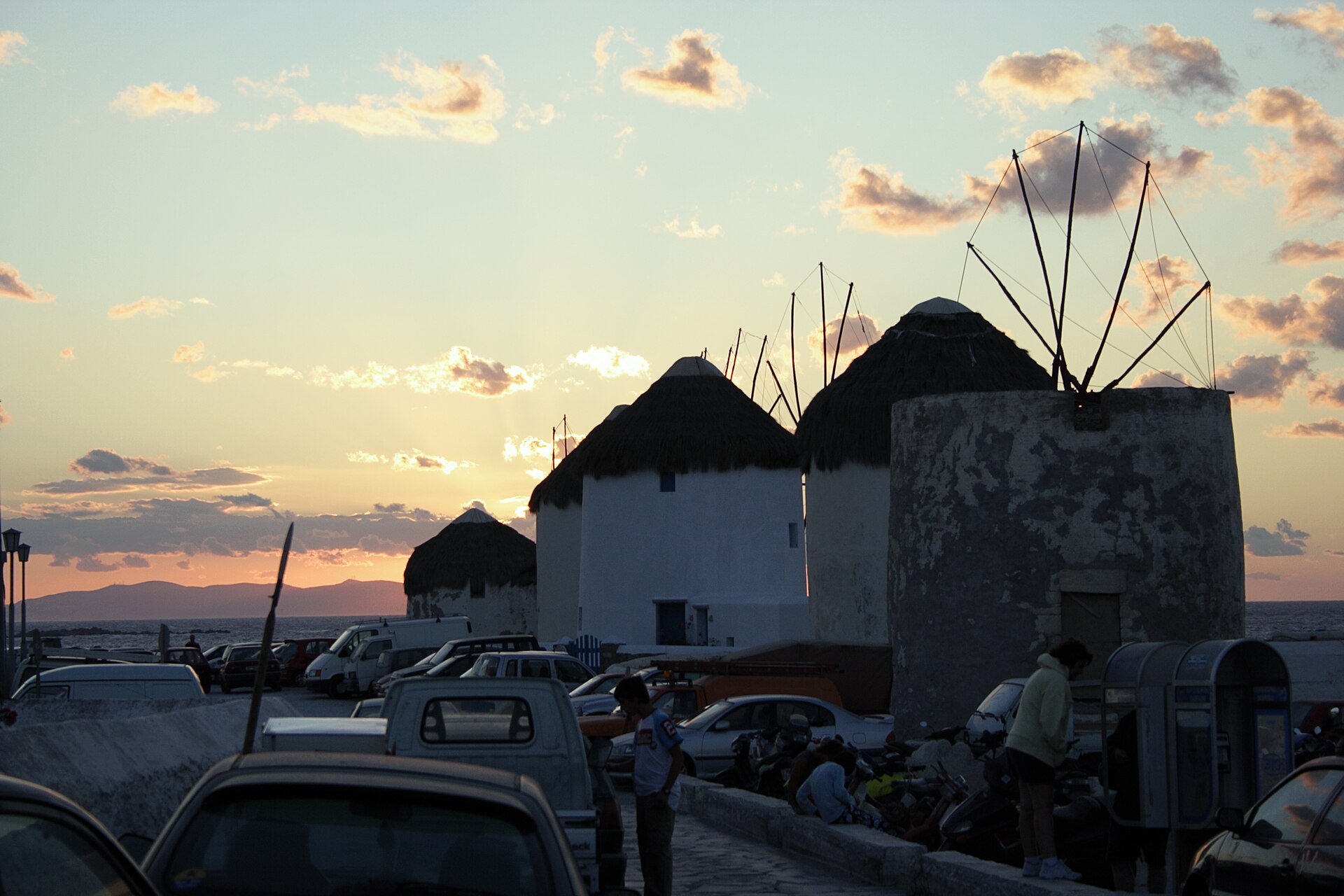
| The lower windmills, Chora, Mykonos | Zde | CC BY-SA 4.0, via Wikimedia Commons |
| Valletta Waterfront, Malta | Jules Verne Times Two | CC BY-SA 4.0, via Wikimedia Commons |
| Port of Civitavecchia | Captain Raju | CC BY-SA 4.0, via Wikimedia Commons |
| The Colosseum, Rome | Wilfredor | CC0, via Wikimedia Commons |
| The Forum at Pompeii with Vesuvius | Commonists | CC BY-SA 4.0, via Wikimedia Commons |
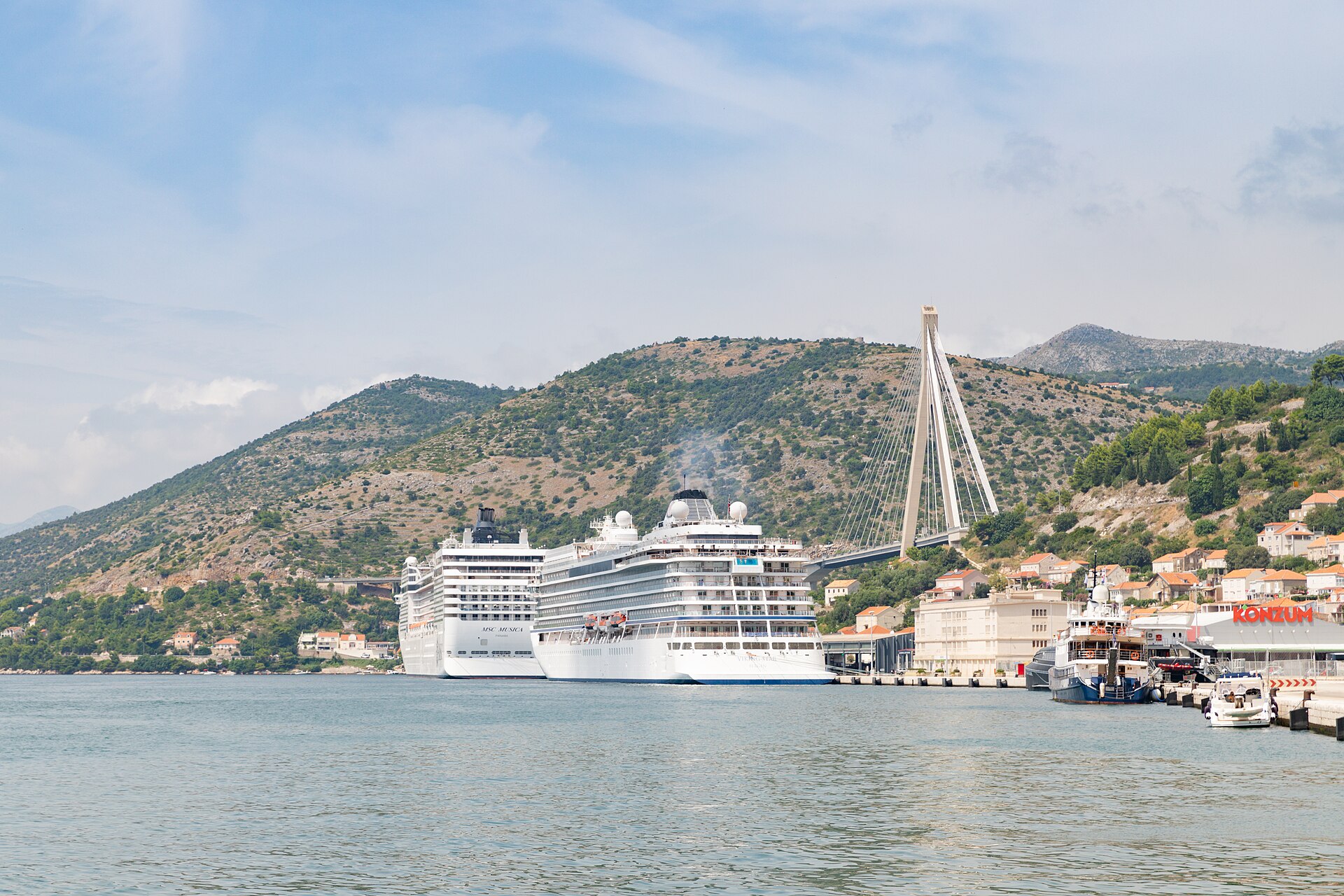
| Cruise ships at Port Gruz, Dubrovnik | dronepicr | CC BY 2.0, via Wikimedia Commons |
Published 11 September 2026. Fares, fees and entry rules were checked on that date and will change — verify anything you are about to pay for. Further reading: the Port of Barcelona cruise pages and the Santorini cable car operator’s published tariff.