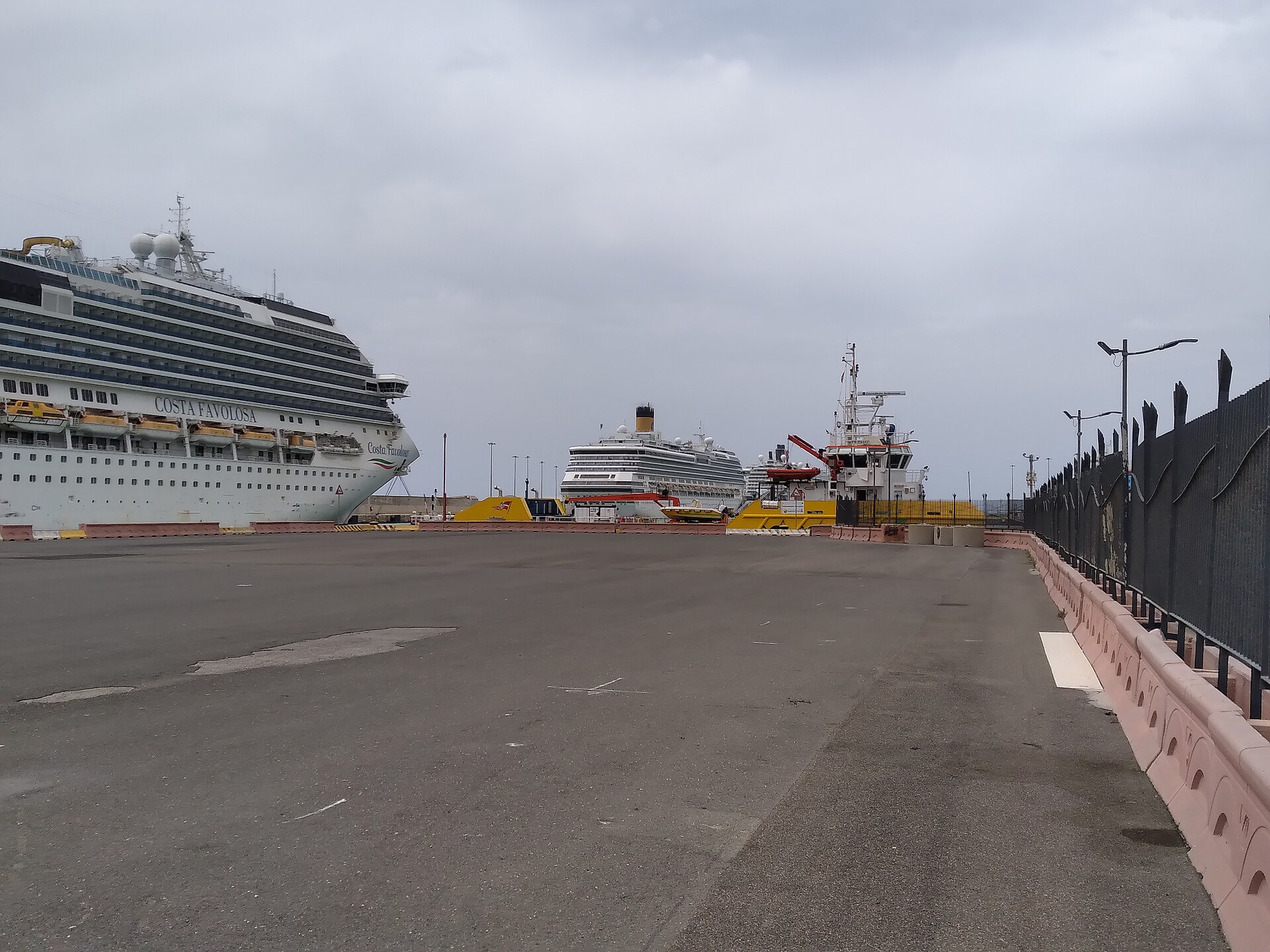
The main Italy cruise ports on the west coast are Civitavecchia for Rome, Livorno for Florence and Pisa, La Spezia for the Cinque Terre, Genoa, Naples for Pompeii and Capri, and Salerno for the Amalfi Coast. Portofino, Sorrento, Amalfi and Capri are tender stops. Almost none of them is the city on your ticket, so the transfer is the day.
That last sentence is the whole point of this guide. Italy’s cruise ports are superb, and they are also where first-time Mediterranean cruisers most often get the arithmetic wrong. Civitavecchia is 46 miles from the Colosseum. Livorno is 65 miles from Florence and does not let you walk out of the port. Naples is the rare big port where you step off the ship into the city itself. Italian ports handled 14.7 million cruise passengers in 2025, more than a third of all Mediterranean cruise traffic, so you will not be the only person trying to catch the 09:00 train. Below is every major west-coast port with the distance, the transport, the price and the date we checked it. For the region as a whole, our Mediterranean cruise planning guide is the place to start.
Italy cruise ports at a glance
| Busiest ports, 2025 | Civitavecchia 3.56 million passengers (second in the Mediterranean); Naples 1.85 million (fifth); Genoa 1.63 million (seventh). Livorno ranked 16th and La Spezia 18th in the Mediterranean. |
| Whole country | 14.74 million cruise passengers and 5,696 ship calls in 2025. The 2026 forecast is 15.31 million and 5,970 calls, both records. |
| Walk off into the city | Naples (centre about 10 minutes on foot), Genoa (old town 5–10 minutes), Salerno (about 10 minutes). |
| Long transfer | Civitavecchia to Rome, 46 mi (74 km). Livorno to Florence, 65 mi (105 km). Livorno to Pisa, 16 mi (25 km). |
| Tender ports | Portofino and Santa Margherita Ligure, Sorrento, Amalfi, Capri. |
| Headline tickets | Pompeii from €20 (about $23) since January 2026, named and time-slotted. Cinque Terre train card from €22 (about $26) a day. |
| Local fees | Capri charges a landing contribution of €5 (about $6) per person from April to October. |
| Currency, plugs | Euro. Sockets are Type C, F and L at 230 V. US devices need an adapter and, if not dual-voltage, a converter. |
| Season | All year in the Western Med, busiest May to October. Rome averages 86°F (30°C) in July and August. |
| Conversions | €1 = $1.1592, European Central Bank reference rate, 11 September 2026. Prices are as of September 2026 unless dated otherwise. |
Where do cruise ships dock in Italy?
On Italy’s west coast, cruise ships dock at Civitavecchia (for Rome), Livorno (for Florence and Pisa), La Spezia (for the Cinque Terre), Genoa, Savona, Naples and Salerno. They anchor and tender at Portofino or Santa Margherita, Sorrento, Amalfi and Capri. Sicily, Sardinia, Venice and the Adriatic ports are separate regions with their own logistics.
The pattern is worth understanding before you look at a single itinerary. Italy’s great inland cities — Rome, Florence, Pisa, Lucca — are not on the sea, or not on water deep enough for a modern cruise ship. So lines use the nearest industrial or commercial harbour and sell you the city behind it. The brochure says “Rome”. The ship docks at Civitavecchia. The brochure says “Florence/Pisa”. The ship docks in the container port at Livorno.
The coastal destinations work the other way round. The Amalfi Coast, Capri, Portofino and Sorrento are exactly where people want to be, but their harbours are tiny and their cliffs are steep, so ships anchor offshore and run tenders — small boats that shuttle passengers between the ship and a landing stage. That is lovely on a calm morning and a problem when there is a swell, because tenders are the first thing a captain cancels.
Between those two sits Naples, which is neither: a big city whose cruise terminal is on the downtown waterfront. It is the one major Italian call where you can genuinely do the city on foot from the gangway, and it is also the base for the three most popular excursions in southern Italy: Pompeii, Capri and the Amalfi Coast.
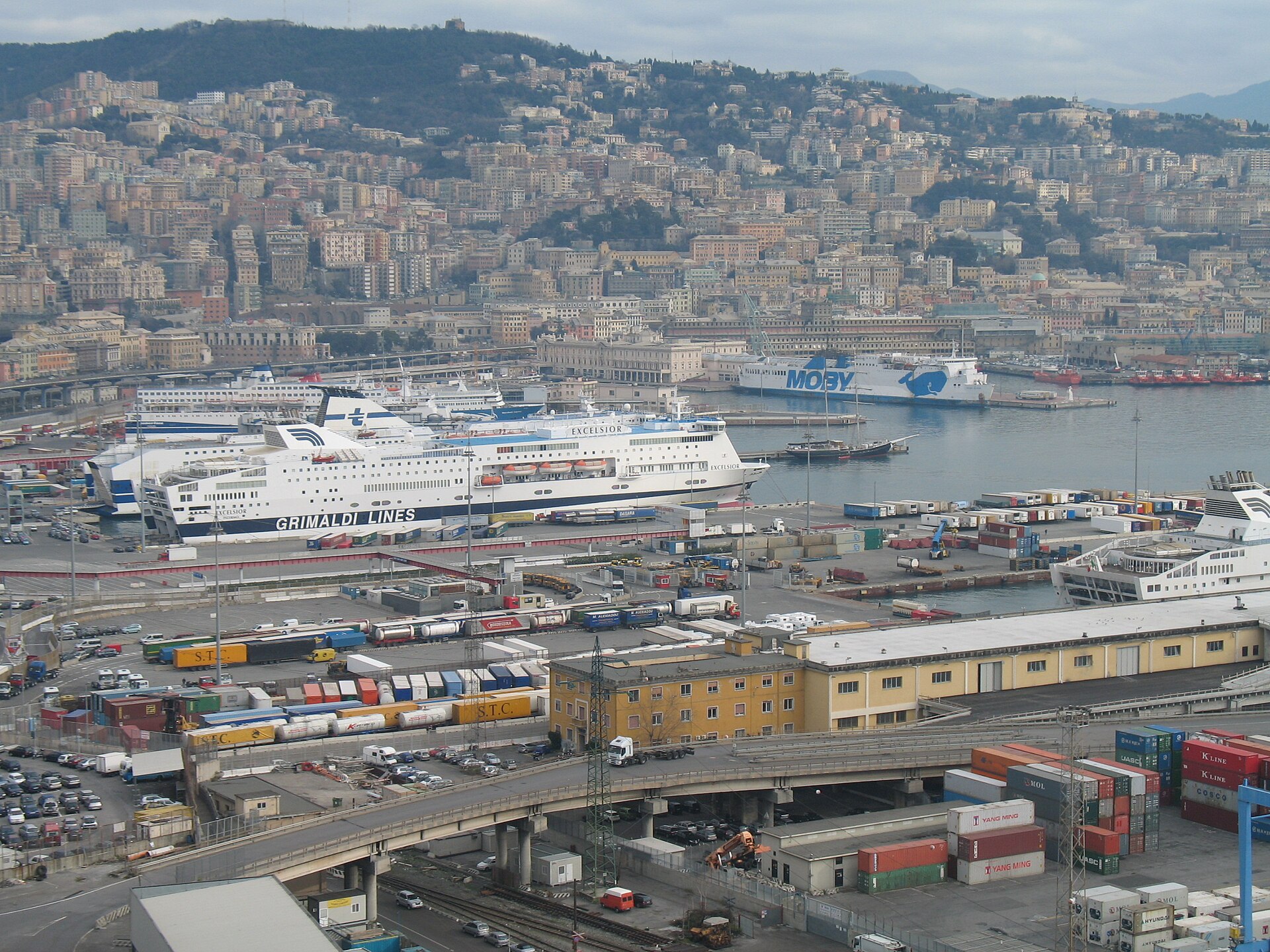
Italy cruise ports compared: the port name versus where you actually want to go
This is the single most useful table for an Italian cruise. It lists each west-coast port with the place most passengers actually want to reach, how far away it is, how you get ashore, and the transport with a dated price. The last column is our planning opinion of the minimum time you need at the port for that plan to be worth doing, including a return buffer.
| Port | Dock or tender | Where you want to go | Transport, as of September 2026 | Minimum call for this plan |
|---|---|---|---|---|
| Civitavecchia | Dock; free in-port shuttle to the port exit at Largo della Pace | Rome, 46 mi (74 km) | Train 45–59 min, about 44 a day, from about €4.85; SIT coach €15 one way or €25 return, about 1 hour | 9 hours |
| Livorno | Dock in the commercial port; no walking out | Florence 65 mi (105 km); Pisa 16 mi (25 km); Lucca about 31 mi (50 km) | Port shuttle to Piazza Grande about €5 (re-verify); station about 2 mi; train to Florence 1 h 08 to 1 h 22, about 36 a day, from about $14 | 10 hours for Florence; 6 for Pisa |
| La Spezia | Dock at Molo Garibaldi; free shuttle to the terminal | Cinque Terre, about 30 min by train | Station about 25 min on flat ground; Cinque Terre Treno card €22 / €29.50 / €35 a day by season | 7 hours |
| Genoa | Dock at the Stazione Marittima | Old town, 5–10 min on foot, some steps | Walk | 4 hours |
| Portofino / Santa Margherita | Tender; large ships often anchor off Santa Margherita, about 2 mi south | Portofino harbour and village | Bus line 82 or local boat from Santa Margherita; fares not verified | 5 hours |
| Naples | Dock at the Stazione Marittima beside Molo Beverello | City centre 10 min on foot; Pompeii 15 mi (24 km); Capri by sea | Hydrofoil to Capri about 40 min; slow ferry 75–80 min; ferry to Sorrento about 40 min; Circumvesuviana train to Pompei Scavi (current fare not verified) | 6 hours for Pompeii; 8 for Capri |
| Salerno | Dock at the western end of town | Downtown 10 min on foot; Amalfi by ferry about 35 min | Ferries along the coast; fares re-verify locally | 7 hours for Amalfi |
| Sorrento | Tender to Marina Piccola | Piazza Tasso, about 200 steps up | Minibus or lift; Pompeii about 30 min by train; Capri about 25 min by hydrofoil | 5 hours |
| Amalfi | Tender to the town waterfront | Duomo, steps from the landing | Ferry to Positano about 25 min | 4 hours |
| Capri | Tender to Marina Grande | Capri town, about 5 min by funicular | Funicular and buses; landing contribution €5 April–October | 5 hours |
Two things jump out of that table. The first is how often the honest answer is “this needs a long call”. A nine-hour stop at Civitavecchia is a perfectly normal itinerary and a genuinely tight Rome day. The second is how many ports simply do not need a plan at all. Genoa, Naples and Salerno let you walk out and start exploring, and for travellers who find transfer days exhausting, those are the best calls on an Italian cruise.
Where do cruise ships dock for Rome?
Cruise ships for Rome dock at Civitavecchia, a working port 46 miles (74 km) northwest of the city. A free shuttle runs inside the port to the exit at Largo della Pace. From there, the train takes 45 to 59 minutes to Rome, with about 44 departures a day, and the SIT coach takes about an hour.
Civitavecchia is Italy’s busiest cruise port by a wide margin: 3.56 million passengers in 2025, second only to Barcelona in the Mediterranean. It is both a homeport, where sailings begin and end, and a port of call on longer itineraries. On a busy summer Saturday there can be several large ships alongside, which matters because they are all sending passengers to the same station and the same coaches at the same time.
Your three realistic options on a port-of-call day:
- Regional train. Take the port shuttle to Largo della Pace, then walk about 20 minutes to Civitavecchia station or ride the Argo local bus for about 6 minutes. Trains run to Roma San Pietro (for the Vatican), Trastevere, Ostiense and Termini, with fares from about €4.85 (about $5.60) as of September 2026. It is the cheapest and, when it runs to time, the fastest option. Validate a paper ticket before you board.
- SIT shuttle coach. €15 (about $17) one way or €25 (about $29) return from the port’s Welcome Centre to Via Crescenzio near the Vatican, then on to Termini, in about an hour. It removes the station walk and the risk of boarding the wrong train, but you are on its timetable and in Rome’s traffic.
- Ship’s excursion. Often expensive and usually short on time in the city, but the ship waits if the coach is late. On a short call, that guarantee is worth more here than at any other Italian port.
Our honest view: first-time visitors to Rome on a single port day should pick one area — the Vatican, or the Colosseum and Forum, or a walk through the centro storico from the Pantheon to the Trevi Fountain — and do it properly. Trying to see all three from Civitavecchia is how people miss the ship. And if Rome is the main reason for your trip, the better answer is often to start or end your cruise there and give the city two nights on land.
If you decide not to go to Rome at all, Civitavecchia has a harbour-front fort, a small old centre and beaches within reach. It is a pleasant, low-key town that is unfairly treated as a car park for the capital. Our planned guide to things to do in Civitavecchia will cover that day in full.
What port do cruise ships use for Florence?
Cruise ships use Livorno for Florence and Pisa, and sometimes La Spezia, which lines also market as a Florence port. From Livorno, Florence is 65 miles (105 km) away, about 1 hour 8 minutes to 1 hour 22 minutes by train from Livorno Centrale. Pisa is 16 miles (25 km), a much easier half-day.
Livorno
Livorno is the harder of the two. Large ships berth in the commercial and container port, and passengers are not allowed to walk through it, so you start the day with a shuttle. As of our last check, a port shuttle ran to Piazza Grande in the town centre for about €5 (about $6) — a figure from a guide we could not re-verify this season, so treat it as indicative. From Piazza Grande, Livorno Centrale station is roughly another 2 miles, by local bus or taxi.
That is why Florence from Livorno is the classic over-reach of Italian cruising. Add up the shuttle, the transfer to the station, the wait for a train, the train, the walk into the centre, and the same again in reverse with a buffer, and a nine-hour call leaves you something like four hours in Florence. That is enough for the Duomo from outside, a walk to the Ponte Vecchio and lunch. It is not enough for the Uffizi and the Accademia, whatever anyone tells you.
Pisa is the relaxed alternative: 16 miles away, a short train or taxi ride, and the Leaning Tower, cathedral and baptistery all sit together on the Piazza dei Miracoli. Lucca, with its complete Renaissance walls you can walk or cycle around, is roughly 31 miles (50 km) away and, in our opinion, the most underrated day out from Livorno.
La Spezia
La Spezia is a far friendlier port. Ships dock at Molo Garibaldi, with a free shuttle to the terminal, and the town centre is about 15 minutes away on foot. La Spezia Centrale station is about 25 minutes’ walk on flat ground. A new cruise pier at Calata Paita, with two berths and shore power, was contracted in December 2023; we have not been able to confirm whether it is in service for 2026, so check your ship’s berth.
Most passengers go to the Cinque Terre, the five cliffside villages about 30 minutes up the coast by train. The Cinque Terre Treno card, which covers the regional trains between La Spezia and Levanto plus the park’s trails and buses, cost €22 (about $26) in low season, €29.50 (about $34) in mid season and €35 (about $41) on peak days as of September 2026. Those figures come from an aggregator that updated them on 11 September 2026; the national park’s own card portal was not showing prices when we checked, so confirm at the station. Ferries also link La Spezia with the villages from roughly April to September, weather permitting.
Florence from La Spezia is further than from Livorno and, in our view, not worth it on a normal call. Pick the Cinque Terre, Portovenere or Lerici instead, and save Florence for a cruise that calls at Livorno or, better, a few nights on land.
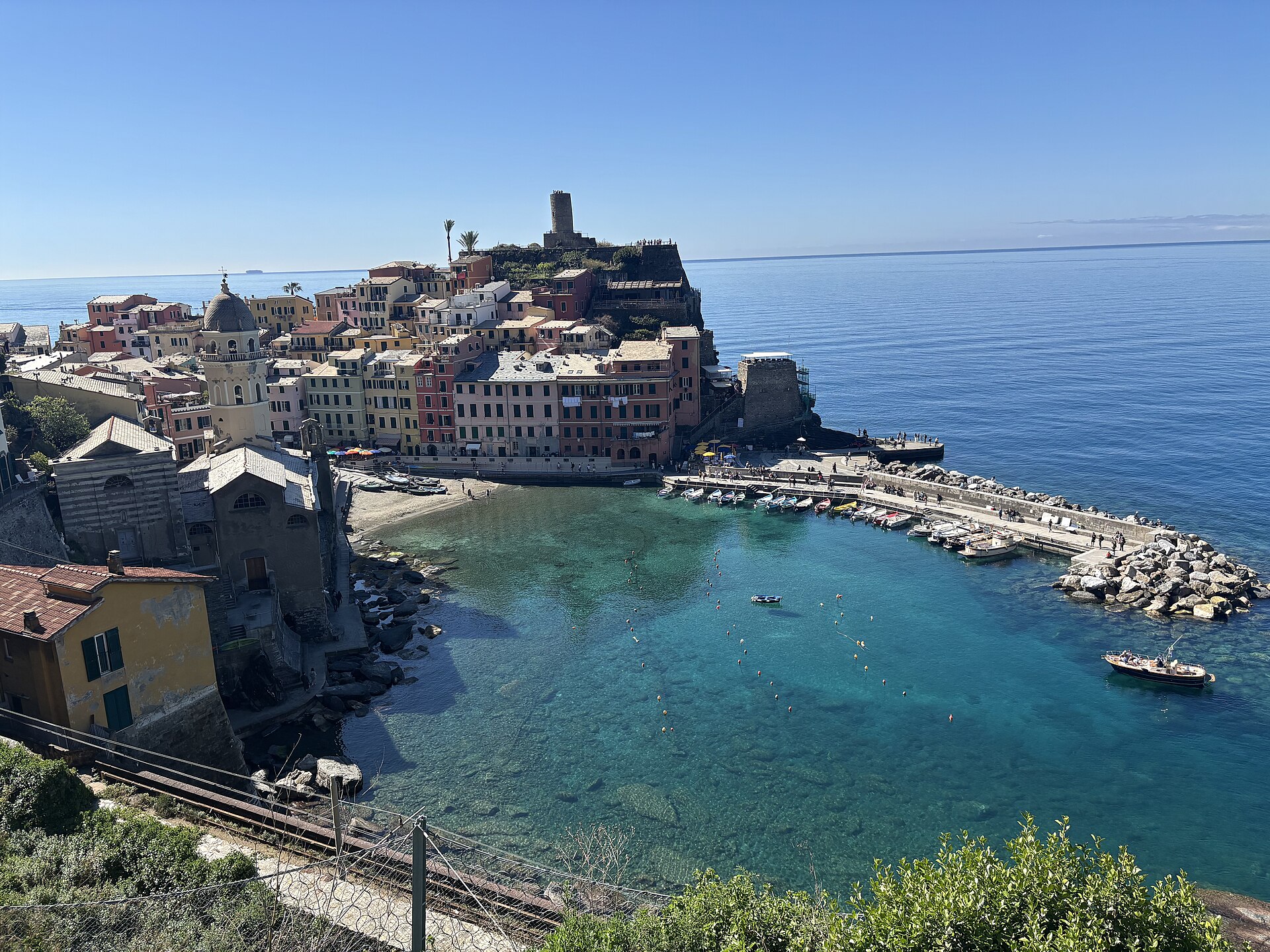
Genoa, Portofino and the Italian Riviera
Liguria, the thin coastal region between the French border and Tuscany, gives you one of Italy’s most underrated big-city ports and two of its most glamorous tender stops.
Genoa
Genoa is mainly a homeport, especially for MSC and Costa, and handled 1.63 million cruise passengers in 2025. Ships dock at the Stazione Marittima, the historic maritime station on the waterfront, and the old town — one of the largest medieval centres in Europe, a maze of narrow caruggi lanes and palaces along the Strada Nuova — is 5 to 10 minutes on foot, with some steps. The Porto Antico and its aquarium are right alongside. For a port day, Genoa needs no transport at all, which is rare for a city of its size.
If your cruise begins in Genoa or nearby Savona, the logistics are an embarkation question rather than a port-day one, and belong with our homeport guides.
Portofino and Santa Margherita Ligure
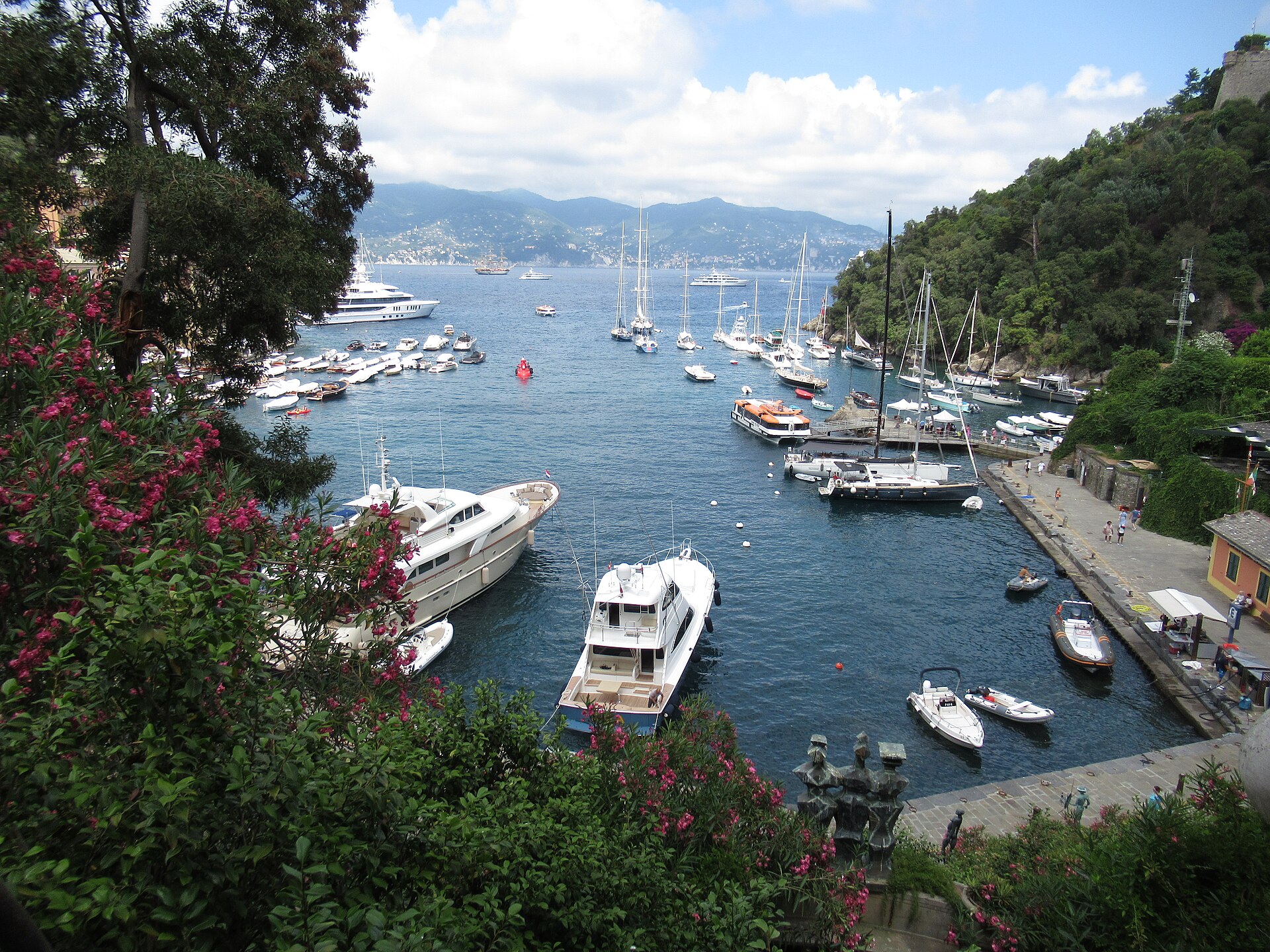
Portofino is the small, very expensive, very photographed harbour village on the headland east of Genoa. Its harbour is far too small for a cruise ship, so smaller ships anchor off Portofino itself and larger ones typically anchor off Santa Margherita Ligure, about 2 miles to the south, and tender passengers ashore there. From Santa Margherita, bus line 82 and local boats run to Portofino; we could not verify current fares for this guide.
The honest caveat: this is one of the more exposed anchorages on a typical Western Med itinerary. Tendering here can be cancelled when there is a swell, and ships have diverted to Genoa instead. If Portofino is the one port you care about, book an itinerary with a backup you would also enjoy.
Naples, Sorrento, Capri and the Amalfi Coast
The Bay of Naples and the Amalfi Coast are the richest few miles of coastline on any Italian itinerary. Your ship might call at Naples, Salerno, Sorrento, Amalfi or Capri, and which one it chooses decides what is easy and what is a stretch.
Naples
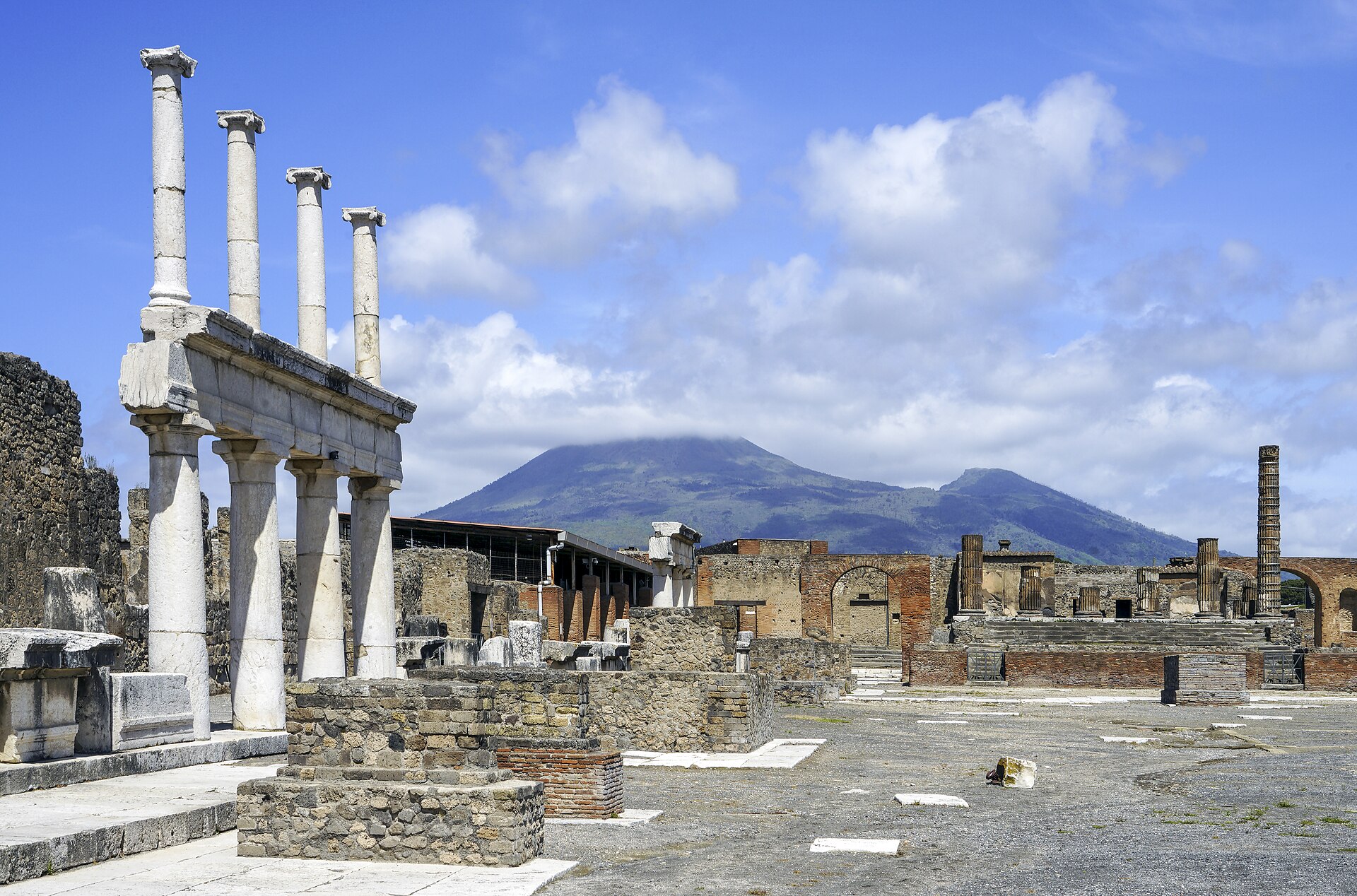
Naples is the best big-city port in Italy. Ships dock at the Stazione Marittima, right beside Molo Beverello, where the ferries and hydrofoils leave for the islands. The centre is about 10 minutes on foot, the Municipio metro station about 10 minutes, and Napoli Centrale railway station about 2 miles. Naples handled 1.85 million cruise passengers in 2025.
From the ship you can do three very different days:
- Pompeii, 15 miles (24 km) away, by the Circumvesuviana suburban train to Pompei Scavi or by tour. Since 12 January 2026 tickets are named, and ID may be checked: Pompeii Express €20 (about $23), Pompeii+ €25 (about $29), Pompeii Plus €30 (about $35, three days, multi-site). Between 16 March and 14 October entry is split into two time slots, 09:00–13:00 (maximum 15,000) and 13:00–17:30 (maximum 5,000), with a daily cap of 20,000 and a bag limit of 30 × 30 × 15 cm. That bag rule catches out anyone carrying a day pack from the ship.
- Capri, by hydrofoil from Molo Beverello in about 40 minutes, or by slow ferry from Calata di Massa, a 10-minute walk away, in about 75 to 80 minutes. On arrival Capri charges a landing contribution, €5 per person from April to October, usually built into the ferry ticket.
- Naples itself: the historic centre, the National Archaeological Museum (where many of Pompeii’s finest mosaics and frescoes actually are), and some of the best pizza in the world. For a deep city guide, the owner’s sister site naplestourism.org covers Naples on land in far more detail than a cruise site should.
Salerno
Salerno is the working answer to “how do I see the Amalfi Coast from a cruise ship”. Ships dock at the western end of the town, and downtown is about 10 minutes on foot. From the waterfront, coastal ferries run to Amalfi in about 35 minutes and on to Positano. That beats the Amalfi Coast road by coach in summer traffic by a very long way, weather permitting. Fares change every season and we could not verify 2026 prices, so buy at the kiosk.
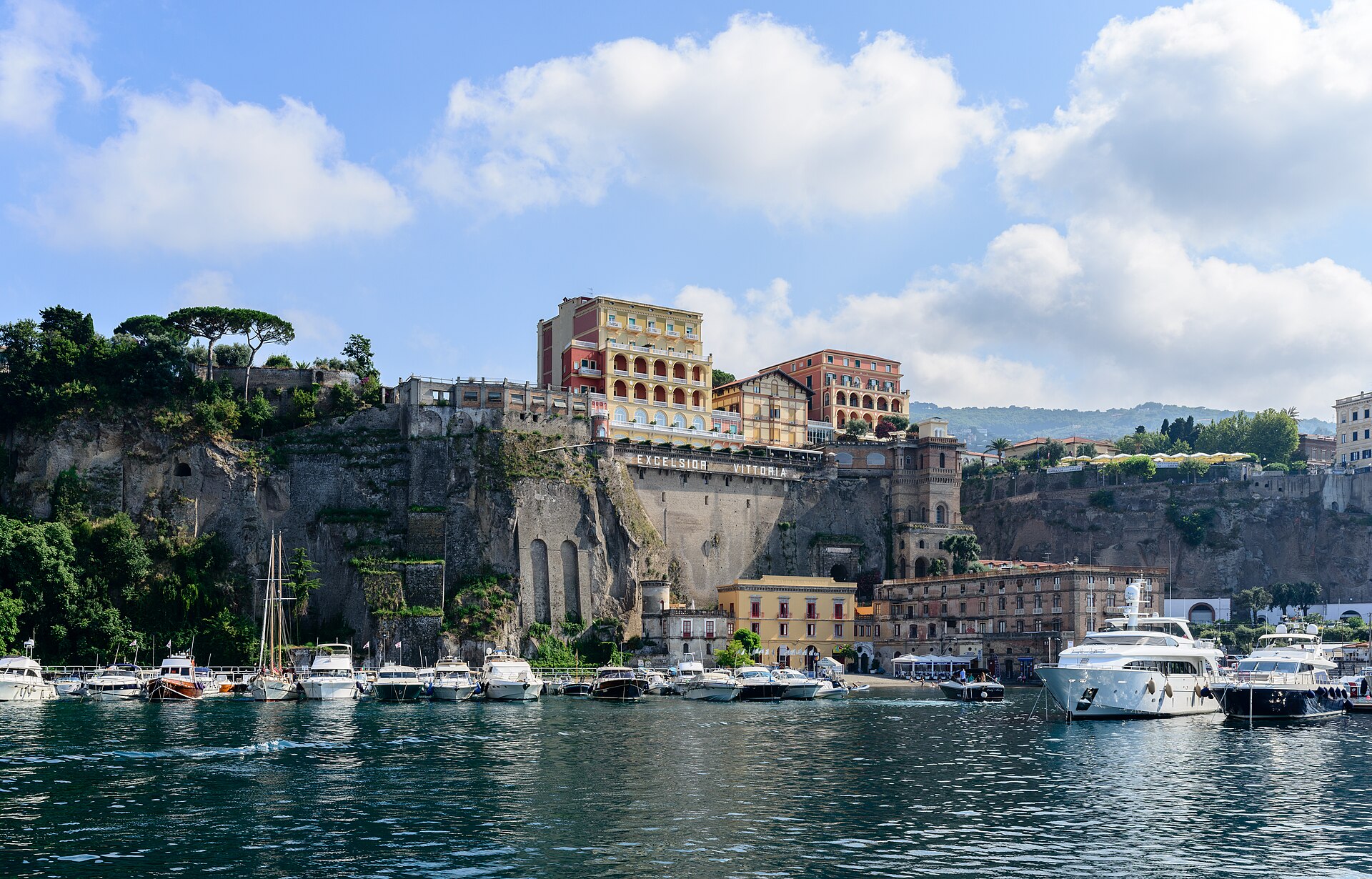
Sorrento, Amalfi and Capri as ports of call
Smaller ships sometimes call directly at the famous names, and each one is a tender port:
- Sorrento: tender to Marina Piccola, then about 200 steps up to Piazza Tasso, or a minibus or lift. Pompeii is about 30 minutes by train and Capri about 25 minutes by hydrofoil, which makes Sorrento a surprisingly good base for either.
- Amalfi: tender into town, with the Duomo steps from the landing. Positano is about 25 minutes by ferry.
- Capri: tender to Marina Grande, then the funicular up to Capri town in about 5 minutes. Queues for the funicular and the Blue Grotto boats in high summer are the real constraint.
All-aboard math: Rome and Florence from the ship
All aboard is the time you must be back on the ship, usually 30 to 60 minutes before the published departure. The ship does not wait for independent travellers who are late. Below are worked timelines for the two longest Italian transfers on a typical call. Transfer times come from published timetables; queue and walking buffers are our planning assumptions, and you should widen them on a day with several ships in port.
Civitavecchia to Rome by train, 07:00 to 19:00 call, all aboard 18:30
| Time | What happens | Why |
|---|---|---|
| 07:00–07:30 | Gangway opens; port shuttle to Largo della Pace | First shuttles fill with independent travellers |
| 07:30–07:55 | Walk or Argo bus to Civitavecchia station; buy and validate tickets | Machine queues build quickly |
| 08:05–09:05 | Regional train to Roma San Pietro or Termini | 45–59 minutes depending on the service |
| 09:15–15:00 | Rome: one area, done well | About six hours on the ground |
| 15:00 | Latest safe time to be at the Rome station | Allows a missed or cancelled train |
| 15:15–16:15 | Train back to Civitavecchia | Avoid the last train you could theoretically catch |
| 16:15–17:00 | Station to port gate and shuttle to the ship | Shuttle queues peak late afternoon |
| 18:30 | All aboard | Our recommended buffer here: 90 minutes |
On a more common 08:00 to 17:00 call, knock three hours off the middle. That leaves around three hours in Rome, which is the honest reason a Rome port day disappoints so many people.
Livorno to Florence by train, 08:00 to 18:00 call, all aboard 17:30
| Time | What happens | Why |
|---|---|---|
| 08:00–08:40 | Gangway, port shuttle to Piazza Grande | No walking allowed in the container port |
| 08:40–09:05 | Bus or taxi to Livorno Centrale, about 2 miles | Budget for a taxi queue |
| 09:15–10:30 | Train to Firenze Santa Maria Novella | 1 h 08 to 1 h 22 |
| 10:30–14:00 | Florence: Duomo, Piazza della Signoria, Ponte Vecchio | About three and a half hours |
| 14:00 | Latest safe time to be at Santa Maria Novella | One missed train still leaves time |
| 14:15–15:30 | Train back to Livorno | |
| 15:30–16:30 | Station to Piazza Grande, shuttle back to the ship | |
| 17:30 | All aboard | Our recommended buffer here: 60–90 minutes |
Look at that middle row for a moment. Ten hours in port bought three and a half hours in Florence. That is why we think Pisa or Lucca is the better day for most people from Livorno, and why a ship’s excursion, with its guaranteed return, makes more sense here than almost anywhere else in Italy.
Which Italian cruise ports are tender ports?
The regular Italian tender ports are Portofino and Santa Margherita Ligure, Sorrento, Amalfi, Positano and Capri. Some smaller ports tender larger ships depending on draft and berth availability. Civitavecchia, Livorno, La Spezia, Genoa, Naples and Salerno are all docking ports. Tender calls are the first to be cancelled in a swell.
Tender ports matter for three reasons. They add time: getting a few thousand people into small boats and back can take an hour or more at each end of the day. They are weather-dependent: a swell that would not trouble a ship alongside a quay can make tendering unsafe. And they are an accessibility barrier: stepping from a ship’s platform into a moving boat is hard or impossible for many wheelchair users and people with limited mobility, and lines may decline to tender passengers who cannot manage the step.
| Ease of getting ashore | Port | Why |
|---|---|---|
| Easiest | Naples, Genoa, Salerno | Docked close to the city centre on mostly flat ground |
| Easy | La Spezia | Docked with a free shuttle; flat walk to town and station. The Cinque Terre villages themselves are steep |
| Moderate | Civitavecchia | Docked with a shuttle, but the day depends on a long transfer |
| Moderate | Livorno | Docked, but compulsory shuttle through the commercial port |
| Hard | Sorrento, Amalfi, Capri | Tender, then steps, funicular or steep lanes |
| Hardest | Portofino / Santa Margherita | Exposed tender anchorage; cancellations and diversions happen |
That ranking is our planning guide based on dock or tender status and terrain, not an access audit. If mobility is a concern, ask your cruise line in writing what its tender policy is before you book.
Ship’s excursion or on your own? What the transfers really cost
Italy is where the “book the ship’s tour or go independently” argument is loudest, and the answer genuinely changes from port to port. Here are the dated costs for a couple going independently, against the risk they take on.
| Port day | Independent transport for two, as of September 2026 | Plus entry tickets | Our view |
|---|---|---|---|
| Rome from Civitavecchia | Train from about €19.40 return (about $22) or SIT coach €50 return (about $58) | Colosseum, Vatican Museums: check the official sites | Independent if the call is 10+ hours; ship’s tour if it is 8 or less |
| Florence from Livorno | Port shuttle about €20 return for two (re-verify) plus train from about $56 return for two, before the taxi or bus to the station | Uffizi and Accademia need timed bookings | Ship’s tour or Pisa instead, unless the call is very long |
| Cinque Terre from La Spezia | Treno card €44–€70 for two (about $51–$81), depending on season | Included in the card | Independent. Easy, and the ship’s tour adds little |
| Pompeii from Naples | Circumvesuviana train; fare not verified for 2026 | €40–€60 for two (about $46–$70) | Independent with pre-booked tickets and a small bag |
| Capri from Naples | Hydrofoil return; fares vary by operator | Landing contribution €10 for two | Independent in shoulder season; think twice in August |
The number cruise lines never put next to their excursion prices is the one in the first column. A Rome train ticket for two costs less than a round of coffees on the Via Veneto. What you are really buying with a ship’s tour at Civitavecchia or Livorno is insurance against a missed ship, and on a short call that insurance can be well worth it. For how shore excursions fit into your overall budget, see our Mediterranean cruise cost guide.
Venice, the Adriatic and the islands: what this guide does not cover
“Italy cruise ports” in a brochure often includes three groups of ports that work so differently we have given them their own hubs.
Venice and the Adriatic. Since 1 August 2021, ships of 25,000 gross tonnes or more, or longer than 180 metres, have been barred from the Giudecca Canal past St Mark’s. Large ships now use Marghera or Fusina on the mainland, and many lines have moved their Adriatic homeports to Trieste or Ravenna instead. Reports of a partial reopening of the old Stazione Marittima to smaller ships in 2027 are not confirmed, and we would not plan around them. Bari, Ancona and Brindisi on the east coast also belong with the Adriatic.
Sicily and Sardinia. Messina docks downtown, with the cathedral about 10 minutes’ walk away and Taormina 31 miles (50 km) south; Palermo, Catania, Trapani, Cagliari and Olbia complete the island group, which we cover with Malta because they share itineraries and logistics.
Greece next door. Many Italian itineraries continue east. If yours does, our guide to Greek cruise ports does the same port-by-port job for the Aegean and Ionian, including the tender at Santorini and the landing fee Greece charges per call.
Once you know how to reach the sight, the next decision is whether to go with a tour. Our guide to Mediterranean shore excursions compares ship’s tours, private operators and going it alone, including who waits for you if the day runs late.
If your cruise starts or ends at Civitavecchia, Genoa, Savona or one of the Venice substitutes, the questions change from sightseeing to airport transfers and hotel nights. Our embarkation ports guide covers that side.
If you are still choosing the cruise rather than planning the port days, our Italy cruise guide compares the five kinds of trip — Western Med weeks, round-Italy, the Adriatic, Italy and Greece, and small ships — with who sails each in 2027 and when Rome and Florence are better done on land.
Most Western Med weeks that call in Italy also call in Spain. Our Spain and Portugal cruise ports guide does the same port-by-port job for Barcelona, Palma, Malaga, Cadiz and Lisbon.
Where this guide goes deeper
This page is the hub for Italy’s west-coast ports. The guides beneath it take one port, or one transfer, at a time, each with a full data box and all-aboard timeline, and each will be linked here as it publishes:
- Rome: Civitavecchia to Rome, Civitavecchia to Rome by train and things to do in Civitavecchia.
- Tuscany: Livorno cruise port, Livorno to Florence and Livorno to Pisa.
- Liguria: La Spezia cruise port, La Spezia to Cinque Terre, La Spezia to Portovenere, Genoa cruise port day and Portofino and Santa Margherita tender port.
- Naples and the coast: Naples cruise port, Naples cruise port to Pompeii, Naples cruise port to Capri, which cruise port for the Amalfi Coast, Salerno cruise port, Salerno to Amalfi, Sorrento tender port and Capri cruise port.
Elsewhere on the site: the itineraries guide shows how these ports are combined on real Western Med weeks; the best time to cruise the Mediterranean covers heat, crowds and price by month; and the cruise lines guide explains which ships can reach the small tender ports.
Italy cruise ports FAQs
How far is Civitavecchia from Rome?
Civitavecchia is 46 miles (74 km) from central Rome. The regional train takes 45 to 59 minutes, with about 44 services a day and fares from about €4.85. The SIT shuttle coach takes about an hour and costs €15 one way or €25 return, as of September 2026.
Can you walk from the Naples cruise port into the city?
Yes. The Naples cruise terminal is on the downtown waterfront beside Molo Beverello, about 10 minutes on foot from the centre and the Municipio metro. It is the most walkable big-city port in Italy, and the hydrofoils to Capri leave from right next door.
Is Florence worth it from Livorno on a cruise?
Only on a long call, in our opinion. Florence is 65 miles away and the shuttle, transfer and train leave about three and a half hours in the city on a ten-hour call. Pisa, 16 miles away, or Lucca make a more relaxed day. If Florence is a must, take the ship’s excursion for the guaranteed return.
Which cruise port is best for the Cinque Terre?
La Spezia. The station is about 25 minutes’ walk from the cruise terminal, and the villages are about 30 minutes by train. The Cinque Terre Treno card cost €22 to €35 a day by season as of September 2026. From Livorno or Genoa the trip is much longer.
Which cruise port is closest to the Amalfi Coast?
Salerno is the most practical docking port: ferries reach Amalfi in about 35 minutes. Smaller ships tender directly at Amalfi or Sorrento. From Naples the Amalfi Coast is a long day by road or sea, and in summer traffic the ferry from Salerno is far quicker.
Can large cruise ships still sail into Venice?
No. Since August 2021 ships of 25,000 gross tonnes or more, or longer than 180 metres, have been barred from the Giudecca Canal. Large ships use Marghera or Fusina on the mainland, or lines homeport in Trieste or Ravenna instead.
Do I need to book Pompeii tickets before my cruise?
We would. Since January 2026 Pompeii tickets are named, entry is split into time slots between mid-March and mid-October, and the site caps visitors at 20,000 a day with only 5,000 in the afternoon slot. Tickets start at €20. Bags larger than 30 × 30 × 15 cm are not allowed in.
What is the busiest cruise port in Italy?
Civitavecchia, the port for Rome, with 3.56 million cruise passengers in 2025, second in the Mediterranean after Barcelona. Naples was second in Italy with 1.85 million and Genoa third with 1.63 million, according to Risposte Turismo.
How we researched this guide
Every fare, fee, distance and rule on this page comes from a named source with the date we checked it. Italian traffic figures are Risposte Turismo’s 2025 data and 2026 forecast. Civitavecchia transport details come from the port authority and rail timetable data; Pompeii ticket rules from the archaeological park’s own January 2026 announcement; Cinque Terre card prices from a tariff updated on 11 September 2026; and the Capri landing contribution from Italian local press reports current in 2026. Where a figure came from an older guide we could not re-verify this season — the Livorno port shuttle, Salerno ferry fares, the Circumvesuviana fare — we have said so or left it out. We checked page one of Google for this topic on 16 September 2026 and wrote this to fill the gaps those pages leave: prices, dates, tender status and the time actually left at the sight.
We are an independent editorial site. We do not sell cruises or excursions, and we have not personally sailed into every port described here. Opinions — that Lucca beats Florence from Livorno, that one area of Rome is better than three — are labelled as ours. Money figures are re-checked each January and March, and port rules before each season.
Image credits
| Image | Photographer | Licence |
|---|---|---|
| Genoa passenger port below the city | Twice25 & Rinina25 | CC BY 2.5, via Wikimedia Commons |
| Harbour of Portofino | Superchilum | CC BY 4.0, via Wikimedia Commons |
| Sorrento harbour and clifftop hotels | Norbert Nagel | CC BY-SA 3.0, via Wikimedia Commons |
| Port of Civitavecchia | Captain Raju | CC BY-SA 4.0, via Wikimedia Commons |
| Vernazza harbour, Cinque Terre | Mathieu Chollet | CC BY-SA 4.0, via Wikimedia Commons |
| The Forum at Pompeii with Vesuvius | Commonists | CC BY-SA 4.0, via Wikimedia Commons |
Published 18 September 2026. Fares, fees and ticket rules were checked in September 2026 and will change — verify anything you are about to pay for. Primary sources: the Port of Civitavecchia and the Pompeii Archaeological Park.