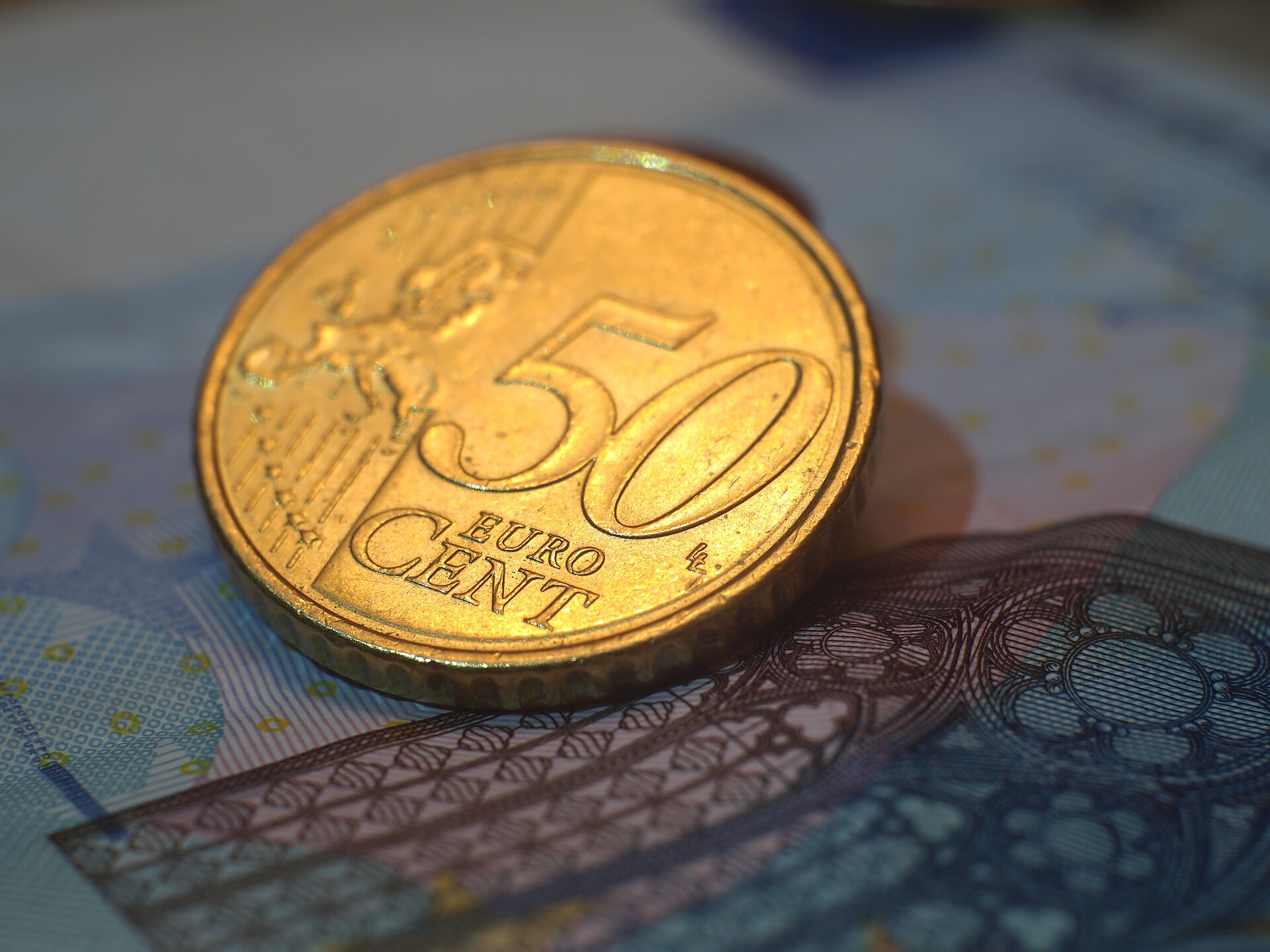
The currency on Mediterranean cruise itineraries is the euro in almost every port, from Barcelona and Rome to Athens, Dubrovnik and Kotor. The exceptions are Turkey (lira), Gibraltar (pound), Morocco (dirham), Tunisia (dinar) and Albania (lek). Your ship’s own account, confusingly, usually runs in US dollars on American lines and in euros on MSC and Costa.
That split — euros ashore, dollars aboard — is most of the puzzle, and it is where the money mistakes on a European cruise come from. Nearly all of them are Caribbean habits carried across the Atlantic: assuming dollars will work ashore, pressing “yes” when a card machine offers to charge you in dollars, tipping at American rates, and leaving a phone switched on at sea. This guide goes through each in turn, port by port and line by line, with the prices and rules we could verify and a plain note wherever we could not. For the bigger budget picture, including fares, taxes and what a week costs all-in, start with our Mediterranean cruise cost breakdown; for everything else about planning the trip, our complete Mediterranean cruise guide.
At a glance: money on a Mediterranean cruise in 2026
| Ashore | Euro in Spain, France, Monaco, Italy, Malta, Greece, Croatia, Slovenia, Montenegro, Cyprus and Portugal. Turkish lira, Gibraltar pound, Moroccan dirham, Tunisian dinar and Albanian lek elsewhere. |
| Aboard | US dollars on Royal Caribbean, Celebrity, Norwegian, Princess, Holland America, Carnival, Oceania and Azamara. Euros on MSC and Costa in the Mediterranean. Pounds sterling on P&O Cruises and Fred. Olsen. |
| Exchange rates used here | €1 = $1.1403 and $1 = about 48.9 Turkish lira, from the European Central Bank’s reference rates on 25 September 2026. |
| Cards | Contactless Visa and Mastercard work almost everywhere in the euro ports. American Express is patchier. Know your PIN. |
| Cash | Still useful for island buses, small cafes, market stalls, lifts, tips and Turkish bazaars. Change it only in small amounts. |
| The one rule | When a card machine or ATM offers to charge you in dollars, say no and pay in the local currency. |
| Tipping aboard | Automatic gratuities of about $17–$20 per person per day on most mainstream lines, and $20 on Viking; included on Oceania, Regent, Silversea, Seabourn and Explora. |
| Tipping ashore | Round up, or 5–10% for a genuinely good meal; a few euros per person for guides and drivers. Twenty percent is expected nowhere. |
| Levies on your account | Greece’s cruise passenger fee, up to €20 (about $23) per call at Santorini and Mykonos in summer, is billed to your onboard account. |
| Phones | AT&T’s International Day Pass costs $20 a day per line on a cruise. Ship Wi-Fi runs about $16–$25 per device per day. An eSIM used in port is usually cheapest. |
What currency is used on a Mediterranean cruise?
The euro, in nearly every port: Spain, France, Monaco, Italy, Malta, Greece, Croatia, Slovenia, Montenegro, Cyprus and Portugal all use it. Turkey, Gibraltar, Morocco, Tunisia and Albania do not. On board, American lines bill your account in US dollars; MSC and Costa bill in euros.
In practice that means a typical seven-night Western Mediterranean cruise needs only one foreign currency, and an Eastern Mediterranean one usually needs two. You will buy a Santorini cable car ticket in euros, a carpet in Kusadasi in lira or whatever currency the seller prefers to quote, and the cocktail back aboard in dollars. Keep those three mental columns separate and most of the confusion disappears.
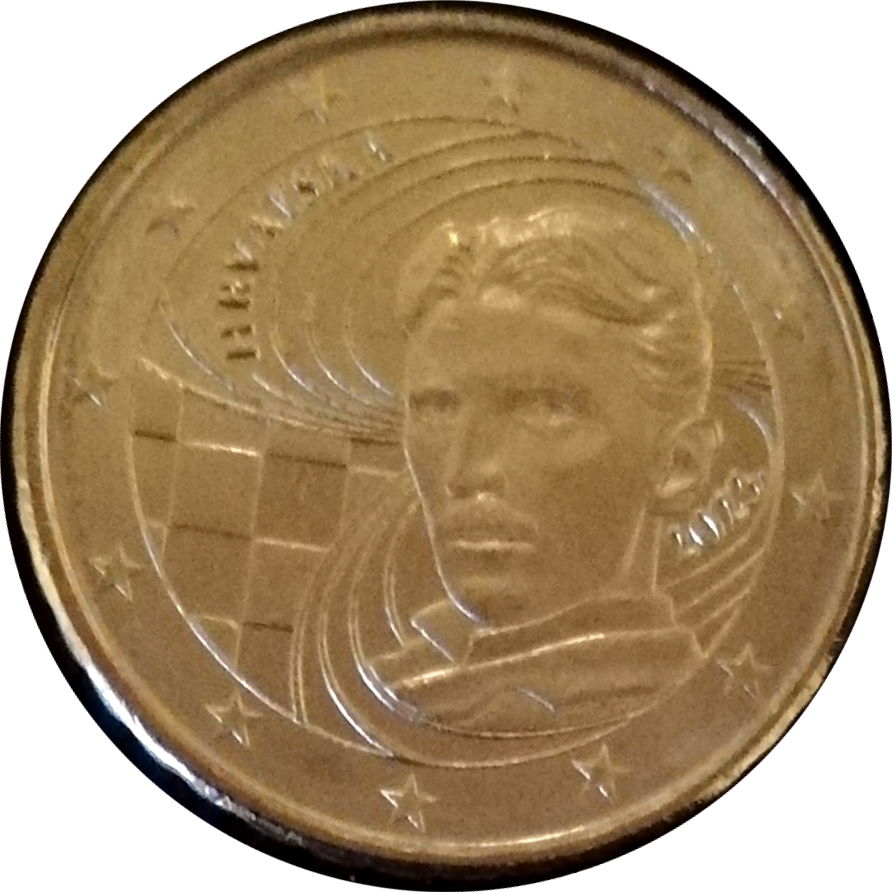
Two changes catch people using old guides. Croatia replaced the kuna with the euro on 1 January 2023, so any article still telling you to buy kuna for Dubrovnik or Split is out of date. As of September 2026, one of the pages on the first page of Google for this very question still does. And Montenegro, although it is not in the European Union, has used the euro for years, so Kotor is a euro port. Albania, next door, is not: its currency is the lek, although euros are often accepted in the tourist businesses around the cruise piers.
Currency on Mediterranean cruise itineraries, port by port
Here is every country a mainstream Mediterranean itinerary is likely to visit, with the currency you will actually be handed and the local quirk worth knowing. The notes on cards are general patterns in the cruise ports, not guarantees for every shop.
| Country | Main cruise ports | Currency | Cards | Worth knowing |
|---|---|---|---|---|
| Spain | Barcelona, Palma, Malaga, Valencia, Cadiz | Euro | Widely accepted, contactless standard | Barcelona charges €11 (about $13) per cruise passenger on stays of under 12 hours |
| France and Monaco | Marseille, Villefranche, Cannes, Monaco | Euro | Widely accepted | Restaurant prices include service; tipping is a small extra, not a percentage |
| Italy and the Vatican | Civitavecchia, Naples, Livorno, La Spezia, Messina, Palermo | Euro | Widely accepted; a coffee bar may prefer coins | The coperto, a per-person cover charge, is not a tip |
| Malta | Valletta | Euro | Widely accepted | The Upper Barrakka lift up to the city is about €1 return |
| Greece | Piraeus, Santorini, Mykonos, Rhodes, Corfu, Katakolon | Euro | Widely in towns; small kiosks and island transport can be cash-first | The cruise passenger fee is billed to your onboard account per port call |
| Croatia | Dubrovnik, Split, Zadar | Euro, since 1 January 2023 | Widely accepted | The kuna is no longer legal tender |
| Slovenia | Koper | Euro | Widely accepted | — |
| Montenegro | Kotor | Euro, used without formal eurozone membership | Widely accepted in the Old Town | Taxi fares to Perast are quoted in euros; agree before you get in |
| Albania | Sarandë, Durrës | Lek | Less universal than in the EU | Euros are often accepted in tourist businesses, at the seller’s rate |
| Turkey | Istanbul, Kusadasi, Bodrum, Izmir | Turkish lira, about 48.9 to the dollar | Widely accepted in shops and restaurants | Tourist shops often quote euros; taxi and dolmus fares are unpublished, so agree the price first |
| Cyprus | Limassol | Euro | Widely accepted | The Limassol Airport Express is €9 (about $10) for adults |
| Portugal | Lisbon, Portimão | Euro | Widely accepted | — |
| Gibraltar | Gibraltar | Gibraltar pound, at par with sterling; UK notes circulate | Widely accepted | Euros are taken in many shops, rarely at a good rate, and change comes in pounds |
| Morocco | Tangier, Casablanca | Dirham, a closed currency | Patchier; cash for taxis and souks | You cannot buy dirhams before you arrive; change only what you will spend |
| Tunisia | La Goulette, for Tunis | Dinar, a closed currency | Patchier outside hotels and larger shops | Importing and exporting dinars is prohibited; keep exchange receipts to change money back |
| Egypt and Israel | Alexandria, Port Said; Haifa, Ashdod | Egyptian pound; new shekel | — | The major lines suspended these calls through 2026 |
Two patterns are worth pulling out of that table. First, a Western Mediterranean cruise from Barcelona or Rome is a single-currency trip, and the only reason to think about exchange rates at all is your card’s foreign-transaction fee. Second, the currencies that cause real trouble are the closed ones, which you cannot buy at home and should not bring home. With Carnival adding its first-ever calls at La Goulette for Tunis and at Tangier for the 2027 season, more American cruisers are about to meet them for the first time.
What currency is used on cruise ships?
The line’s home currency, not the port’s. Royal Caribbean, Celebrity, Norwegian, Princess, Holland America, Carnival, Oceania and Azamara run onboard accounts in US dollars even in the Mediterranean. MSC and Costa use euros on European sailings; P&O Cruises and Fred. Olsen use pounds sterling.
This is the detail that the currency pages on Google most often get wrong. One widely shown answer says all onboard charges on a Mediterranean cruise are in euros. On every American-run line, they are not. Your drinks, specialty dinners, spa treatments, Wi-Fi and ship’s excursions are priced and billed in dollars, exactly as they would be in the Caribbean, even while the ship is tied up in Naples.
| Line | Onboard currency in the Mediterranean | What it means for an American card |
|---|---|---|
| Royal Caribbean, Celebrity, Norwegian, Princess, Holland America, Carnival, Oceania, Azamara | US dollars | Prices look familiar and nothing is converted on board |
| MSC Cruises, Costa | Euros | Every onboard charge is a euro transaction that your card issuer converts, so a no-foreign-fee card matters |
| Cunard | US dollars, with an option to settle in sterling for a conversion fee | Settle in dollars on a US card |
| P&O Cruises, Fred. Olsen | Pounds sterling | UK-market lines; a US card converts every charge |
How the onboard account actually works
Every mainstream ship is cashless. At check-in you link a card to your cabin account, your key card becomes your wallet, and every purchase posts to the account until a final statement arrives on the last morning. A few practical consequences follow.
- Use a credit card, not a debit card. Lines typically place a hold for your expected daily spending against the linked card. On a credit card that is invisible; on a debit card it is your cash, tied up until the hold is released after the cruise.
- No card means a cash deposit. Most lines will take a cash deposit instead of a card, and top-ups when you run through it. It works, but it is fiddly, and the amount varies by line and cruise length.
- Destination charges land here too. Greece’s cruise passenger fee is billed to your onboard account for each Greek port call where you go ashore: €20 (about $23) per call at Santorini and Mykonos and €5 (about $5.70) elsewhere between 1 June and 30 September, falling to €12 and €3 in April, May and October.
- Ship ATMs and exchange desks exist, and they are not cheap. Some ships have ATMs that dispense both euros and dollars, and some guest services desks sell small amounts of euros. Both are fine in an emergency. Neither will give you a rate as good as a bank ATM on the quay.
- A euro-billing line may offer to settle in dollars. If MSC or Costa offers to convert your euro account into dollars at the end, that is the same trade as a card machine’s dollar offer. Compare the rate with your card’s before you accept.
Automatic gratuities also post daily to this account, which is why a surprisingly large share of the final statement is money you never consciously spent. We come back to them in the tipping section below.
Should you get euros before your cruise?
Get a little, not a lot. Arriving with roughly €100 to €200 per person covers the airport taxi or train, a first coffee and the first port’s buses. After that, a bank ATM ashore gives a better rate than an exchange counter at home, at the airport or on the ship.
That figure is our planning suggestion, not a rule, and it reflects the two costs you are most likely to meet before an ATM: Athens airport taxis charge a flat €40 (about $46) to the city center by day and €55 (about $63) at night, and Barcelona’s official fixed taxi fare from the airport to the Moll Adossat cruise terminals is €46 (about $52). Card payment is increasingly normal in both cities’ taxis, but arriving tired with no local cash at all is a small misery worth avoiding for the price of a bank order.
Where to get euros, best to worst
- A bank-branch ATM in the port city, with a debit card that charges no foreign fees. This is the cheapest route for most Americans. Use machines attached to actual banks rather than stand-alone machines in tourist areas, which tend to charge more and push the dollar-conversion offer harder.
- Your own bank, a week or two before you fly. Most large US banks will order euros for account holders. The rate includes a margin, but you land with cash in hand and no decisions to make.
- A card-and-ATM combination on arrival at the airport. Airport bank ATMs are fine; airport exchange counters are the expensive part of the terminal.
- The ship’s guest services desk. Convenient for a few euros of pocket change; poor value for anything more.
- A street exchange booth. The “no commission” sign usually means the commission is in the rate.
Whichever you use, take out fewer, larger amounts rather than many small ones, because fixed ATM fees add up per withdrawal. Carry two cards and keep them in different places. And check before you travel whether your bank still wants a travel notice; most now handle it automatically, but a blocked card on a Sunday in Katakolon is a genuinely difficult problem to solve.
What a port day costs in small change
Mediterranean port days are full of small fixed fares: a shuttle here, a funicular there, a bus into town. None of them breaks the budget, and many take cards now, but they are the reason a few coins in your pocket still make the day smoother. These are real 2026 prices from our port guides.
| Port | Item | Price as of September 2026 | In dollars |
|---|---|---|---|
| Barcelona | PortBus shuttle from the cruise terminals | €3 one way, €4.50 return | $3.42 / $5.13 |
| Civitavecchia | Regional train to Rome, cheapest fare | From about €4.85 each way | From $5.53 |
| Civitavecchia | SIT coach to the Vatican and Termini | €15 one way, €25 return | $17.10 / $28.51 |
| La Spezia | Cinque Terre Treno card, one day, adult | €22 low, €29.50 mid, €35 peak season | $25.09 / $33.64 / $39.91 |
| Naples | Pompeii Express ticket | €20 | $22.81 |
| Valletta | Upper Barrakka lift | About €1 return | About $1.14 |
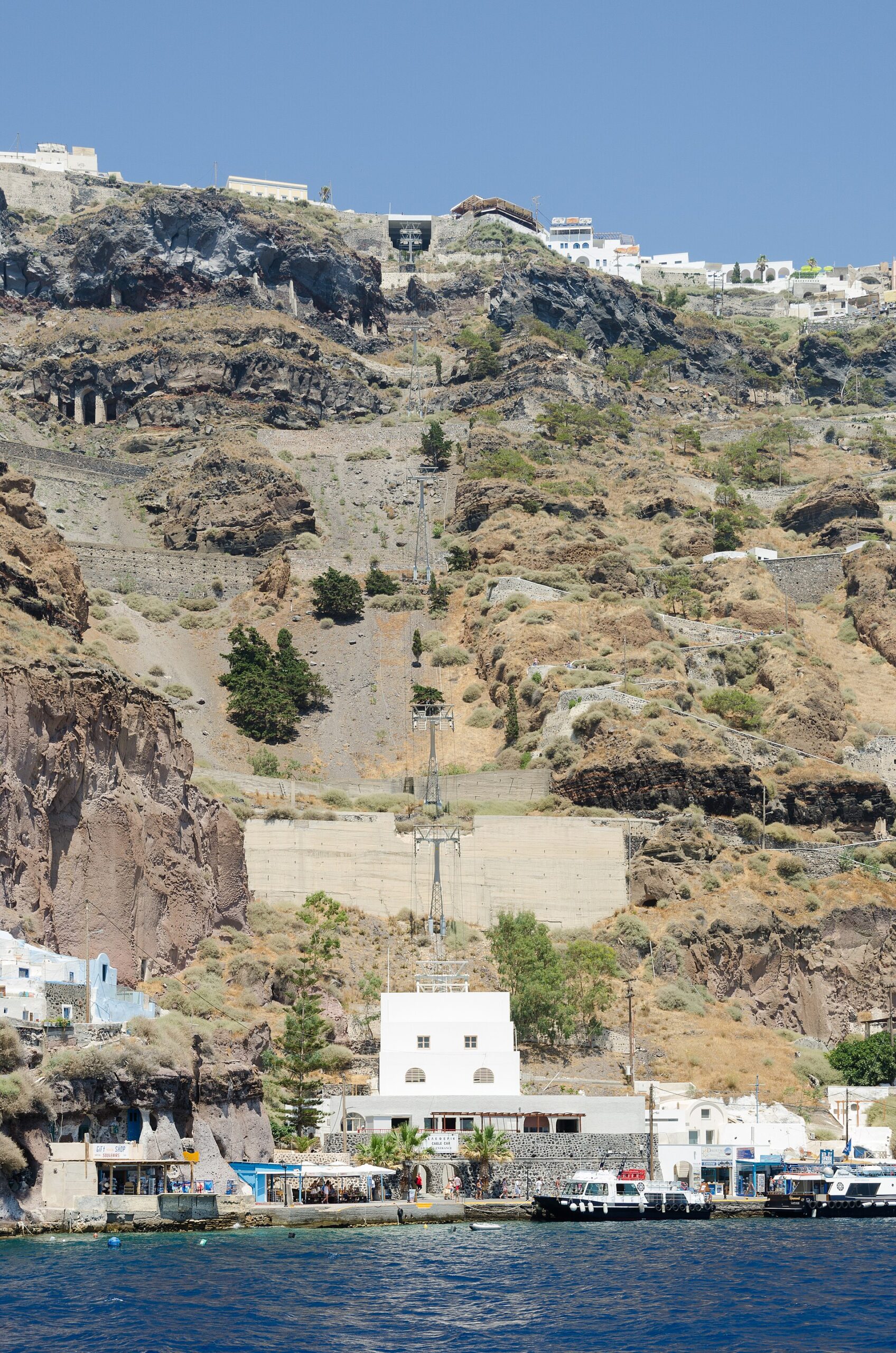
| Santorini | Cable car, Old Port to Fira, adult | €10 one way | $11.40 |
| Mykonos | SeaBus, New Port to Chora | €2 one way | $2.28 |
| Katakolon | Train to Ancient Olympia | €10 return | $11.40 |
| Dubrovnik | Cable car up Mount Srđ | €17 one way, €30 return | $19.39 / $34.21 |
Add coffee, a gelato, a bottle of water and the odd tip, and a light spending day ashore for one person runs to perhaps €30 to €60 before lunch or any serious sightseeing ticket. That is our own estimate, but it is a useful sanity check against the forum threads that recommend carrying hundreds of euros in cash. You do not need to; you need a card that works and a modest stash of coins.
Cash or card in European cruise ports?
Card, mostly. Contactless Visa and Mastercard work in most shops, restaurants, museums and many ticket machines across the euro ports. Carry some cash anyway for island buses, small cafes, market stalls, tips and Turkey’s bazaars, and always choose to pay in the local currency when a terminal offers you dollars.
Tap-to-pay is now the normal way to pay in much of southern Europe, and phone wallets such as Apple Pay and Google Pay work wherever contactless cards do. That makes a phone plus one physical card a workable combination for most port days. The places where a card still fails are predictable: a kiosk selling bus tickets on an island, a market stall, a coffee bar where the espresso costs little more than the card fee, and some unattended machines that insist on a PIN.
The dollar-or-euro question at the card machine
Sooner or later a card terminal, a restaurant payment device or an ATM will ask whether you want to pay in dollars or euros. It looks like a courtesy. It is a product called dynamic currency conversion, and the exchange rate it offers is set by the terminal’s provider with its own margin built in. Your card network’s rate is almost always better, even after a foreign-transaction fee. The rule is simple and has no exceptions worth remembering: choose euros (or lira, or whatever the local currency is), and if the staff member has already pressed “USD” for you, ask them to cancel and run it again.
Which cards to bring
- A credit card with no foreign-transaction fee. Many American cards add a fee of around 3% to every foreign transaction. On a week of euro spending, plus an onboard account on MSC or Costa, that adds up. Check your card’s terms before you go, not on your statement afterwards.
- A second card on a different network. If one is Visa, make the other Mastercard. It covers a declined card, a lost card and the occasional merchant that takes only one.
- A debit card for ATMs. Ideally one that refunds or waives foreign ATM fees.
- American Express as a bonus, not a plan. It is accepted by large hotels, chains and many restaurants, but less reliably by small businesses than Visa and Mastercard.
- Your PIN. American cards are often used without one at home. Train ticket machines and some other unattended terminals in Europe may demand it.
How much should you tip on a Mediterranean cruise?
On board, the automatic gratuity covers it: about $17 to $20 per person per day on most mainstream lines, added to your account. Ashore, tip lightly: round up or leave 5 to 10% for good restaurant service, and a few euros per person for guides and drivers. Twenty percent is not expected anywhere.
Tipping on board: the automatic gratuities
Automatic gratuities are the most underestimated line in a Mediterranean budget, because European itineraries run long and the charge runs every night. A couple on a seven-night Royal Caribbean sailing pays $259 at the standard rate; on a twelve-night sailing, $444.
| Line | Standard cabin, per person per day | Suite | Note |
|---|---|---|---|
| Royal Caribbean | $18.50 | $21.00 | One source gives $21.50 for suites |
| Celebrity | $19.50 | $20.50 Concierge and Aqua; $24.50 Retreat | From 29 July 2026, up from $18.00, per consistent trade reports |
| Norwegian | $20.00 | $25.00 | — |
| Princess | $18.00 | $19.00 mini-suite; $20.00 suite | Effective 8 March 2026 |
| Holland America | $17.00 | $19.00 | — |
| Carnival | $17.00 | $19.00 | From 2 April 2026 |
| Virgin Voyages | $22.00 | — | $20.00 if prepaid |
| MSC Cruises | $16.00 | $20.00 | That is the Caribbean rate; MSC charges European sailings in euros and we could not verify the current rate |
| Viking | $20.00 | $20.00 | US bookings; added automatically unless prepaid |
| Oceania, Regent, Silversea, Seabourn, Explora | Included in the fare | Part of why their headline fares look high | |
You can usually ask guest services to adjust the automatic gratuity, but the crew’s pay structure assumes it, and we would not reduce it without a real service failure. Extra cash for a cabin steward or a bartender who went out of their way is a kindness, not an obligation; on a dollar-billing ship, dollars are the right currency for it.
Tipping ashore: lighter than you think
Southern European service norms are not American ones, and Americans routinely overpay. Restaurant staff are not paid on the American tipped-wage model, and a modest gesture reads as generous rather than stingy. These are the norms we would follow; they are conventions, not rules, and the detailed country guides beneath this page go further.
| Situation | What is normal | Watch for |
|---|---|---|
| Sit-down restaurant | Round up, or 5–10% for a genuinely good meal | Italy’s coperto cover charge is not a tip; a line reading servizio means service is already charged |
| Cafe or bar | Leave the small change | Standing at the counter in Italy is cheaper than sitting down |
| Taxi | Round up to the next euro or two | Agree fares in advance where meters are not used, as in Kusadasi |
| Group tour guide, ship or independent | A few euros per person for a half-day, more for a full day | Hand it to the guide directly at the end |
| Private guide or driver | More, in proportion to the fee and the effort | Check whether a gratuity is already in the price |
| France | Service is included in menu prices; a euro or two extra is a courtesy | Don’t add a US-style percentage on top |
If you are buying a shore excursion rather than doing a port independently, our guide to Mediterranean shore excursions explains when the ship’s tour is worth its premium and when a local operator is better value, which changes how much of the day’s money goes on the tour itself.
Phones at sea and in port: roaming, eSIMs and ship Wi-Fi
Your phone meets three different networks on a Mediterranean cruise, and each is priced differently. In port, it connects to local land networks, where your carrier’s international plan or an eSIM works as it would on any European trip. At sea, it may connect to the ship’s own maritime cellular network, which is billed at cruise rates that most standard plans exclude. And all the time, there is the ship’s satellite Wi-Fi, which you buy by the day.
| Option | Cost as of September 2026 | At sea | In port | Best for |
|---|---|---|---|---|
| AT&T International Day Pass | $12 a day on land ($6 for each additional line), capped at 10 daily fees per bill period; $20 a day per line on cruises | Yes, at the cruise rate | Yes | People who need their own number every day |
| Verizon TravelPass | About $12 a day in most countries, charged only on days used | Check the terms; ship networks are treated separately | Yes | Light users on port days |
| T-Mobile international roaming | Included on many plans on land | Standard plans exclude ship networks; separate cruise plans are sold | Yes | T-Mobile customers, in port |
| Europe data eSIM | Varies with data allowance; a fraction of ship Wi-Fi | No | Yes, where the plan covers the country | Most people |
| Ship Wi-Fi | About $16–$25 per device per day for browsing; $28–$40+ for streaming | Yes | Yes, on board | Sea days, anyone who must work |
The expensive mistake is the maritime network. Once the ship is out of range of land, phones left on can latch onto the ship’s cellular service, run by maritime providers such as Cellular at Sea, and standard international plans do not cover it. AT&T is unusually clear about its own terms: its International Day Pass support page prices cruise use at $20 per day, per line, “for all days used, including days used both on land and at sea”. Verizon’s TravelPass FAQ is the place to check its current cruise terms before you sail.
The fix takes ten seconds. When the ship leaves port, switch to airplane mode and turn Wi-Fi back on if you have bought a package. When you arrive in the next port, switch cellular back on and let your eSIM or day pass take over. Better still, set your phone to choose networks manually, so it cannot hop onto the ship’s network on its own.
Choosing an eSIM for a Mediterranean itinerary
A data-only eSIM bought before you travel is, for most people, the cheapest way to have maps, messages and ride apps in port. Two checks matter more than the headline price. First, confirm the country list covers every non-EU stop on your itinerary: Turkey, Montenegro, Albania, Gibraltar, Morocco and Tunisia are the ones regional “Europe” plans are most likely to treat differently. Second, remember that Europe’s “roam like at home” rules protect EU SIM cards, not American ones; they do nothing for your US number. Our cost breakdown shows how much replacing ship Wi-Fi with an eSIM can take off a week’s bill.
The non-euro ports: Turkey, Gibraltar, Morocco, Tunisia and Albania
These are the five places on a Mediterranean itinerary where the euro is not the currency, and each behaves differently.
Turkey
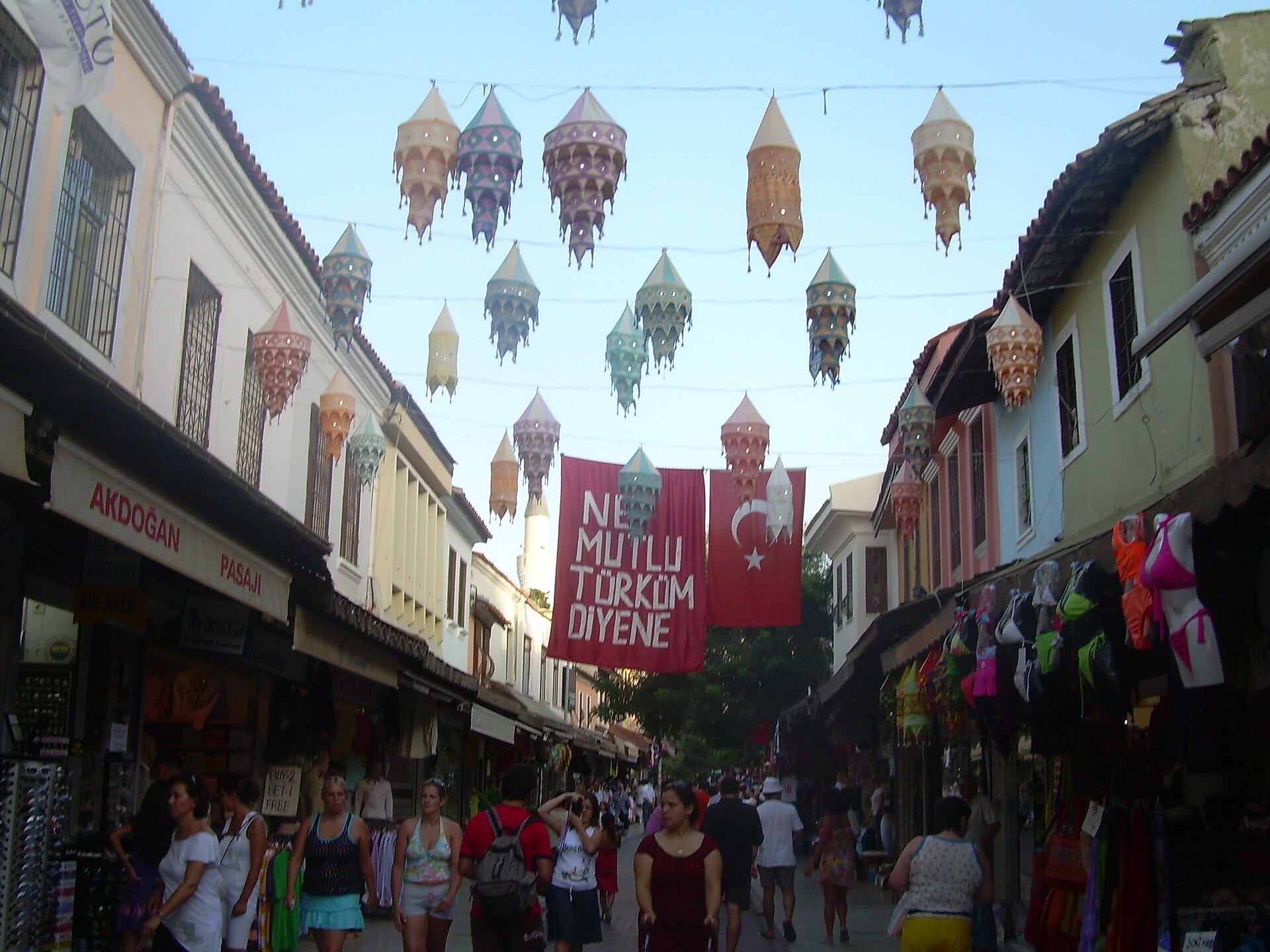
Turkey uses the lira, at about 48.9 to the dollar on 25 September 2026, and the rate has moved a long way in recent years, which is why tourist businesses often quote prices in euros instead. Cards are widely accepted in shops and restaurants in Istanbul, Kusadasi and Bodrum; pay in lira when the terminal asks, for the same reason you pay in euros in Italy. Keep some small lira notes for taxis, the dolmus minibuses and tips. Taxi and dolmus fares from Kusadasi’s Ege Port to Ephesus are not published by any source we could verify, so agree the price before you get in. US and Canadian citizens have been visa-free for tourist visits to Turkey since 1 January 2024, and UK citizens are also visa-free; our travel documents guide has the details, and our guide to Turkey’s cruise ports covers the transfers.
Gibraltar
Gibraltar uses its own pound, at par with sterling, and British notes and coins circulate freely alongside it. Cards are widely accepted on Main Street. Many shops will take euros, but at a rate that favors the shop, and your change will come back in pounds, which is a nuisance to spend anywhere else on a Mediterranean itinerary. Pay by card.
Morocco
Morocco’s dirham is a closed currency: you cannot buy it before you arrive, and you should not plan on taking it home. For a cruise call in Tangier or Casablanca, that means changing, or withdrawing, only what you expect to spend, keeping the receipts, and using a card in the larger shops and restaurants. Taxis and the souks run on cash.
Tunisia
Tunisia’s dinar is stricter still. Importing and exporting dinars is prohibited, so you will get them only after you land and must spend or change them back before you leave, which is why keeping exchange receipts matters. La Goulette, the port for Tunis, is on more itineraries than it used to be: Marella’s adults-only Marella Explorer 2 includes Tunis on a Dubrovnik-to-Malaga sailing departing 29 October 2026, and Carnival adds La Goulette for 2027.
Albania
Albania uses the lek, and Sarandë, its main southern cruise port, is newly on Virgin Voyages’ 2027 program from Athens. Euros are often accepted by tourist businesses around the port, usually at the seller’s rate. For anything more than a coffee, a card or a small lek withdrawal will serve you better.
Shopping: VAT refunds and the US duty-free limit
Visitors from outside the European Union can usually reclaim the VAT included in the price of goods bought in the EU and taken home in their luggage, which on an expensive purchase is a meaningful saving. The mechanics are what trip up cruise passengers. Ask the shop for a tax-free form at the time of purchase; minimum spends and refund rates differ by country. The form then has to be validated by customs at the point where you finally leave the EU with the goods, which for most fly-home cruisers is the departure airport, not the ship. If your cruise ends outside the EU, in Istanbul for example, ask the shop how validation works for your route before you buy, not after.
Coming home, US residents have a personal duty-free exemption of $800 per person on goods acquired abroad, with separate limits on alcohol and tobacco. It is a generous allowance for a cruise, and a family can pool theirs on one declaration.
A money plan for a Mediterranean cruise
If you do nothing else on this page, do these, in this order.
- Two months out: sort your cards. One credit card with no foreign-transaction fee for the onboard account and big purchases, one on a different network as backup, and a debit card for ATMs. Confirm all three PINs.
- A month out: check your phone plan. Decide between your carrier’s day pass and a Europe eSIM, check the eSIM’s country list against your itinerary, and read your carrier’s cruise terms.
- Two weeks out: order a small amount of euros from your bank, enough for the airport and the first port, roughly €100 to €200 per person. For a Turkish or North African call, buy nothing in advance; get local currency there.
- At check-in: link the credit card to your onboard account, not the debit card.
- Every departure day: airplane mode as the ship leaves port, Wi-Fi only if you have bought it.
- Every port day: pay in the local currency whenever a machine asks, carry a few coins for buses and lifts, and keep the big notes in a different pocket from the everyday ones.
- Mid-cruise: check your onboard account on the app or the cabin TV, so the final statement holds no surprises.
- Last night: review the statement, query anything you don’t recognize, and decide about any extra tips.
- At the airport: validate VAT refund forms before check-in, and spend or change any closed-currency leftovers before you leave Morocco or Tunisia, not after.
Mediterranean cruise money FAQs
Can I use US dollars in Mediterranean ports?
Not in the euro ports. Shops, restaurants and transport in Spain, Italy, Greece, Croatia and the rest expect euros, and anyone who does accept dollars will set a poor rate. Some tourist businesses in Turkey and Albania quote euros or dollars, but paying in the local currency by card is usually cheaper.
Do cruise ships exchange currency?
Some do, in small amounts, at the guest services desk, and some ships have ATMs that dispense euros as well as dollars. Both are convenient and neither is cheap. A bank ATM on the quay, with a card that charges no foreign fees, almost always gives a better rate.
Should I link a debit or credit card to my onboard account?
A credit card. Cruise lines typically place holds for expected spending against the linked card, and on a debit card those holds tie up your own cash until they are released after the cruise. A credit card with no foreign-transaction fee is the best choice, especially on MSC and Costa, which bill in euros.
How much cash should I bring on a Mediterranean cruise?
Less than most forums suggest. We would arrive with roughly 100 to 200 euros per person, use cards for most spending, and top up at bank ATMs ashore. A light day ashore for one person, with buses, coffee and small tips, runs to perhaps 30 to 60 euros before lunch or major tickets.
Do I need Turkish lira for Kusadasi or Istanbul?
Not strictly: cards are widely accepted and tourist shops often quote euros. Small lira notes are still useful for taxis, dolmus minibuses and tips, and paying in lira rather than euros usually gets a better price. Taxi fares to Ephesus are not published, so agree the price before you set off.
Is tipping included on a Mediterranean cruise?
On most mainstream lines, gratuities are added automatically to your onboard account at about 17 to 20 dollars per person per day. Viking adds 20 dollars on US bookings, and they are included in the fare on Oceania, Regent, Silversea, Seabourn and Explora. Tipping ashore is separate and much lighter than in the US.
Will my phone work on a Mediterranean cruise?
In port, yes, with an international plan or an eSIM. At sea, only through the ship’s Wi-Fi or its maritime cellular network, which standard plans exclude and which can be expensive: AT&T charges 20 dollars a day per line on cruises. Use airplane mode at sea unless you have bought Wi-Fi.
What is dynamic currency conversion?
It is the offer, on a card machine or ATM abroad, to charge you in dollars instead of the local currency. The rate is set by the machine’s provider and includes its margin, so it is almost always worse than your card network’s rate. Always choose to pay in the local currency.
Where this guide goes deeper
This page is the hub for money, tipping and phones on a Mediterranean cruise. The detailed guides beneath it are being published over the coming months, and we will link each one here as it goes live.
- Cash and cards. Should You Get Euros Before Your Cruise? ATMs, Exchange and Onboard Options and Using Credit Cards in Europe on a Cruise: Fees, Dollars vs Euros and Tap-to-Pay.
- Tipping. Tipping in Europe’s Cruise Ports: Country-by-Country Guide, Tipping in Italy: How Much to Tip Guides, Drivers and Waiters on a Port Day and Tipping in Greece: A Cruise Passenger’s Guide.
- Phones. Best eSIM for a Mediterranean Cruise (and How to Avoid Ship Roaming Charges) and International Phone Plans on a Cruise: Verizon, AT&T and T-Mobile in the Med.
For the port-by-port fares in the small-change table, see our guides to Italy’s cruise ports and Greece’s cruise ports. If you are weighing an inclusive line against a mainstream one to take gratuities and Wi-Fi off the bill, our ranking of the best Mediterranean cruise lines compares what each includes.
How we researched this guide
Currencies and exchange rates come from the European Central Bank’s euro reference rates for 25 September 2026. Onboard currencies come from the lines’ policies as compiled in a cruise-currency guide, checked September 2026. Gratuity rates come from industry trackers updated in January and July 2026. Port fares come from port authorities, rail operators and site ticket offices as recorded in our port guides, checked September 2026. Phone prices come from AT&T’s own support page (updated 2 March 2026) and from carrier pages and roaming trackers for Verizon and T-Mobile. Closed-currency rules for Morocco and Tunisia come from Tunis-Carthage airport’s customs guidance and consistent travel-money sources. For country-level rules that can affect your money, such as currency declarations and entry requirements, the US State Department’s country information pages are the authoritative starting point.
We are an independent editorial site. We do not sell cards, eSIMs or currency, and nothing on this page is a paid placement. The tipping guidance, the suggested cash amounts and the ranking of places to get euros are our editorial judgement and are labeled as such; we have not tested every ATM, card or eSIM we mention. Two figures we could not verify: MSC’s current euro gratuity rate for Mediterranean sailings, and Verizon’s precise treatment of cruise-ship networks. Money figures are rechecked each January and March; phone plans whenever a carrier changes its terms.
Image credits
| Image | Photographer | Licence |
|---|---|---|
| A 50 euro cent coin on euro banknotes | José Carlos Casimiro | CC BY-SA 2.0, via Wikimedia Commons |
| Croatian 10-cent euro coin | Xfigpower | CC BY-SA 3.0, via Wikimedia Commons |
| Santorini Old Port and the cable car to Fira | Norbert Nagel | CC BY-SA 3.0, via Wikimedia Commons |
| The lower windmills, Chora, Mykonos | Zde | CC BY-SA 4.0, via Wikimedia Commons |
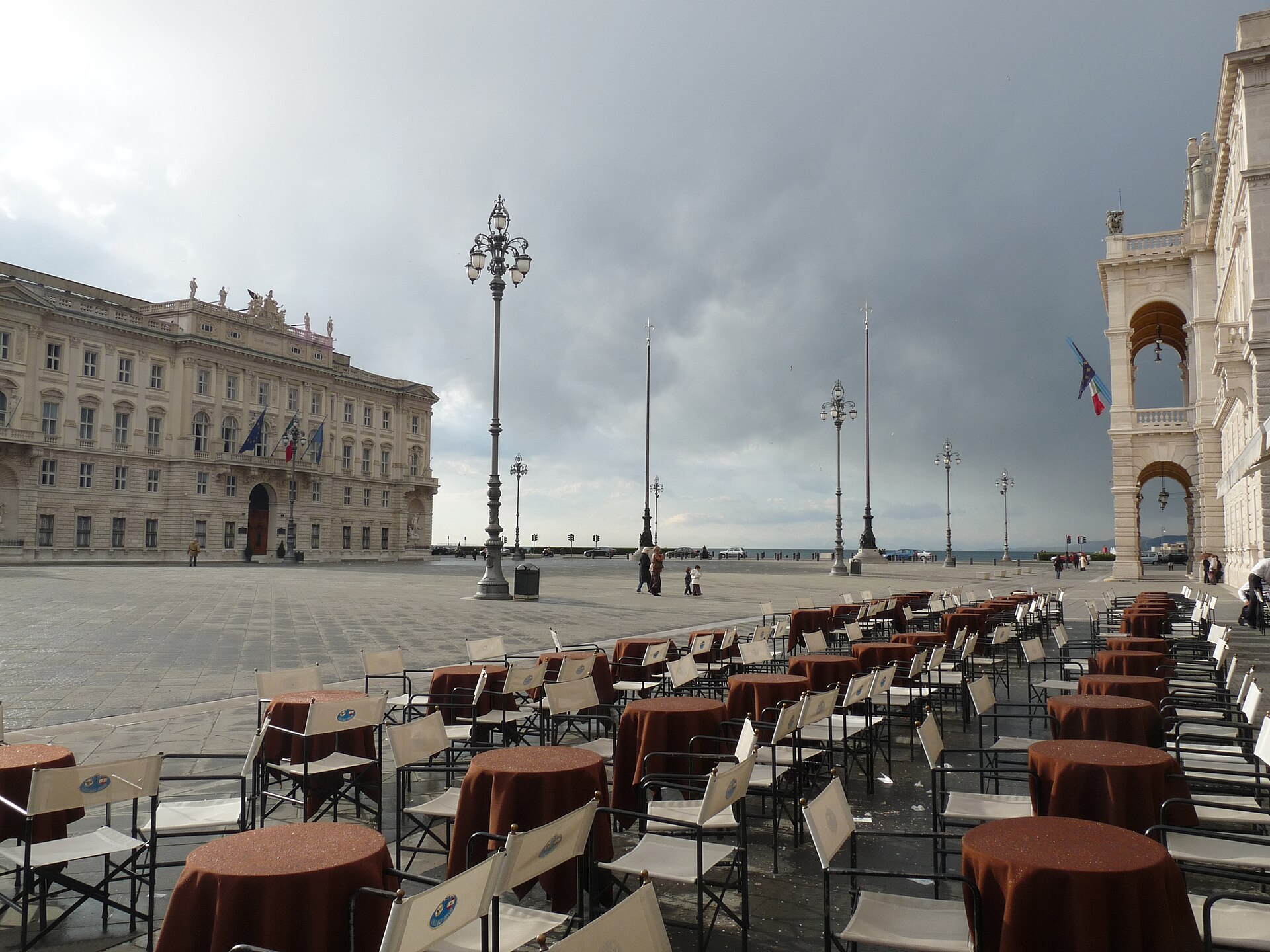
| Piazza Unità d’Italia, Trieste | dani7c3 | CC BY-SA 2.0, via Wikimedia Commons |
| The bazaar, Kusadasi | Vikimach | CC BY 3.0, via Wikimedia Commons |
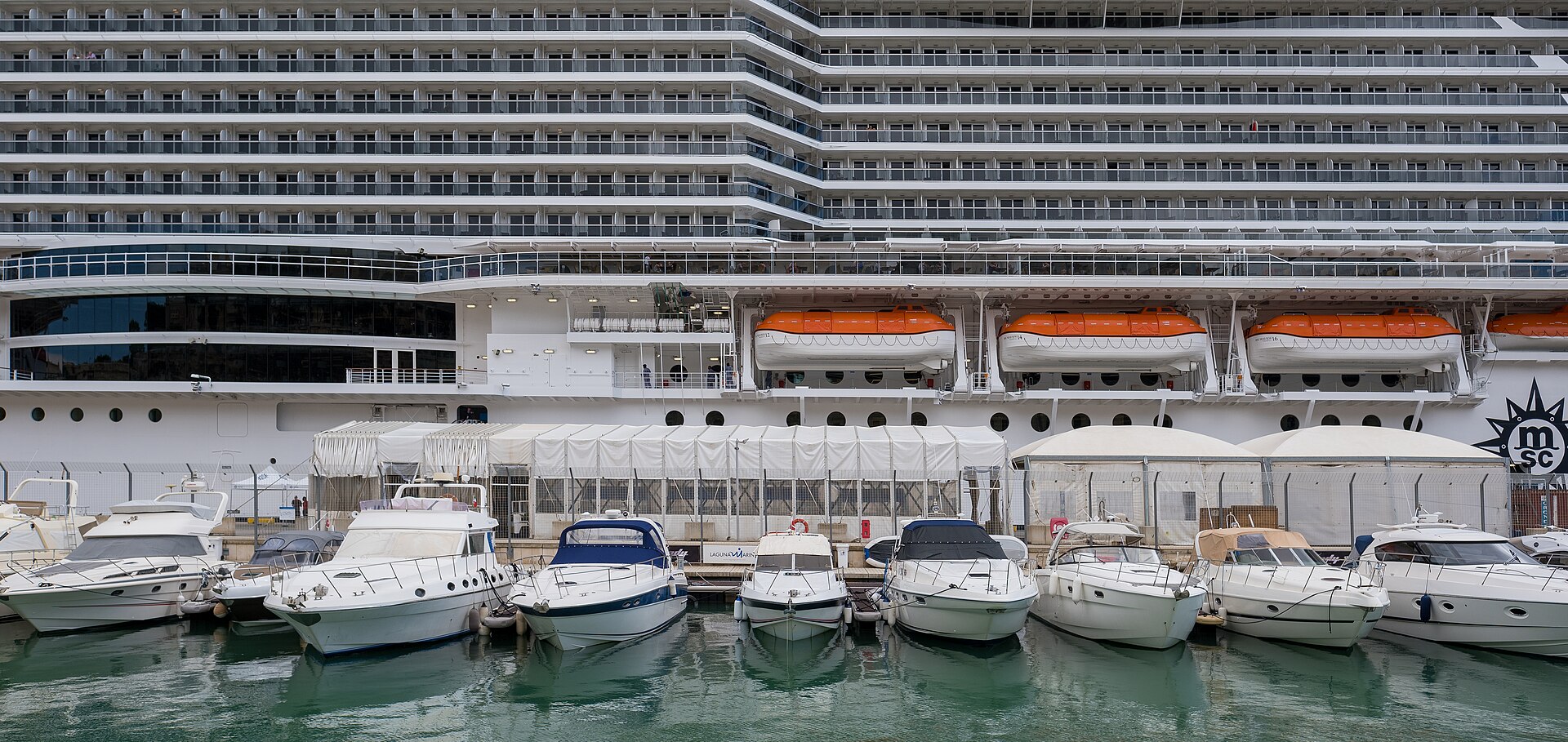
| Valletta Waterfront, Malta | Jules Verne Times Two | CC BY-SA 4.0, via Wikimedia Commons |
Published 8 October 2026. Exchange rates, fares, gratuity rates and phone prices were checked in September 2026 and will change — verify anything you are about to pay for.