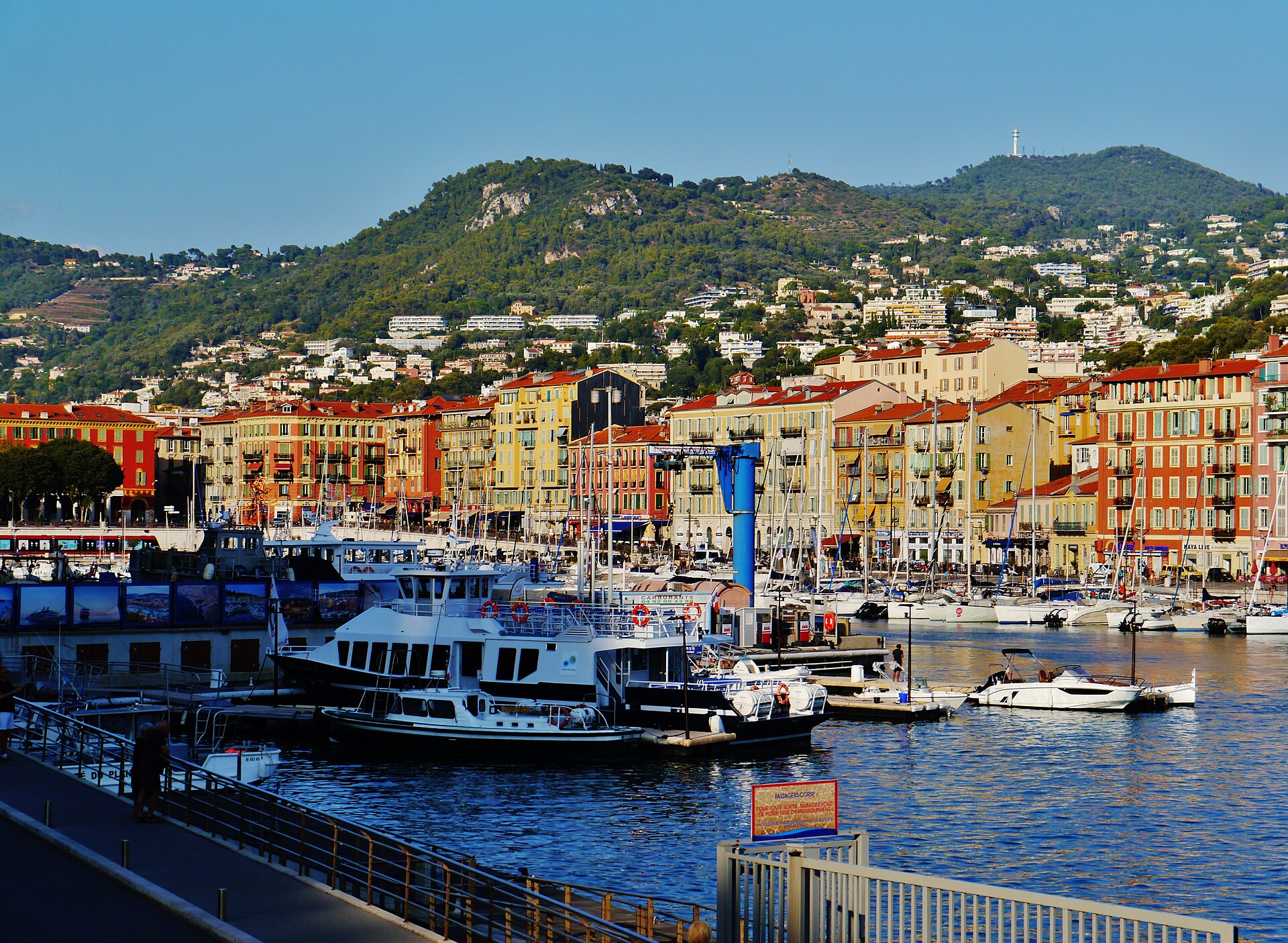
Ships anchor and tender at Villefranche-sur-Mer for Nice and Monaco, at Cannes, at Antibes and at Saint-Tropez. They berth alongside at Marseille, Toulon, Nice’s own Port Lympia and the Corsican ports. Monaco takes cruise ships at Port Hercule, but only up to a published length limit that excludes the modern megaships entirely.
That distinction — who tenders and who berths — is the whole shape of a day at the French Riviera cruise ports, and it is oddly hard to find set out plainly. Page one for this search currently includes a forum thread, two schedule databases, a guide to river cruising in Paris and a Wikipedia article about a ship called Riviera. This guide covers the three coastlines that a French call actually falls on: Provence and Marseille in the west, the Côte d’Azur and Monaco in the east, and Corsica offshore. Each port gets a dated data box, and the Nice, Monaco and Aix timings are worked backwards from the all-aboard time.
At a glance: France’s Mediterranean cruise ports
| The Riviera ports | Villefranche-sur-Mer, Cannes, Antibes and Nice’s Port Lympia, all operated by Riviera Ports, plus Monaco and Saint-Tropez. |
| The Provence ports | Marseille (France’s biggest), Toulon, Bandol, Sanary-sur-Mer, Cassis and Sète. |
| Corsica | Ajaccio, Bastia, Calvi, Bonifacio, Porto-Vecchio and Propriano. |
| Who tenders | Villefranche always. Cannes, Antibes and Saint-Tropez almost always. Nice takes small ships alongside and anchors the large ones. |
| Who berths | Marseille, Toulon, Bandol, Ajaccio, Bastia and Monaco — Monaco within its size limit. |
| The headline day | Villefranche, because the train from the station above the tender pier reaches Nice in about seven minutes and Monaco in about twenty. |
| Currency and plugs | Euro. France and Monaco use plug types C and E, 230 V / 50 Hz. |
| What cancels a call | The mistral. Tender operations stop long before berthed calls are affected, which is why the Riviera’s tender ports are the region’s most cancellable. |
| Our buffer | 60 minutes at any tender port, 90 if you have taken a train. Tendering is slow at both ends of the day. |
France sits in the middle of almost every Western Mediterranean routing — our Western Mediterranean route guide shows where these calls fall in a seven- or ten-night itinerary, and our complete Mediterranean cruise guide covers the region as a whole.
Where do cruise ships dock on the French Riviera?
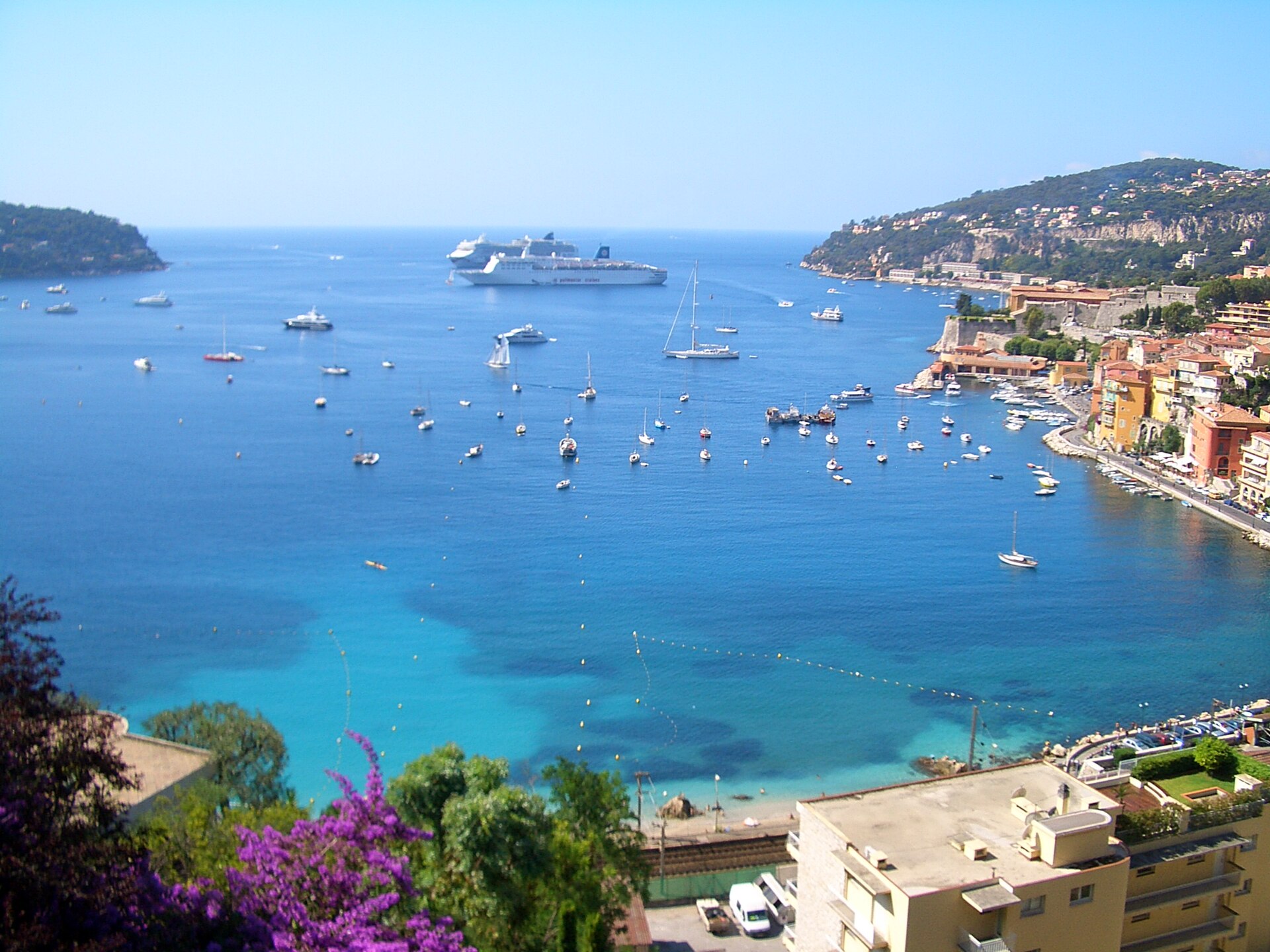
Mostly they do not dock — they anchor and tender. Villefranche-sur-Mer, Cannes, Antibes and Saint-Tropez are tender calls. Nice’s Port Lympia takes small ships alongside and anchors larger ones. Monaco berths cruise ships at Port Hercule within a published length limit, and Marseille and Toulon berth everything.
Riviera Ports, which runs the cruise calls at Cannes, Antibes, Nice and Villefranche-sur-Mer, is the organisation behind most of the eastern coast. Its own material notes that Villefranche-sur-Mer and Cannes were voted first and fifth best cruise destinations in the Western Mediterranean, and that Villefranche has a completely renovated passenger terminal with a processing area, a tourist office counter and a restaurant — which matters more than it sounds, because a tender port with a proper terminal is a far better place to wait out a queue than a pontoon.
The French Riviera cruise ports, port by port
Each box gives what we could verify and marks what we could not. French Riviera transport fares are a particular problem: the figures circulating on cruise-port sites are undated, and one widely copied Villefranche–Nice train fare of €1.60 is years out of date. Buy at the machine and do not budget from a blog.
Villefranche-sur-Mer — the port for Nice and Monaco
| Dock or tender | Tender, always. Typical wait 5–10 minutes |
| Terminal | Completely renovated passenger terminal with processing area, tourist office counter and restaurant (Riviera Ports, as of September 2026) |
| To the station | About 10 minutes on foot, uphill |
| To Nice | 4 km (2.5 miles); about 7 minutes by train |
| To Monaco | About 20 minutes by train |
| Fares | Published figures are stale — buy at the station machine. We will not print a number we cannot date |
| Hours needed | 2 hours for Villefranche itself; 5 for Nice; 6 for Monaco; 7 for both |
| Step-free | The tender pier and the old town waterfront are flat. The climb to the station is not, and Villefranche’s old town is stepped |
| Our buffer | 60 minutes minimum, 90 if you have taken a train |
Nice — Port Lympia, for the ships that fit
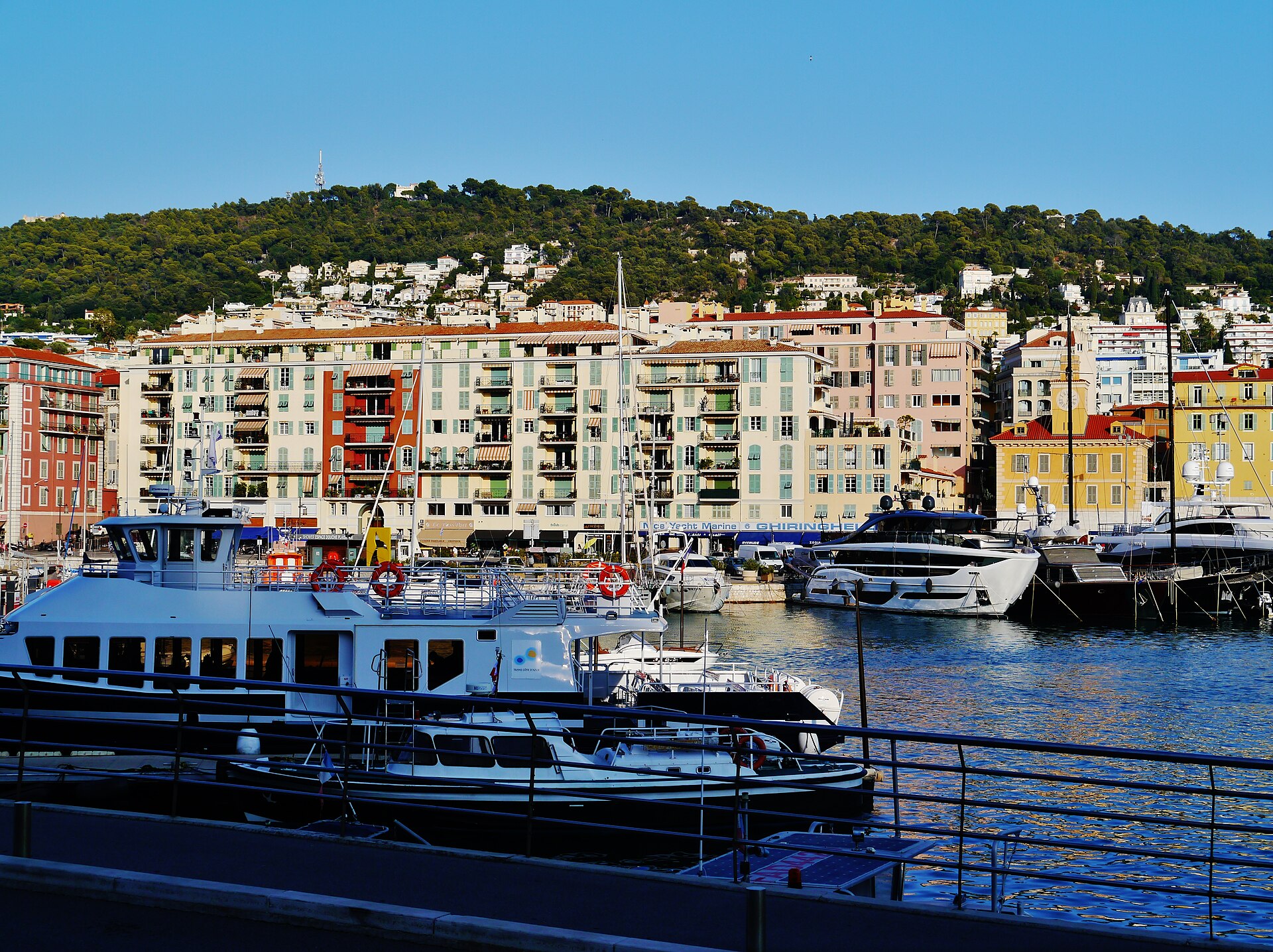
| Dock or tender | Small ships berth alongside at Port Lympia; larger ships anchor in the bay and tender |
| To the centre | Port Lympia is at the eastern end of the seafront, a walk round or under Castle Hill to the Old Town and the Promenade des Anglais |
| Also from here | The Corsica ferries. Port Lympia is a working ferry port as well as a cruise berth |
| Hours needed | 5–6 for Nice; the city rewards a full day |
| Our buffer | 30 minutes if berthed, 60 if tendering |
Cannes, Antibes and Saint-Tropez — the tender calls
| Port | Arrangement | What you get |
|---|---|---|
| Cannes | Anchor and tender to the Palais des Festivals quay. Tenders land at Quai Laubeuf, shared with the coastal boat-trip operators. Tender ride typically 10–15 minutes | The Croisette, Le Suquet’s old town on the hill, the boat to the Îles de Lérins |
| Antibes | Tender to Port Vauban | The old town and the Picasso museum, within walking distance of the tender landing |
| Saint-Tropez | Tender, roughly a 15-minute ride | A compact, walkable town and one of the most photographed harbours in Europe |
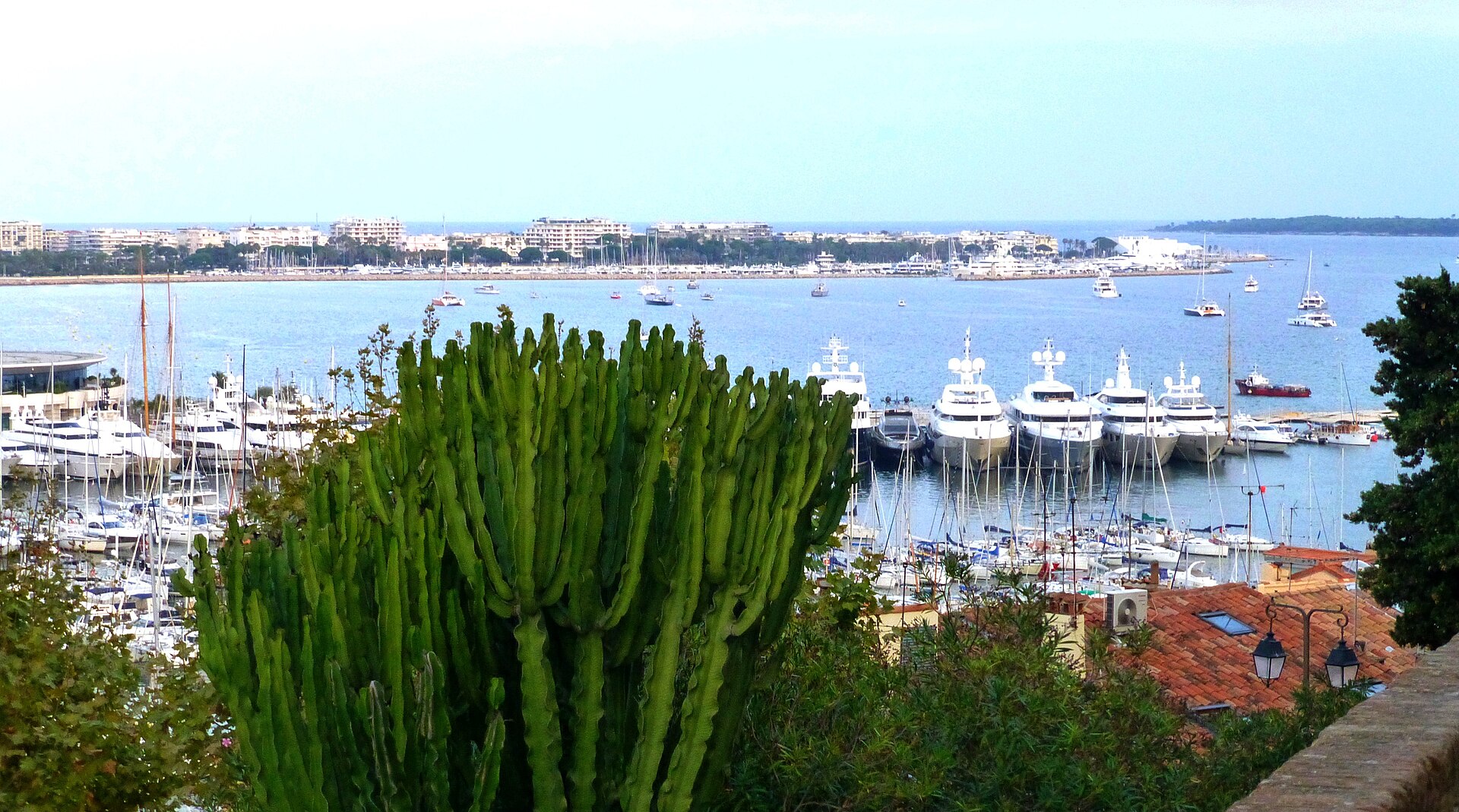
All three are short, walkable days once you are ashore, and all three are entirely dependent on a tender operation. That is the trade-off worth understanding before you get attached to the itinerary: the prettiest calls on this coast are the ones most likely not to happen.
What a tender day actually costs you in time
Nobody prices this properly when they plan a Riviera itinerary, and it is the difference between a good day and a frustrating one. A tender call takes time at four separate points, and they add up to well over an hour on a busy ship.
- The morning wait. Ship excursions go first. Independent passengers on a large ship are often issued tender tickets and called by number, which can mean an hour between the published arrival time and actually standing on the quay.
- The crossing. Five to ten minutes at Villefranche, ten to fifteen at Cannes, about fifteen at Saint-Tropez. Each way.
- The afternoon queue. The one people underestimate. Everybody comes back in the last ninety minutes, and the pier becomes a single-file bottleneck. A twenty-minute wait is normal; forty is not unusual.
- The sea state. A choppy afternoon slows the operation down and occasionally stops it, which is when the captain brings the all-aboard time forward.
Two practical consequences. First, on a large ship at a tender port, treat the published arrival time as optimistic and the all-aboard time as hard: that is why our buffer at these ports is 60 to 90 minutes rather than the 30 to 45 we would use at a berthed call. Second, small ships have a genuine advantage here that has nothing to do with luxury — four hundred people clear a tender operation in a fraction of the time four thousand do.
If the tender queue is the thing that would ruin the holiday for you, look at the itineraries that use Nice’s Port Lympia, Toulon or Marseille instead, or accept that the prettiest calls on this coast come with a queue attached.
All-aboard math: Nice and Monaco from Villefranche
All aboard is the time by which every passenger must be back on the ship, normally 30 to 60 minutes before the published departure. At a tender port it matters more than anywhere else, because the last tenders form a queue and the queue is not a formality — a thousand people trying to get off a pier in forty minutes is a real constraint. Here are both Villefranche days worked backwards.
Nice, on an 08:00–17:00 call
| Time | What is happening |
|---|---|
| 08:00 | Ship at anchor. Tenders start running; independent passengers usually go after the ship’s tours |
| 08:45 | Ashore at the tender pier, into the renovated terminal |
| 09:00 | Ten minutes uphill to Villefranche-sur-Mer station. It is a real hill — allow the full ten minutes |
| 09:20 | Train to Nice-Ville, about seven minutes |
| 09:30–14:30 | Five hours in Nice: Vieux Nice, the Cours Saleya market, the Promenade des Anglais, Castle Hill, lunch |
| 14:30 | Latest safe train back. Trains are frequent, but “frequent” is not “guaranteed” |
| 14:50 | Back at Villefranche station, ten minutes downhill |
| 15:10 | In the tender queue, 50 minutes before a 16:00 all aboard |
| 16:00 | All aboard |
Monaco, on an 08:00–17:00 call
The same shape with a longer train ride: about twenty minutes each way instead of seven. Turn around by 14:00 rather than 14:30, which gives you roughly four and a half hours in the Principality — enough for the Palace, the Oceanographic Museum, the Casino square and the harbour, but not for a leisurely lunch as well.
Our honest view: this is the best independent port day anywhere in France, and one of the best in the Mediterranean, because a suburban train removes every variable that usually ruins an independent excursion. There is no coach, no traffic and no driver. The one variable it does not remove is the tender, which is why the buffer is 90 minutes rather than 45.
Can cruise ships dock in Monaco?
Yes, at Port Hercule, but only within a size limit that excludes modern megaships. Monaco’s own ports authority says the 352-metre semi-floating sea wall “makes it possible to host cruise ships of up to 300 metres”, and that before it was built in the early 2000s only craft under 100 metres could dock at all. Other sources report a stricter 250-metre, 1,250-passenger limit.
We are giving you the range rather than a single number because the sources genuinely conflict, and this is exactly the sort of figure that gets copied between cruise sites without anyone checking it. What is not in doubt is the practical consequence: a contemporary mainstream ship of 300 metres and more cannot berth in Monaco, which is why the Principality appears mostly on small-ship and luxury itineraries, and why everyone else visits by train from Villefranche.
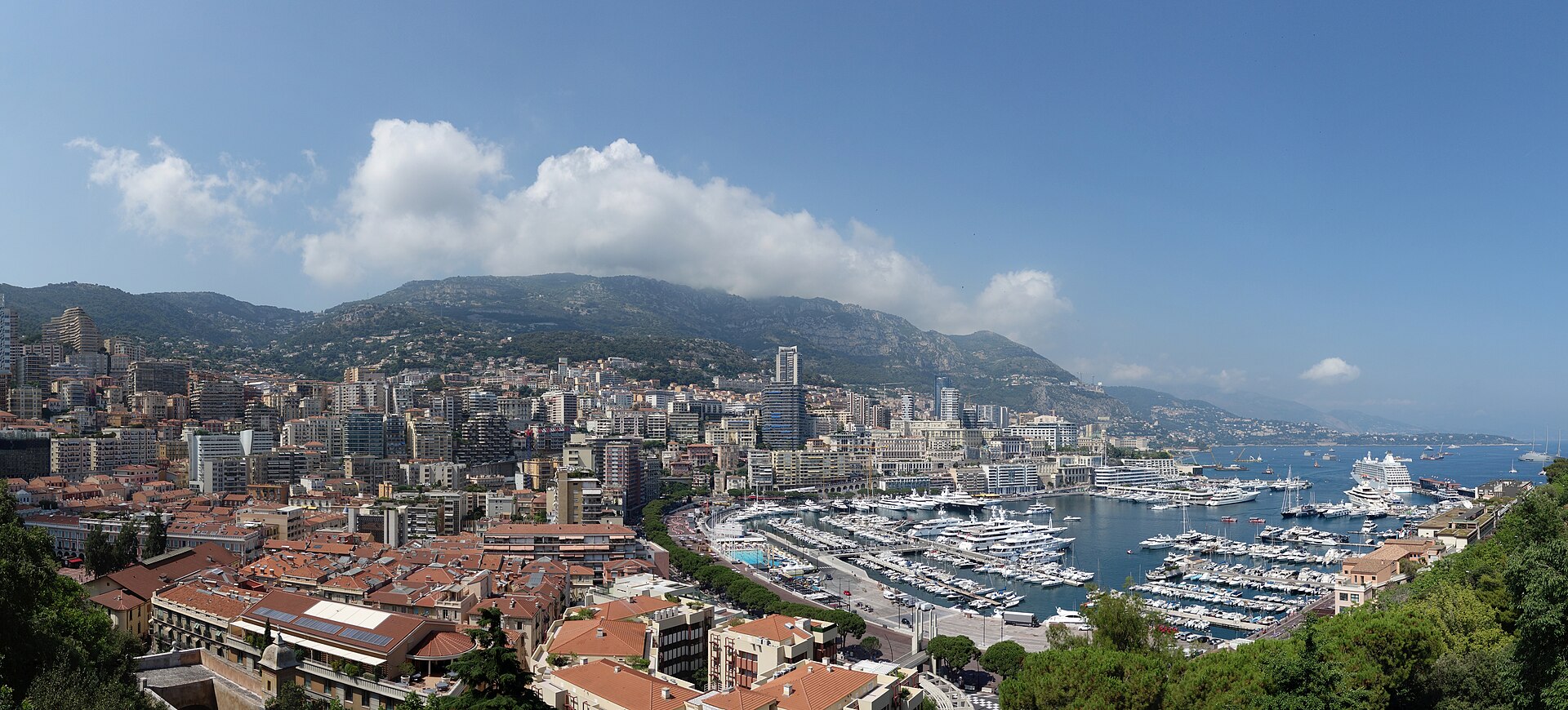
If berthing in Monaco rather than arriving by train is what you want, the practical answer is to look at the small-ship and luxury lines — our comparison of luxury Mediterranean cruises sets out which of them are inside the limit and what that access costs.
Marseille and the Provence ports
Marseille is France’s biggest cruise port and behaves nothing like the Riviera calls. Ships berth alongside at the Grand Port Maritime, and there is a free port shuttle on every ship day — which you will want, because the main cruise terminal is a long way from anywhere you came to see.
| Dock or tender | Dock. Large ships at the MPCT terminal; smaller ships at La Joliette |
| MPCT to the Vieux-Port | 5 miles (8 km) |
| La Joliette to the centre | About a 25-minute walk |
| Shuttle | A free port shuttle runs on every ship day (official, as of September 2026) |
| Hours needed | 5 for Marseille itself; 6–7 for Aix-en-Provence or Cassis |
| Step-free | The Vieux-Port and the Joliette waterfront are flat. Notre-Dame de la Garde is a serious climb |
| Our buffer | 45 minutes from the city, 90 from Aix or Cassis |
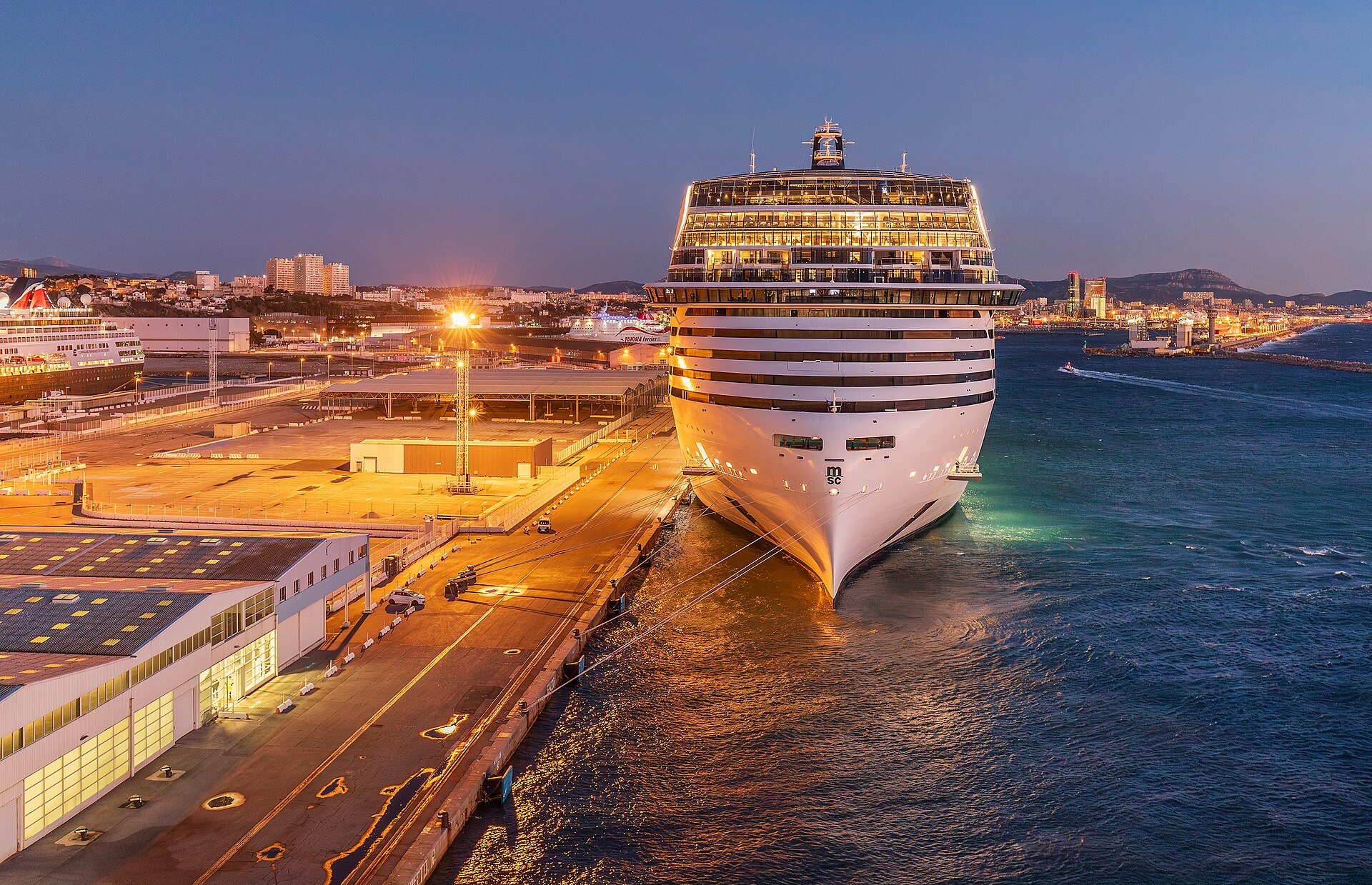
Toulon, Bandol, Sanary-sur-Mer and Cassis are the small Provençal calls: all alongside or a short tender, all walkable, all a very different day from Marseille. Sète, further west, is a canal town that appears mostly on small-ship itineraries.
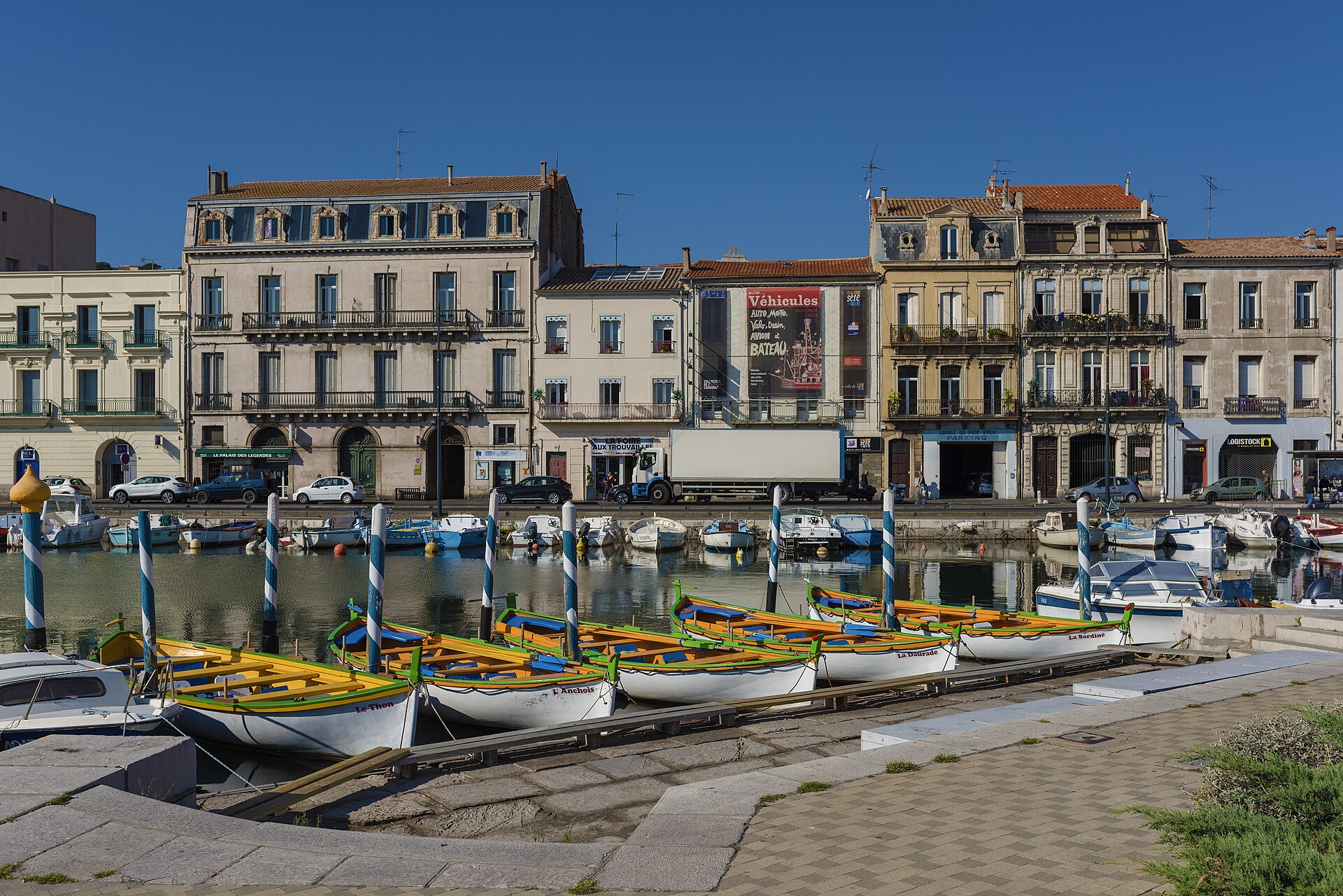
Toulon, Bandol, Sanary-sur-Mer and Cassis
The smaller Provençal calls are the quiet counterweight to Marseille, and they are the easiest port days in France. All of them are either alongside or a short tender, all of them put you within a few minutes’ walk of the town, and none of them needs an excursion to be worth the day.
| Port | Arrangement | What the day is |
|---|---|---|
| Toulon | Alongside, about a 10-minute walk to the centre | A real working naval city rather than a resort. The cable car up Mont Faron is the headline, and the harbour boat tours are good |
| Bandol | Alongside, walking distance | A palm-lined promenade, a small resort town, and the wine appellation that carries its name |
| Sanary-sur-Mer | Alongside or anchor and tender; walking distance either way | One of the prettiest small harbours on the coast, with everything reachable on foot |
| Cassis | Tender into a small harbour | The Calanques — limestone inlets reached by boat from the harbour. The best small-ship call in Provence |
Our view on these four: if your itinerary offers one of them instead of a second big-city call, take it. A Mediterranean cruise that is all Barcelona, Marseille, Genoa and Rome is a week of transfers; a day at Sanary or Cassis is the one where you actually sit down by the water. The same argument applies to Sète further west and to the Corsican ports, and it is one of the reasons small-ship itineraries read so differently from mainstream ones.
The Marseille port authority’s own pages are the place to confirm which terminal your ship uses before you sail — the difference between MPCT and La Joliette is five miles and a shuttle ride.
All-aboard math: Aix-en-Provence and Cassis from Marseille
Marseille’s two classic excursions run in opposite directions, and the return risk is different for each.
- 08:30 — off the ship. At the MPCT terminal this means the free shuttle first, not a walk.
- 09:00 — depart for Aix-en-Provence, inland and north, or for Cassis, east along the coast past the Calanques.
- 10:00 — arrive. Both are comfortably reachable within the morning; Cassis’s approach road is the slower and prettier of the two.
- 10:00–13:30 — three and a half hours. Aix’s Cours Mirabeau and old town; or Cassis’s harbour and a boat into the Calanques.
- 13:30 — latest safe turnaround for a 16:00 all aboard.
- 14:30 — back at the port gate, allowing 90 minutes of buffer.
The Cassis version carries one extra risk worth naming: if you take a boat into the Calanques, you have added a sea leg to your day, and sea legs are weather-dependent in a way road legs are not. Treat it exactly as we treat the Gozo ferry from Malta — fine on a long call, marginal on a nine-hour one.
Corsica: Ajaccio, Bastia, Calvi and Bonifacio
Corsica belongs to this coast on the map and to a different world on the ground, and it is the part of a French Riviera itinerary most people know least about. The Chamber of Commerce and Industry of Ajaccio and Corsica South manages the ports of Ajaccio, Bonifacio, Porto-Vecchio and Propriano; Bastia and Calvi sit in the north.
| Port | Arrangement | Notes |
|---|---|---|
| Ajaccio | Alongside | Corsica’s largest cruise port, and at one point the second largest in France behind Marseille. The railway station is near the port at Square Pierre Griffi. No official terminal-to-centre distance is published — we will not invent one |
| Bastia | Alongside | The busiest French passenger port on the Mediterranean overall, though most of that traffic is ferries rather than cruise ships. The station is in the city centre |
| Calvi | Usually tender | A citadel above a crescent bay; a small-ship call |
| Bonifacio | Tender into the inlet | The most dramatic arrival in France — a narrow limestone gorge with the town on the cliff edge. Small ships only |
| Porto-Vecchio, Propriano | Small-ship calls | Beaches and the southern coast |
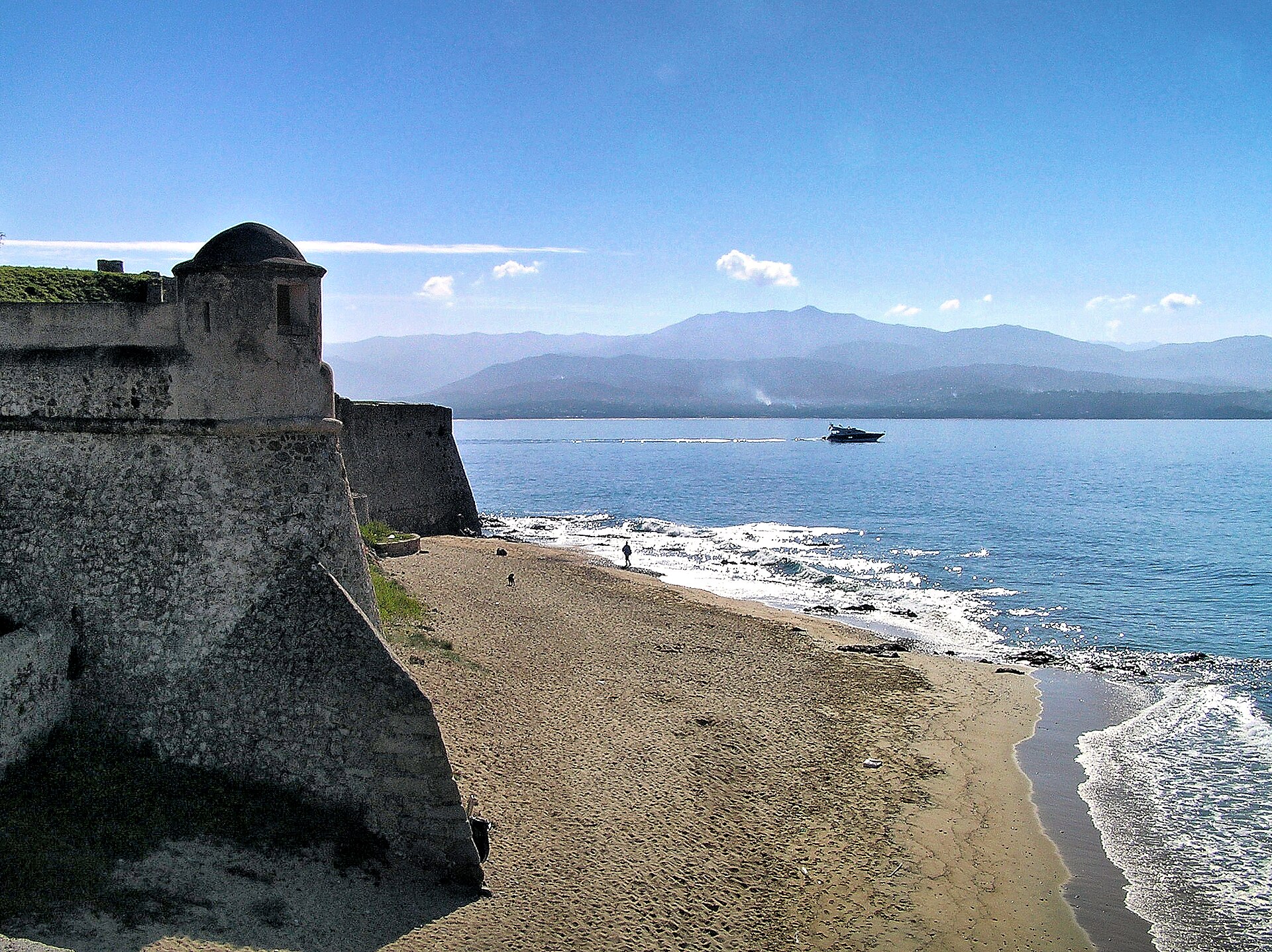
A Corsican call is the one place on a French itinerary where we would simply walk, sit and eat rather than plan an excursion. Ajaccio’s old town, the Bonaparte house and the market are all close to the port; Bastia’s old port and citadel are the same. The island’s interior is genuinely mountainous and a long way from the quay, which makes an ambitious inland excursion a poor use of a nine-hour call.
Which French cruise ports can you walk into?
Cannes, Antibes and Saint-Tropez once the tender lands you; Monaco, Toulon, Bandol, Sanary and Cassis straight off the gangway; Ajaccio and Bastia into their old towns. Villefranche village is at the pier but Nice and Monaco need the train. Marseille’s main terminal is five miles out — take the shuttle.
| Port | Walkable? | What that means |
|---|---|---|
| Cannes | Yes, after the tender | Quai Laubeuf is in the middle of town; Le Suquet is a short walk up |
| Antibes | Yes, after the tender | Port Vauban is beside the old town |
| Saint-Tropez | Yes, after the tender | Compact and entirely walkable |
| Villefranche | The village yes, the day no | The village is at the pier; Nice and Monaco need the train up the hill |
| Nice | Yes if berthed | Port Lympia to the Old Town is a walk round or under Castle Hill |
| Monaco | Yes | Port Hercule is the middle of the Principality; everything is uphill from it |
| Toulon, Bandol, Sanary, Cassis | Yes | Short flat walks into small towns |
| Ajaccio, Bastia | Yes | Old towns close to the quay; no official distances published |
| Marseille (La Joliette) | Just about | About 25 minutes to the centre on foot |
| Marseille (MPCT) | No | 5 miles to the Vieux-Port. Take the free shuttle |
The mistral, and what actually cancels a call
The mistral is the strong, cold, dry north-westerly that funnels down the Rhône valley and out across the Gulf of Lion. It is the Western Mediterranean’s equivalent of the Aegean meltemi and the Adriatic bora, and it is the single biggest reason a French Riviera call does not happen.
We are going to be honest about the limits of what we can tell you. The cruise-season frequency of the mistral is not published on any basis we could verify, so we are not going to give you a percentage or a “worst month”. What we can tell you is the mechanism, and the mechanism is what you plan around:
- Tenders stop before berths do. A wind that makes a tender operation unsafe is a long way below the wind that stops a ship coming alongside. Villefranche, Cannes, Antibes and Saint-Tropez are therefore the most cancellable calls on the French coast, and Marseille and Toulon the least.
- The decision is made on the morning, by the captain. Not the night before, and not by the shore excursion desk. A call can be cancelled with the ship already at anchor.
- A cancelled tender port usually becomes a sea day, not a substitute port, because there is rarely a berth free at short notice on this coast in season.
- Pre-booked independent arrangements are your risk. A non-refundable private driver at Villefranche is money gone if the tenders do not run. Ship excursions are refunded.
None of that is a reason to avoid the Riviera. It is a reason to keep independent bookings flexible at tender ports specifically, and to treat the pretty small harbours as a bonus rather than the reason you booked the cruise. Our guide to the best time to cruise the Mediterranean covers how the wind seasons shift through the year.
Where this guide goes deeper
This page is the hub for France, Monaco and Corsica. Over the coming weeks we are publishing the detailed port guides that sit beneath it, and we will link each one here as it goes live.
- Provence. Marseille Cruise Port Guide and Marseille Cruise Port to Aix-en-Provence and Cassis, plus Toulon Cruise Port Guide.
- The Côte d’Azur. Villefranche Cruise Port Guide (for Nice), Villefranche to Nice: Train, Bus or the Coastal Walk, Villefranche to Monaco: Train, Bus or Taxi, Monaco Cruise Port Guide and Cannes Cruise Port (Tender) Guide.
- Corsica. Ajaccio Cruise Port Guide (Corsica).
French Riviera cruise port FAQs
Does the ship dock or tender at Villefranche?
Tender, always. Villefranche-sur-Mer has a deep natural bay and no cruise berth, so every ship anchors and runs tenders ashore, typically with a five- to ten-minute wait. The compensation is a completely renovated passenger terminal at the pier and a railway station ten minutes’ walk up the hill.
How do I get from Villefranche to Nice?
By train, in about seven minutes. Walk about ten minutes uphill from the tender pier to Villefranche-sur-Mer station and take a westbound service to Nice-Ville. Buy at the station machine rather than budgeting from a published fare — the figures circulating online are years out of date.
How do I get from Villefranche to Monaco?
The same station, eastbound, about twenty minutes. On an 08:00–17:00 call, turn around in Monaco by 14:00 to allow for the train, the walk down and the tender queue. That leaves roughly four and a half hours, which covers the Palace, the Oceanographic Museum and the Casino square comfortably.
Can cruise ships dock in Monaco?
Yes, at Port Hercule, within a size limit. Monaco’s ports authority says its 352-metre semi-floating sea wall hosts cruise ships of up to 300 metres; other sources report a 250-metre, 1,250-passenger cap. Either way, modern mainstream megaships cannot berth, which is why Monaco appears mainly on small-ship and luxury itineraries.
Do cruise ships tender in Cannes?
Almost always. Ships anchor offshore and tender to Quai Laubeuf by the Palais des Festivals, a ride of roughly ten to fifteen minutes depending on conditions. A very small number of small ships can come alongside. The quay is in the middle of town, so the walk once you are ashore is short.
How far is Marseille cruise port from the city centre?
The main MPCT terminal is about five miles (8 km) from the Vieux-Port; the smaller La Joliette terminal is about a 25-minute walk from the centre. A free port shuttle runs on every ship day, which is the answer for MPCT and the sensible answer for La Joliette too in summer heat.
Which French Riviera cruise port is best?
Villefranche-sur-Mer, in our view, because the train at the top of the hill puts Nice seven minutes away and Monaco about twenty, with no coach, no traffic and no driver to wait for. It is the best independent port day in France despite — not because of — being a tender call.
Where do cruise ships dock in Corsica?
Alongside at Ajaccio and Bastia, the island’s two main ports. Calvi is usually a tender, and Bonifacio, Porto-Vecchio and Propriano are small-ship calls. No official terminal-to-centre distance is published for Ajaccio or Bastia, so ask your line rather than assume; both old towns are close to their quays.
What happens if the mistral cancels my port?
The call usually becomes a sea day rather than a substitute port, because berths are rarely free at short notice on this coast in season. Ship excursions are refunded; independent bookings are your own risk. The decision is made on the morning by the captain, sometimes with the ship already at anchor.
Do I need to carry my passport ashore in France?
No. France and Monaco are inside the Schengen area and the ship clears immigration for the whole manifest, so your ship card is enough. Carry a photocopy and leave the passport in the cabin safe — our travel documents guide sets out when that advice changes.
How long is the tender ride on the French Riviera?
Five to ten minutes at Villefranche-sur-Mer, roughly ten to fifteen at Cannes and about fifteen at Saint-Tropez, each way and depending on sea conditions. The crossing is rarely the problem. The queue to board the last tenders of the afternoon is, which is why we build a 60- to 90-minute buffer into any tender call.
Is Cassis or Aix-en-Provence the better day from Marseille?
Aix if you want a town, Cassis if you want the coast. Aix’s Cours Mirabeau and old town are a comfortable three and a half hours and the return is a straightforward road journey. Cassis adds a boat trip into the Calanques, which is the more memorable half-day and the one with weather risk attached.
Are French Riviera ports good for wheelchair users?
The berthed calls are: Marseille, Toulon, Bandol, Nice’s Port Lympia, Monaco and the Corsican ports are all step-free at the quay, though the towns above them rarely are. Tender ports are the difficulty — transferring between a ship and a moving tender depends on sea state, and lines set their own limits on mobility equipment.
How we researched this guide
Port arrangements come from the operators themselves wherever possible, checked on 19 September 2026: Riviera Ports for Cannes, Antibes, Nice and Villefranche, and Ports de Monaco for Port Hercule’s sea wall and its stated 300-metre capability. Marseille’s terminal distances and the free port shuttle come from our own verified facts file, last checked in September 2026. Corsica’s port management, Ajaccio’s historic cruise traffic and the positions of the Ajaccio and Bastia railway stations come from public reference sources; no official terminal-to-centre distance is published for either Corsican port and we have not estimated one.
Where sources conflict we have said so rather than pick one. Monaco’s maximum cruise-ship length is the clearest example: the Principality’s own site describes a 352-metre sea wall hosting ships of up to 300 metres, while secondary sources report a 250-metre and 1,250-passenger limit. We have given the range. Similarly, we have not published French Riviera train, bus or taxi fares, because every figure we could find was undated and at least one widely copied Villefranche–Nice fare is years stale. The mistral’s cruise-season frequency is not published on any basis we could verify, so we have described the mechanism and declined to give a number.
The all-aboard timelines are our own arithmetic, built from the verified distances and journey times with explicit buffers. They are planning tools, not guarantees — your ship’s daily programme is the authority on the day. We are an independent editorial site, we do not sell cruises or excursions, and we have not visited every port described here. Where this page gives an opinion — that Villefranche is the best French port day, that a Corsican call is for walking rather than excursions, that tender ports deserve a 90-minute buffer — it is labelled as ours. Port rules and prices are re-checked before each season.
Image credits
| Image | Photographer | Licence |
|---|---|---|
| Port Lympia, Nice | Zairon | CC BY-SA 4.0, via Wikimedia Commons |
| The quay at Port Lympia, Nice, with an excursion boat and superyachts | Zairon | CC BY-SA 4.0, via Wikimedia Commons |
| Cruise ships at anchor in the bay of Villefranche-sur-Mer | Vmenkov | CC BY-SA 3.0, via Wikimedia Commons |
| The Vieux Port at Cannes, from Le Suquet | Edgar El | CC BY 3.0, via Wikimedia Commons |
| Port Hercule, Monaco | Spike | CC BY-SA 4.0, via Wikimedia Commons |
| MSC ship at the Marseille cruise terminal | Ximonic (Simo Räsänen) | CC BY-SA 4.0, via Wikimedia Commons |
| Traditional boats on a canal in Sète | Christian Ferrer | CC BY-SA 4.0, via Wikimedia Commons |
| The citadel and Saint-François beach, Ajaccio | Pierre Bona | CC BY-SA 3.0, via Wikimedia Commons |
Published 1 October 2026. Port arrangements and operator statements were checked on 19 September 2026 and will change — verify anything you are about to pay for. Further reading: Riviera Ports on its cruise call ports and Ports de Monaco.