A typical Mediterranean cruise itinerary is 7 nights with five port days and one or two sea days, sailing round trip from Barcelona, Civitavecchia or Piraeus. Western routes are almost entirely berthed; Eastern and Greek Isles routes involve tendering. The longer, better trips are 10 to 14 nights and frequently one-way, which changes what you pay for flights.
That is the pattern. What almost no guide gives you is a real, published route with real times, and the difference between how long the ship is alongside and how long you are actually standing in the place you came to see. This page gives you both, for two verified 2027 sailings, reproduced hour by hour.
It also counts the things that decide whether a route suits you rather than somebody else: tender ports, walking load, transfer distance, and which of the 2026 rules touch which itineraries. If you are earlier in the process, the main Mediterranean cruise guide covers regions and lengths, and the seasonal guide covers when to sail.
At a glance: how Mediterranean itineraries are built
| Default length | 7 nights. Lines describe their Mediterranean range as 7 to 14 nights; Princess sells 7 to 42 days |
| Ports per week | Five or six port days, one or two sea days |
| Time alongside | Long by cruise standards. Norwegian says its ships spend over 90% of their time in port, averaging nearly 11 hours |
| Main homeports | Barcelona, Civitavecchia (Rome), Piraeus (Athens), Ravenna and Trieste for the Adriatic, Southampton for no-fly UK sailings |
| Four route families | Western Mediterranean, Eastern Mediterranean and Greek Isles, Adriatic, and combined or “grand” routes of 12 to 21 nights |
| Tendering | Rare in the west. Santorini always tenders; Mykonos sometimes. Villefranche, Cannes and sometimes Capri tender in the west |
| Round trip vs one way | Round trips are simpler to fly to; one-ways see more coastline and need an open-jaw ticket |
| Biggest planning trap | Reading the port name as the city. Civitavecchia is 46 miles from Rome; Livorno is 65 miles from Florence; Katakolon is 21 miles from Olympia |
| Currency note | Conversions use €1 = $1.1592, the European Central Bank reference rate of 11 September 2026 |
What does a typical Mediterranean cruise itinerary look like?
A typical 7-night Western Mediterranean cruise from Barcelona calls at Palma de Mallorca, La Spezia for Florence and the Cinque Terre, Civitavecchia for Rome and Naples for Pompeii, with two sea days. A typical Greek Isles week from Piraeus calls at Santorini, Rhodes, a Turkish port and Mykonos, with one sea day. Both are five port days.
Those are not composites. They are the shape of real, bookable, published 2027 sailings, which is what the next section reproduces.
| Route family | Typical length | Port days | Sea days | Tender ports | Homeports |
|---|---|---|---|---|---|
| Western Mediterranean | 7 nights | 5 | 1–2 | 0–1 | Barcelona, Civitavecchia, Marseille, Genoa, Palma |
| Eastern Med & Greek Isles | 7 nights | 5–6 | 0–1 | 1–2 | Piraeus, Civitavecchia, Istanbul |
| Adriatic | 7–10 nights | 5–7 | 0–1 | 0–1 | Ravenna, Trieste, Athens |
| Combined / grand | 12–21 nights | 8–14 | 3–5 | 1–3 | Barcelona, Rome, Athens — usually one way |
| Transatlantic repositioning | 14–16 nights | 5–7 | 5–7 | 0–1 | Fort Lauderdale, Tampa or New York to Barcelona or Rome |
| Short Greek loop | 3–4 nights | 3–4 | 0 | 1–2 | Piraeus |
Two real 2027 itineraries, hour by hour
Here are two published sailings, reproduced exactly as scheduled, with the arrival and departure times the line itself publishes. We have picked them because they are the most ordinary itineraries in their regions — not showcase voyages — and because between them they cover every structural difference that matters.
Royal Caribbean Legend of the Seas, 7 nights round trip from Barcelona, departing 25 July 2027.
| Day | Port | Arrive | Depart | Hours alongside |
|---|---|---|---|---|
| 1 | Barcelona, Spain | — | 17:00 | Embarkation |
| 2 | Palma de Mallorca, Spain | 08:00 | 18:00 | 10 |
| 3 | At sea | — | — | — |
| 4 | La Spezia, Italy (Florence, Pisa, Cinque Terre) | 07:00 | 20:00 | 13 |
| 5 | Civitavecchia, Italy (Rome) | 07:00 | 20:00 | 13 |
| 6 | Naples, Italy (Pompeii, Capri) | 07:00 | 19:00 | 12 |
| 7 | At sea | — | — | — |
| 8 | Barcelona, Spain | 05:00 | — | Disembarkation |
Royal Caribbean Rhapsody of the Seas, 7 nights round trip from Piraeus, departing 22 October 2027.
| Day | Port | Arrive | Depart | Hours alongside |
|---|---|---|---|---|
| 1 | Piraeus (Athens), Greece | — | 17:00 | Embarkation |
| 2 | Santorini, Greece — tender | 07:00 | 21:00 | 14 |
| 3 | Rhodes, Greece | 08:00 | 18:00 | 10 |
| 4 | Bodrum, Turkey | 08:00 | 17:00 | 9 |
| 5 | Kusadasi, Turkey (Ephesus) | 08:00 | 18:00 | 10 |
| 6 | Mykonos, Greece | 07:00 | 18:00 | 11 |
| 7 | At sea | — | — | — |
| 8 | Piraeus (Athens), Greece | Early | — | Disembarkation |
Put side by side, the two routes look very similar and behave very differently. The Greek week gives you six more hours alongside and one fewer sea day — which sounds better. It also gives you a tender port, five consecutive early starts, a shorter season, and a per-call landing fee the Western route does not pay.
Hours alongside are not hours ashore
This is the single most useful calculation on the page, and no cruise line will do it for you. The published time in port includes the gangway queue, the shuttle, the transfer, the return transfer and the all-aboard buffer. What is left is the time you actually spend in the place.
Two conventions first. All aboard is the deadline for being back on the ship, and lines typically set it 30 minutes before the published sailing time — confirm it on your daily programme, because it varies and the ship does not wait for independent travellers. Tendering means the ship anchors and small boats ferry you ashore, which adds a queue at both ends and can be cancelled outright by wind.
Here is the conversion for both itineraries, using the transfer distances and published transport we have verified.
| Port | Alongside | All aboard | Getting there | Realistic time at the headline sight |
|---|---|---|---|---|
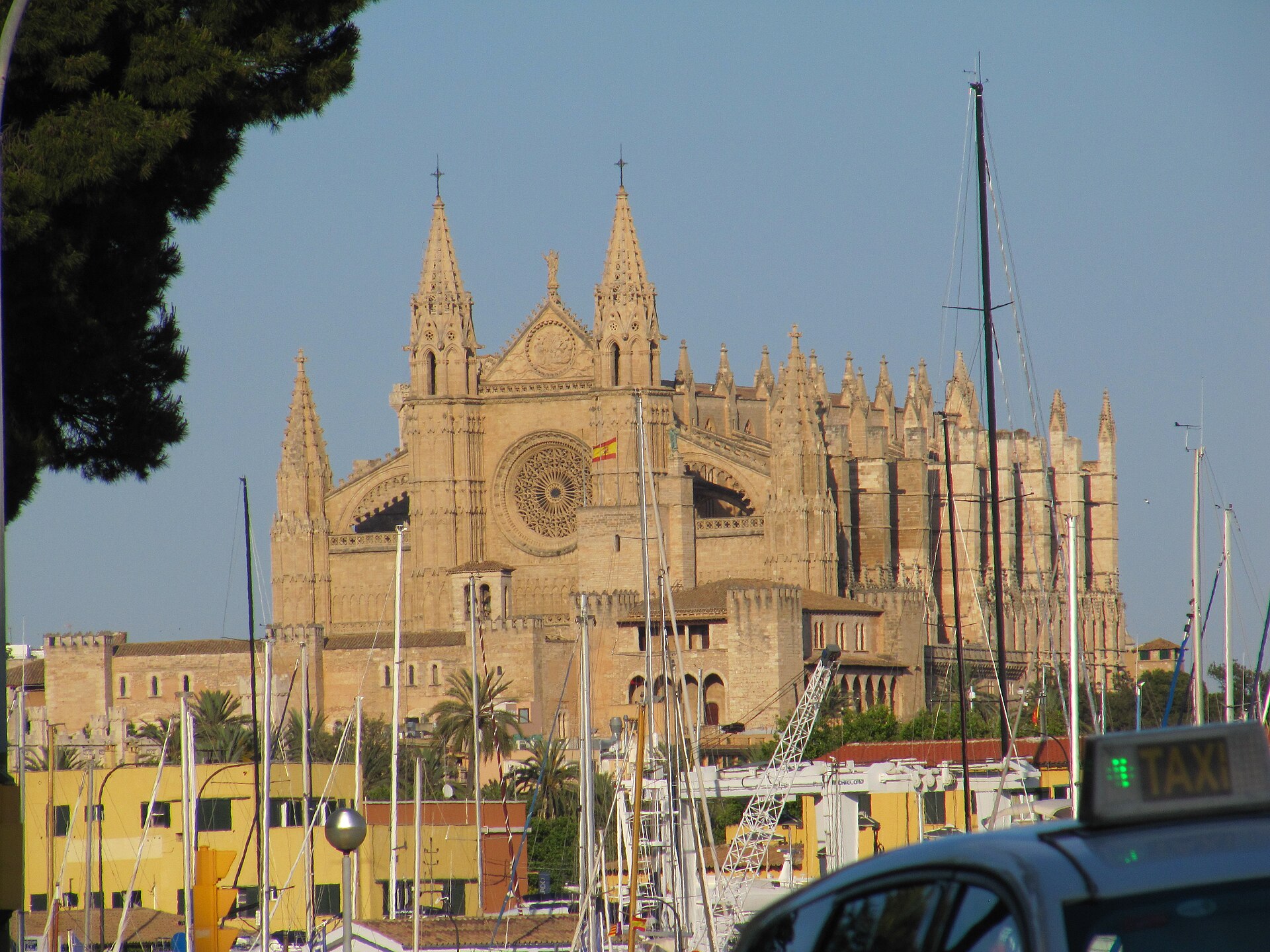
| Palma de Mallorca | 10 h | 17:30 | Estació Marítima is about a 40-minute walk from the centre; Porto Pi is 75–90 minutes. EMT line 1 about €3 | about 8 h in the old town |
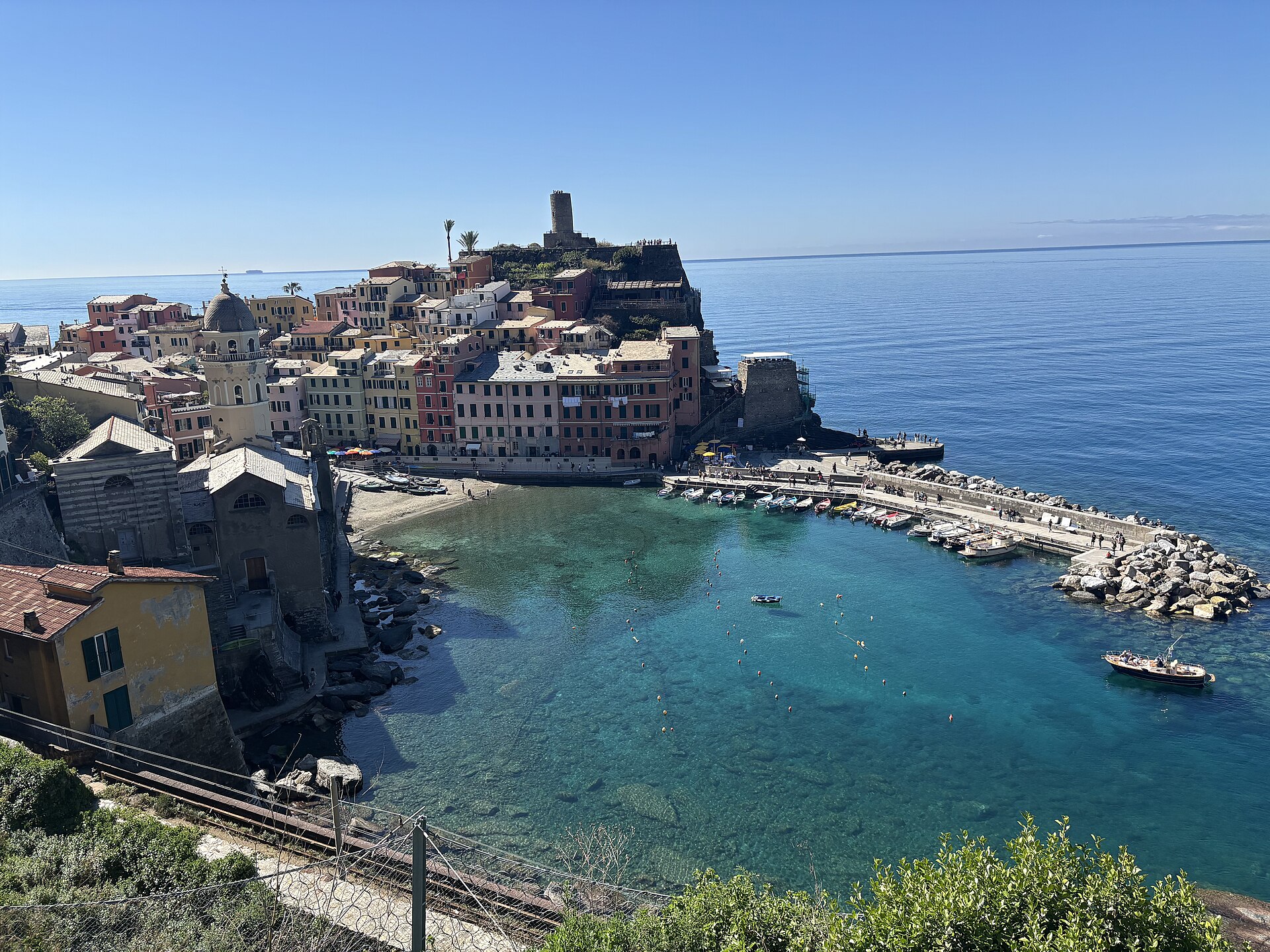
| La Spezia → Cinque Terre | 13 h | 19:30 | Free shuttle from Molo Garibaldi; station is a flat 25-minute walk; first village about 30 minutes by train | about 8.5 h in the villages |
| La Spezia → Florence | 13 h | 19:30 | Roughly 2 h 30 each way door to door | about 6 h in Florence — and you will not see the Uffizi properly |
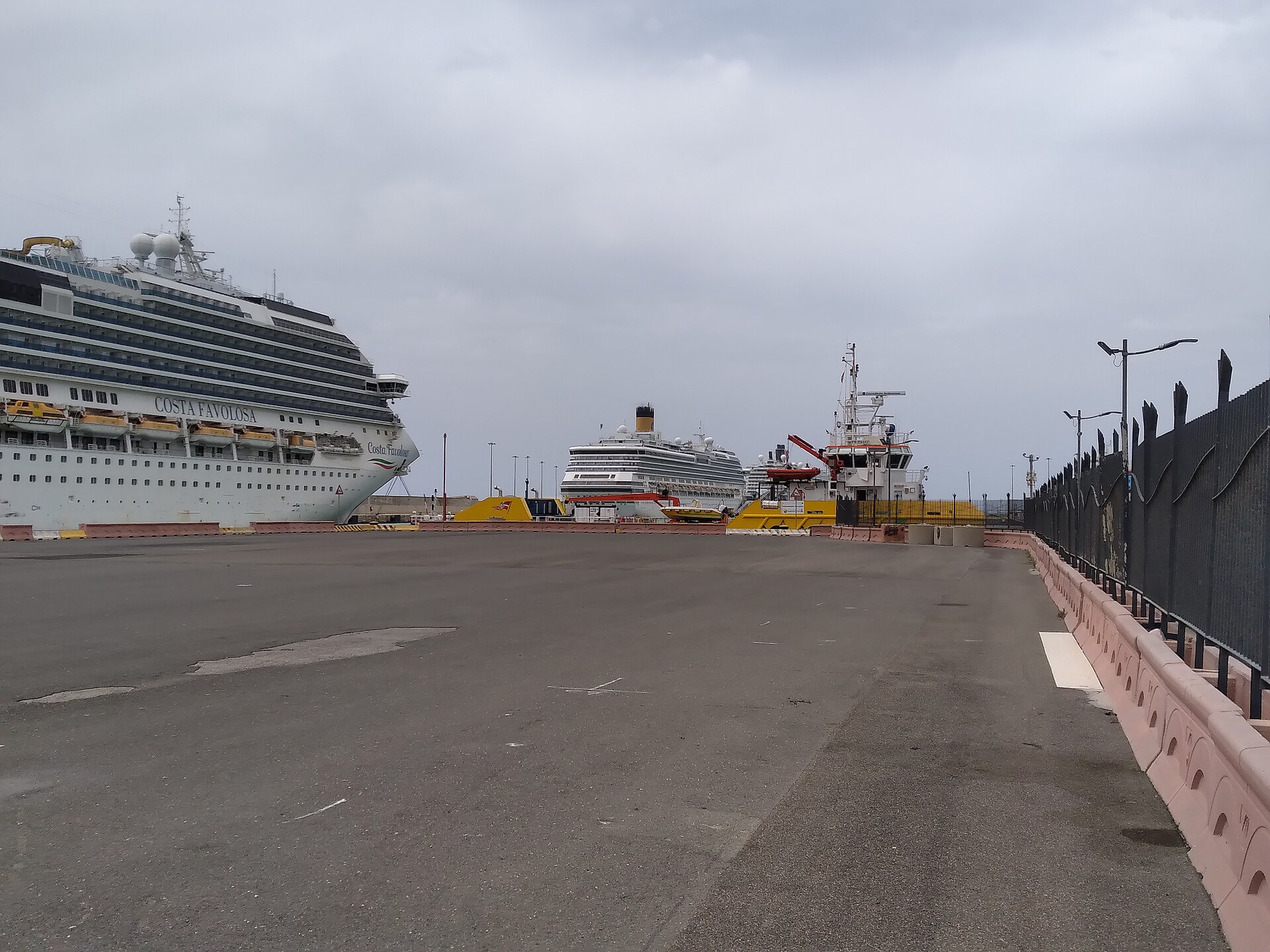
| Civitavecchia → Rome | 13 h | 19:30 | 46 miles (74 km). In-port shuttle, then 20-minute walk or the Argo bus to the station, then 45–59 minutes by train, from about €4.85. Roughly 1 h 45 each way in practice | about 8 h in Rome |
| Naples → Pompeii | 12 h | 18:30 | Stazione Marittima is a 10-minute walk from the centre; Pompeii is 15 miles (24 km) on the Circumvesuviana | about 9 h, or 11 h if you stay in Naples |
| Santorini (tender) | 14 h | 20:30 | Tender to the Old Port, then the cable car €10 one way, or the steps. Queues both ways, often 45–75 minutes each end in high season | about 9–10 h on the island |
| Rhodes | 10 h | 17:30 | Docks; the Old Town is walkable from the berth | about 8.5 h |
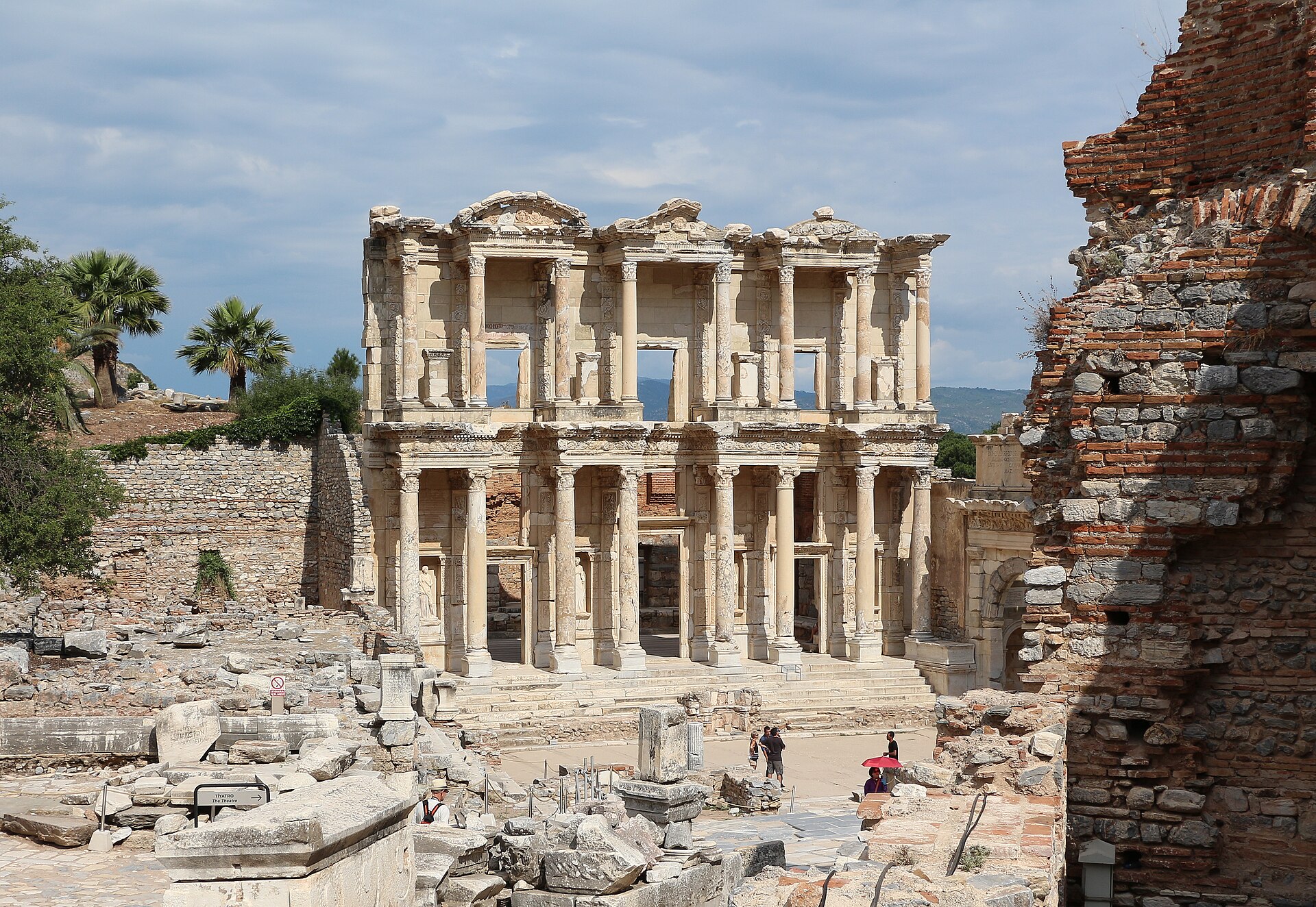
| Kusadasi → Ephesus | 10 h | 17:30 | Ege Port puts you 50 m from town; Ephesus is 11 miles (18 km), 20–25 minutes | about 8.5 h across Ephesus and the town |
| Mykonos | 11 h | 17:30 | Usually docks at Tourlos; Chora is 2–2.5 km. SeaBus €2 one way, about 12 minutes, every 15–30 minutes, 1 April to 31 October | about 9.5 h |
| Bodrum | 9 h | 16:30 | Transport fares here are not published by any source we can verify. Agree a price before you get in | Not stated rather than guessed |
All-aboard math: a worked Rome day from Civitavecchia
Take day five of the Barcelona itinerary above. The ship is alongside 07:00 to 20:00, so all aboard is around 19:30. Here is what the day actually contains if you go to Rome independently.
- 07:15 – gangway opens; walk or take the in-port shuttle to Largo della Pace.
- 07:45 – reach Civitavecchia station, a 20-minute walk from the shuttle drop or six minutes on the Argo bus.
- 08:10 – board a regional train to Roma San Pietro or Termini. Journey 45 to 59 minutes; about 44 services a day; fares from around €4.85.
- 09:15 – arrive in Rome. Metro or walk to your first sight.
- 09:45 to 16:15 – six and a half hours in Rome. That is the Colosseum and the Forum, or the Vatican, or a long walk through the centre. It is not all three.
- 16:30 – board the return train. Target one that arrives by 18:15, not the last possible one.
- 18:30 – back at Civitavecchia station; walk or bus to the port gate.
- 19:00 – aboard, half an hour before all aboard.
Thirteen hours alongside becomes about eight hours in Rome, and that assumes nothing goes wrong. Build in a full hour of slack on any transfer over 30 miles. If you miss the ship because a train was late, getting to the next port is entirely your problem and your expense — which is the one genuine argument for booking the ship’s own excursion on long-transfer days.
Western, Eastern, Adriatic and Grand: the four route families
Almost every Mediterranean sailing belongs to one of four families, and the family decides your flight, your heat exposure, your walking load and how much of your money you spend ashore.
| Family | Usual ports of call | Season | Character | Best for |
|---|---|---|---|---|
| Western Mediterranean | Palma, Marseille, Villefranche, Livorno, La Spezia, Civitavecchia, Naples, Valletta, Ibiza | April–November, plus limited winter | Berthed, big cities, long inland transfers | First-timers, families, US East Coast flyers |
| Eastern Med & Greek Isles | Santorini, Mykonos, Rhodes, Crete, Corfu, Katakolon, Kusadasi, Bodrum | April–October | Short transfers, tendering, heat, per-call levies | Repeat cruisers, ruins-and-beach travellers |
| Adriatic | Dubrovnik, Split, Kotor, Koper, Zadar, Bari, Corfu | May–October | Walk-off ports, walled towns, gentle days | Anyone tired of coaches |
| Combined / grand | West and East in one sailing, 12–21 nights | Spring and autumn | One-way, more sea days, more coastline | People with the vacation days |
The Adriatic is the family most people overlook and, for a certain traveller, the best of the four. Split puts you 800 metres from Diocletian’s Palace on flat ground. Kotor’s quay is 200 to 400 metres from the Sea Gate. Koper, Zadar and Bari are all walkable. If your idea of a good port day is stepping off the ship and being immediately somewhere, the Adriatic beats both headline regions and nobody markets it that way.
Which Mediterranean cruise itinerary is best for a first-timer?
A 7-night Western Mediterranean round trip from Barcelona is the best first Mediterranean cruise. It has dense nonstop air service from North America, almost no tendering, a season running April to November, and a mix of walk-off ports and big-city days. The Greek Isles are the better-looking trip and the harder first one.
That is our opinion, not a fact, and plenty of people would reverse it. The evidence behind it:
| Western round trip from Barcelona | Greek Isles round trip from Piraeus | |
|---|---|---|
| Flights from North America | Dense nonstop service to Barcelona | Fewer nonstops to Athens; most routings connect |
| Tender ports | Usually none | At least one, always Santorini |
| Weather disruption risk | Low | Meltemi wind peaks July–August and cancels tenders |
| Transfer burden | High at Civitavecchia and Livorno, low elsewhere | Low at island ports, high at Katakolon and Piraeus |
| Destination fees | Barcelona €11 short-stay charge | €5–€20 per Greek call depending on port and season |
| Season length | April–November, some winter | Effectively April–October |
| Early starts | Two sea days to recover | Five consecutive port days |
One qualifier. If the Greek islands are the entire reason you are going, do not talk yourself into Spain. Book the Greek week, sail it in late September, and accept the tender risk knowingly rather than discovering it on day two.
How many ports and sea days should you expect?
Expect five or six port days and one or two sea days on a 7-night Mediterranean cruise. That is far more port-intensive than a Caribbean sailing: Norwegian states its ships spend over 90% of their time in port, averaging nearly 11 hours alongside. Longer routes add ports roughly one for every extra night, not one for every two.
The sea day is worth defending rather than resenting. On a five-port week with 07:00 arrivals you will be tired by day four, and the ship’s facilities — which you have already paid for — are only usable on the day you are not sprinting for a train. A Greek itinerary with zero sea days is not a better deal; it is a more demanding one.
| Nights | Ports | Sea days | What it realistically gets you |
|---|---|---|---|
| 3–4 | 3–4 | 0 | Athens plus two or three Greek islands. A taster, or an add-on to a land trip |
| 7 | 5–6 | 1–2 | One region, one homeport, about 40–55 hours ashore in total |
| 10–12 | 7–9 | 2–3 | Often one way; the best value per flight-dollar for North Americans |
| 14 | 9–11 | 3–4 | West and East in one go, or a circumnavigation of Italy |
| 14–16 transatlantic | 5–7 | 5–7 | Atlantic islands, then a few Med ports. About $70–$90 per person per night |
| 21+ | 12–16 | 5–7 | Grand routes; a small, dedicated audience |
Tender count: the itinerary detail that decides your Greek week
A tender port is one where the ship anchors offshore and small boats ferry you in. It matters for three reasons: it costs you an hour or more of your port day at each end, it is the first thing cancelled in bad weather, and it is the part of an itinerary that mobility-limited passengers most often cannot use.
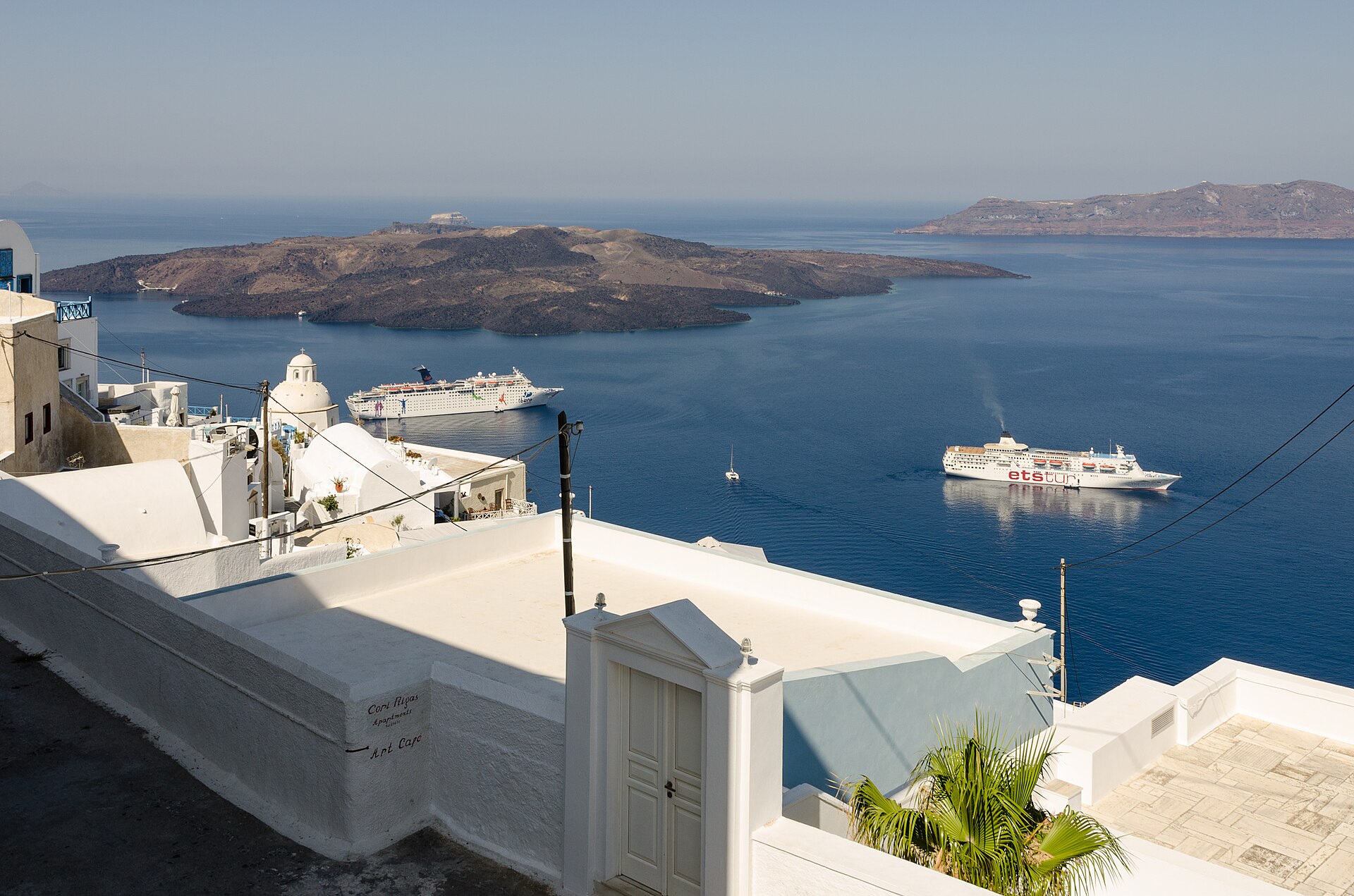
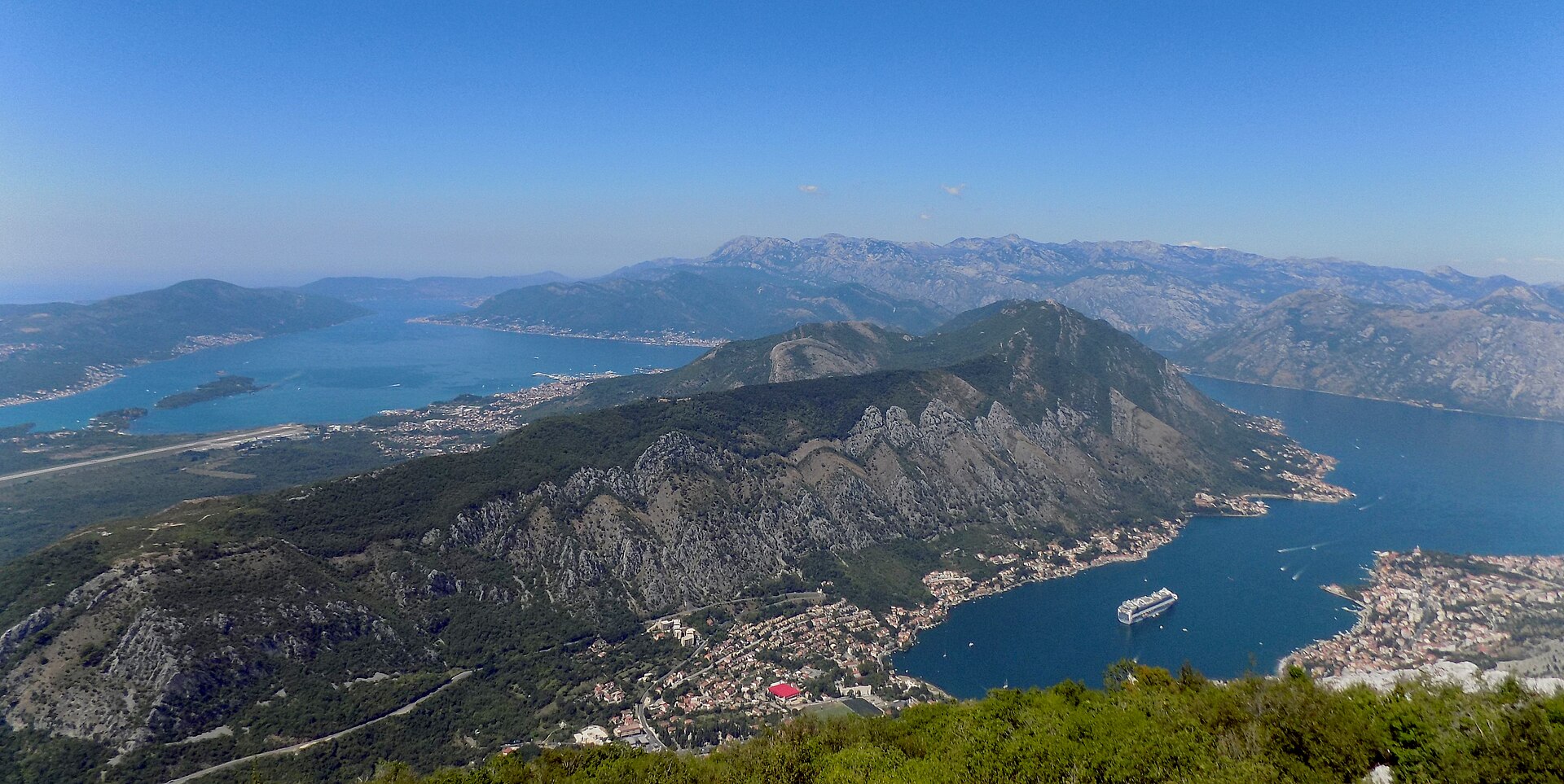
Santorini always tenders, because the caldera is too deep to berth in. Mykonos usually docks at the New Port at Tourlos but tenders on busy days. In the Western Mediterranean, Villefranche tenders, Cannes tenders, and Capri tenders when it appears at all. Kotor’s main quay is usually alongside but ships anchor and tender when berths are full.
The compounding risk is wind. The meltemi — the dry northerly that blows across the Aegean — is most frequent from June to September and at maximum strength and duration in July and August. In mid-August 2026 the National Observatory of Athens recorded gusts above 100 km/h in several Aegean locations, with 93 km/h on Tinos on 14 August and 104 km/h on 15 August. A tender operation stops in conditions a berthed ship shrugs off, which is why Santorini calls are missed far more often than the weather forecast alone would suggest.
So if a tender-free itinerary matters to you — for mobility, for certainty, or because Santorini is the one photograph you want and you would rather not gamble — read the port list before you read the price, and check whether your line publishes berth or anchorage for each call.
Walking load and transfer burden, port by port
Two itineraries with identical port counts can demand completely different amounts of physical effort. This is the information cruise lines are least likely to publish and travellers most often wish they had known.
| Port | Berth to centre | Terrain | Verdict |
|---|---|---|---|
| Split | 800 m to Diocletian’s Palace | Flat | The easiest headline port in the Mediterranean |
| Kotor | 200–400 m to the Sea Gate | Flat | Two to five minutes. Nothing needed |
| Naples | 10 minutes to the centre | Flat, then steep if you go up | Walk off and you are in the city |
| Kusadasi | 50 m to town | Flat | Ephesus is the effort, not the port |
| Rhodes | Walkable to the Old Town | Cobbles | Easy, but the cobbles are punishing in sandals |
| Valletta | 1.5 km, about 15 minutes | Steep | Take the Upper Barrakka lift, about €1 return |
| Barcelona | Moll Adossat 2–3 km to the Columbus Monument | Flat | PortBus €3 one way; the walk is legal but dull |
| Dubrovnik | Port Gruz, 2 miles (3 km) to the Old Town | Flat to the gate, steps everywhere inside | Bus about €4; the wall circuit is a mile and a quarter of unshaded stone |
| Santorini | Tender, then a cliff | Cable car, steps or mule | Cable car €10 one way; queues both directions |
| Corfu | New Port, 2.9–3 km to the Old Town | Flat seafront | About a 30-minute walk, or the in-port shuttle |
| Civitavecchia | 46 miles to Rome | Train | A travel day with a city attached |
| Livorno | 65 miles to Florence; no walking out of the container port | Shuttle then train | The heaviest transfer on most Western itineraries |
| Katakolon | 21 miles to Olympia | Train, about 45 minutes | €10 return; only three services, timed to the ships each morning |
Read that table as a route-building tool. An Adriatic week is four walk-off ports and almost no coach time. A Western week is two magnificent cities reached by an hour and three-quarters of train each way. Neither is better; they are different holidays sold at the same price.
Round trip or one way? The open-jaw question
Round trips are simpler and usually cheaper to fly to. One-ways — Barcelona to Rome, Rome to Athens, Barcelona to Venice-substitute ports — see more coastline, repeat fewer sea days, and are frequently the better itinerary. They need an open-jaw air ticket, which is usually more expensive and occasionally much more expensive.
The sequencing mistake that costs people real money is falling in love with a one-way route and pricing the flights afterwards. Do it the other way round. Price the open-jaw ticket first; if it adds $300 per person over a round trip, the one-way itinerary needs to be worth $300 per person to you, and sometimes it plainly is.
One practical consequence for round trips from a US origin: book at least two nights in the embarkation city before you sail. A cancelled connection on embarkation day means chasing the ship to its next port at your own expense, and no line owes you anything if you booked the flight yourself. Our cost guide puts numbers on both sides of that decision.
Choosing a Mediterranean cruise itinerary by what you want from it
Here is the shortest honest version of this entire page: pick the route family by what you want to do with your days, then pick the length by how many flights you are willing to buy per port day.
| If you want… | Book | Because |
|---|---|---|
| A first Mediterranean cruise | 7-night Western round trip, Barcelona | Dense flights, no tendering, long season |
| Greek islands above all | 7-night Greek Isles from Piraeus, late September | Warmest sea, meltemi easing, crowds gone |
| Minimum walking and transfers | Adriatic, 7–10 nights | Split, Kotor, Koper and Zadar are all walk-off |
| Maximum coastline per flight | 10–14 nights one way, Barcelona to Athens | Eight to eleven ports on one airfare |
| Ruins and archaeology | Eastern or Italy-focused, April–May or October | Ephesus, Olympia and Pompeii are all unshaded |
| The lowest possible price | Transatlantic repositioning, spring or autumn | About $70–$90 per person per night, no red-eye |
| Accessible port days | Western or Adriatic, avoiding tender ports | Tenders are the main accessibility barrier in the Med |
| To do this once and properly | 14 nights, combined West and East | Nine to eleven ports, three or four sea days to recover |
What the 2026 rules do to specific routes
Several things changed recently that make some itineraries materially different from how they were sold two years ago.
- Greek per-call levy. Since 21 July 2025, going ashore in Greece costs €20 per person at Santorini and Mykonos between 1 June and 30 September, €12 in April, May and October, and €4 in winter; other Greek ports are €5, €3 and €1. It is billed to your onboard account and only if you land. A Greek week in July with five Greek calls costs a couple about €110.
- Santorini’s cap. A hard limit of 8,000 cruise passengers a day, set by the Thira Municipal Port Fund under a ranked berth allocation. Scheduled 2026 calls fell to 595 from 728 in 2025, down about 18%. Fewer itineraries include Santorini than did three years ago.
- Dubrovnik’s berthing limits. The 2026 regulations cap simultaneous visitors at 4,000, alongside a long-standing agreement of two ships a day and 5,000 passengers. Some outlets report 8,000; the sources conflict, so treat it as a range.
- Venice. Ships of 25,000 gross tons or more, or over 180 metres, have been barred from the Giudecca Canal since 1 August 2021. Large ships use Marghera or Fusina, and Ravenna and Trieste have become the Adriatic homeports. An itinerary that says “Venice” may mean a coach from Ravenna. A reported Q2 2027 reopening of the Stazione Marittima for smaller ships is unconfirmed.
- Monaco. Premium and luxury vessels only, up to 250 metres and 1,250 passengers. If Monte Carlo is on a big mainstream itinerary, check whether the call is an anchorage off Monaco or a berth at Villefranche.
- Levant and Egypt calls. Major lines suspended calls at Haifa, Ashdod, Port Said and Safaga through 2026. Itineraries listing them for 2027 are not promises; lines re-route with little notice, usually substituting a Greek island or a sea day, entirely at their discretion under the cruise contract.
- Entry paperwork. The EU Entry/Exit System has been fully operational since 10 April 2026 — biometric, nothing to apply for, but it produced real queues at Barcelona, Rome Fiumicino and Athens in summer 2026. ETIAS is scheduled for the last quarter of 2026 at €20; that date has slipped before, so check it.
Are there itineraries you should avoid booking for 2027?
Not avoid, but read carefully. Three categories deserve scepticism before you pay a deposit.
Anything listing Egypt or Israel. Major lines suspended those calls through 2026 and substitutions are at the line’s discretion. If Egypt is the reason for the booking, book a trip that goes to Egypt on purpose.
Anything listing “Venice” without naming the berth. Since the large-ship ban, that may mean Marghera, Fusina, Ravenna or Trieste, and the difference between them is a couple of hours of coach travel.
Seven-night Greek Isles weeks in July and August. Not because they are bad, but because they combine the peak meltemi, the €20 levy tier, the tightest crowd caps and the highest fares in one purchase. The identical itinerary in late September or early October is cheaper, calmer and more likely to actually land at Santorini.
The one thing we would genuinely push back on is booking a 7-night sailing from North America when 10 or 11 nights is available on the same ship for a few hundred dollars more. The flights cost the same either way, and three extra nights buy three extra port days. It is the highest-leverage change most first-time Mediterranean cruisers can make.
Route and operator are not independent choices. Our guide to the best cruise lines for the Mediterranean sets out which ships each line has in the region for 2027 and where they homeport, and explains where a ship’s size stops being a comfort preference and becomes a hard access rule — at Monaco, at Venice and under Santorini’s daily cap.
The Greek Isles family is the one where the route decisions on this page bite hardest, because it is the only region where tendering is routine. Our Greek islands cruise guide takes that week apart in detail — the Santorini anchorage and cable car, the island’s 8,000-a-day cap, the per-call landing fee, and whether the ferries would serve you better than a ship.
Before you choose a Western Med week on the strength of its Italian ports, check how long each call really is against the transfer it needs. Our Italy cruise ports guide sets out the minimum call we think each plan needs, from four hours in Genoa to ten for Florence from Livorno.
If the Western route family is the one you are leaning towards, our Western Mediterranean cruise guide compares four real 2027 routes across Royal Caribbean, Viking, Carnival and MSC, with the ports, the best months and dated fares side by side.
The Adriatic route family is covered port by port in our Croatia and Adriatic cruise ports guide, including Dubrovnik’s time-window scheduling and the dock-or-tender question at Kotor.
Where this guide goes deeper
This page is the itineraries hub. The guides beneath it take single routes and single questions: Western Mediterranean cruise, Eastern Mediterranean cruise, Adriatic cruise itineraries, 7-day Mediterranean cruise, 10-day Mediterranean cruise, 14-day Mediterranean cruise, Mediterranean cruise route map, one-way Mediterranean cruises, transatlantic repositioning cruises and Mediterranean cruise embarkation ports. Each will be linked here as it publishes.
For what these routes cost all-in, see the Mediterranean cruise cost guide. For when to sail any of them, see the month-by-month guide.
Mediterranean cruise itinerary FAQs
What is a typical 7-day Mediterranean cruise itinerary?
Five port days and one or two sea days from a single homeport. A Western week from Barcelona typically calls at Palma, La Spezia, Civitavecchia and Naples; a Greek week from Piraeus typically calls at Santorini, Rhodes, a Turkish port and Mykonos. Both patterns are drawn from real published 2027 sailings, not composites.
How many ports does a Mediterranean cruise visit?
Five or six on a 7-night sailing, seven to nine on a 10- to 12-night one, and nine to eleven on 14 nights. Transatlantic repositioning crossings are the exception: 14 to 16 nights with only five to seven ports, because most of the voyage is at sea.
Which Mediterranean itinerary has the least tendering?
The Adriatic, followed by the Western Mediterranean. Split, Kotor, Koper, Zadar and Bari are berths; so are Barcelona, Naples, Civitavecchia, La Spezia, Palma and Valletta. The Greek Isles are the tender-heavy region, because Santorini always anchors and Mykonos sometimes does.
Is a one-way Mediterranean cruise better than a round trip?
It is usually the better itinerary and the more expensive flight. One-ways see more coastline and repeat fewer sea days; round trips are simpler and cheaper to reach. Price the open-jaw ticket before you commit, because it can add several hundred dollars per person and change which route is actually better value.
How long is a Mediterranean cruise usually in port?
Long. Norwegian says its ships spend over 90% of their time in port, averaging nearly 11 hours alongside. On the two published 2027 sailings on this page, calls run from 9 to 14 hours. What matters is the conversion: 13 hours alongside at Civitavecchia gives you about 8 hours in Rome once transfers and the all-aboard buffer are deducted.
What is the best Mediterranean cruise itinerary for a first-timer?
A 7-night Western Mediterranean round trip from Barcelona. Nonstop flights from North America, almost no tendering, a season running April to November, and two sea days to recover from a run of early starts. If you can stretch to 10 or 11 nights on the same ship, do — the airfare does not change.
Do Mediterranean itineraries still include Venice?
Rarely as a berth in the historic centre. Ships of 25,000 gross tons or more, or over 180 metres, have been barred from the Giudecca Canal since 1 August 2021. Large ships use Marghera or Fusina, and Ravenna and Trieste now act as Adriatic homeports. Check exactly which port an itinerary means before you book it as a Venice trip.
How many sea days will I get, and do I want them?
One or two on a 7-night Mediterranean sailing, three or four on 14 nights. You want at least one. Five consecutive 07:00 port days is genuinely tiring, and the sea day is the only one on which the ship’s facilities — which you have already paid for — get used.
Can I change or skip a port on my itinerary?
You cannot change it, and the line can. Cruise contracts allow itinerary changes at the line’s discretion, and Mediterranean routes are re-timed for weather, port congestion and geopolitics with little notice. You can, of course, stay aboard on any port day — and in Greece, staying aboard means you are not charged the landing fee.
How we researched this guide
The SERP for this query was checked on 13 September 2026. The longest page-one result was a cruise line’s own destination hub at roughly 3,000 words; the strongest editorial page was around 1,800 words and deliberately general. Not one result on page one published a single arrival or departure time, which is why this page is built around two verified schedules instead of archetypes.
The two itineraries were retrieved on 13 September 2026 from published 2027 schedules and are reproduced as scheduled. Cruise schedules change — treat them as the shape of the product, not as a booking. Port distances, transfer times and transport fares come from port authority and operator sources, checked September 2026; where no verifiable source publishes a fare, as at Bodrum and Messina, we have said so rather than estimate. Levy figures come from the Greek cruise passenger fee schedule in force since 21 July 2025 and Barcelona’s published charge, re-checked 11 September 2026. Cap and closure figures come from the Thira Municipal Port Fund’s berth allocation decision, Dubrovnik’s 2026 berthing regulations and the Venice large-ship rules; where sources conflict we give the range. Entry-rule status comes from the European Commission. Site access rules come from the operators, including Pompeii’s own ticket office; homeport information from the Port of Barcelona. Currency conversions use the European Central Bank reference rate of €1 = $1.1592 on 11 September 2026.
The hours-ashore conversions are our arithmetic on published times and verified transfer distances, not measurements we have taken ourselves. We have not sailed both of these itineraries and do not claim to have; where we recommend one route over another, that is our judgement and the reasoning is on the page so you can weigh it differently.
Image credits
| Image | Photographer | Licence |
|---|---|---|
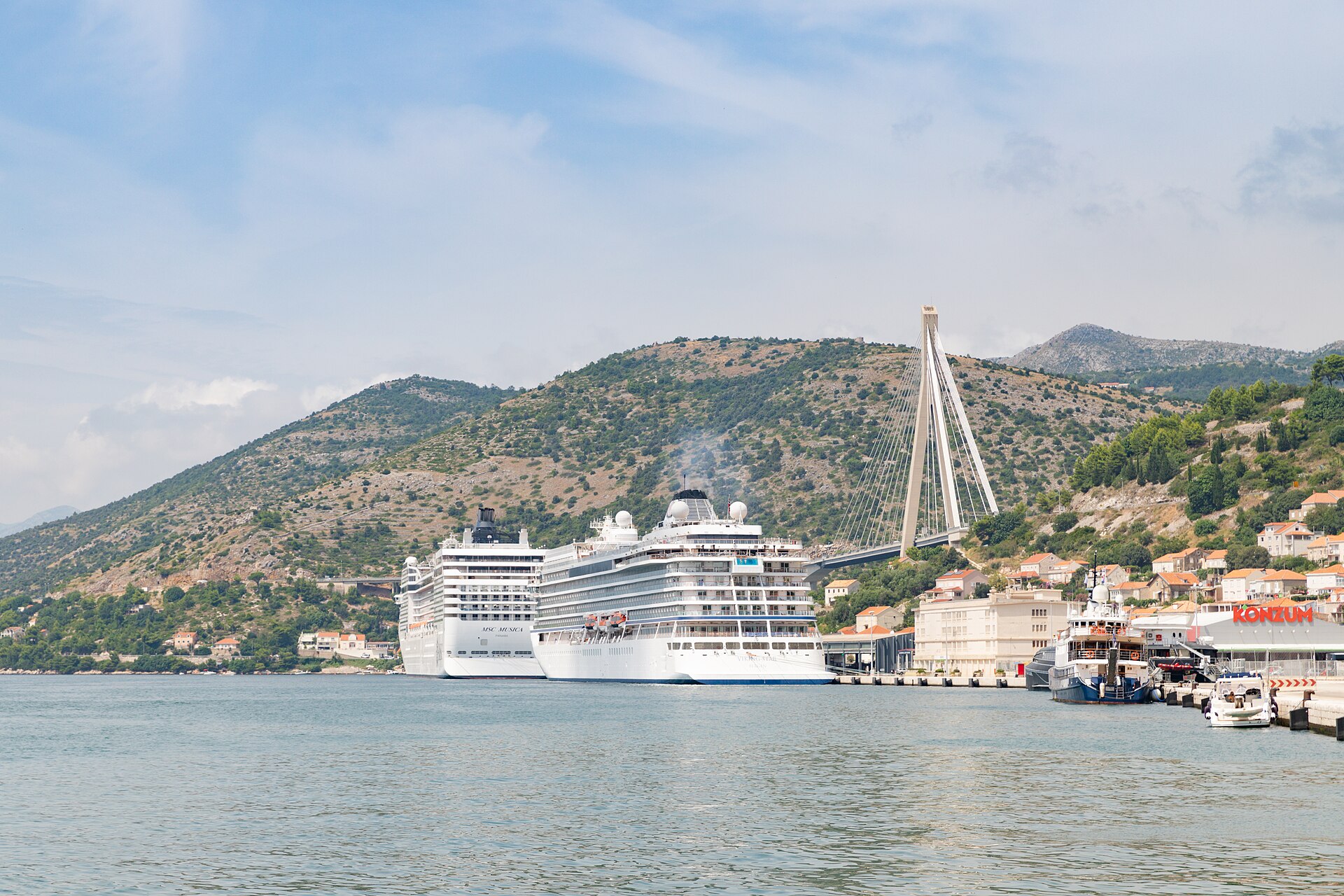
| Cruise ships at Port Gruz, Dubrovnik | dronepicr | CC BY 2.0, via Wikimedia Commons |
| Vernazza harbour, Cinque Terre | Mathieu Chollet | CC BY-SA 4.0, via Wikimedia Commons |
| Palma Cathedral across the marina, Mallorca | Kroksik | CC BY-SA 4.0, via Wikimedia Commons |
| The Library of Celsus, Ephesus | Bernard Gagnon | CC BY-SA 3.0, via Wikimedia Commons |
| Port of Civitavecchia | Captain Raju | CC BY-SA 4.0, via Wikimedia Commons |
| Cruise ships in the Santorini caldera | Norbert Nagel | CC BY-SA 3.0, via Wikimedia Commons |
| Bay of Kotor, Montenegro | Milica Buha | CC BY-SA 4.0, via Wikimedia Commons |
Published 14 September 2026. Schedules, fees and port rules were checked on 13 September 2026 and will change — confirm anything you are about to book.