A wheelchair accessible Mediterranean cruise is entirely possible, and plenty of wheelchair users take one, but it works only if you choose the itinerary by its docked ports rather than its famous names. Big modern ships are well adapted, with accessible cabins, lifts and ramps. The hard part is ashore: tenders that will not carry wheelchairs, cobbled old towns, steep hill towns, and sights reached by steps.
That is the honest summary, and it is more useful than the two versions you usually hear — that cruising is the perfect holiday for wheelchair users, or that Europe is impossible. A cruise ship solves the things that make independent European travel with a wheelchair exhausting: packing and unpacking, inaccessible hotels, finding step-free restaurants every night. The Mediterranean then hands you ports that range from the flat, lift-served waterfronts of Barcelona and Malaga to Santorini, where the ship always anchors and the town sits on top of a cliff. This guide rates the ports, explains the tender rules, sets out step-free access at the Acropolis, the Colosseum and Pompeii, and works through a port day against the all-aboard clock. It is part of our wider guide to planning a Mediterranean cruise.
Wheelchair accessible Mediterranean cruise planning at a glance
| Can you do it? | Yes. Choose an itinerary of docked ports on a large, modern ship, and book an accessible cabin early |
| The one rule that matters | Docked ports are usually manageable; tender ports often are not. Norwegian, for example, does not transfer guests to tenders in wheelchairs, or carry wheelchairs and scooters of 100 lb or more |
| Easiest ports | Barcelona, Malaga, Cadiz, Split, Naples, Valencia, and Monaco when the ship docks |
| Hardest ports | Santorini (always tenders, then a cliff), Sorrento, Amalfi, Capri, Portofino, Villefranche, and the upper towns of Kotor, Mykonos and Bonifacio |
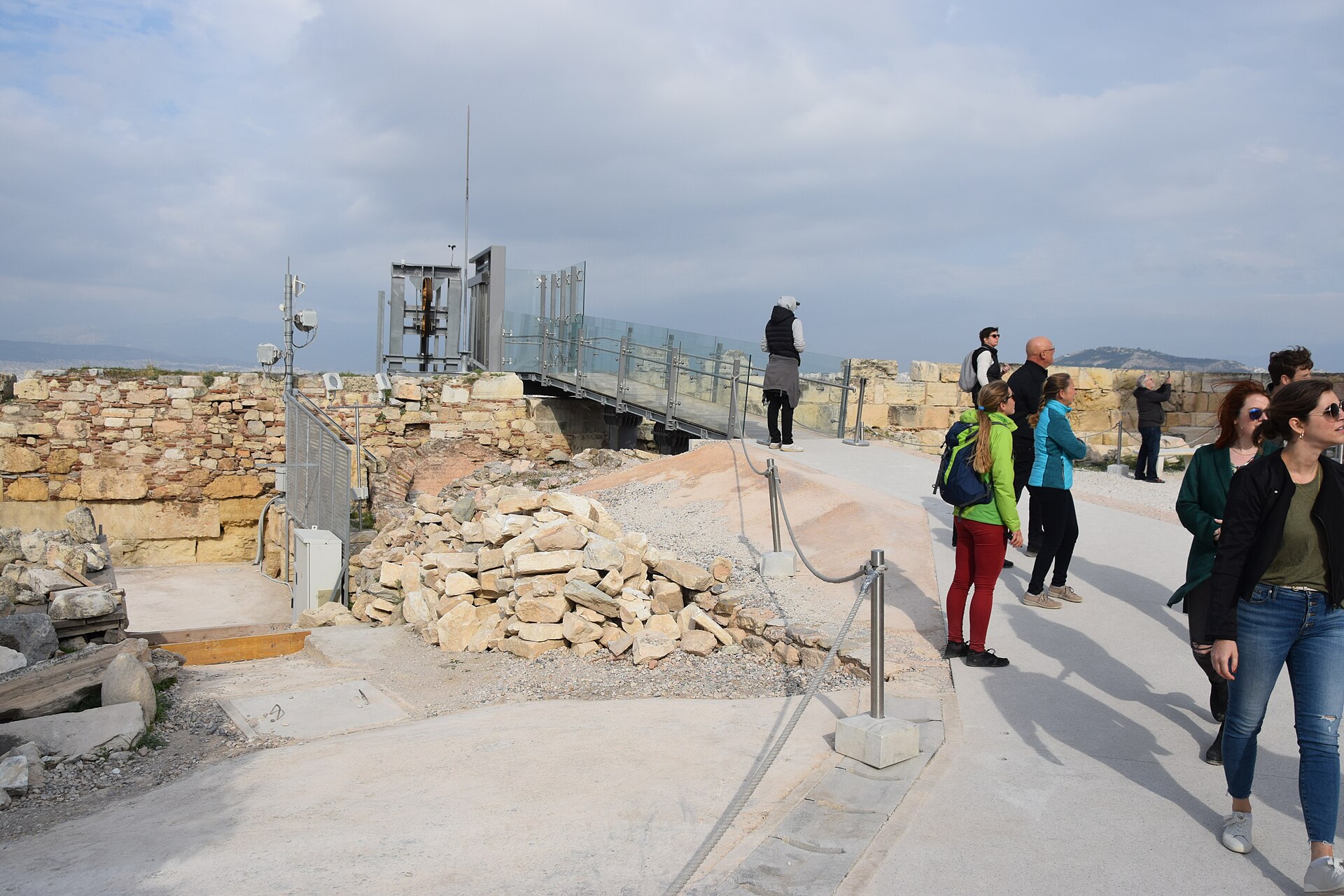
| Headline sights | The Acropolis has had a lift for disabled visitors since December 2020. The Colosseum has lifts to its first and second levels. Pompeii has a 3.5 km step-free route. All three admit disabled visitors and one companion free |
| Tell the line early | Norwegian asks for at least 45 days’ notice of access needs, 90 for sign-language interpreters; other lines set similar deadlines |
| Flights | EU airports must provide free assistance to passengers with reduced mobility; request it at least 48 hours before you fly |
| Transport ashore | Pre-booked accessible vans with ramps or lifts are the reliable option for long-transfer ports; accessible taxis exist in the big cities but not everywhere |
Can you go on a Mediterranean cruise in a wheelchair?
Yes. Large modern cruise ships have accessible cabins, lifts, ramps and accessible public toilets, and most big Mediterranean ports dock alongside a quay. The limits are tender ports, which many lines will not let wheelchair users reach in their chairs, and old towns built on hills, steps and cobbles.
It helps to separate the trip into three parts, because each has a different answer.
- The ship is the easy part, if you choose well. Modern ships are designed with accessibility in mind: wide corridors, banks of lifts, ramps to most outdoor decks, accessible seating in theatres, and pool hoists on many ships. Older and smaller ships can be much harder, and some sailing ships and small yachts have no lifts at all.
- Getting ashore is where plans succeed or fail. At a docked port you roll down a gangway onto the quay. At a tender port you must transfer from the ship into a small boat and then onto a landing stage, and the line may refuse if you cannot step, if your chair is too heavy, or if the sea is too rough.
- The port itself varies more in the Mediterranean than anywhere else on earth. Barcelona is flat, with lowered curbs and an accessible metro. Kotor’s old town is flat but paved in polished stone. Santorini’s Fira sits on a clifftop reached by a cable car or hundreds of steps.
The Mediterranean has one natural advantage worth knowing: its tides are small. In much of Northern Europe, a gangway that is gentle at one state of the tide can be steep a few hours later. In most Mediterranean ports the change is modest, although the gangway angle still depends on which deck it is rigged from and on the height of the quay. It is worth asking the guest services desk, the evening before each port, which deck the gangway will be on.
Docked or tender: the question that decides every port day
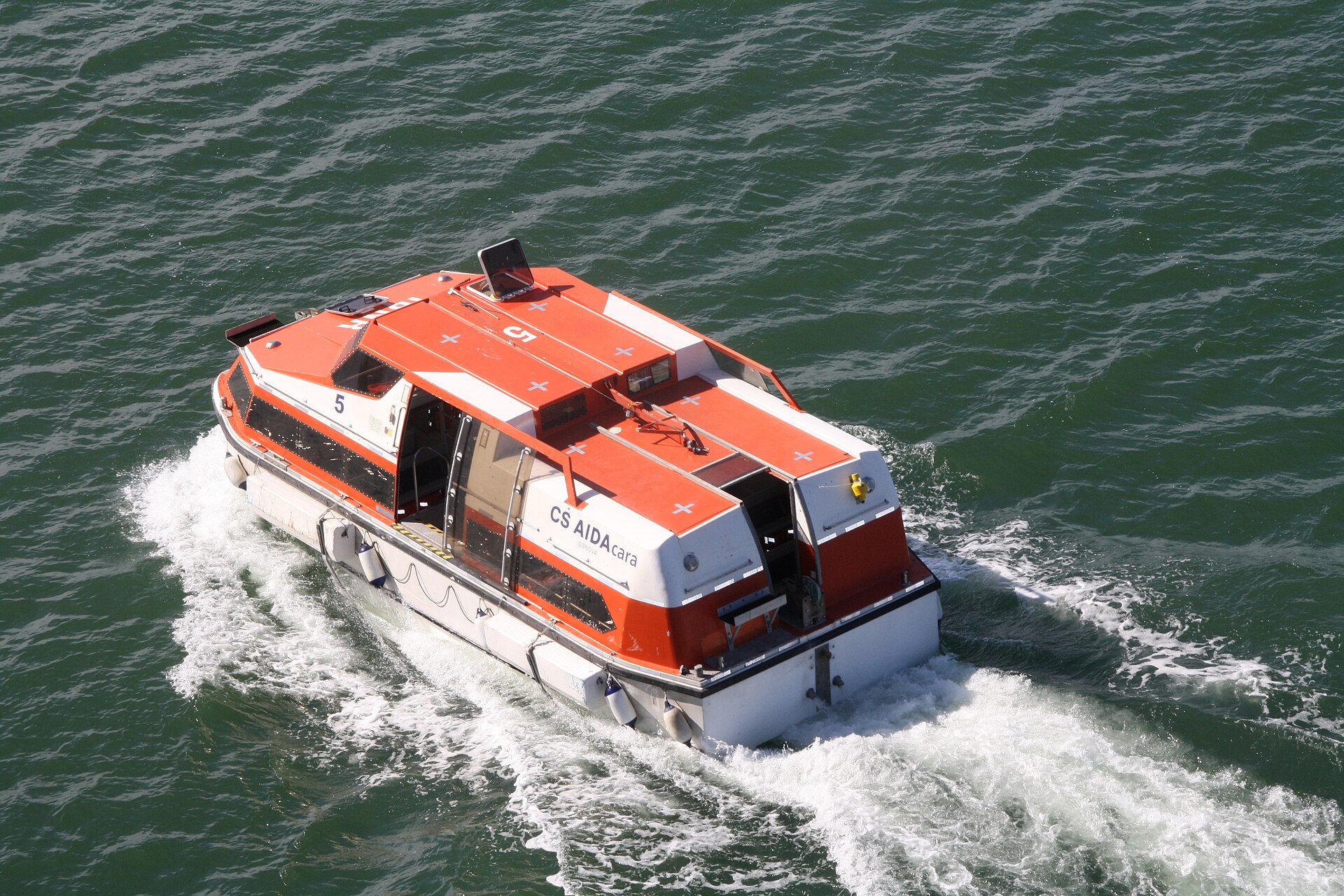
A tender is the small boat, often one of the ship’s own lifeboats, that carries passengers ashore when the ship anchors offshore instead of tying up at a pier. For most passengers it is a mild inconvenience. For a wheelchair user it is frequently the end of the port day, and the lines say so plainly.
Norwegian Cruise Line’s accessibility guidance is typical of the industry and unusually clear. To protect guests and crew, wheelchairs may not be used to transfer from the ship to a tender, and wheelchairs and scooters weighing 100 lb or more are not transferred from ship to tender or from tender to shore. Guests who can step into the tender, with or without help, are more likely to be able to go ashore. The line also warns that tendering and gangways may not be accessible at the time a guest wants, or at all. Travel agents who specialise in accessible cruising add that crew cannot lift passengers for safety reasons, and that sea conditions decide on the day: a transfer that is possible in a flat calm may be refused in a swell.
In practice this means four things for planning.
- Count the tender ports before you book. An itinerary with two tender ports out of six is a very different trip from one with none. Santorini always tenders. Villefranche, Portofino, Sorrento, Amalfi, Capri and Cannes usually do. Kotor, Mykonos and Monaco dock when a berth is free and tender when it is not.
- Treat “sometimes tenders” as “may tender”. Ports that dock only when a berth is free will tender on a busy day, and you will not know until close to the date.
- Decide whether you can step. If you can take a few assisted steps and use a lightweight folding chair ashore, many tender ports become possible in calm weather. If you cannot, plan to stay aboard on tender days and enjoy a quiet ship.
- Keep the scooter for docked ports. A heavy scooter that is perfect in Barcelona stays aboard at Santorini under rules like Norwegian’s. A folding manual chair as a second device widens your options.
The full practical guide, Tendering with a Wheelchair or Mobility Scooter in the Mediterranean, will compare each line’s tender rules as they publish them.
Which Mediterranean ports are most accessible?
Barcelona, Malaga, Cadiz, Valencia, Split, Naples and Monaco are among the most accessible Mediterranean cruise ports: all dock, most sit close to flat waterfronts, and several have lifts or accessible shuttles. The least accessible are the tender and clifftop ports, led by Santorini, Sorrento, Amalfi, Capri and Portofino.
The table below rates the ports most often visited on Mediterranean itineraries. The ratings are our own judgement, built from published port logistics and accessibility guidance; they assume a manual or power wheelchair user who cannot manage steps. Terrain descriptions and transport options are as of September 2026. Where we could not confirm that a shuttle or taxi service is wheelchair-accessible, the table says so.
| Port | Dock or tender | Ship to town | Terrain and step-free notes | Our rating |
|---|---|---|---|---|
| Barcelona | Dock | Moll Adossat 2–3 km from the Columbus Monument, by port shuttle bus; World Trade Center berths about 10 minutes on foot | Flat waterfront and La Rambla; lowered curbs; a largely accessible metro; accessible beach facilities at Nova Icària | Easy |
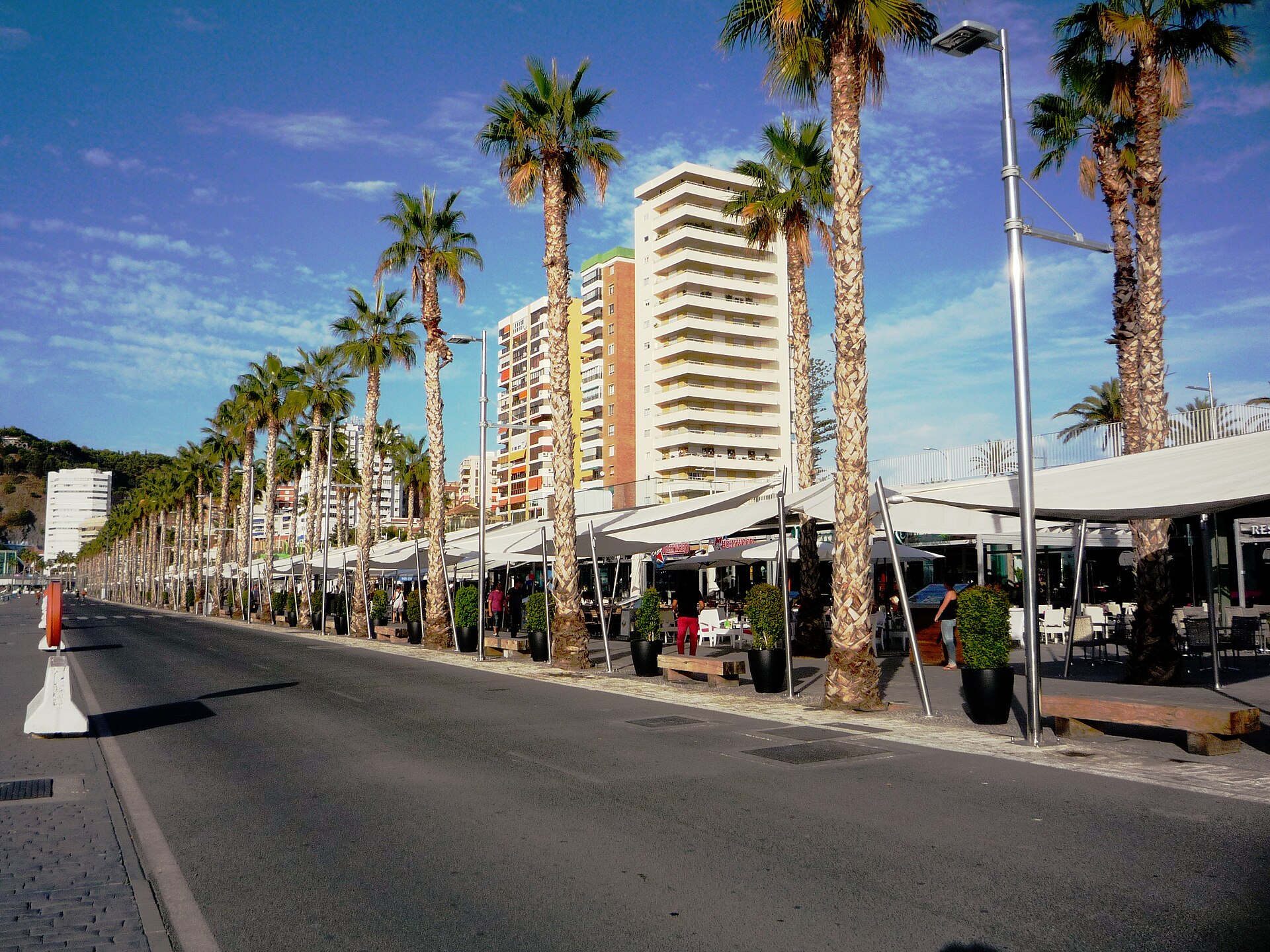
| Malaga | Dock | Centre about 2 km, a flat 15-minute walk along the Muelle Uno promenade | Flat promenade and old-town core; the Alcazaba and Gibralfaro are on a hill | Easy |
| Cadiz | Dock at a central pier | The old town begins at the port | Flat, compact and walkable; Seville is 75 miles away by train or coach | Easy |
| Valencia | Dock | Terminals 3–4 km from the centre; an accessible shuttle, at extra cost, when ships berth on the industrial side | Flat city with lowered curbs | Easy with transport |
| Split | Dock alongside | Diocletian’s Palace 800 m on flat ground | Flat Riva promenade; the palace lanes are polished stone with some steps | Easy to manageable |
| Naples | Dock at Stazione Marittima | City centre about 10 minutes on foot | Flat waterfront; the historic centre is crowded, uneven and steep in places; Pompeii has a step-free route | Manageable |
| Monaco | Docks when the berth is free; tenders otherwise | A flat 500 m walkway and four lifts from the cruise berth towards Monaco-Ville | Compact; lifts and accessible buses; a tender day is a different story | Easy docked, hard tendered |
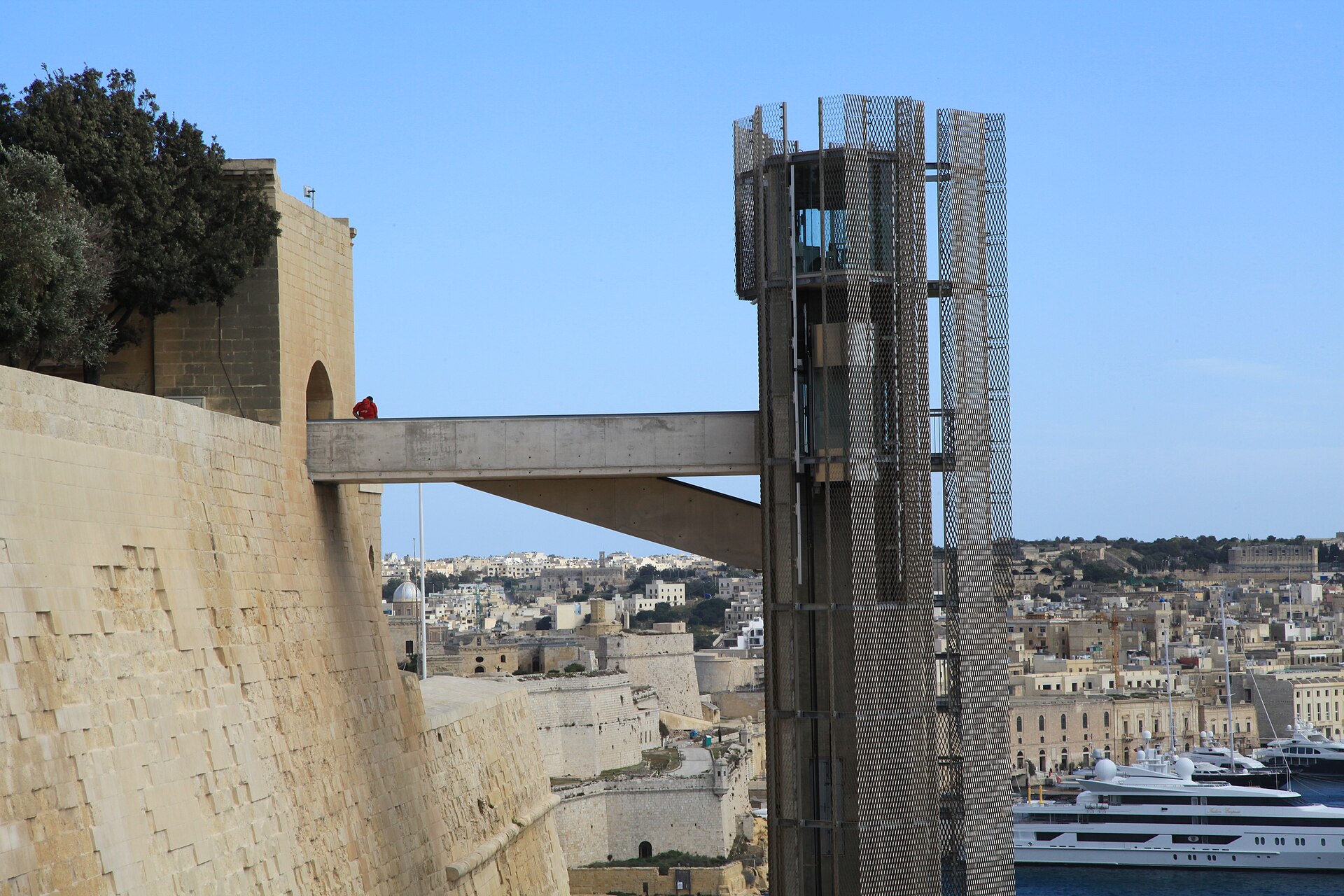
| Valletta | Dock at the Valletta Waterfront | City about 1.5 km and uphill; the Barrakka Lift rises from the harbour to the Upper Barrakka Gardens, about €1 return | A grid of steep streets, some of them stepped; the port area itself has ramps and accessible toilets | Manageable |
| Civitavecchia (Rome) | Dock, with a free in-port shuttle | Rome 46 miles away | Rome has cobbles, crowds and stepped piazzas, but the Colosseum has lifts; an accessible van is the reliable transfer | Manageable with a van |
| Livorno | Dock in the container port | You cannot walk out; port shuttles are not always wheelchair-accessible | Pisa’s Field of Miracles is flat (the tower itself is steps only); Florence is 65 miles away | Manageable with a van |
| Piraeus (Athens) | Dock | Athens 7 miles away | Pre-bookable wheelchair taxi vans; the Acropolis lift for disabled visitors | Manageable with a van |
| Kusadasi | Dock at Ege Port | Town centre about 50 m | The town is easy; Ephesus is 11 miles away on sloping, uneven marble streets | Easy in town, hard at Ephesus |
| Dubrovnik | Dock at Gruz; tenders when full | Old Town 2 miles by bus or taxi | The main street, the Stradun, is flat; side streets climb in steps; the city walls are steps throughout | Manageable |
| Kotor | Dock or tender | Sea Gate 200–400 m | Flat but cobbled old town; the fortress is 1,350-odd steps | Manageable docked, hard tendered |
| Mykonos | Usually docks at the New Port; tenders on busy days | Chora 2–2.5 km by SeaBus; the accessibility of the SeaBus boats is not published | Narrow lanes with steps and whitewashed ledges | Hard |
| Villefranche | Tender | Station a 10-minute walk uphill | A steep little town; Nice and Monaco by train | Hard |
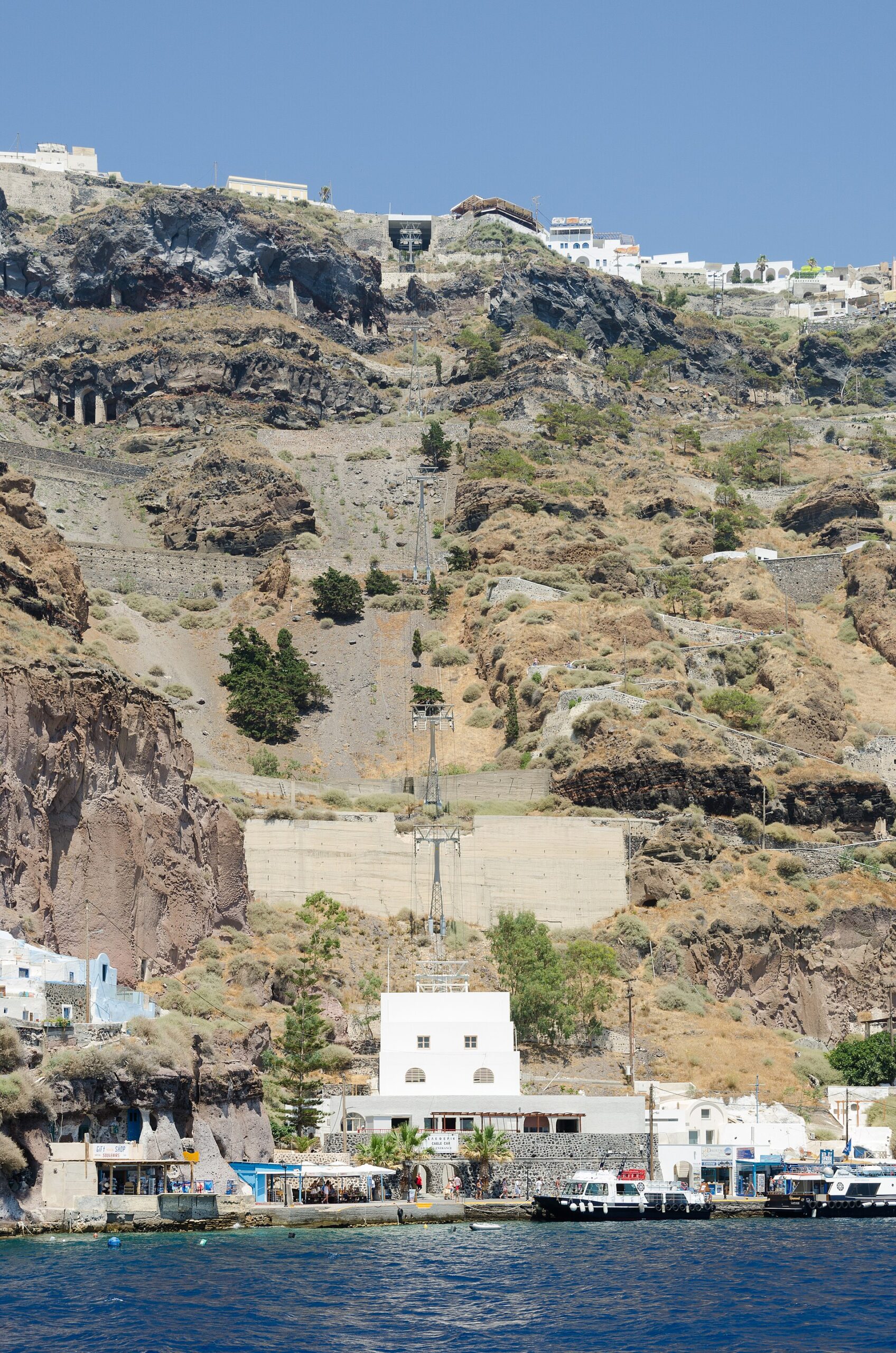
| Santorini | Tender, always | The Old Port sits at the foot of the cliff; Fira is reached by cable car or by the steps | Clifftop towns of steps and narrow lanes | Very hard |
| Sorrento, Amalfi, Capri, Portofino | Tender | Sorrento is about 200 steps up from the landing | Steep coastal towns built into cliffs | Very hard |
Two patterns stand out. The Spanish ports are the Mediterranean’s most accessible group, because they combine docked berths, flat waterfronts and modern city infrastructure; our Spain and Portugal cruise ports guide covers each in detail. And the ports with the most famous names are often the least accessible, because the reason they are beautiful — cliffs, hills, tiny harbours — is the reason ships anchor off them. The full ranking of every port, Wheelchair Accessible Mediterranean Cruise Ports: Every Port Rated, is in preparation.
The hardest ports, and what to do instead
Some of the Mediterranean’s best-known ports are close to impossible for a wheelchair user, and it is kinder to know that at the booking stage than on the day.
Santorini is the hardest of all. Ships always anchor in the caldera, so the day begins with a tender; the Old Port is a narrow quay at the foot of a cliff; and the town is reached by a cable car or by several hundred steps. We could not confirm whether the cable car carries wheelchairs, and even at the top, Fira and Oia are towns of steps and narrow lanes. Our advice is to treat Santorini as a day to enjoy from the ship: the sail-in and the view of the caldera from an upper deck are among the finest in the Mediterranean, and you do not need to go ashore to see them.
The Amalfi Coast and Capri are tender ports built into cliffs. From Naples, a docked port, the Amalfi Coast can be seen by accessible van along the coast road, and the views from the road are the point of the drive; getting down into Positano or Amalfi town is another matter. Portofino tenders into a tiny harbour; the neighbouring docked ports of Genoa and La Spezia are more realistic bases, though the Cinque Terre villages above La Spezia are steep. Villefranche tenders, but Nice and Monaco are more accessible, and some lines’ shore excursions use accessible coaches from the landing.
For each of these, the alternative is usually the same: stay aboard and enjoy a quiet ship, or pick an itinerary that visits the region from a docked port instead. A Western Mediterranean itinerary through Barcelona, Palma, Marseille, Civitavecchia, Naples and Valletta, for example, docks at every port.
Which cabin and ship should a wheelchair user book?
Book a fully accessible cabin, with a roll-in shower, wide doors and a turning circle, on a large modern ship, as early as possible, because accessible cabins are few and sell out first. Check whether the line distinguishes wheelchair-accessible cabins from “ambulatory” cabins with grab bars but no roll-in shower.
Accessible cabins are a small share of any ship’s inventory, and on popular Mediterranean summer sailings they are often the first cabins to go. What a fully accessible cabin typically offers:
- wider doors without raised sills, and space to turn a wheelchair beside the bed;
- a roll-in shower with a fold-down seat, a hand-held shower and grab bars;
- a lowered wardrobe rail, safe and controls within reach;
- on balcony cabins, a ramp over the balcony threshold.
Two words of caution. First, cabin categories vary between lines, and some lines sell “ambulatory accessible” cabins designed for guests who walk with difficulty rather than for wheelchair users; read the description and, if in doubt, ask for the cabin’s measurements. Second, ship choice matters as much as cabin choice. Large ships built in the last fifteen years or so generally have more accessible cabins, more lifts and wider corridors. Small luxury ships reach more intimate ports but often tender more and have fewer adapted cabins, and sailing ships can have steep stairs and no lifts at all. Our coming guide, Best Cruise Lines for Wheelchair Users in the Mediterranean, will compare the lines’ accessible cabins and policies; for the lines as a whole, see our guide to the best Mediterranean cruise lines.
Once you have booked, tell the line’s access or special needs department everything, in writing: the size and weight of your wheelchair or scooter, whether you can step, whether you need a shower chair, raised toilet seat, bed rails, a hoist, oxygen or refrigerated medication. Norwegian asks for at least 45 days’ notice, and 90 days for sign-language interpreters; other lines set their own deadlines, and earlier is always better.
The big sights step-free: Acropolis, Colosseum and Pompeii
The three most visited archaeological sites on Mediterranean cruises have all invested in step-free access, and all three admit disabled visitors and one companion free. None of them is effortless, and each has limits worth knowing before you plan the day around it.
| Site | Step-free access | Limits | Entry |
|---|---|---|---|
| Acropolis, Athens (from Piraeus) | A lift on the north face, new in December 2020, reserved for disabled visitors, plus paved paths on the summit and accessible toilets at the entrance and on top | Call ahead: visitors are advised to confirm lift access the day before. Parts of the summit remain uneven | Free for visitors with a certified disability of 67% or more and one companion, with ID and a disability certificate |
| Colosseum, Rome (from Civitavecchia) | Lifts from the ground floor to the first and second levels, taking two wheelchairs at a time | The underground chambers and the highest tiers are not accessible; lift queues at busy times | Free for disabled visitors and one companion, with disability documentation and a passport |
| Pompeii (from Naples) | “Pompeii for All”, a route of about 3.5 km from the Piazza Anfiteatro entrance to the Sanctuary of Venus, leaving by a lift at Piazza Esedra; about two hours | Some ramps exceed an 8% gradient, and there are small steps and old, uneven paving on the route | Free for disabled visitors and a companion, with documentation; wheelchairs can be borrowed at the main entrances |
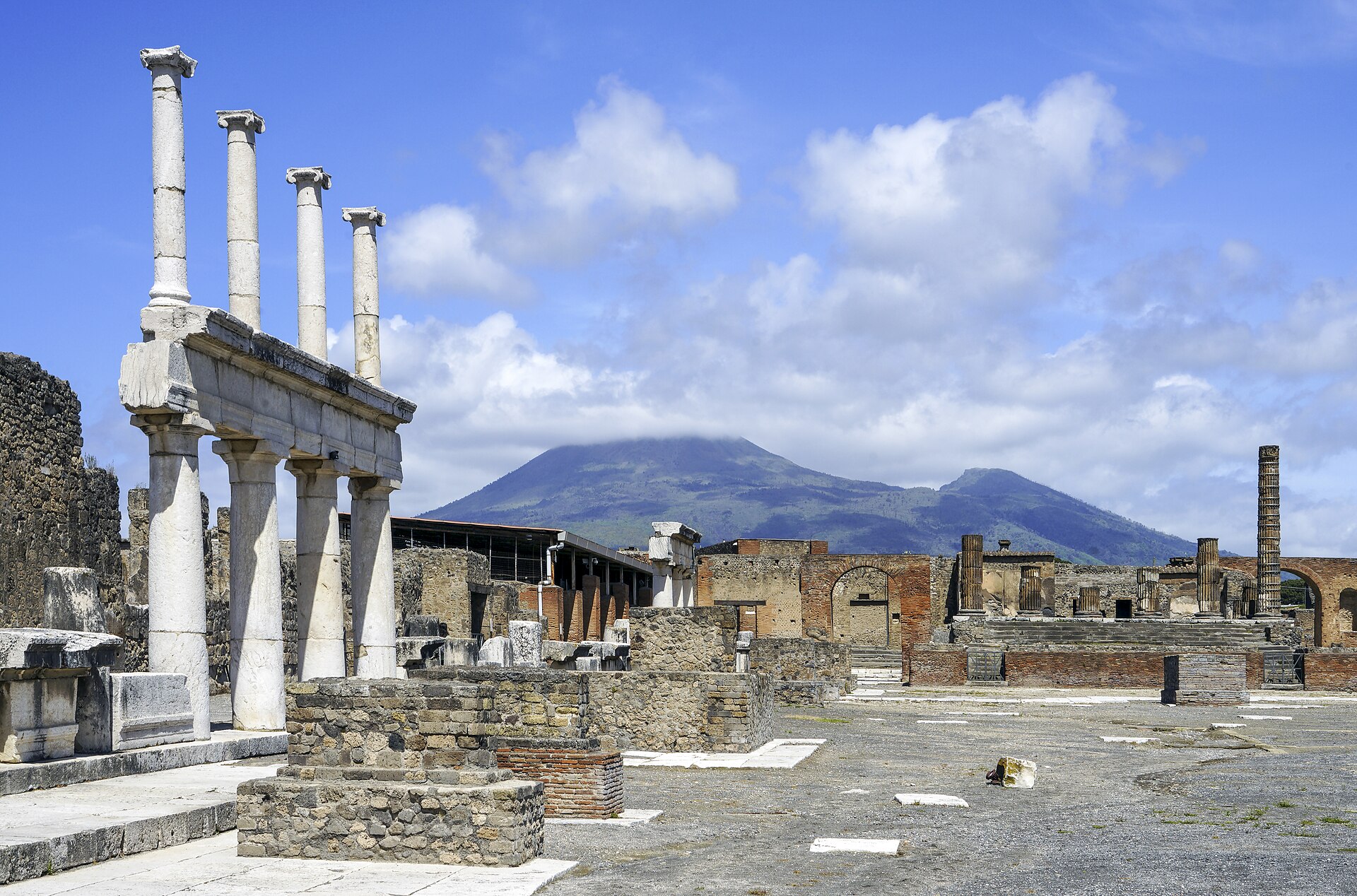
Two practical notes. Lifts at archaeological sites can be taken out of service for weather or maintenance, which is why the advice to call ahead matters; plan the Acropolis for the morning and keep the Acropolis Museum, which is fully accessible and air-conditioned, as the fallback. At Pompeii, the accessible route starts at the Piazza Anfiteatro entrance, at the eastern end of the site and away from the Circumvesuviana station most visitors use at Porta Marina, so arrive by accessible van rather than by train. The excursion-level detail will be in Wheelchair Accessible Shore Excursions in the Mediterranean, and the Rome day in Wheelchair Accessible Rome from Civitavecchia: Vatican and Colosseum Step-Free.
All-aboard math for a wheelchair user: Rome from Civitavecchia
All aboard is the time by which everyone must be back on the ship, usually 30 minutes before departure. For a wheelchair user the arithmetic is the same as everyone else’s, with two differences: the transfer should be a pre-booked accessible van rather than the train, and the buffer should be bigger, because lifts, gangways and security queues are slowest when everyone returns at once. Here is a typical 08:00 to 17:00 call, with all aboard at 16:30.
| Time | What is happening | Cumulative |
|---|---|---|
| 08:00 | Ship alongside at Civitavecchia | — |
| 08:45 | Off the ship once the first rush has cleared and the gangway is set; meet the accessible van at the pickup point the operator has confirmed | 45 min |
| 09:00 | Van departs for Rome, 46 miles away. Allow 75 to 90 minutes, depending on traffic | 1 h |
| 10:30 | Drop-off near the Colosseum; accessible entrance, then the lift to the first and second levels | 2 h 30 |
| 10:30–13:30 | Time in Rome: about three hours. The Colosseum, a step-free lunch, and the view over the Forum from the accessible viewpoints. Not the Vatican as well | — |
| 13:30 | Latest safe departure from central Rome | — |
| 15:00 | Back at the port, allowing for traffic | — |
| 15:30 | Back aboard, an hour before all aboard at 16:30 | — |
Three hours in Rome is enough for the Colosseum done properly, and not for much else. That is the honest answer, and it is the same answer we give every passenger at Civitavecchia: one headline sight per port day. If the Vatican matters more to you than the Colosseum, swap them, but do not try both. The general version of this timeline, by train, is in our main Mediterranean cruise planning guide.
Should you book accessible shore excursions through the ship?
At long-transfer ports, yes, if the ship offers a genuinely accessible tour, because the ship waits for its own excursions. At walkable, docked ports, you can often do better independently. Always ask exactly what “accessible” means: a lift-equipped vehicle, or a coach with steps and a helpful driver.
Cruise lines grade their excursions by activity level, and many offer tours described as suitable for guests with limited mobility. Read the description closely. Some are built around a wheelchair-accessible vehicle with a ramp or lift; many are simply “panoramic” coach tours with little walking, which is not the same thing if you cannot climb the coach steps. Ask the shore excursions desk, before you sail if possible, whether the vehicle has a lift or ramp and whether the stops are step-free.
The alternative is a private accessible van with a driver, or a guide who specialises in accessible travel, booked in advance. For long transfers such as Rome, Florence and Athens, this is often the best option: door-to-door, at your pace, with a vehicle designed for your chair. The price is higher per person than a ship’s coach, but for two or three travellers sharing a van it can be comparable to two ship’s tickets. What you lose is the ship’s promise to wait if you are late, so build in a generous buffer, as in the timeline above, and choose an operator with a return-to-ship guarantee. Our shore excursions guide covers how those guarantees work.
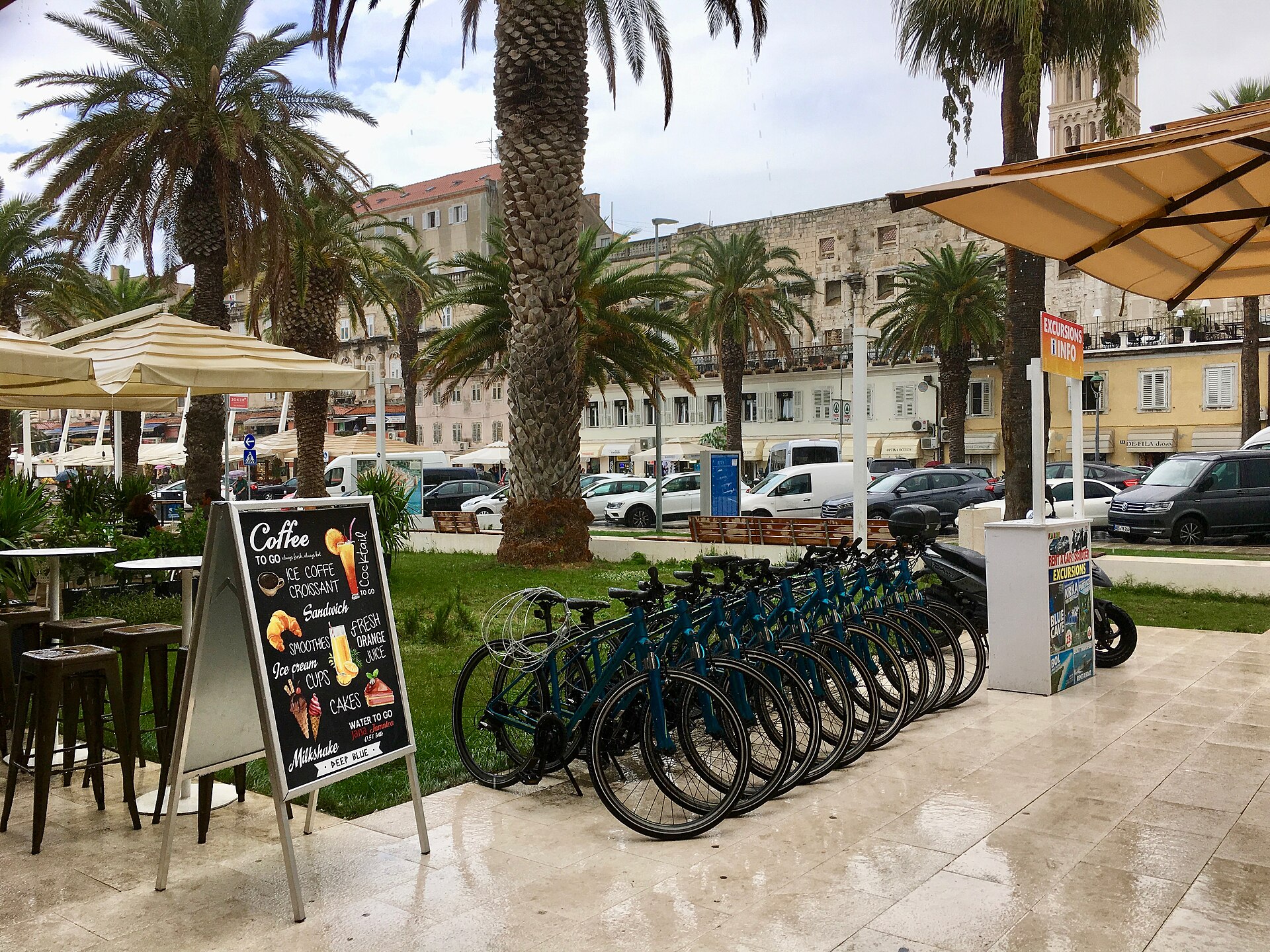
At docked, compact ports — Split, Cadiz, Malaga, Barcelona’s waterfront, Kusadasi’s town — you rarely need a tour at all. Roll off the ship and explore at your own pace, which is the kind of freedom many wheelchair users find hardest to get on other holidays.
Scooters, wheelchairs and medical equipment
Most wheelchair users bring their own chair, and many bring a second, lighter folding chair for ports and tenders. A few things are worth settling before you sail.
- Size and weight. Tell the line the dimensions and weight of every mobility device, and check that it fits through your cabin door and turns inside the cabin. Remember the tender rules: under Norwegian’s policy, devices of 100 lb or more stay aboard on tender days.
- Renting instead. Specialist rental companies deliver wheelchairs and scooters to the ship at many of the main Mediterranean homeports, which avoids flying with a heavy scooter. Book well ahead for summer sailings.
- Batteries and charging. Airlines have specific rules for mobility-device batteries, especially lithium-ion; check with your airline when you book the flight. On board, charge in your cabin, and remember that surge-protected power strips are banned by every major line.
- Medical equipment. Oxygen concentrators, CPAP machines, refrigerated medication and dialysis needs all require advance notice to the line, and sometimes paperwork from your doctor. Ask early; some needs take weeks to arrange.
- Repairs. A puncture or a broken joystick far from home can end a holiday. Carry a basic repair kit and your chair’s details, and know where the nearest specialist repair service is in the homeport.
Flights, airports and embarkation day
For most North Americans, the flight is the hardest part of the trip, and the rules differ on each side of the Atlantic. On US airlines, the Air Carrier Access Act sets out your rights to assistance and to carry your mobility device. At EU airports, EU Regulation 1107/2006 requires the airport to provide free assistance to passengers with reduced mobility, from arrival at the terminal to the aircraft seat and from the aircraft to the exit, and asks passengers to request it at least 48 hours before departure. The European Commission’s air passenger rights pages explain what you are entitled to and how to complain if it goes wrong.
Arrive in the homeport at least a day early, preferably two. Mobility equipment can be delayed or damaged in transit, and a day’s margin gives you time to have it repaired or replaced before the ship sails. It also gives you a day to recover from the flight. At the cruise terminal, lines typically offer priority check-in and boarding for guests with mobility needs, and porters or terminal staff to push manual wheelchairs; ask about both when you tell the line your requirements. Our embarkation ports guide covers the terminals and airport transfers in Barcelona, Rome, Athens and the other homeports, including the fixed-fare taxi from Barcelona airport to the port.
Insurance deserves a word too. Travellers with a disability or a medical condition should buy cover within the window that gives a pre-existing condition waiver, and should check that the policy covers mobility equipment. Our travel insurance guide for a Mediterranean cruise explains the waiver and the medical and evacuation limits we would buy.
Seniors and travellers who walk slowly
Many people who would never describe themselves as wheelchair users still find a Mediterranean cruise physically hard: travellers who walk slowly, tire easily, use a cane, or struggle with heat and steps. For them, most of this guide applies in a softer form. Docked ports are easier than tender ports. The Spanish ports are easier than the Greek islands. Ship’s tours graded for low activity, short independent walks along flat waterfronts, and afternoons aboard make a port-intensive week manageable.
Three adjustments help most. Sail in May, June, September or October rather than July and August, when Athens averages 90°F (32°C) and the Acropolis has closed for heat. Choose a longer itinerary with more sea days, so that the week has rest built in. And borrow or rent a lightweight wheelchair for the long-distance days, such as the Vatican or Ephesus, even if you walk the rest of the time; it turns an exhausting day into a good one. Our full guide for older travellers, Mediterranean Cruise for Seniors: Easy Ports, Best Lines, Smart Excursions, is in preparation.
Where this guide goes deeper
This page is the hub for accessible cruising and seniors. Over the coming months we are publishing the detailed guides that sit beneath it, and we will link each one here as it goes live.
- Ports and shore days. Wheelchair Accessible Mediterranean Cruise Ports: Every Port Rated; Wheelchair Accessible Shore Excursions in the Mediterranean; and Wheelchair Accessible Rome from Civitavecchia: Vatican and Colosseum Step-Free.
- Getting ashore and choosing a ship. Tendering with a Wheelchair or Mobility Scooter in the Mediterranean, and Best Cruise Lines for Wheelchair Users in the Mediterranean.
- Older travellers. Mediterranean Cruise for Seniors: Easy Ports, Best Lines, Smart Excursions.
For port-by-port logistics beyond accessibility, see our guides to Italy’s cruise ports and Greece’s cruise ports.
Wheelchair accessible Mediterranean cruise FAQs
Can wheelchair users go ashore at tender ports?
Often not in their wheelchairs. Norwegian, for example, does not transfer guests to tenders in wheelchairs, and does not carry wheelchairs or scooters of 100 lb or more between ship, tender and shore. Guests who can step into the tender, with help, may be allowed ashore in calm seas. Crew cannot lift passengers, and the final decision is made on the day.
Which Mediterranean cruise ports are wheelchair accessible?
The most accessible are docked ports with flat waterfronts: Barcelona, Malaga, Cadiz, Valencia, Split and Naples, plus Monaco when the ship docks and Valletta with the Barrakka Lift. Rome, Florence and Athens are manageable with a pre-booked accessible van. The least accessible are tender and clifftop ports such as Santorini, Sorrento, Amalfi, Capri and Portofino.
Is the Acropolis wheelchair accessible?
Yes, with planning. A lift reserved for disabled visitors, new in December 2020, runs up the north face, and paved paths cross the summit. Visitors are advised to call the day before to confirm the lift is running. Entry is free for visitors with a certified disability of 67% or more and one companion.
Can I take a mobility scooter on a Mediterranean cruise?
Yes, on most lines, with advance notice of its size and weight. It will be ideal at docked ports and useless at tender ports under rules like Norwegian’s 100 lb limit. Many travellers bring a lightweight folding wheelchair as well, or rent a scooter delivered to the ship at the homeport instead of flying with their own.
How early should I book an accessible cabin?
As early as you can: nine to twelve months ahead is sensible for summer Mediterranean sailings. Ships carry relatively few fully accessible cabins, and they are among the first to sell out. Check whether a cabin is fully wheelchair-accessible, with a roll-in shower, or an ambulatory cabin designed for guests who can walk.
Is Pompeii accessible for wheelchair users?
Partly. The “Pompeii for All” route runs about 3.5 km across the site on ramps and platforms, from the Piazza Anfiteatro entrance to the Sanctuary of Venus, and takes about two hours. Some ramps exceed an 8% gradient and some paving is uneven. Wheelchairs can be borrowed at the main entrances, and entry is free for disabled visitors and a companion.
Do I need to tell the cruise line about my wheelchair?
Yes, and in detail. Tell the line’s access department the size and weight of every mobility device, whether you can step, and any equipment or medical needs, in writing and early. Norwegian asks for at least 45 days’ notice, and 90 days for sign-language interpreters. Late requests may not be met.
What is the most accessible Mediterranean itinerary?
A Western Mediterranean itinerary that docks at every port, on a large modern ship: Barcelona, Palma, Marseille, Civitavecchia, Naples and Valletta is a typical example. The Spanish ports are the easiest group of all. Greek island itineraries are the hardest, because of tenders, steps and heat.
How we researched this guide
Line rules come from Norwegian Cruise Line’s own accessibility pages, which we quote because they are among the clearest in the industry. Site access details for the Acropolis, the Colosseum and Pompeii come from 2026 visitor guidance for each site, cross-checked across several sources, and are labelled accordingly. Port logistics come from port authorities and our own port guides; accessibility details for individual ports come from published accessibility guidance for cruise passengers, and the ratings are our own. Air-assistance rights come from EU Regulation 1107/2006 and the European Commission. We checked everything on this page in September 2026.
We are an independent editorial site. We do not sell cruises or accessible travel services, no company has paid for a mention, and we have not tested every port described here in a wheelchair. Where this page gives an opinion — the ratings in the port table, that Santorini is a day to enjoy from the ship, that a private accessible van usually beats the train — it is labelled as ours. Accessibility changes, sometimes for the better and sometimes because a lift breaks down; confirm the details that matter to you with the line and the site before you travel.
Image credits
| Image | Photographer | Licence |
|---|---|---|
| The top of the Acropolis lift and the paved summit path | Jean Housen | CC BY-SA 4.0, via Wikimedia Commons |
| A cruise ship tender, AIDAcara | Kenny McFly | CC BY-SA 3.0, via Wikimedia Commons |
| The Barrakka Lift, Valletta | Frank Vincentz | CC BY-SA 3.0, via Wikimedia Commons |
| Muelle Uno, Port of Malaga | Martin Haisch | CC BY-SA 2.0, via Wikimedia Commons |
| Santorini Old Port and the cable car to Fira | Norbert Nagel | CC BY-SA 3.0, via Wikimedia Commons |
| The Forum at Pompeii with Vesuvius | Commonists | CC BY-SA 4.0, via Wikimedia Commons |
| The Riva promenade, Split | Marie Thérèse Hébert & Jean Robert Thibault | CC BY-SA 2.0, via Wikimedia Commons |
Published 6 October 2026. Access rules, line policies and prices were checked in September 2026 and will change — confirm the details that matter to you before you travel. Further reading: the Parco Archeologico di Pompei visitor information.